- The new AI-powered bionic hands combine proximity and pressure sensors with neural networks to autonomously adjust posture and grip strength.
- Shared human-machine control reduces the user's cognitive load and improves accuracy in delicate everyday tasks.
- Hybrid, modular, and gamified designs, as well as neural interfaces, are being developed to bring the control and feel of the prosthesis closer to that of a real hand.
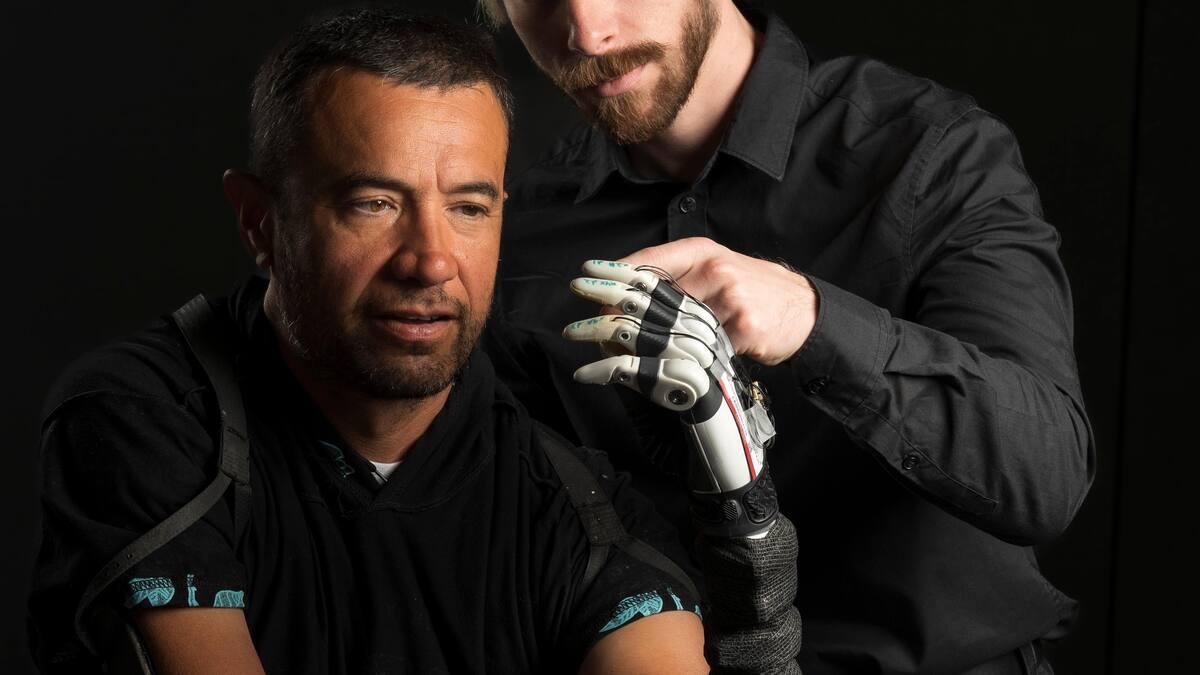
Bionic hands with artificial intelligence are taking a huge leap forward compared to traditional prostheses: it's no longer just about moving fingers mechanically, but about recovering something very similar to the natural dexterity of a human hand, with less mental effort and more confidence in everyday life.
What is truly revolutionary about this new generation of prostheses is that they combine advanced sensors, AI models , rigid and soft robotic structures, and shared human-machine control systems, so that the hand "thinks" part of the movement while the user continues to decide what they want to do at any given moment.
From the first prostheses to intelligent bionic hands
The idea of replacing a lost limb has a long history : prosthetic arms and hands existed in antiquity, such as the famous "Hand of Capua," dating from around 300 BC, made of iron, bronze, and wood. It is believed to have belonged to a Roman soldier who used it to hold his shield after losing part of his arm.
For centuries, prostheses were little more than aesthetic devices , simple molds that mimicked the shape of the limb but offered no real functionality. Their purpose was essentially cosmetic, to "cover up" the absence of the limb without providing any useful movement.
With the medical and mechanical advances of the 19th and 20th centuries came the first articulated prostheses, capable of reproducing some basic movements thanks to simple mechanisms. Later, "robotic" or "bionic" prostheses appeared, with motors, various types of grippers, and some degree of muscular or electrical control.
Even so, the most advanced commercially available bionic hands still suffer from a crucial limitation: their control remains complex, unintuitive, and mentally exhausting. Tasks that a person with intact hands performs almost without thinking—picking up a mug, holding a plastic cup, grasping a thin piece of paper—pose an enormous challenge for many prosthesis users.
The cognitive effort is so high that nearly half of users end up abandoning their bionic hand, citing difficulty of use, unnatural controls, and a constant mental strain. The major problem is that most of these devices don't accurately replicate the sense of touch or the automatic coordination that the brain performs unconsciously.
The University of Utah's approach: shared human-machine control
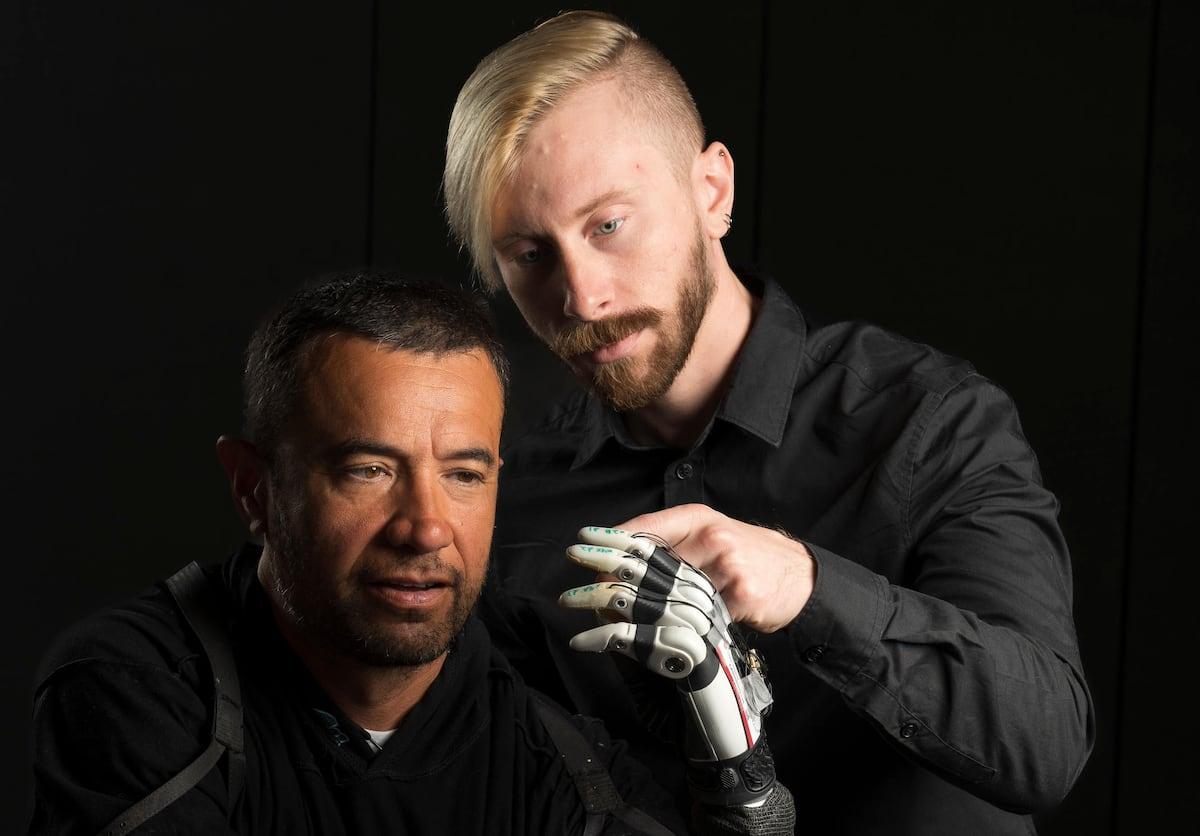
A team from the NeuroRobotics Laboratory at the University of Utah , led by researchers such as Marshall Trout and Jacob A. George, has developed a shared control system that is completely changing the landscape. Their proposal, published in the journal Nature Communications, is based on a commercially available prosthetic hand (such as the TASKA Hand) equipped with sensors and a specially trained AI.
The key point of this work is the continuous cooperation between person and prosthesis : the user indicates the general intention of the action (grab, release, bring closer, hold…), while an artificial intelligence model is in charge of autonomously adjusting the position of the fingers and the grip strength with a finesse that is very difficult to achieve with direct human control alone.
To achieve this, scientists have added proximity and pressure sensors to the fingertips of the bionic hand. These optical sensors are even able to "see" the object before touching it, estimate its distance, and detect minute variations in contact and pressure once the grip begins.
All this information is fed into a system trained with thousands of grip positions. The AI model "learns" which combination of finger spread and force is most suitable for each type of object, so that when the hand approaches a cup, an egg, or a sheet of paper, it automatically adjusts the fingers to the optimal position.
At the same time, the prosthesis receives human signals from the body , such as the electrical activity of the forearm muscles or the skin, which indicate the intended movement. The system merges the user's signals and the AI's decisions in real time to generate hybrid control: the machine doesn't control everything, and the person doesn't have to micromanage each finger.
Fine touch and proximity sensors: towards a prosthetic “sixth sense”
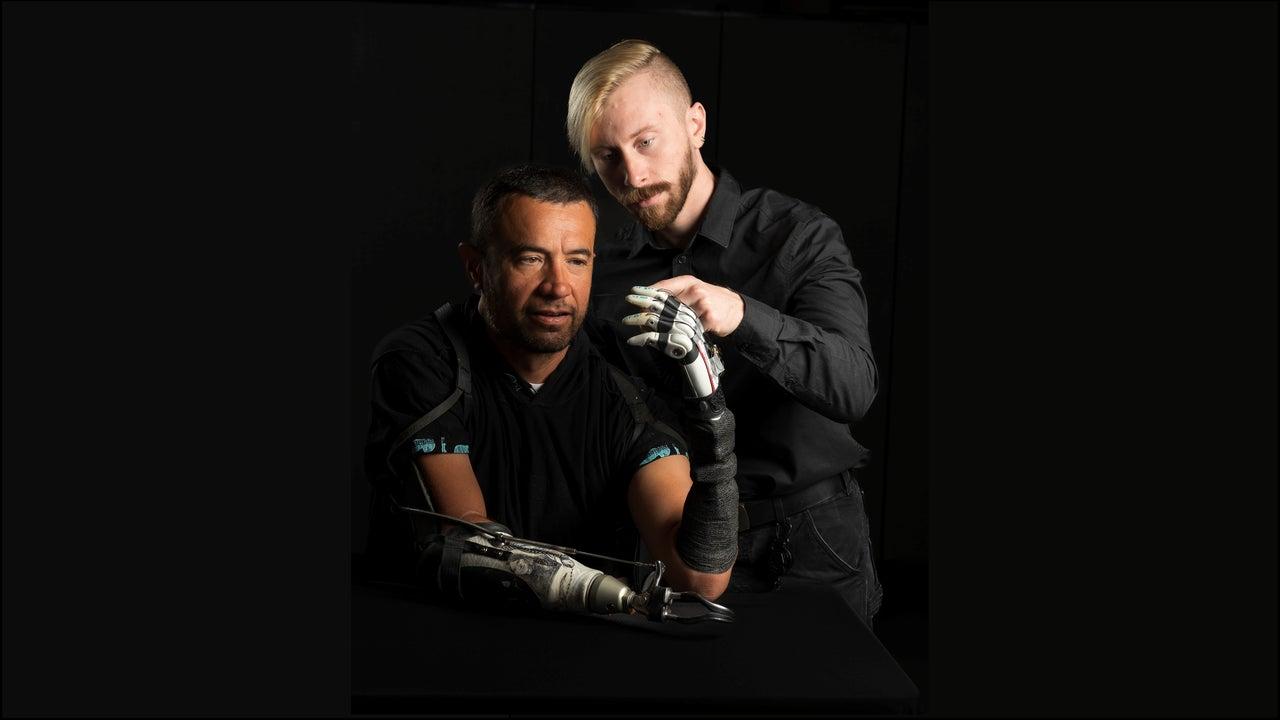
One of the major advances of this AI-powered bionic hand lies in its artificial fingertips , designed to mimic fine human touch. They not only measure the pressure exerted on an object's surface, but also integrate optical proximity sensors capable of detecting objects before physical contact.
Thanks to these sensors, the fingers can detect even a virtually weightless cotton ball as it falls on them, something unthinkable with many current commercial prostheses. This allows for estimating the mass, volume, and delicacy of the object and, therefore, adjusting the grip strength with ultra-precise precision.
Each finger has its own proximity sensor that allows it to "see" in front of it , meaning all the fingers work in parallel to achieve a stable grip. Instead of the user having to think, "Now I close my index finger a little more, now I relax my thumb," the AI calculates the exact position needed for the entire hand to hold the object without crushing it or dropping it.
Proximity and pressure data continuously feed into the neural network , which adjusts the finger movements in real time. If the object starts to slip, the sensors detect it and the system slightly increases the pressure; if it notices that the object is deforming (for example, a plastic cup), it reduces the force to avoid breaking it.
This sensory integration makes the bionic hand a much more autonomous system when it comes to regulating the grip, relieving the user's brain of a significant part of the task of constant monitoring that it previously had to do consciously.
Cognitive load: why bionic hands tire the brain so much
In our daily lives, moving our hand is almost automatic : we don't consciously calculate the position of each finger or the force we apply. The brain relies on internal models and the sense of touch to adapt our grip, and it does so at enormous speed and unconsciously.
In conventional robotic prostheses, this automation practically disappears . The user has to think carefully about what gesture to make, how much force to apply, when to open and when to close, and often does so with hardly any tactile information to guide them.
The result is enormous mental strain : unintuitive controls, the need to repeatedly practice simple gestures, and a feeling that any lapse in concentration could result in a broken glass or an object on the floor. This scenario explains why so many users end up abandoning the prosthesis despite its advanced technology.
The system proposed by the Utah team seeks to alleviate precisely this cognitive load . By delegating the fine-tuning of the grip to AI and leveraging sensors that simulate touch, the user can focus on the overall intention of the movement (grasping, holding, releasing) instead of controlling every micro-detail.
The study's authors emphasize that they don't want the person to "fight" with the machine for control of their hand. The goal is for the AI to act as a reinforcement of the user's natural control, not as an autopilot taking over without permission. In this way, the patient's wishes are respected while relieving them of some of the mental burden.
Real-world test results: greater accuracy, less effort
The intelligent bionic hand system has been tested with different types of users : nine people without amputation (to validate the control and interface) and four amputee people with limb loss between the elbow and wrist, i.e., with forearm prostheses.
These tests involved very common but delicate tasks , such as holding an egg without breaking it, picking up a sheet of paper without tearing it, drinking from a cup, manipulating small objects, or lifting a cup by its handle. These are examples where grip strength and posture must be very precise.
Participants showed a clear improvement in grip safety and accuracy when using the AI-powered system compared to conventional, purely human, or purely automated control methods. Furthermore, researchers measured a significant reduction in perceived cognitive load during the tasks.
The most striking aspect is that many of these movements were performed without prior intensive training . In other words, the combination of sensors and a neural network allowed the user to use different grip styles more naturally from a very early stage, without having to memorize complicated muscle activation patterns.
In amputee patients, an improvement was also observed in what is called "fine motor control ," that ability to perform precise and coordinated movements with the small muscles of the hand and fingers, essential for activities such as writing, manipulating utensils, fastening clothes, or handling fragile objects.
Does a bionic hand with AI have a "mind of its own"?
The University of Utah's own press release spoke of giving the hand a "mind of its own ," a striking expression that has generated some philosophical and media debate. The idea is not that the prosthesis is conscious, but rather that it has enough autonomy to manage part of its movement on its own.
In practice, the bionic hand receives information from the environment, processes it, and acts without the user having to monitor every micro-adjustment. From the outside, it may appear to "decide" on its own, but what it actually does is execute the user's general commands in a highly sophisticated way, relying on what it learned during the neural network's training.
Some experts in cognitive neuroscience, such as Tamar Makin , have shown that the relationship between the brain and prostheses is more complex than previously thought. Their neuroimaging studies suggest that prostheses are not represented in the brain exactly as hands or tools, but rather generate their own neural signature, a kind of "new category."
Other researchers, such as Dani Clode at the University of Cambridge , are exploring prostheses that not only replace but also extend capabilities—for example, by adding a second thumb—taking advantage of the brain's plasticity to integrate additional elements into the body schema without needing to 100% mimic the original anatomy.
All of this raises interesting questions about how we attribute consciousness and agency to machines and devices. Currently, we have no way of proving that an AI is conscious, and in the case of prosthetics, we are talking more about highly sophisticated sensorimotor control systems than about “minds” in the strict sense.
Other lines of innovation: hybrid hands, modularity, and gamification
Utah's smart hand isn't the only powerful advance in this field . Other research teams, such as the one at Johns Hopkins University, are working on hybrid robotic hands that combine rigid and soft structures to better mimic human anatomy and manipulate both delicate and heavy objects.
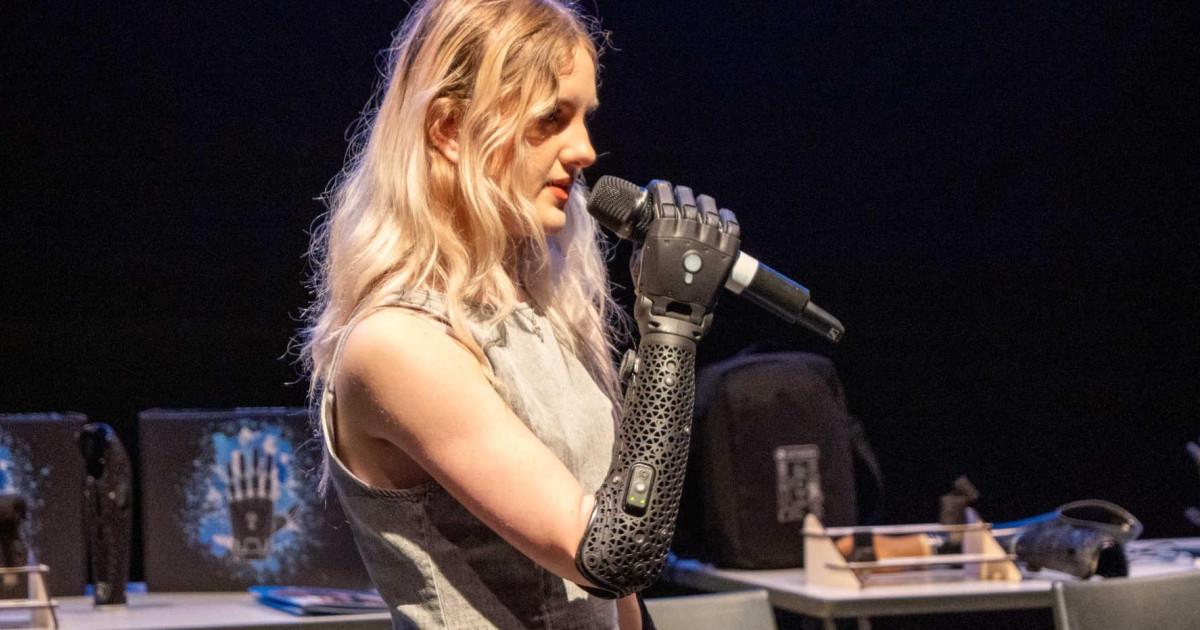
These hybrid hands typically incorporate an internal 3D-printed structure made of rubber-like polymers and flexible joints. This allows the prosthesis to better adapt to irregular shapes, different textures, and varying pressures, providing a much more versatile grip.
They also incorporate several layers of touch sensors inspired by human skin , capable of detecting contact, changes in pressure, and slippage. This “electronic skin” allows the hand to sense if an object begins to slip and automatically increase the force applied to prevent it from falling.
All of this is complemented by control systems based on muscle signals , where the forearm muscles send commands to the artificial fingers, and artificial intelligence and machine learning algorithms translate those signals into natural movements. The prosthesis's "brain" interprets whether something is hard or soft, hot or cold, stable or about to slip.
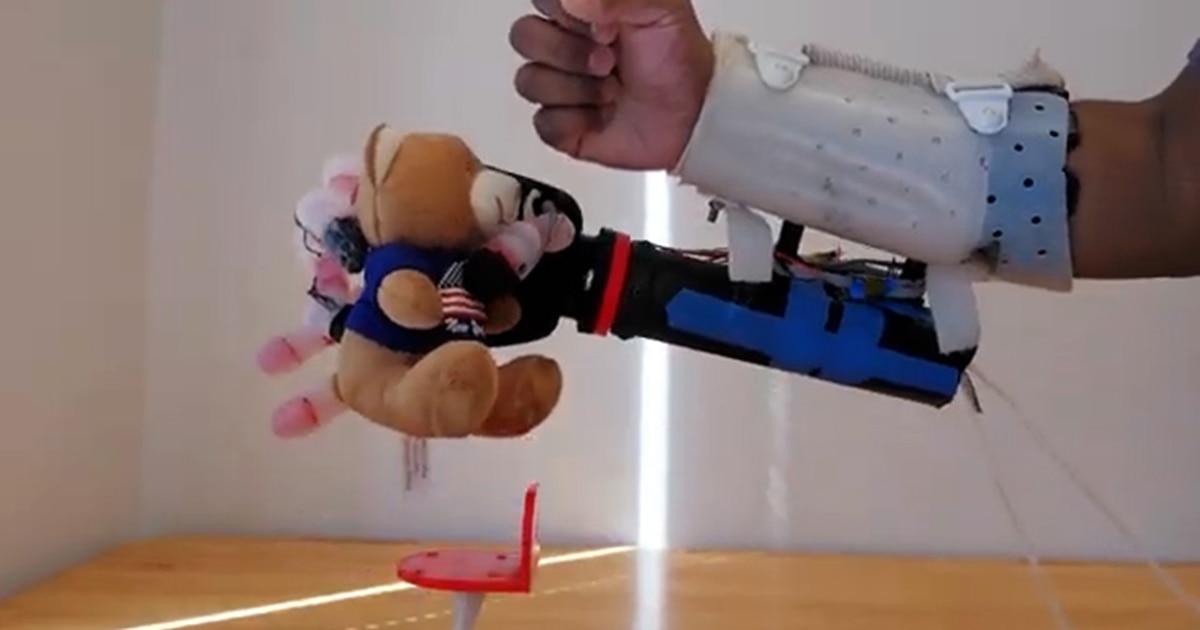
In tests with everyday objects—stuffed animals, sponges, bottles, pinecones, or plastic cups —some of these hands have achieved near 100% success rates in manipulating them without deforming or breaking them. One particularly illustrative experiment involved lifting a thin plastic cup full of water using only three fingers, adjusting the pressure with remarkable precision.
Meanwhile, companies like Open Bionics have focused on user-oriented solutions , such as the Hero Arm line, which offers fully wireless, water-resistant and customizable bionic hands, designed to integrate into the daily lives of children, teenagers and adults much more comfortably.
These prostheses are controlled by wireless EMG electrodes (MyoPods) placed on the residual limb or forearm, which detect muscle activity and translate it into movements of the bionic fingers. Being wireless, they allow the hand to be physically detached from the body and reconnected, and even to attach sports accessories using the same standard anchoring system.
The emotional and motivational component is also key . Some startups have developed modular and relatively affordable hands, designed primarily for children, that grow with them: the pieces can be replaced with larger ones as the child's body changes, reducing the cost of replacing complete prostheses every few years.
To make learning to use a prosthesis less of a chore , virtual reality environments like VREHAB have been created, where children practice movements with their bionic hand through games like "climbing buildings like a superhero." As they improve, they earn points, and therapists can monitor their progress remotely.
The customizable aesthetics also help the user feel a sense of ownership over the prosthesis : thanks to 3D printing, designs inspired by superheroes, futuristic styles, or finishes that match youth fashion are available. This transforms the bionic hand into more than just a medical device, making it an element of identity as well.
Towards thought control and touch "back" to the brain
Looking to the near future, leading research teams plan to combine these smart hands with implanted neural interfaces, so that the prosthesis can be controlled directly by brain activity rather than relying solely on surface muscle signals.
The goal is for the bionic hand to respond almost as quickly and naturally as a biological hand, further reducing cognitive load. If the user thinks about closing their hand, the prosthesis should initiate the movement without requiring them to deliberately contract the muscle or execute learned patterns.
At the same time, work is underway to bring touch back to the user's nervous system: the pressure and proximity sensors of the prosthesis could send coded signals that translate into sensations of contact, texture or force perceived in the brain, approaching true sensory feedback.
Researchers like Jacob A. George emphasize that this line of research is part of a broader vision to improve the quality of life for people with amputations by integrating intelligent prostheses, neural interfaces, and advanced sensory systems into a coherent ecosystem.
Although there are still years of development and clinical trials to come , current results show that it is already possible for tasks as simple as drinking from a plastic cup to cease being an exhausting challenge and gradually feel as natural as they did before the amputation.
Everything points to bionic hands with artificial intelligence ceasing to be science fiction and becoming practical tools that reduce mental effort, restore fine motor skills and expand the possibilities of interaction with the environment, from safely holding a cup or an egg to hugging someone without fear of hurting them.
