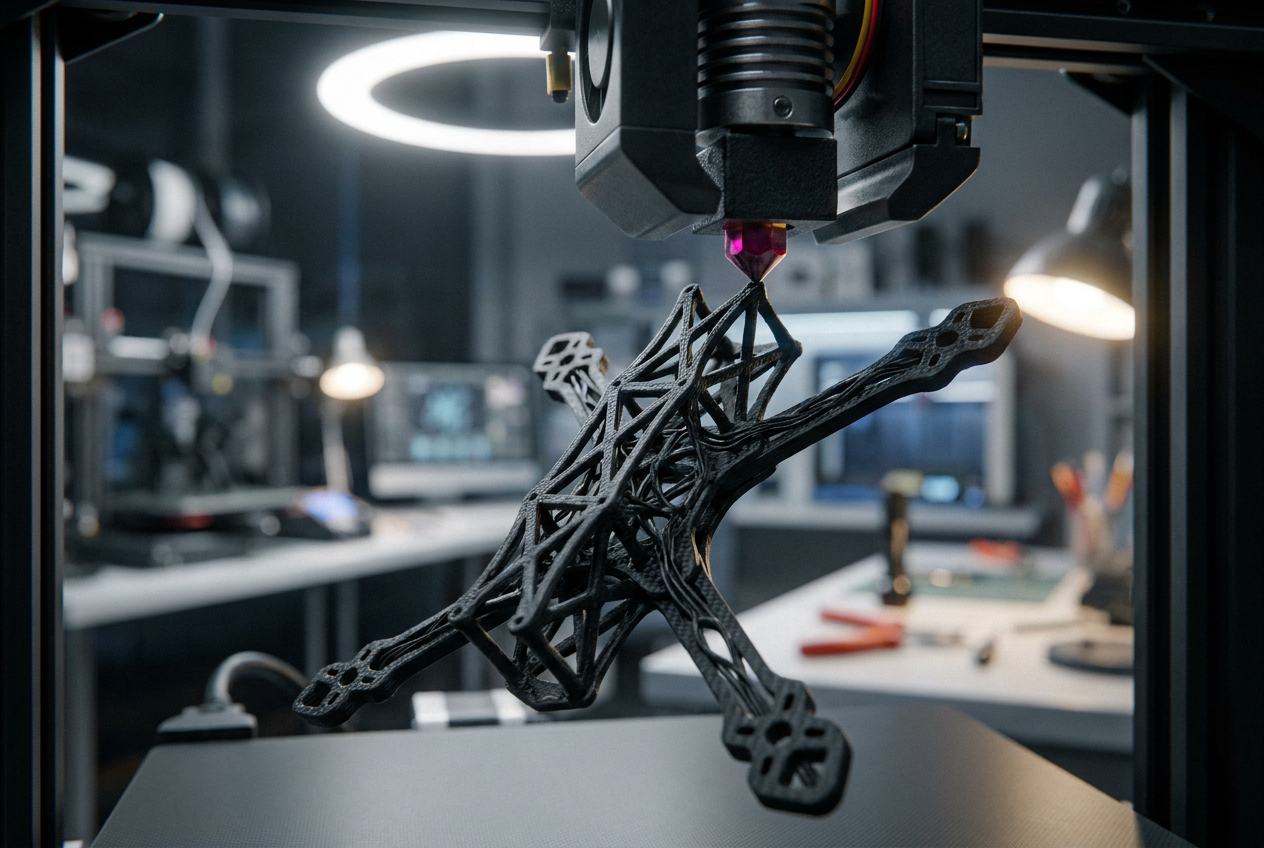
If you're into drones, you know that the chassis is practically the skeleton that holds everything together. These days, 3D printing parts has become the preferred option for those looking to move away from commercial kits and start experimenting with their own configurations.
Since these devices ceased to be mere toys or military tools and became a global phenomenon, the possibility of manufacturing custom-made structures has opened the door to unprecedented personalization, allowing any enthusiast to assemble a competitive team from home.

Variety of drones manufactured with 3D printing
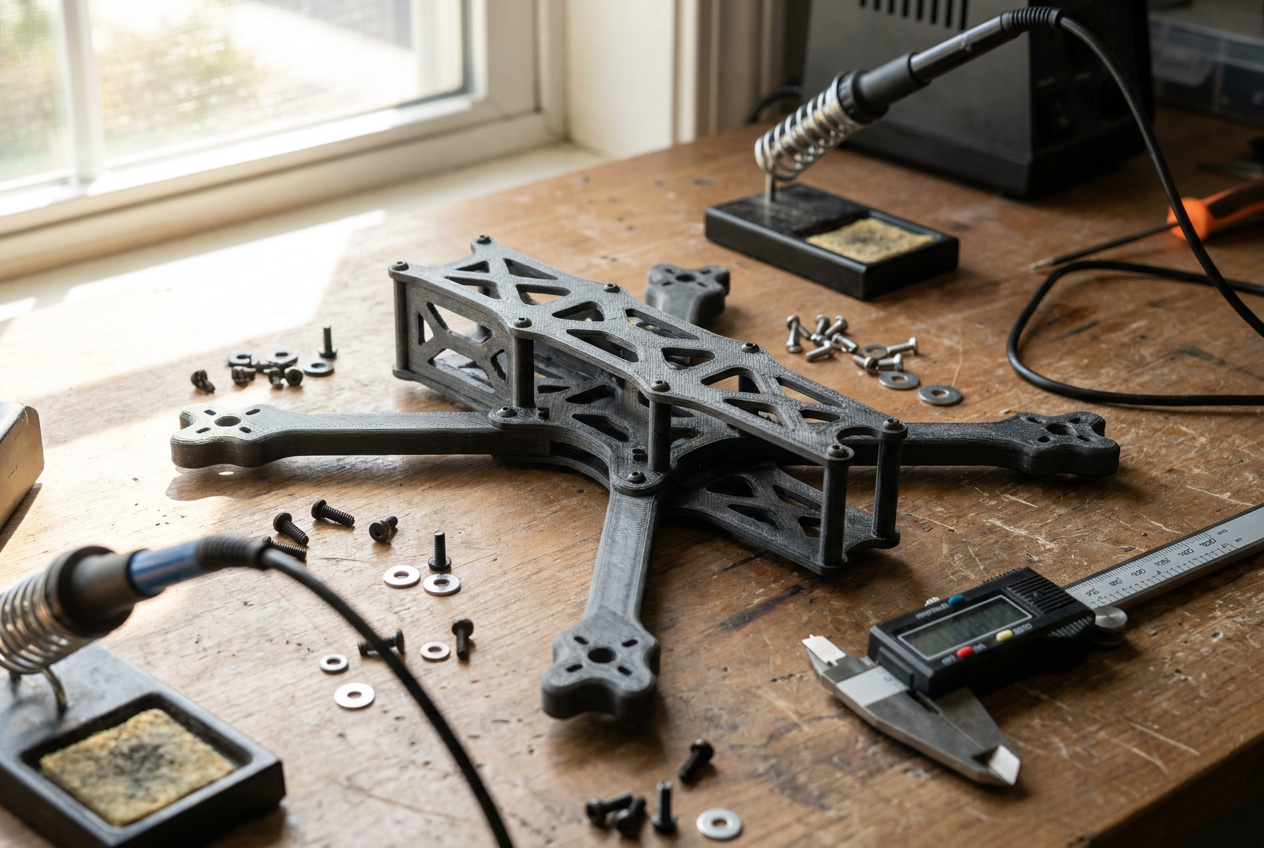
Not all drones are the same, and the versatility of additive manufacturing allows it to meet a huge range of needs. For example, racing drones benefit most from this technology, as they require extremely lightweight parts that can withstand the occasional hard impact, thus achieving an enviable top speed.
On the other hand, we have drones designed for transporting goods. In this case, 3D printing is used to optimize the cargo structure , ensuring that the drone can lift extra weight without compromising motor performance.
There are also models designed for very specific missions. Whether it's to inspect damaged infrastructure or to monitor natural ecosystems using camera-equipped drones , 3D design allows the chassis to be precisely adapted to the sensors or cameras required for the mission.

Evolution and current market outlook
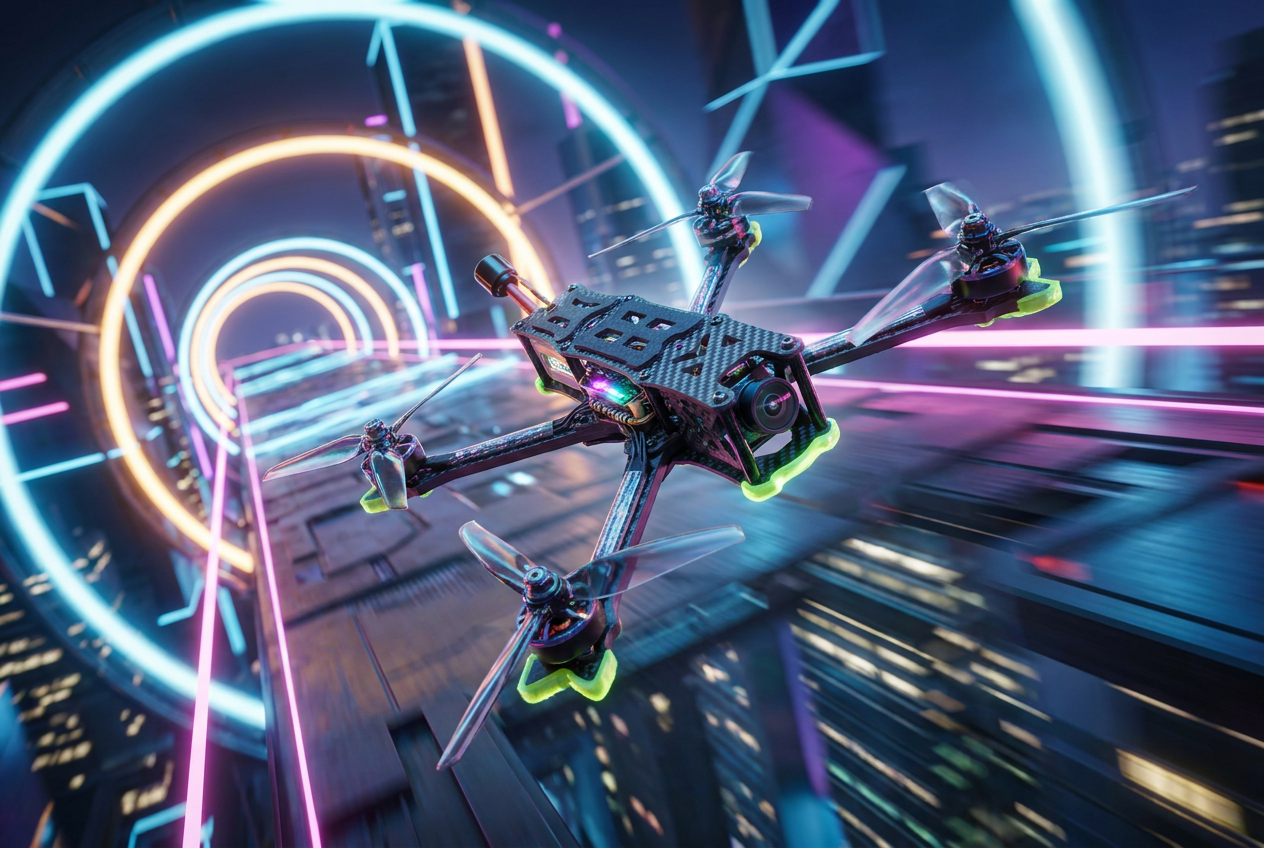
To understand where we are, we have to look back. Drones began primarily as projectile carriers and training targets during the interwar period. Over time, improvements in sensors and communications led to their entry into the civilian sphere , expanding into sectors such as agriculture, surveillance, and even leisure.
In today's market, there's a constant battle between giants and small players. We have companies like DJI, which dominate the mass-produced commercial FPV drone sector , and firms like Skydio, which focus on full autonomy and onboard data processing for real-time obstacle avoidance.
At the opposite end of the spectrum are defense contractors, such as Lockheed Martin or Boeing, which create advanced tactical units in small quantities. However, this is where the magic of 3D printing comes in: it allows smaller companies like Nakai Robotics or Boresight to compete, as their ability to innovate and prototype rapidly compensates for the lack of budgets of large corporations.
When you opt for 3D printing, you not only save money, but you also gain complete control over the drone's geometry. You can experiment with materials to make the drone more resistant to vibrations or more aerodynamic, depending on the type of flight you want to perform.
- Full customization: You can move the center of gravity by adjusting the position of the motors.
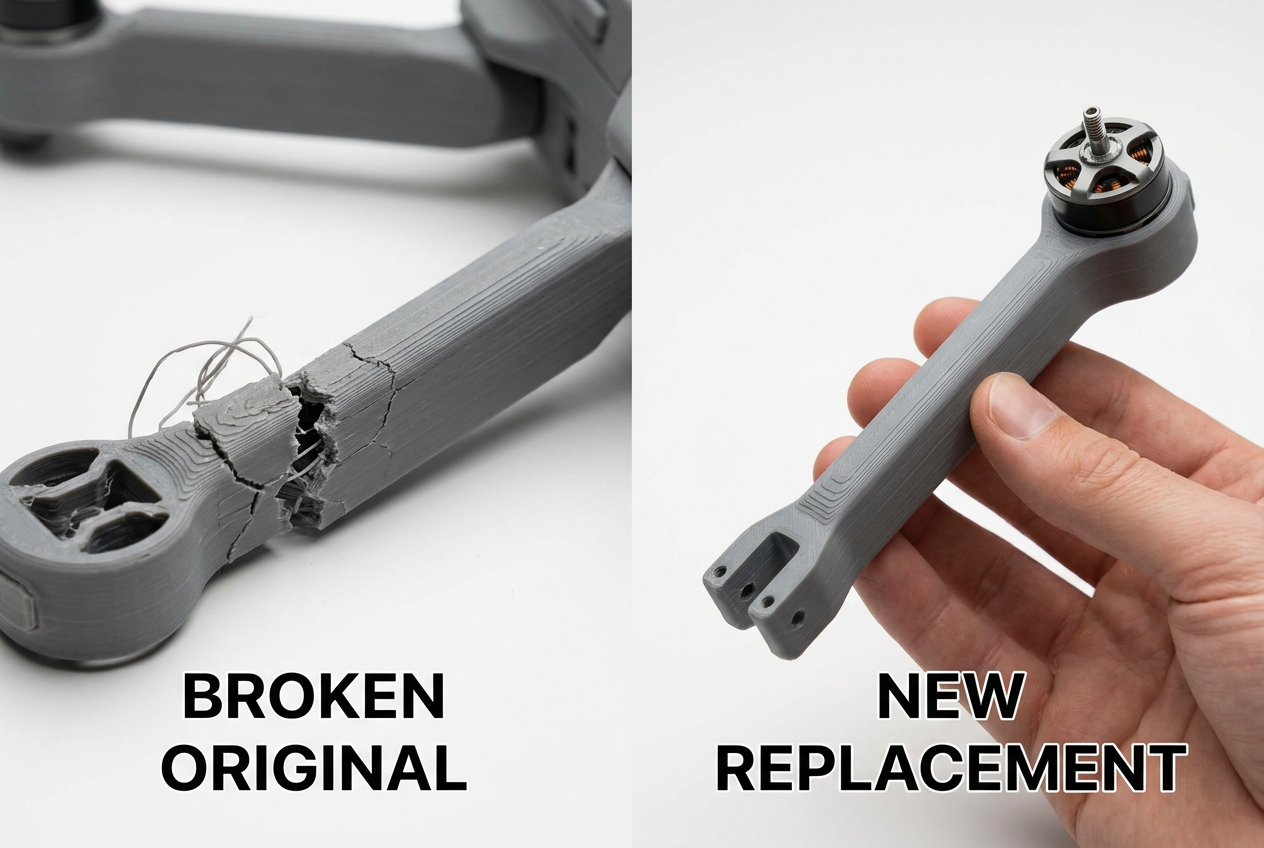
- Quick repairs: If you break your arm in a race, you just have to reprint the affected part instead of buying a new chassis.
- Experimentation: It allows testing new airflow designs to better cool the electronics.
The ability to integrate downloadable designs and modify them based on flight experience makes the quadcopter ecosystem an infinite playing field, where manufacturing agility is key to staying competitive against factory-standardized models.
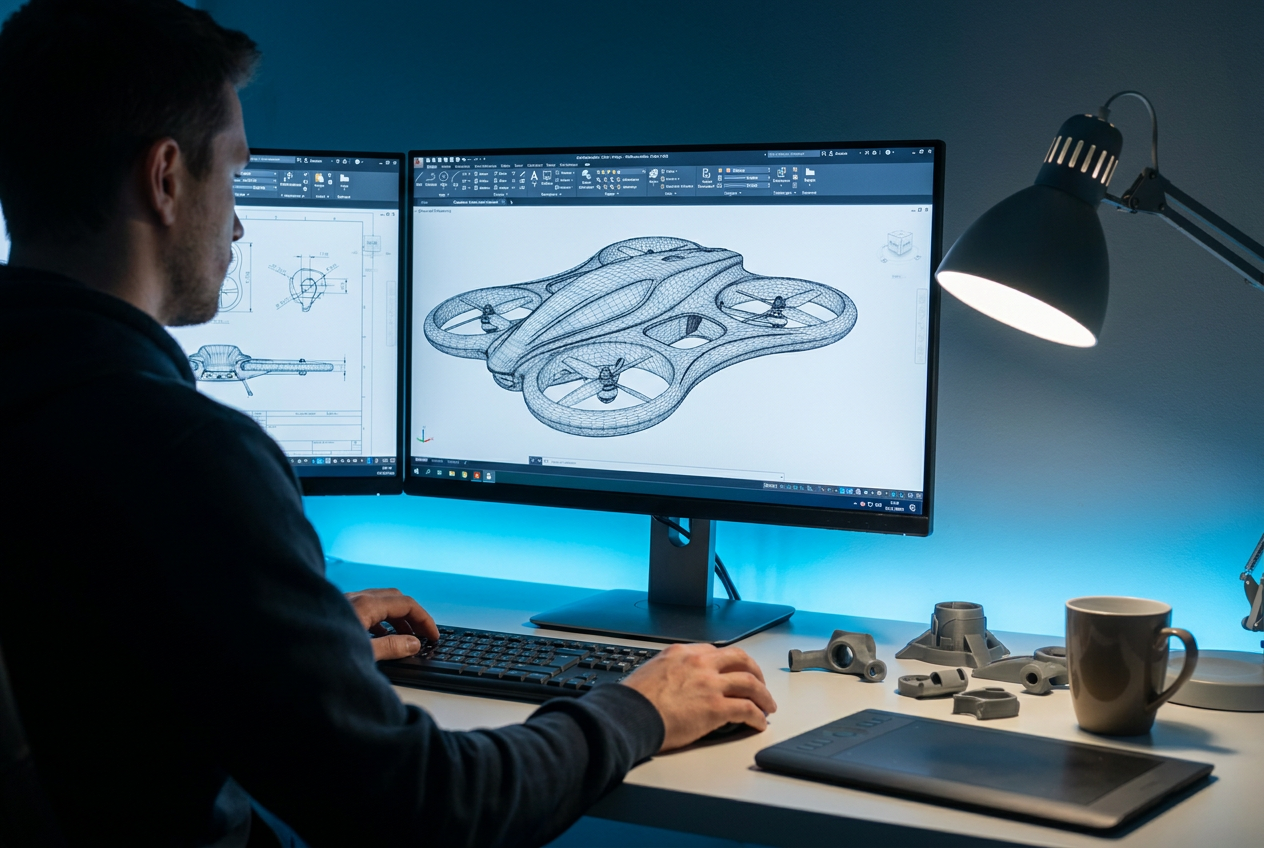
Additive manufacturing technology has democratized access to unmanned aviation, allowing everyone from the most casual user to the most advanced engineer to create efficient aircraft, whether to win a speed competition or to perform technical inspection tasks, relying on the flexibility of modern materials and computer-aided design.