- Fundamental differentiation between the model training phase and the inference phase to generate commercial value.
- Analysis of deployment architectures: from centralized cloud processing to edge computing (Edge AI).
- Evaluation of the technical hardware requirements, especially the importance of VRAM in GPUs for model execution.
- Optimization strategies such as quantization and the use of Small Language Models (SLM) to improve operational efficiency.

When we talk about artificial intelligence, most people picture massive learning processes and supercomputers processing trillions of data points. However, there's a part of the process where the real magic for business happens: inference. Essentially, this is when AI stops learning and starts working, applying everything it has learned to solve real-world problems and make decisions based on data it has never seen before.
In today's landscape, companies have moved beyond viewing AI as a laboratory experiment and have made it a fundamental part of their daily operations. It's no longer just about creating the most powerful model, but about how to run it reliably, securely, and, above all, profitably, shifting the workload from theory to active production in hybrid environments.

Training vs. Inference: They are not the same
To avoid confusion, it's important to clearly distinguish between these two stages. Training is like the school years for AI; it's an intensive process where the model analyzes historical data and labels to find patterns. Powerful hardware accelerators like GPUs or TPUs are used in large data centers , and response time isn't the priority, as the process can take days or weeks.
Inference, on the other hand, is the final test applied in real time. It's the execution process where the model receives an input (a photo, text, or sensor reading) and returns an immediate result. In this phase, latency becomes critical , and efficiency is key. While training lays the foundation, inference is what generates direct economic value for the organization.
Deployment strategies: Cloud, On-premises, and Edge
There is no single way to perform inference. Depending on the urgency and volume of data, companies choose from several approaches. Batch inference is ideal for massive, non-urgent tasks, such as overnight financial analysis or large-scale document categorization, where data is processed in the cloud and results are returned later.

Then we have real-time inference , essential for chatbots or fraud detection systems, where the response must arrive in milliseconds. Although the cloud remains the dominant option due to its scalability, it is beginning to show its limitations due to network latency and high bandwidth costs when handling terabytes of data.
This is where edge inference, or Edge AI, comes into play . By processing data directly on the device (an IoT sensor, a robot, or a smartphone), extremely low latency and significantly greater privacy are achieved, as sensitive information doesn't have to travel to a remote server. This is vital in sectors where a delay of milliseconds can be critical, such as autonomous driving or telesurgery.
Plant Inference and Industry 4.0
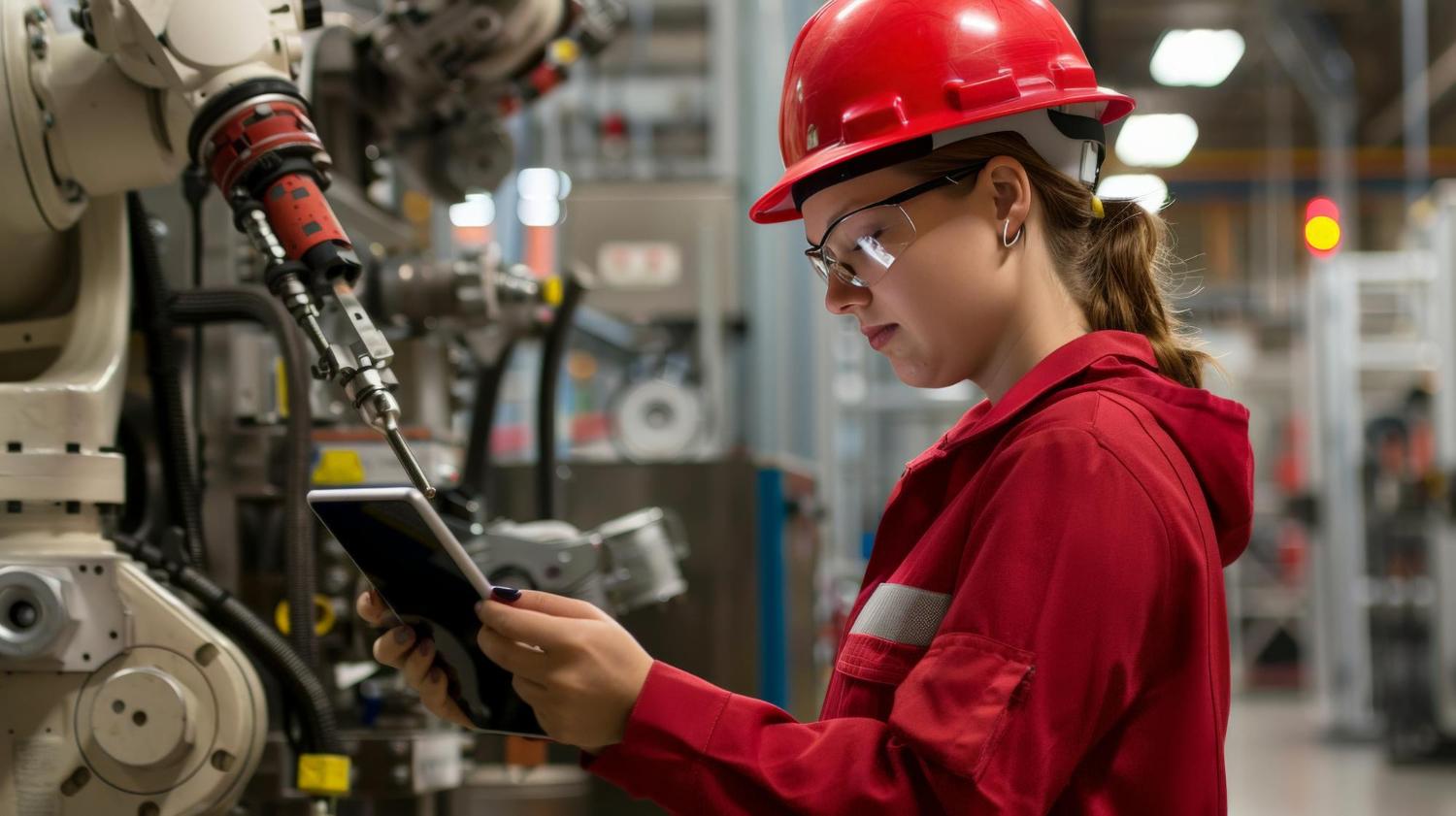
In the manufacturing sector, inference technology is a true gem. It allows machines to make intelligent decisions instantly without relying on an internet connection. This translates into real-time quality control , detecting defective parts on the assembly line before they become an unnecessary expense.

Furthermore, it forms the basis of predictive maintenance . AI models analyze the health of equipment in real time and provide early warnings before anything breaks down, preventing production stoppages that would cost thousands of euros. In the food and electronics industries, this ensures that the final product always meets the strictest quality standards.

Technical requirements and model optimization
If a company decides to run inference locally, the hardware is key. GPUs are essential due to their parallel architecture. The most critical factor isn't just raw power, but VRAM (video memory); if the model fits entirely in VRAM, response time skyrockets. Otherwise, the system relies on conventional RAM, which slows everything down considerably.
To make these models work on limited devices, optimization techniques are used. Quantization reduces the precision of the model weights (for example, from 32 to 4 bits), making the file much smaller and faster without sacrificing too much accuracy. On the other hand, LoRA (Low-Rank Adaptation) allows large models to be adapted to specific tasks without having to retrain the entire model, which is much cheaper and faster.

Small Language Models (SLMs) are also gaining ground . Unlike massive LLMs, SLMs are designed to be efficient and lightweight, making them a perfect match for edge hardware. To address hardware fragmentation, WebAssembly (Wasm) is used , which allows AI to run at near-native speed on any device, regardless of its processor.
Governance, Security and Operational Tools
Moving AI to production means it's no longer just a game, but a mission-critical workload. Many companies already operate in hybrid or multicloud environments , which necessitates the implementation of strict routing and security controls. Governance now focuses on the prompt, token, and API layers, where managing security in AI development environments is crucial to preventing data leaks.
For those who want to experiment with local inference, there are some very powerful tools available. LM Studio is an excellent option for users looking for a simple graphical interface and compatibility with Hugging Face models. For developers, Ollama is the star tool, as it's open source and allows you to use local AI on your computer very efficiently through Docker containers.

There are other interesting alternatives like Llama.cpp for broad hardware support, or Jan for those who prioritize a 100% offline environment. There are even smartphone apps like PocketPal that bring inference directly to your pocket, demonstrating that artificial intelligence no longer necessarily needs a supercomputer to be useful.
The trend is clear: artificial intelligence is moving toward a distributed model. The future lies not in a single, centralized brain in the cloud, but in an intelligent inference network spread across data centers and local devices. This hybrid architecture allows for a balance between computing power, the need for instant responses, and the protection of corporate data privacy.
