- Differentiation between cooperative scheduling, where the process voluntarily releases the CPU, and preemptive scheduling, where the system can force a context switch.
- Analysis of fundamental algorithms such as FCFS, SJF, Round Robin and weight-based fair scheduling.
- Exploration of advanced architectures including multi-level feedback queues and real-time process management.
- Study of scheduling in multiprocessor environments using symmetric and asymmetric schemes with load balancing.

Imagine your computer is an office with a single, highly efficient employee who can only do one thing at a time. To prevent them from going crazy and to keep everything running smoothly, you need someone to organize the paperwork on their desk and decide which task to tackle first and how much time to dedicate to it. Well, in the world of computing, that organizer is the CPU scheduler , responsible for managing the queue of ready processes so the processor doesn't just sit idle while there's work to be done.
This mechanism is vital because, if done incorrectly, you'll notice the mouse is choppy or applications take forever to open. The goal is essentially to maximize hardware efficiency , ensuring the CPU is always running at full capacity and that users feel the system is instantly responsive, even though the processor is actually switching between tasks at breakneck speed.
The heart of the planner and the allocator
The short-term scheduler is tasked with choosing which process from the ready queue will be the next to take action. While we often think of this as a normal queue where the first one in is the first one out, the reality is that much more sophisticated strategies exist to optimize performance. It's crucial that this process be extremely fast, as it runs approximately every 100 milliseconds; if the scheduler were slow, it would waste the very time it's trying to optimize.
Once the scheduler has made its decision, the allocator comes into play. This component is what actually puts control of the CPU into the hands of the chosen process. To achieve this, it must perform a context switch, transition the processor to user mode, and jump to the exact point in the code where the program left off. The time that elapses from when the scheduler chooses the process until the allocator starts it is known as allocation latency.
Types of planning: Cooperative vs. Expropriatory
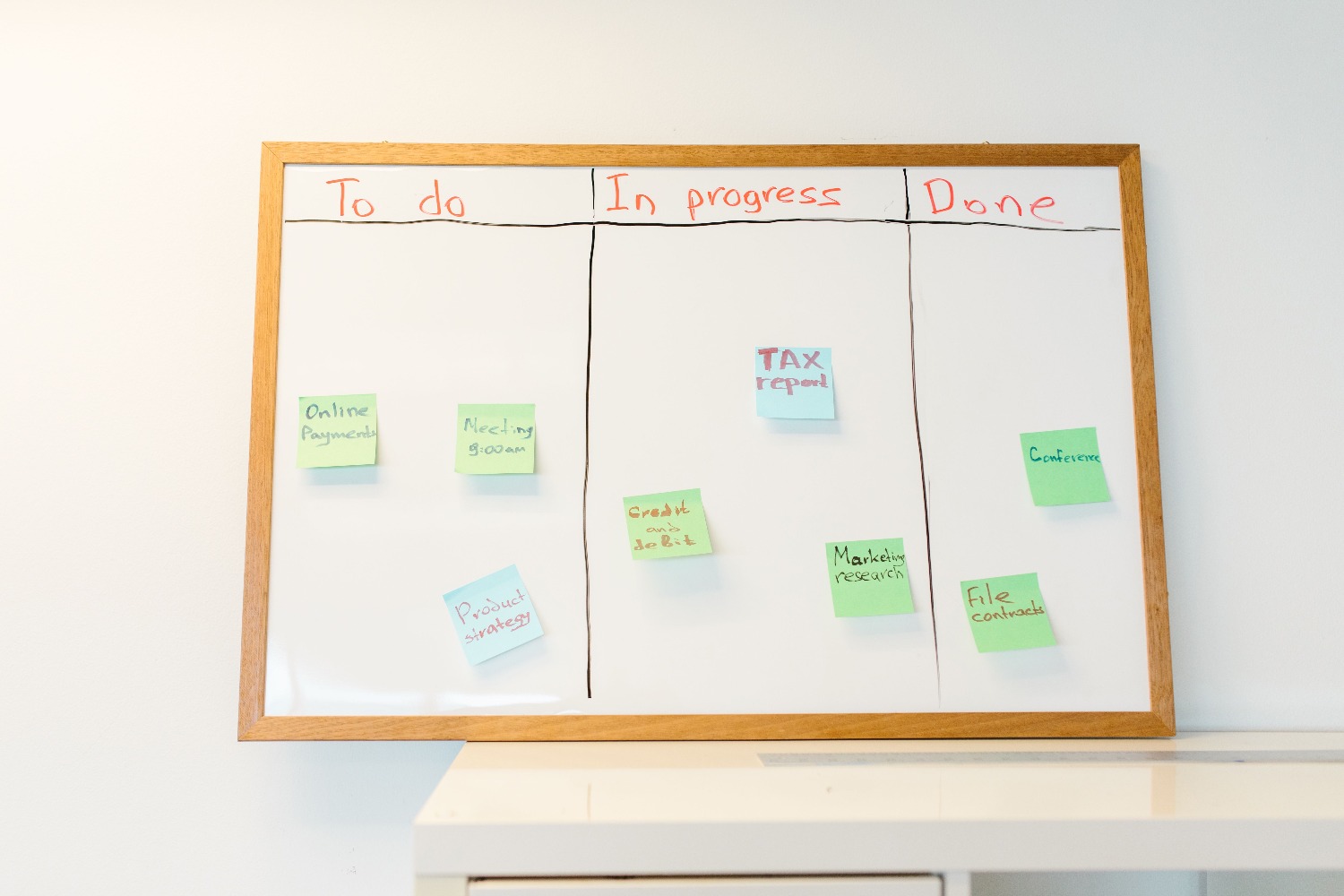
In older systems, such as Windows 3.x, cooperative scheduling was used. Here, the process is in charge: once it has the CPU, it doesn't relinquish it until it finishes its task or decides it needs to wait for some input/output operation. It's a simple system that doesn't require special hardware, but it has a serious problem: if a program hangs, the entire machine freezes because the process never releases the processor.
To avoid these problems, modern systems use preemptive scheduling. In this model, the operating system can take the CPU away from a process, even if the process doesn't want it, based on timer interrupts or because a more urgent process has arrived. This requires hardware support and complicates programming, as developers must use synchronization mechanisms to prevent shared data from becoming corrupted when a process is interrupted mid-operation.
Metrics for judging an algorithm
Not all algorithms are good for everything. To know which one to choose, we look at several criteria. On the one hand, we want CPU utilization to be as close to 100% as possible and a high processing rate (processes completed per second). However, there are other values we want to minimize, such as total execution time or queue waiting time.
For the average user, the most important factor is response time , which is how long it takes the system to react after a click. However, on a server performing scientific calculations, total execution time is more important. Depending on whether the process is CPU-bound (long bursts of calculation) or I/O-bound (many short waits), the algorithm must prioritize some processes over others to avoid the convoy effect, where short processes get stuck behind a very long one.
Classical scheduling algorithms

- FCFS (First Come, First Served): It's the simplest queue. The first one that arrives is the first one executed. It's cooperative and, while fair, can be very inefficient if the first process is extremely long, causing the others to wait an eternity.
- SJF (Shortest Job First): The winner here is the one with the shortest burst. It's ideal for minimize average waiting timeHowever, the problem is that the system does not know how long a process will last in the future, so it must try to predict it using weighted averages.
- SRTF (Shortest Remaining Time First): It's the expropriatory version of the Federal Judiciary. If a new case arrives that requires less time than the one currently underway, expropriation occurs immediately.
- Priority Planning: Each process is assigned a number. The highest priority process runs first. To prevent low priority processes from never running (starvation), the following is used: aging, increasing their priority as they spend more time waiting.
- Round Robin (RR): Designed for shared systems. Each process has a fixed time called a quantum (between 10 and 100 ms). If the process does not finish within that time, His shift is cut short and goes back to the end of the queue.
Advanced strategies and equitable planning
Fair scheduling aims to ensure that all processes receive the same amount of CPU time within a given period. Unlike Round Robin, it calculates allocation time dynamically. Modern implementations like Linux's CFS use a concept of virtual time and weights to ensure that the most important processes receive a larger share of the resource, thus optimizing fairness in resource allocation.
To combine the best of several worlds, there are multilevel queues. The system separates processes into different queues according to their priority or type. For example, interactive processes might go to a Round Robin queue, and background processes to a First-Come, First-Served (FCFS) queue. In feedback multilevel queues , processes can move between queues: if a process runs out of CPU time, its priority drops, while if it waits a long time, its priority increases to prevent it from being forgotten.
Real-time and multiprocessor systems

In strict real-time, the system must guarantee that a task finishes within a precise time, something impossible on standard PCs due to virtual memory. Therefore, we use flexible real-time , giving maximum and fixed priority to critical tasks. For this to work, the kernel must be preemptible, allowing an urgent task to interrupt any system operation, although this can cause priority inversion , where an important process waits for an insignificant one that has blocked a resource.
When we have multiple cores, things get complicated. In asymmetric multiprocessing, there's a master processor that controls everything. In symmetric multiprocessing (SMP), each core has its own scheduler. A common queue can be used, but that severely impacts cache performance. Therefore, a queue per processor is preferred , using balancing techniques like push migration (the system moves tasks) or pull migration (an empty core takes tasks from another) to ensure no core is idle.
CPU management is a constant balancing act between fairness, speed, and efficiency. From the simplest algorithms like FCFS to the complexity of preemptible cores and weighted scheduling, the goal is always to maximize hardware utilization by preventing processes from blocking each other or the user from experiencing system sluggishness.
FAQ
What is the difference between cooperative and expropriatory planning?
In cooperative mode, the process maintains control of the CPU until it terminates or voluntarily waits, while in preemptive mode, the operating system can force the process to exit through interrupts.
What is the convoy effect on the CPU?
It is a phenomenon where short processes get stuck in the waiting queue behind a very long process, causing input and output devices to be underutilized.
How does the Round Robin algorithm work?
Assign each process a fixed time interval called a quantum; if the task does not finish within that time, it is preempted and sent to the back of the queue to make room for the next one.
What is process starvation and how can it be solved?
This occurs when low-priority processes never get completed because there are always more urgent tasks. It's resolved with aging, which gradually increases the priority of those who wait the longest.
What does priority investment consist of?
This happens when a high-priority process is blocked waiting for a resource held by a low-priority process, which cannot finish because it does not receive CPU time.
What advantage is there to having a queue of prepared materials per processor in SMP?
It eliminates the need to use global synchronization mechanisms to access the queue, preventing kernels from wasting time waiting for access to a single shared structure.
What is the difference between strict and flexible real-time?
The strict approach guarantees compliance with exact timeframes under any circumstances, while the flexible approach simply prioritizes critical tasks over normal ones.
