- Dumb Terminals are devices that rely on remote servers to run applications and process data.
- Its history dates back to the 1960s, facilitating access to mass computers.
- Today, they offer advantages such as enhanced security and centralized data management.
- Virtualization has increased its relevance in modern business environments.
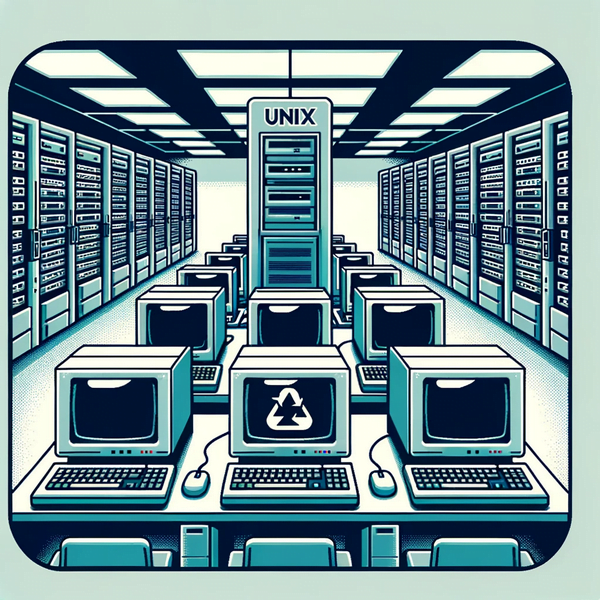
What is a terminal in computing?
What is a Dumb Terminal?
Dumb Terminal: A Computing Paradox?
How Does a Dumb Terminal Work?
The First Steps of the Dumb Terminal
The Dawn of Computing
The Dumb Terminal in the 70s and 80s
The 90s: The Renaissance of Dumb Terminals
The Dumb Terminal in the Digital Age

Dumb Terminal in the 21st Century: More Relevant Than Ever
Advantages of Dumb Terminals Today
The Dumb Terminal and Virtualization
Dumb Terminal FAQ
1. What is the difference between a Dumb Terminal and a traditional PC?
2. What are the advantages of using Dumb Terminals in a company?
- Centralized Management: Software administration and maintenance is simplified as updates and patches are applied on the central server, eliminating the need to manage multiple workstations individually.
- Increased Data Security: Since data is stored on centralized servers rather than multiple machines, there are fewer entry points for potential threats. Additionally, in the event of device failure, data is not lost as it is not stored on the endpoint.
- Costs reduction: In the long term, businesses can experience a reduction in hardware and operating costs, as Dumb Terminals are often cheaper than traditional PCs and consume less energy.