- Transition from manual binary programming to the creation of sophisticated graphical user interfaces.
- Development of key concepts such as multiprogramming, time-sharing, and distributed systems.
- Emergence of fundamental architectures such as UNIX and diversification towards open environments such as GNU/Linux.
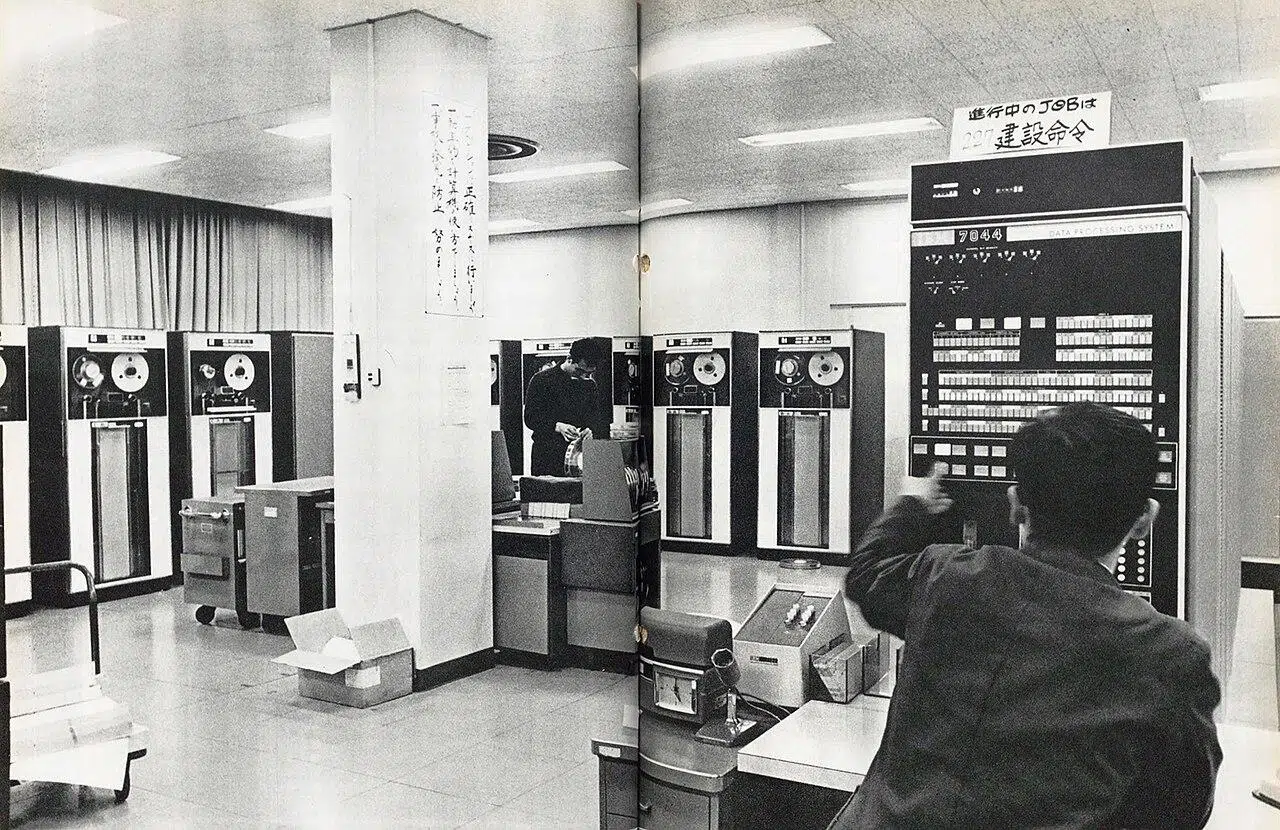
To understand how the gadgets we use today work, it's essential to look back and see how hardware management began. Back then, there was no such thing as intermediate software; programmers spent hours interacting directly with machine language , moving switches and wrestling with zeros and ones in an era when computing was in its infancy.
Over time, the complexity of machines grew to such an extent that managing them manually became impossible. This gave rise to the need for a layer to organize resources, leading to the development of operating systems which, from their humble beginnings, have transformed the relationship between humans and machines, making it much smoother and simpler.
The beginnings and the era of lots
In the early 1940s, we find ourselves in the zero generation. There was no operating system; access was direct to the console via microswitches that allowed the program to be loaded into memory. It wasn't until the 50s that the first concepts of a resident monitor and temporary storage began to emerge , making interaction less rudimentary.
The main objective was to optimize idle time. The first official operating system appeared in 1956 for the IBM 704, and its basic function was to launch the next program as soon as the previous one finished. To speed this up, techniques such as buffering and spooling were implemented, allowing data loading and execution to occur simultaneously.
Back then, the process was quite tedious. Programmers would write the code on paper using Fortran or assembly language, transfer it to punched cards , and hand them to an operator. The operator would manage the batches of jobs, and at the end, the programmer would collect the printed results in the output room.
The revolution of multiprogramming and time sharing
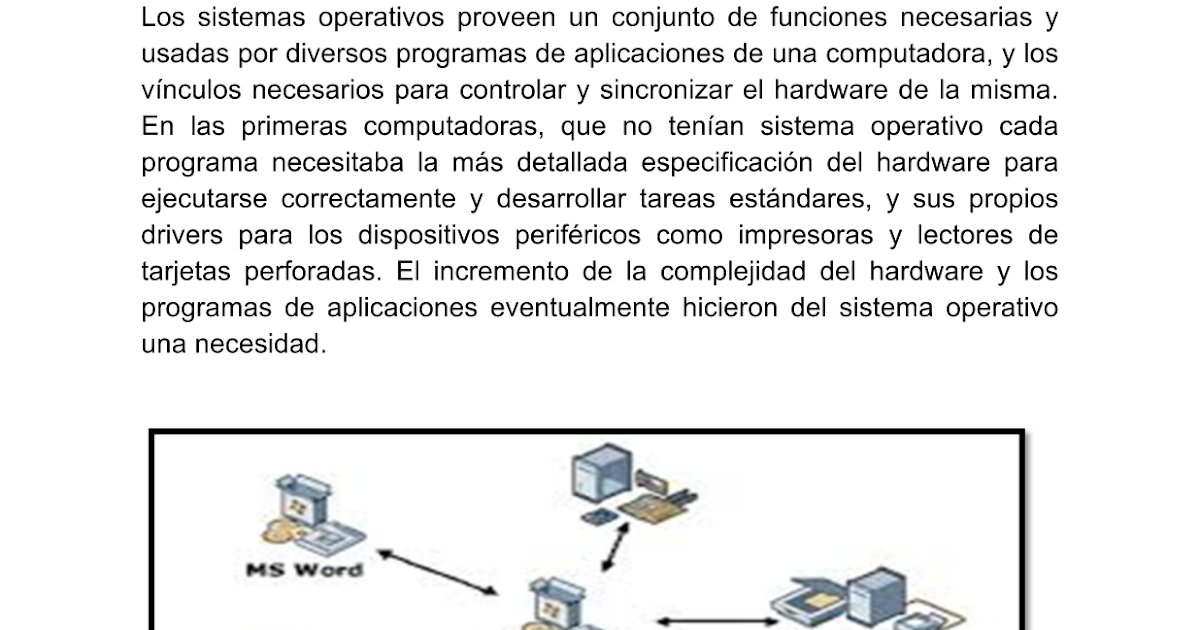
By the 60s, computing had taken a leap forward thanks to the arrival of integrated circuits. This is where things get interesting with the emergence of multiprogramming . Instead of a single program occupying the CPU and leaving it idle while waiting for an input or output operation, the operating system would switch to executing another task, thus leveraging process management in operating systems to optimize resource allocation.

To improve interactivity, a multi-user model was adopted using time-sharing . Unlike simple multiprogramming, here the system pauses the application after a short period to allow another user, enabling several people to work on the computer simultaneously via online terminals.
This period also saw the emergence of real-time systems, designed to process external events within very strict timeframes. If the system failed to respond within the expected timeframe, it was considered a critical failure, a vital concept based on the principles of real-time electronic systems , particularly in the telecommunications and industrial control sectors.
The era of large systems and the birth of UNIX
Between the mid-60s and 70s, IBM launched the System/360 family, designing general-purpose machines that were veritable behemoths. These systems were capable of handling batch processing, time-sharing, and multiprocessing simultaneously, although they were extremely expensive and complex to develop, often exceeding their original budgets.
In this context, the 70s were pivotal with the creation of UNIX at AT&T's Bell Labs. UNIX was a landmark because it was one of the first operating systems written in a high-level language , laying the foundation for almost everything we use today. Alongside it, other projects emerged, such as Multics and Gary Kildall's popular CP/M, which became the standard for early microcomputers.
The rise of personal computing and graphical interfaces
With the advent of large-scale integration (LSI) circuits, computers began to enter homes. Performance ceased to be the sole priority, and the focus shifted to making the system user-friendly for the average user , leading to the development of menus and graphical user interfaces (GUIs).
In the 80s, Microsoft dominated the scene with MS-DOS, which originally came from the purchase of a system called QDOS. Meanwhile, in 1984, Apple launched the Macintosh, which surprised the world by introducing the use of the mouse and a visual interface , something that at the time was dismissed as a "toy" by command-line purists.
During this stage we also saw other interesting attempts:
- AmigaOS: Pioneer in multimedia capabilities in 1985.
- OS / 2: A joint project between IBM and Microsoft that ended up being managed solely by IBM.
- BeOS: Focused on high multimedia performance and efficiency.
Modern systems: From the Linux kernel to the stability of NT
In the 90s, the landscape diversified enormously. GNU/Linux emerged, a free version of Unix based on the POSIX standard. Thanks to its open-source nature and robust permissions system, Linux has become the foundation of free operating systems for servers and supercomputing, with well-known distributions like Ubuntu and Debian.

On the other hand, Microsoft made a qualitative leap with Windows NT (New Technology). Unlike the first versions of Windows, which were simple layers on top of MS-DOS, NT was a stable system with its own graphical interface , geared towards workstations and servers, laying the foundation for modern Windows and its Windows file systems.
Apple also evolved with Mac OS X, based on Darwin and the XNU kernel, integrating Unix and BSD services to achieve a level of stability that previous versions lacked. This architecture enabled advanced memory management and much more efficient symmetric multiprocessing.
Specialized projects and current free software
The ecosystem continues to grow with highly specific projects. There's ReactOS, which aims to be a Windows NT clone for binary compatibility, and FreeDOS, which seeks to be a free and compatible alternative to the old MS-DOS. There are also optimization gems like lightweight operating systems for reviving older PCs, such as SymbOS, designed for very limited hardware but with an aesthetic similar to Windows 95.
In the Unix realm, Solaris evolved into OpenSolaris and subsequently gave rise to projects like Illumos and OpenIndiana, keeping the legacy of Sun Microsystems alive. Finally, Haiku follows the spirit of BeOS, focusing on efficient personal and multimedia computing.
The trajectory of operating systems has been a constant path towards abstraction, allowing the end user to not have to worry about the physical details of the hardware but to interact with an optimized and secure virtual machine that facilitates any everyday task.
