- Artificial intelligence is maturing and integrating into marketing, operations, cloud, and security, with AI agents and synthetic data changing how decisions are made and purchases are made.
- The technology ecosystem is evolving towards hybrid, multicloud and edge architectures, reinforcing technological sovereignty, resilience and advanced cybersecurity requirements.
- Companies are focusing on smart operations, extensive automation, and data analysis, while marketing is betting on inclusion, micro-communities, and a culture of indulgence.
- Competitiveness will depend on digital talent, continuous training, well-managed hybrid work, and a technology strategy aligned with sustainability.
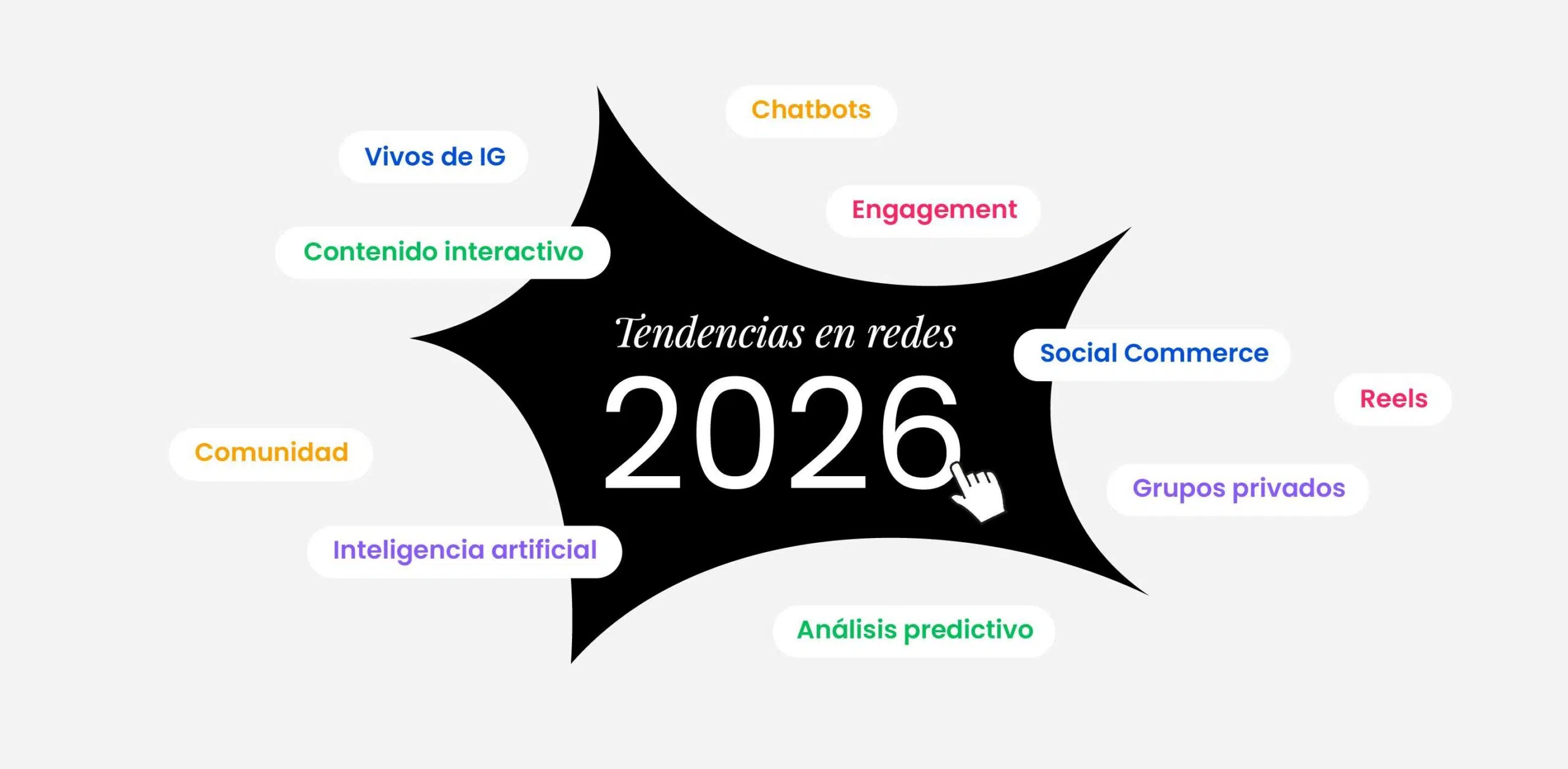
The digital trends that will dominate the landscape in 2026 are far more interconnected than they appear: artificial intelligence, cloud computing, cybersecurity, data, immersive experiences, sustainability, and digital talent are all intertwined to redefine how companies operate and how we live our daily lives. Far from being a mere list of technological fads, we're talking about a profound shift in how we make decisions, engage with customers, and compete in increasingly turbulent markets.
As these technologies mature, the pressure on organizations to adapt skyrockets : it's no longer enough to simply "have a digital presence" or launch an AI pilot; these advances must be integrated into the business architecture , the company culture, and the way results are measured. And, above all, this must be done responsibly, securely, and with a people-centered approach, because without trust, no transformation is worthwhile.
Marketing trends and consumer behavior in 2026
In the field of marketing, 2026 brings a clear shift: we're moving from fighting solely for attention to competing for purchase intent in an environment dominated by AI agents . More and more users are delegating searches and decisions to intelligent assistants, automated comparison tools, and shopping agents, so brands are no longer just targeting people, but also these "non-human consumers" who filter options and recommend products.
This means companies will have to optimize their online presence so that AI models recognize and choose them , while simultaneously cultivating emotional connections with people through traditional and digital channels. The game is played on two levels: pleasing the algorithm while building a human, approachable, and purposeful brand.
In parallel, a powerful social trend is taking hold: the so-called "treatonomics" or "culture of indulgence," where small, everyday pleasures replace major life milestones as the primary source of reward. In a context where buying a house or starting a family is inaccessible or simply undesirable for many young people, micro-moments of celebration are multiplying: a gourmet treat, a brief experience, a fashionable accessory, a digital subscription…
For marketers, this raises an uncomfortable but necessary question: are their products and services bringing joy and a sense of control to people's daily routines, or do they only appear at specific moments? Brands that can fit into these small daily rituals will gain relevance and loyalty, even if the average purchase value is low.
Another key factor is inclusion: truly inclusive marketing is no longer just a pose; it's a real driver of growth and brand building . Consumers increasingly value companies that champion diversity and authentic representation, moving away from superficial messages and campaigns that simply tick a box without any real change. In a climate of polarization, brands that clearly lead by their values, innovate inclusively, and maintain consistency over time will emerge stronger.
On social media, the impact of generic, mass-market content is weakening, while micro-communities with highly specific interests are gaining strength . Faced with saturated algorithms and impersonal spaces, users are finding refuge in smaller groups where they feel a genuine sense of belonging. For brands, this means prioritizing authenticity and relevance over mere reach: a group of highly engaged fans is worth more than thousands of indifferent followers.
Generative AI, intelligent agents, and synthetic data
Generative AI, in particular, is establishing itself as a cross-cutting tool capable of producing content, code, designs, reports, and recommendations in a matter of seconds . Companies use it to create personalized campaigns, generate technical documentation, develop visual prototypes, and even write support responses. But the next step is to stop seeing it as a "quick fix" and make it a stable component of their strategy.
In this new landscape, AI agents are making a powerful entrance—systems that not only respond but also act on behalf of the user to search for information, compare products, negotiate prices, process orders, or manage issues. As these agents gain autonomy, they become a new type of audience that brands must cultivate, because they will be the ones filtering and prioritizing the available options.
To better understand their audiences and test strategies, many organizations are starting to work with synthetic data and digital twins : AI-generated simulations of customers or environments that allow them to experiment without exposing real data. This approach is enhanced by the integration of text, voice, image, and virtual reality, creating immersive testing environments where it's possible to anticipate behaviors and adjust campaigns.
However, the quality of the results will depend directly on the quality of the training data and the protective measures in place. Companies need robust data governance policies, ethical controls, human oversight mechanisms, and trusted partnerships with technology providers to prevent bias, leaks, and misuse.
AI literacy is becoming a basic skill for the general population: understanding what a model does, what its limitations are, and how to leverage it safely. This is why short, highly practical training courses are proliferating, explaining the essential concepts of AI applied to everyday life , from writing better prompts to automating small, repetitive tasks with assistants and workflows. At a professional level, interest is skyrocketing in automation courses using tools like Zapier or Power Automate, which allow for integrating applications and reducing manual workloads.
Cloud 3.0, edge computing and technological sovereignty
The cloud ecosystem is entering a phase of maturity where hybrid, multicloud, private, and sovereign architectures are no longer the exception but the norm . Large-scale AI, particularly generative AI and agentic systems, demands much more flexible, powerful infrastructures located closer to the point of data generation.
Under the umbrella of “ Cloud 3.0 ” are grouped environments where the traditional public cloud coexists with private clouds, on-premises solutions, edge computing, and sovereign cloud . The goal is to balance performance, cost, latency, regulatory requirements, and data control without being overly dependent on a single provider. This diversity increases resilience but also adds complexity to management.
In parallel, technological sovereignty is emerging as a strategic priority for both governments and businesses. Rather than seeking total autonomy (impossible in an interconnected world), the idea is to move towards resilient interdependence that reduces geopolitical and supply chain risks . This includes diversifying suppliers, investing in sovereign clouds, promoting alternative chip ecosystems, and deploying local AI models when regulation or confidentiality demands it.
For organizations, navigating this new phase of the cloud smoothly means strengthening internal capabilities, modernizing governance , and designing portable architectures that allow for seamless transitions between providers or environments. The most in-demand skills combine in-depth cloud knowledge, business acumen, advanced security, and the ability to orchestrate complex infrastructures.
Cybersecurity, digital identity and trust
As technological dependence grows, cybersecurity is no longer just a "technical" issue, but a fundamental condition for peace of mind at work, at home, and in personal life . Clicking on a malicious link, using unsecured Wi-Fi, or reusing a password can trigger data theft, service disruptions, or serious financial losses.
The prevailing approach is Zero Trust architecture: no user, device, or application is trusted by default , even if they are within the organization's perimeter. Every access request is continuously validated, applying strong authentication, network segmentation, and constant monitoring for anomalous behavior.
AI also plays a crucial role here: advanced detection algorithms make it possible to identify attack patterns before they materialize , automate initial responses, and reduce reaction time. This is especially important in cloud environments and digital supply chains, where a failure in one link can impact dozens of partners.
On an individual level, managing one's digital identity is more important than ever. Every record, post, permission, or photograph leaves a trace; therefore, people need tools and knowledge to control their digital footprint and decide what to share and what to protect . This includes learning how to use password managers, multi-factor authentication, virtual private networks (VPNs), and privacy settings on services and devices.
At the corporate level, companies have an obligation to strengthen their data protection policies to comply with regulations such as the GDPR and emerging AI legislation. Beyond avoiding penalties, it's about building trust with customers, employees, and partners by demonstrating transparency in data use, ethical criteria in algorithms, and the ability to respond to incidents.
Business digitization, automation, and smart operations
Digital transformation rests on a clear idea: digitizing for digitization's sake is no longer effective ; what matters is redesigning processes to be faster, more reliable, and more useful for the customer. By 2026, automation will move from isolated tasks to end-to-end connected workflows, powered by AI and real-time data.
Robotic process automation (RPA) is becoming a key tool for eliminating repetitive tasks in areas such as invoicing, reconciliation, report generation, and inventory management . At the same time, enterprise applications (ERP, CRM, service tools) are increasingly being integrated into unified platforms that break down silos between sales, marketing, operations, and support.
The next leap is that of so-called "intelligent operations": systems cease to be mere repositories of information and become active engines that monitor processes, propose improvements, resolve exceptions, and orchestrate workflows with the help of AI agents. Finance, supply chain, human resources, and customer service begin to operate more proactively than reactively.
Advanced analytics and predictive analytics allow decisions to be based on solid evidence: demand forecasts, customer segmentation, risk models, and scenario simulations. The challenge is no longer just collecting data, but transforming it into actionable information that everyone can understand , through clear dashboards, user-friendly visualizations, and data narratives tailored to the business.
In sectors like management software, new regulations (such as tax registration and verification obligations) are also coming into play, pushing companies to update their solutions, review integrations, and ensure traceability . Those who anticipate these regulated changes will not only avoid problems but also gain a competitive advantage.
Training, digital skills and hybrid work
All this technological development is useless if people don't have the necessary skills to leverage it. That's why digital talent has become one of the scarcest and most strategic assets for any organization . It's not just about hiring highly technical profiles, but about raising the average digital level of the entire workforce.
AI literacy, understanding cybersecurity risks, digital identity management, data skills, and fluency in using collaboration tools are becoming as essential as knowing how to use email. The solution lies in continuous, modular, and highly practical training programs that allow learning at different paces and levels, from short courses to more in-depth programs.
Data analysis is a good example: while not everyone will become a data scientist, understanding a dashboard, table, or graph is key to making decisions in purchasing, healthcare, personal finance, or professional projects. Tools like Power BI, advanced spreadsheets, and interactive dashboards are becoming a common language between business and technology.
Hybrid work, meanwhile, is no longer an emergency solution but has become a stable model in many organizations . This involves designing processes specifically for the digital environment: asynchronous coordination, clear documentation, more focused meetings, and physical spaces adapted to collaboration when the team is in the same place.
Applications like Notion, collaborative office suites, and cloud-based project management tools help organize tasks, share information, and maintain visibility into everyone's work. There's also a growing awareness of ergonomics, mental health, and risk prevention in the home-office environment, so the remote workspace is being cared for almost as much as the physical office.
Immersive experiences, quantum computing and sustainability
Immersive experiences are taking a qualitative leap with the maturation of augmented and mixed reality. We're no longer just talking about video games or social media filters: education, tourism, healthcare, industry, and design are beginning to experiment with environments where digital information is overlaid on the physical world to educate, guide, or assist people.
From interactive guided tours to visual maintenance manuals and clinical simulations, augmented reality is emerging as a versatile tool for learning and working more intuitively . You don't need to be an expert to get started: all you need are compatible devices and a curiosity to explore new ways of interacting.
Meanwhile, quantum computing is quietly advancing toward practical applications. Although still far from widespread use, tangible results are expected in areas such as molecular simulation, logistics optimization, and advanced data analytics . Companies that stay informed now, identify use cases, and forge alliances with specialized providers will be better positioned when these capabilities become more commonplace.
All of this is happening under the lens of sustainability, which is becoming a decisive criterion for customers, investors, and regulators. The so-called "Green IT" promotes more efficient data centers, the use of renewable energy, and circular economy policies to reduce electronic waste and extend the lifespan of devices . Service models (pay-per-use, technology leasing, refurbishment) are gaining ground over impulsive hardware purchases.
Companies' reputations will be increasingly linked to their environmental, social, and governance (ESG) performance. Communicating transparently about consumption, emissions, and energy efficiency efforts is not just about image: it directly influences customer loyalty and talent attraction , especially among younger generations.
Everything points to the emerging digital trends forming a complete ecosystem: AI is maturing and becoming integrated into business strategy, cloud infrastructure is diversifying and moving closer to the edge, cybersecurity and technological sovereignty are gaining importance, marketing is shifting towards intent and inclusivity, hybrid work and continuous learning are becoming the norm, and sustainability is acting as a common thread. Organizations that embrace this change as an ongoing process, supported by quality data, constant innovation, and a deep respect for people, will have a much greater chance of turning disruption into a competitive advantage.
