- Full Stack Developers handle both the frontend and backend of web applications, creating complete solutions.
- Mastering programming languages like JavaScript, Python, and SQL is critical to your success.
- Knowledge of frameworks and databases is vital to developing efficient and scalable applications.
- Communication and teamwork skills are crucial to understanding client needs and collaborating effectively.
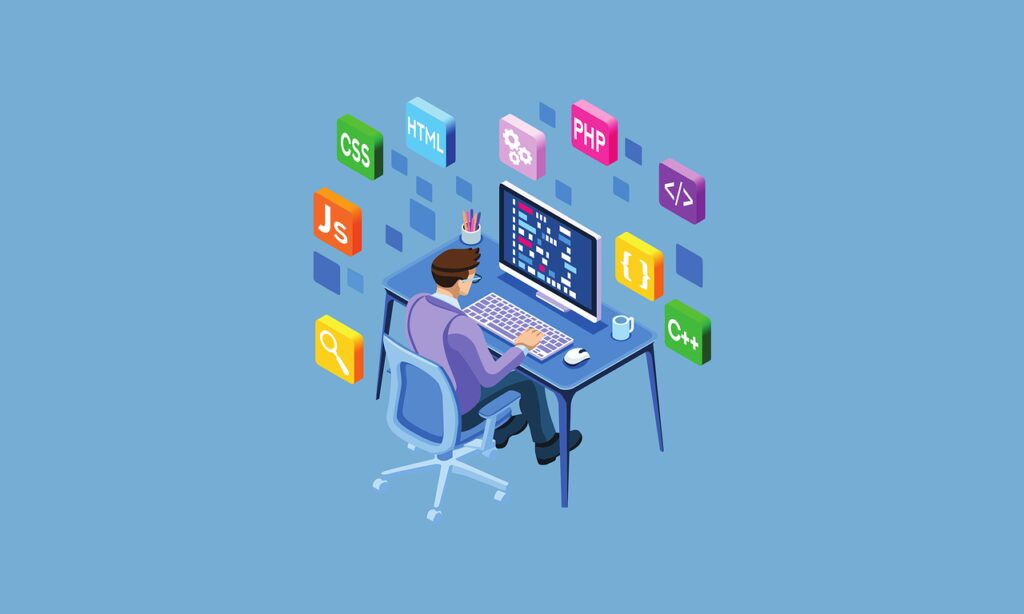
The world of web programming is exciting and challenging, and becoming a successful Full Stack Developer is an achievable goal for those willing to constantly learn and evolve. In this article, we will explore the 5 crucial skills every Full Stack Developer must master to succeed in this ever-changing industry.
What is a Full Stack Developer?
A Full Stack Developer is a versatile professional who has the ability to work on both the client and server side of a web application. This means they can handle both user interface (frontend) development and server and database (backend) development. Full Stack Developers are highly valued in the tech industry due to their ability to build complete web applications from scratch.
Skill 1: Mastery of Programming Languages
To become a successful Full Stack Developer, you need to have a deep knowledge of several programming languages. Here are some of the most important ones:
JavaScript
JavaScript is essential for frontend development. It is the primary language for creating dynamic interactions on websites and applications.
HTML and CSS
HTML and CSS are the foundations of web development. HTML is used to create the structure of a web page, while CSS takes care of the layout and presentation.
Python
Python is widely used in backend development due to its ease of use and ability to handle complex tasks.
Ruby
Ruby is known for its simplicity and elegance. It is the language behind the popular Ruby on Rails framework.
SQL
SQL is essential for working with databases. You must be able to create and manage databases effectively.
Skill 2: Knowledge of Frameworks
Frameworks are sets of tools and libraries that make it easier to develop web applications. Some of the most popular frameworks for Full Stack Developers are:
React
React is a widely used JavaScript library for building interactive and reactive user interfaces.
Angular
Angular is a JavaScript framework developed by Google that makes it easy to create complex web applications.
Node.js
Node.js is a JavaScript runtime environment that enables developers to build highly scalable server applications.
Express.js
Express.js is a Node.js framework that simplifies the creation of web servers and APIs.
Ruby on Rails
Ruby on Rails is an open source web development framework that promotes simplicity and productivity.
Skill 3: Understanding Databases
A Full Stack Developer must be able to design, create and maintain efficient databases. Some of the most commonly used databases are:
MySQL
MySQL is an open source relational database widely used in web applications.
MongoDB
MongoDB is a NoSQL database that is ideal for handling unstructured data.
PostgreSQL
PostgreSQL is another open source relational database known for its robustness and scalability.
Skill 4: Knowledge of Servers and Web Hosting
You need to understand how the web infrastructure works and how to deploy your application to a server. Some key skills include:
Server Management
Learning how to manage web servers is essential to ensuring your application is online and running properly.
Web Hosting
You need to know the web hosting options and how to choose the most suitable one for your projects.
Security
Online security is crucial. You need to be aware of security best practices and protect your application from cyber threats.
Skill 5: Communication and Teamwork Skills
Being a successful Full Stack Developer is not just about technical skills. You must also be able to communicate effectively with other team members and understand client needs.
EFFECTIVE COMMUNICATION
You must be able to express your ideas clearly and understandably, both in written and verbal communication.
Teamwork
Collaboration is key in software development. Working well as a team ensures an efficient workflow and high-quality results.
Understand Customer Needs
To develop successful applications, you must understand customer goals and expectations and translate them into technical solutions.
FAQ
1. How long does it take to become a Full Stack Developer?
Becoming a Full Stack Developer can be a journey that varies from person to person, based on several factors including individual aptitude, prior programming experience, and time spent daily to learn and practice. In general, it can be estimated that it will take at least two years of constant learning and practice to reach an initial level of competency. During this period, aspirants will have to learn a variety of technologies, programming languages, and also work on practical projects to gain real-world experience. Some people might be able to shorten this time if they have a prior education in computer science or have experience in software development. Additionally, quality learning resources and guidance from experienced mentors can significantly speed up the learning process.
2. What is the average salary of a Full Stack Developer?
The salary range for a Full Stack Developer can vary widely depending on the geographic region, level of experience, and the company they work for. In countries with developed economies, salaries are generally higher compared to developing regions. For example, in the United States, salaries can range from $50,000 to $100,000 annually or even more, depending on experience and location. Additionally, Full Stack Developers with specialized skills or experience in in-demand technologies can command even higher salaries. It is vital for Full Stack Developers to stay up to date with emerging technologies and the skills required in the industry to maximize their earning potential.
3. Is it necessary to have a college degree to be a Full Stack Developer?
It is not strictly necessary to possess a college degree to become a Full Stack Developer. Many people have successfully transitioned into a career in software development through self-education, using online resources, tutorials, and programming courses. Additionally, there are intensive coding bootcamps designed to take individuals from zero to employable level in a relatively short period of time, such as 3 to 6 months. However, a degree in computer science or a related field can provide a solid foundation of theoretical knowledge and could make the process of finding employment easier, especially at companies that still value academic credentials.
4. What advice do you have for constantly learning in this evolving industry?
The technology industry is constantly changing, which requires a commitment to continuous learning. Stay up to date with the latest trends and emerging technologies by subscribing to blogs, industry magazines, and participating in online communities such as forums and social media groups. Additionally, attending local conferences, webinars, and meetups can provide valuable networking and learning opportunities. Try and learn new programming languages or frameworks on personal projects or contribute to open source projects. Also, consider finding a mentor in the industry who can provide valuable guidance and feedback.
5. What is the biggest challenge of being a Full Stack Developer?
The main challenge for Full Stack Developers is keeping up with the rapid evolution of technology and the proliferation of new tools, languages and frameworks. The nature of the Full Stack role means that developers need to have a broad understanding of both front-end and back-end development, which can be overwhelming given the pace of change in both areas. Additionally, they may be faced with the complexity of working on large, multi-faceted projects, which requires good problem-solving and team-working skills.
6. What final advice do you have for those who want to become successful Full Stack Developers?
For those aspiring to be successful Full Stack Developers, the key lies in never stopping learning and maintaining a genuine passion for technology. Look for opportunities to apply your knowledge in real projects, whether through employment, freelancing, or contributions to open source projects. Also, build and maintain a strong network of professional contacts who can provide you with opportunities and advice throughout your career. Also, develop soft skills such as effective communication, time management, and problem-solving, as they are equally important for success in this industry.
Conclusion
Becoming a successful Full Stack Developer takes time, dedication, and a constant commitment to learning and improvement. Mastering the skills mentioned above will help you stand out in the web programming industry. Don't hesitate to embark on this exciting career and build a successful future in web development!
Share this article!
If you found this information useful, please share it with other aspiring Full Stack Developers to help them on their journey to success in the world of web programming.