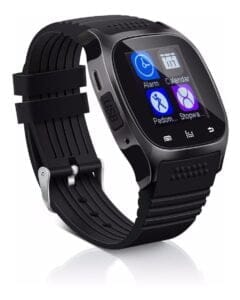
- Pebble OS was released; Eric Migicovsky announces project to revive watches after running the system on modern hardware.
- The prototype uses the nRF52840 chipset (Bluetooth 5.3), improving connectivity and energy efficiency compared to the Bluetooth 4.1 from 2016.
- Possible compatibility with NFC, Bluetooth Mesh, Thread and Zigbee, enabling contactless payments and advanced integration with smart devices.
- Open source on GitHub invites developers to create spheres, apps, and optimizations, fostering an ecosystem and different versions of Pebble OS.

Since Pebble closed its doors after being acquired by Fitbit in 2016, many enthusiasts have dreamed of the return of its iconic smartwatch, a topic you can learn more about in our article on smartwatches and their uses . Now, that dream seems closer to becoming a reality thanks to the release of the Pebble OS source code , which has opened the door to new devices that can run this operating system.
Eric Migicovsky, founder of Pebble , has announced that the project to revive these watches is underway. In a recent blog post, he shared that they have successfully run Pebble OS on modern hardware, paving the way for future versions of the device.
New hardware for an improved experience
One of the most significant advances in this resurgence is the ability to adapt Pebble OS to current components . In this first prototype, the system has been run on a Bluetooth 5.3 chipset (nRF52840), which offers significant improvements in connectivity and energy efficiency compared to the Bluetooth 4.1 used in the last Pebble model released in 2016.
This new hardware will not only retain all the features of the original Pebble, but could also bring improvements such as compatibility with NFC, Bluetooth Mesh, Thread, and Zigbee . These new technologies could give the device more advanced capabilities , such as contactless payments or smoother integration with other smart devices.
A community of developers to drive the resurrection
The project not only aims to bring back the original devices, but also to create an ecosystem around Pebble OS . To achieve this, collaboration from the developer community will be key. Through GitHub, those interested can contribute not only to improving the operating system, but also to creating new features and applications for the Pebble ecosystem.
The ways developers can participate include creating new watch faces , developing applications, or even improving system connectivity and performance. All of this will help ensure that the evolved Pebble OS platform truly makes an impact on today's market.
Furthermore, the open-source nature of the project means that anyone can contribute to, explore, and modify the software to suit their own needs. This could lead to multiple versions of Pebble OS optimized for different types of hardware.
A renaissance with a lot of potential
While details are still lacking on whether this revival will result in a commercially viable product, the initiative to bring back Pebble OS and adapt it to current hardware represents a unique opportunity for Pebble enthusiasts . The combination of an active developer community and the possibility of using modern technologies could mark a new era for this watch that once revolutionized the wearables market.
Time will tell if this Pebble revival manages to capture the public's interest beyond first-generation enthusiasts, but the fact that advances have already been made in hardware and software indicates that the project has a solid foundation to move forward.