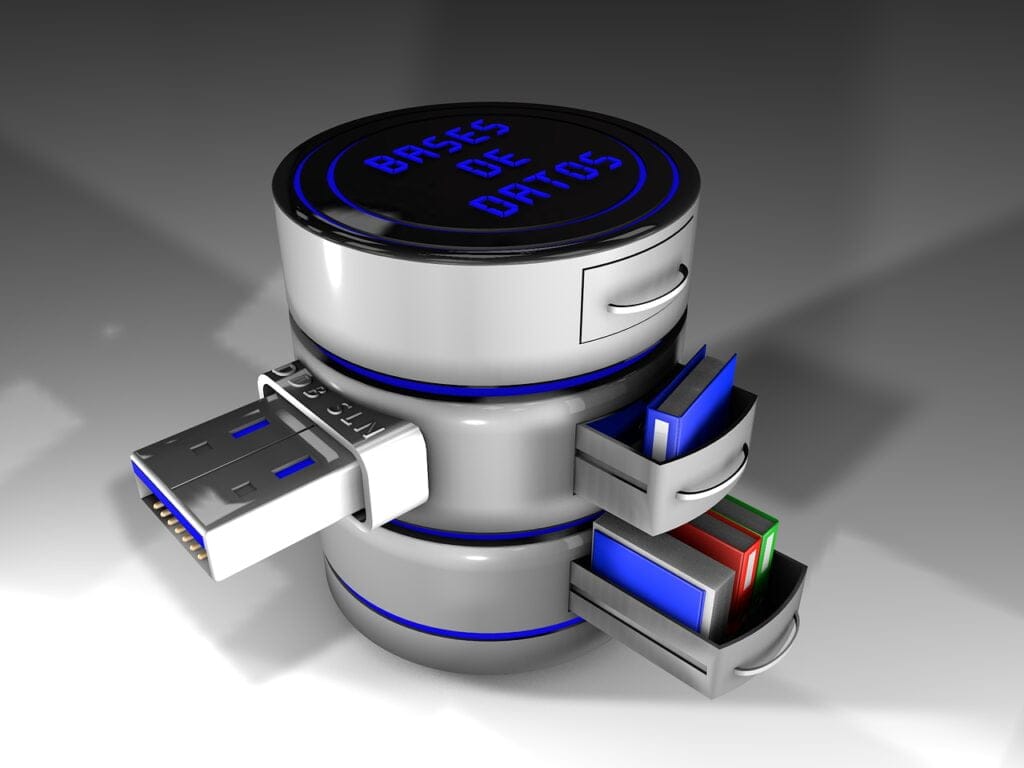
Are you looking for an alternative to traditional relational databases? Non-relational databases may be the answer. In this article, we'll explore what exactly non-relational databases are, their main features, and the different types that exist. Plus, we'll present some examples to help you decide if this option is right for your business. Ready to dive into the world of non-relational databases? Read on!
Introduction
If you've worked in the world of databases , you've probably heard the term "non-relational." Simply put, a non-relational database is one that doesn't follow the traditional structure based on tables and relationships. Instead, it uses different methods to store and organize data.
This type of database has become increasingly popular due to its ability to handle large amounts of unstructured information. As businesses generate more and more data every day, many are turning to these innovative solutions to manage it effectively.
Relational vs. Non-Relational Databases
Relational databases have been the default choice for decades, but recently there has been a shift towards non-relational databases. The main difference is that relational databases use tables and relationships between them to store information, while non-relational databases use different models.
Although both systems have their advantages and disadvantages, the truth is that the growing volume of data means that many companies are increasingly opting for non-relational systems due to their ability to handle large volumes of information without sacrificing speed or scalability.
Key features
Non-relational databases are characterized by having a flexible structure that allows the storage of large amounts of information, without following a fixed and predefined scheme. This means that they can easily adapt to different needs and types of data, which makes them very versatile.
Opting for a non-relational database brings many advantages. These databases are widely scalable, meaning they are capable of handling large volumes of information without any issues, even in distributed and cloud-based environments. Additionally, non-relational databases can process large amounts of information in variable environments with flexibility.
Advantages and disadvantages
Non-relational databases have their advantages and disadvantages. For one, these databases are much more flexible than relational ones, meaning they can handle a large number of different data types. Additionally, they are horizontally scalable, making them a good choice for growing businesses.
On the other hand, non-relational databases also have some disadvantages. They can be difficult to understand and manage due to their complexity. Also, they may lack proper support and documentation compared to their more popular relational counterparts.
Examples of non-relational databases
Non-relational databases can be useful when it comes to storing large amounts of information that changes frequently. Popular examples include MongoDB, Cassandra, and Couchbase.
MongoDB is a document database that uses JSON documents to store information, while Cassandra is designed to handle large amounts of data distributed across multiple servers. On the other hand, Couchbase combines the horizontal scalability of the key-value model with the flexibility of the document model. There are several options available on the market for those interested in experimenting with the advantages offered by non-relational databases.
Types of non-relational databases
Non-relational databases can be divided into several types, each with its own way of storing and accessing data. One of the most common types is the key-value database. In this type, each item is stored as a unique key-value pair and can be quickly retrieved by its key.
Another popular type is document databases, which store data in structured JSON or XML documents . Queries can be performed using the MongoDB Query Language (MQL), allowing for great flexibility and scalability in managing large volumes of information.
Key-value databases
Key-value databases are a type of non-relational database that stores data in key-value pairs. These databases are commonly used for applications with large volumes and varieties of data as they offer high scalability.
Each value in the database is linked to a unique key, allowing for rapid retrieval of data by identifying it by the key. In addition, key-value databases can be distributed across multiple servers to handle large amounts of information.
Documentary databases
Document databases are an attractive alternative for those who manage large amounts of unstructured information. These databases allow for storing complete documents instead of fragmenting information into tables and columns.
Unlike relational databases, document databases have a flexible and dynamic schema that allows them to easily adapt to changes or updates. Furthermore, their ability to work with different formats and file types makes them a highly versatile tool for the analysis and processing of large amounts of data.
Graph databases
Graph databases are a type of non-relational database that stores information as interconnected nodes. Each node represents an entity and relationships are established using edges.
This model is very useful for representing complex networks, such as social networks or recommendation systems. In addition, graph databases allow highly efficient and scalable queries thanks to their ability to perform deep and fast searches within the graph.
Object databases
Object databases are a specific category within non-relational databases. Unlike other forms, this type allows for the direct creation and storage of complex objects rather than the use of tables.
In these databases, objects are stored as individual units with unique identifiers that can be easily retrieved or modified. In addition, the schema does not need to be defined in advance, allowing greater flexibility in its use for systems that handle large amounts of varied information.
Columnar databases
Columnar databases store data in vertical columns, rather than horizontal rows as relational databases do. Each column has a specific type and name, allowing for greater efficiency in searching and retrieving information.
Due to their ability to expand without affecting the fluidity of their systems, these databases are the best tool for those companies that present an increasing amount of information, since they allow them to store and analyze data without any inconvenience.
Multivalued databases
Multivalued databases are a variety of non-relational databases that allow multiple values to be stored in a key-value pair. This means that each key can have more than one associated value, which is very effective for handling large amounts of information.
An important advantage is flexibility, as it allows adding new fields and values without having to modify the entire previous structure. However, its complexity can make access to data difficult if you do not have appropriate tools or specialized technical knowledge.
How to choose the right database?
When choosing a non-relational database, it is important to take into account our needs and the requirements of the project. For example, if we need to store large amounts of data that must be processed quickly, the ideal would be to opt for graph or column databases.
It is also essential to consider the type of information to be managed. If our database must contain complex objects with multiple attributes, then we should choose a document or object-based database. To choose the appropriate database, we must carefully analyze our requirements and look for the option that best suits them.
Conclusion: Are non-relational databases the best option?
Having explored non-relational databases, we can say that they offer an interesting alternative to traditional relational databases. While it is true that they have limitations in terms of the complexity of the data they can handle and their ability to perform complex queries, it is also true that they are highly scalable, flexible and efficient.
The choice between a relational or non-relational database will depend primarily on the type and amount of information you want to store, as well as the use you will give it. In general, non-relational databases are ideal for web and mobile applications with large volumes of information and high concurrency.
In conclusion, although each case must be evaluated individually before making a final decision on what type of database to use, non-relational databases represent an attractive and innovative option for those projects in which scalability and flexibility are critical factors.