- The EU is pushing for a Chip Law 2.0 to address vulnerabilities and accelerate key investments.
- Three pillars: R&D and pilot projects, security of supply, and crisis response.
- Semicon/SEMICOM Coalition and industry align funding, talent, and sustainability.
- Spain strengthens its commitment to SETT and PERTE Chip in line with Brussels.
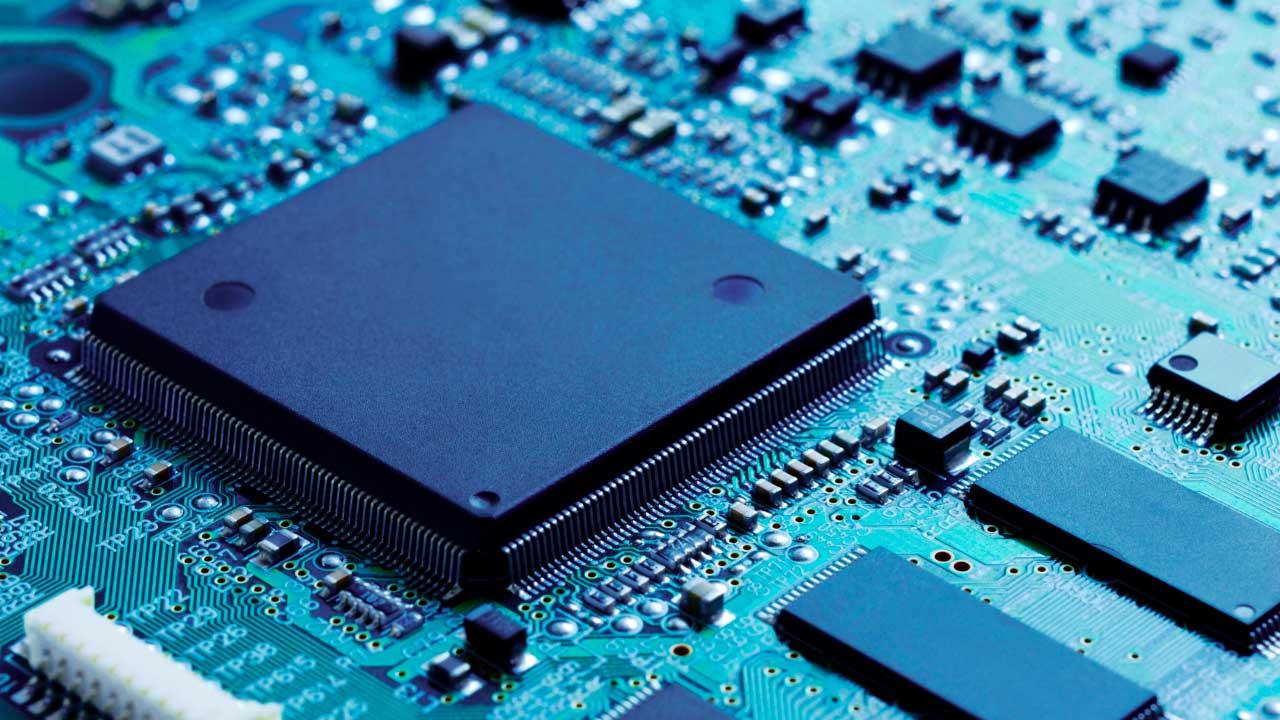
The semiconductor industry underpins much of our digital life and the economy, from the cars we drive to our mobile phones and cloud services. Following the recent global shortage, Europe has set out to strengthen its technological independence with a revamped roadmap: the so-called "Chip Law 2.0 ," an ambitious overhaul to close gaps, accelerate investment, and bolster the resilience of the supply chain.
The first European Chip Law came into force in 2023 with very clear goals, but market performance has forced a rethink of objectives, funding, and implementation . With all Member States aligned in a grand coalition and the Commission gathering input from industry, the focus is now on translating the lessons learned into a more precise, rapid, and effective strategy.
Why does Europe need a new Chip Law?
Chips are at the heart of almost everything electronic: automotive, communications, data centers, defense, space, smart devices, and gaming, among others. The recent supply crisis demonstrated the extent to which concentrated global production can paralyze factories, create shortages of essential products, and strain supply chains . To prevent this from happening again, the EU activated a comprehensive regulatory package to bolster its semiconductor ecosystem.
This package, in force since September 21, 2023, combined several elements: a Strategic Communication for the sector, the Regulation of the Chips Act itself, an amendment to the Council Regulation that created the Joint Undertaking for Key Digital Technologies, and a Recommendation to Member States to monitor and mitigate disruptions in the supply chain. This framework lays the foundation for more refined public-private coordination and a more agile response to crises.
What does the European Chip Law aim to achieve?
The law strengthens the European ecosystem with a focus on resilience and reducing critical dependencies. Its key policy objective was to double Europe's overall market share to 20% by 2030, a challenge requiring large-scale investment and capabilities.
To achieve this, it articulates five strategic objectives: strengthening research and technological leadership ; enhancing the capacity to innovate in design, manufacturing and advanced packaging; creating a fertile environment to scale production by 2030; attracting talent and overcoming the skills gap ; and developing a deep understanding of the global semiconductor chain.
These five objectives are realized through three perfectly defined and complementary pillars of action, with implementation and governance instruments at multiple levels that seek to close the gap from laboratory to factory and provide certainty to industrial investment.
Pillar I – Chips for Europe Initiative
The "Chips for Europe" initiative is driving large-scale technological capabilities, from cutting-edge semiconductors to quantum technologies . Under the Chip Joint Undertaking , five pilot lines are being launched, focused on the development, testing, and experimentation of processes, as well as small-scale production with an industrial perspective, to accelerate the transition from R&D to manufacturing.
A key element is the network of competence centers established in all Member States and Norway, which offer companies (especially SMEs and start-ups) support services, training, and access to large infrastructures created under the Act. This network facilitates access to design, prototyping, testing, and packaging, and acts as a lever to democratize access to cutting-edge technology.
Pillar II – Security of supply and resilience
The EU has created a framework to attract investment and scale up manufacturing, advanced packaging, testing, and assembly capabilities, with the aim of ensuring supply and reducing vulnerabilities. In this context, the Commission has already approved seven state aid decisions for pioneering facilities, mobilizing more than €31.500 billion in public and private funding.
Among the validated projects, different technological hubs and locations stand out, forming a geographically and specialty- balanced industrial mosaic , with an impact on mature and cutting-edge manufacturing, and on high-value packaging:
| Company | Member state | Location | Total investment (billions of €) | Technology |
| STMicroelectronics | Italy | Catania | 0,73 | SiC wafers |
| STMicroelectronics & GlobalFoundries | France | Crolles | 7,5 | 300 mm FD-SOI |
| STMicroelectronics | Italy | Catania | 5 | SiC devices |
| ESMC (TSMC + Bosch/Infineon/NXP) | Germany, | Dresden | > 10 | CMOS, FinFET |
| Silicon Box | Italy | Novara | 3,2 | Advanced packaging |
| Infineon | Germany, | Dresden | 4,46 | Discrete, analog/mixed signals |
| am OSRAM | Austria | Premstätten | 0,567 | CMOS |
In addition, other proposals are still being prepared, while the Commission has published guidelines for recognition as an integrated production facility and as an open EU smelter , in order to simplify procedures, prioritize access to pilot lines and give greater regulatory visibility to investors.
Pillar III – Crisis monitoring and response
The European Semiconductor Council (SEBC), composed of representatives of the Member States and chaired by the Commission, is the central hub for governance and coordination. Its mission is to map the value chain, monitor early warning signs, and activate emergency measures in the event of supply disruptions, continuing the work of the former European Semiconductor Expert Group.
The Semicon Coalition Statement: Towards the "Chip Law 2.0"
In September 2025, the 27 Member States endorsed the Semicon Coalition Declaration , calling for a revised and forward-looking Chip Law. The request emphasizes addressing vulnerabilities, seizing technological opportunities, and strengthening a resilient European ecosystem in the face of global shocks.
In parallel, the Commission launched a public consultation and data call on September 5, 2025, to assess the current performance of the Act and propose adjustments. The entire value chain (and adjacent sectors) is invited to share evidence and recommendations that will help Europe compete globally and strengthen its technological sovereignty.
Europe adjusts its expectations and accelerates the pace
The 2023 Law mobilized more than 43.000 billion euros across various items, with the aspiration of reaching 20% of global chip production by 2030. However, the European Court of Auditors and other analyses have indicated that, with the current situation, the realistic target is around 11,7% by the end of the decade.
In this context, the proposed "Chip Law 2.0" aims to quadruple mobilized investment, ensure more targeted public support, and accelerate the approval of critical infrastructure. The industry has responded with support: organizations such as SEMI (representing some 3.000 companies ) and nearly 50 companies in the sector—including NVIDIA, ASML, Intel, STMicroelectronics, and Infineon—endorse this more precise approach.
The review also aims to correct execution flaws, including the difficulty in retaining and attracting large-scale projects , following incidents such as Intel's withdrawal from a factory in Germany. Prioritizing specific bottlenecks in design, manufacturing, and packaging can make all the difference in gaining traction in key segments.
Five strategic axes shared by the Member States
1) Industry-research-SME collaboration
The proposal aims to forge pan-European alliances that integrate large manufacturers, SMEs, and startups with research centers, fostering complementary ecosystems. The objective is to strengthen the value chain from suppliers to end markets , accelerating technology transfers and new business models.
2) Harmonization of public and private financing
The Declaration calls for coordinating European and national instruments, streamlining approvals for strategic projects, and mobilizing private capital at scale. This financial convergence should underpin the sector's sustainability, with a robust and predictable project pipeline .
3) Training and attracting talent
A strong push is planned to develop advanced technical skills in microelectronics, with educational and continuing training programs that meet the demand for qualified professionals. Without a sufficient talent pool, it is impossible to scale manufacturing, design, and packaging in Europe.
4) Chips for the ecological transition
Microelectronics is a key driver of decarbonization: energy efficiency, power, sensors, and control. Europe aims to promote the development and production of cleaner, more sustainable components , aligned with its environmental goals and with traceability throughout the entire value chain.
5) International collaboration with like-minded partners
Emphasis is placed on forging strategic relationships to secure critical raw materials, diversify suppliers, and strengthen resilience against global disruptions. This alliance agenda aims to avoid excessive dependence and open markets for European industry.
SEMICOM: a platform to coordinate efforts
Established in March 2025, the SEMICOM coalition comprises Austria, Belgium, Finland, France, Germany, Italy, the Netherlands, Poland, and Spain. Its purpose is to foster a coordinated response to international competition and technological dependence on third parties , consolidating capabilities and maximizing the impact of resources.
The recently presented Joint Declaration is the first major outcome of this multilateral effort, now backed by all member states. SEMICOM aims to synchronize industrial agendas, reduce vulnerabilities , and accelerate the implementation of key projects across the continent.
Spain: national policies in line with Brussels
Spain is moving forward in parallel with the EU framework with the PERTE Chip program (over €12.000 billion) to boost the national value chain. The Spanish Society for Technological Transformation (SETT) , created in July 2024, manages these investments and other initiatives such as Next Tech and Spain Audiovisual Hub, channeling public-private co-investment towards productive and technological capabilities.
Spain's focus is on attracting projects, increasing local production, and facilitating technology transfer from research to industry. With a specialized structure, Spain aims to accelerate implementation and position itself in sectors where it offers comparative advantages (power, automotive, design, packaging, testing).
Global context: The US proposal and the domino effect
On the international stage, the US administration has floated a 1:1 trade framework for AI chips: for every chip imported, another must be produced domestically, under penalty of high tariffs . The measure aims to boost industrial sovereignty, but it raises concerns about its immediate impact on supply chains.
Building state-of-the-art factories is not a quick process: Intel's example in Ohio , whose megafactory announced in 2022 is now slated for 2030, illustrates the real timelines. TSMC, for its part, has committed $100 billion over four years to expand its AI chip production in the US, although a one-to-one approach could disrupt the market in the short term.
For Europe—with its European Chips Act—and for countries like Spain (PERTE Chip), this protectionist shift is a wake-up call: external dependence remains a risk. If chip imports become more expensive or restricted, sectors such as automotive, banking, digital services, and defense could face cost overruns and delays in critical supplies.
What professional offices should monitor
The new framework increases regulatory and contractual complexity. For advisory firms, consultancies, and law firms, this opens up new avenues for adding value: identifying clients with high supply risk, renegotiating contracts , and anticipating tax and industry implications.
- Customers exposed to supply risks: especially in technology, automotive, finance and hardware-intensive sectors.
- Increase in litigation and contractual inquiries: due to delays, force majeure clauses and reconfiguration of agreements.
- Public aid and subsidies: guidance for applying for EU and national instruments (PERTE Chip, digitalisation).
- International taxation and tariffs: analysis of the impact of protectionist measures on imports and operations.
Official documents and resources
The European Commission supports the implementation with reference materials and guides (including downloadable widgets on its portals), as well as administrative guidance for integrated production facilities and open foundries, which facilitate priority access to pilot lines.
Medium-term outlook
Over the next few months, the review of the Chip Act will incorporate technical and policy input from governments and industry. The Semicon Coalition Declaration seeks to direct resources toward a shared strategy, with measures that align funding, talent, and production capacity to compete with the major technology hubs.
If Europe acts quickly, adjusts incentives, and accelerates critical projects, it can turn its ambition into tangible results: more production on European soil, more diversified supply chains, and a talent base capable of fueling the next wave of AI, automotive, energy, and defense without falling behind due to a lack of chips.
