- Computer networks facilitate communication, allowing efficient access and sharing of resources.
- There are different types of networks: LAN, WAN and wireless, each with specific applications.
- Networks improve productivity and reduce operating costs by centralizing data and resources.
- Cybersecurity and scalability are key challenges in implementing computer networks.
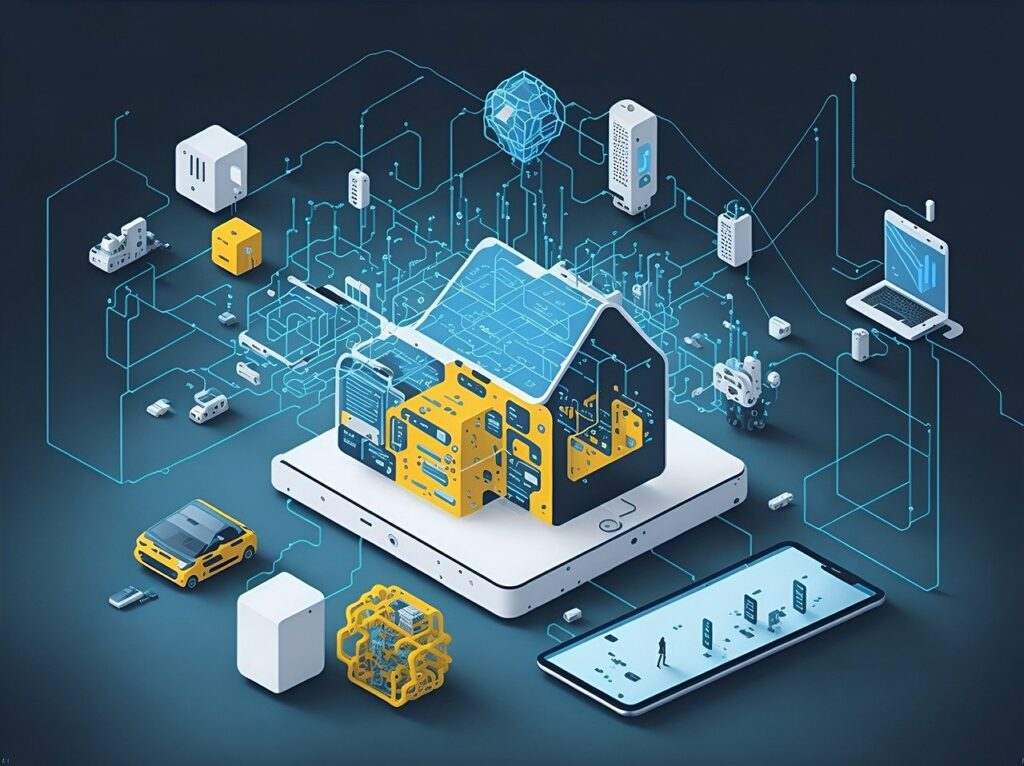
The digital revolution has radically transformed the way we live, work, and communicate. At the heart of this transformation are computer networks, the lifeblood of our hyperconnected world, enabling the constant flow of information. But have you ever wondered what a computer network is really for? Get ready to discover a world of possibilities you may never have imagined!
1. What is a computer network used for?
Imagine for a moment that your office or home is like a living organism. In this scenario, a computer network would be the nervous system that allows all the parts to communicate and work in harmony. But let's go beyond metaphors and explore the concrete functions that make computer networks an indispensable element in our daily lives.
Sharing resources: The essence of collaboration
At the heart of every computer network is the principle of sharing. Have you ever needed to access a file that's on another computer? That's where a network shines. It allows multiple users to access and share resources like files, printers, and Internet connections simultaneously.
Imagine an office where every employee had to get up and walk to a colleague's computer every time they needed a document. It would be chaos! With a computer network, those days are long gone. Now, with a few clicks, you can access that crucial report your colleague just finished, without even getting up from your chair.
But it doesn’t stop there. Modern networks go even further, allowing for real-time collaboration. Platforms like Google Docs or Microsoft 365 harness the power of networks so that multiple people can work on the same document simultaneously. The result? An exponential increase in productivity and efficiency.
Instant Communication: Breaking Geographic Barriers
Remember the days when sending a message to someone in another country meant waiting weeks for a reply? Thanks to computer networks, those days are history. Now, instant communication is the norm, not the exception.
Networks have made it possible for us to communicate with colleagues, friends and family anywhere in the world in a matter of seconds. Whether through email, instant messaging or video conferencing, computer networks have shortened distances and made the world seem smaller.
But communication goes beyond simply exchanging messages. Computer networks have revolutionized how businesses operate globally. Virtual meetings, collaboration on international projects, and even remote work have become everyday realities thanks to the ability of networks to transmit data quickly and reliably.
Centralized storage: A safe haven for data
In the information age, data is the new gold. And like all treasures, it needs a safe place to be stored. This is where computer networks demonstrate another of their superpowers: centralized storage.
Imagine having all your important documents, family photos, and work projects scattered across different devices. It would be a nightmare trying to find something specific, right? Computer networks make it possible to create centralized servers where all this information can be stored safely and in an organized manner.
But the ability to centralize data not only improves organization but also simplifies security management. In addition, network storage makes it easier to implement data backup and recovery policies. If you've ever lost an important file due to a computer failure, you'll understand the invaluable value of having regular, easily accessible backups.
2. Types of computer networks and their applications
Now that we’ve unraveled some of the key functions of computer networks, it’s time to dive into the different types of networks that exist and how they are applied in the real world. After all, not all networks are created equal, and each type has its own strengths and specific use cases.
LANs: The heart of modern offices
Local area networks , or LANs, are probably the type of network you interact with most often in your daily life without even realizing it. Have you ever connected to your office Wi-Fi or printed a document from your computer to a shared printer? Congratulations! You've used a LAN.
LANs are the workhorse of the modern office. They connect devices in a limited geographic area, such as an office building or a university campus. Their main advantage is speed. Designed to cover short distances, LANs can transfer data at lightning speeds, making them ideal for sharing large files or working with applications that require an instant response.
But LANs aren't just limited to offices. In your home, you probably have a small LAN that connects your devices to your internet router. This lets you browse the web on your phone while your partner streams a movie on the smart TV, all without interference.
LANs are also the backbone of many educational environments. In schools and universities, LANs allow students to access shared educational resources, work on collaborative projects, and even take online exams securely.
WAN Networks: Connecting the Business World
If LANs are the heart of individual offices, wide area networks (WANs) are the digital highways that connect these offices to each other, no matter where they are in the world. WANs are the reason a company headquartered in Madrid can operate seamlessly with branches in New York, Tokyo and Sydney.
WANs work by connecting multiple LANs across vast geographic distances. They use a variety of technologies, from telephone lines to satellite connections, to accomplish this feat. Although they are generally slower than LANs due to the distances involved, WANs are essential to the global operations of modern businesses.
One of the most famous examples of a WAN is, in fact, the Internet. Yes, the network of networks you use every day is actually a massive WAN that connects millions of smaller networks around the world.
WANs have revolutionized the way businesses operate globally. They enable the centralization of critical resources, such as customer databases or inventory management systems, which can be accessed from anywhere in the world. They also facilitate the implementation of uniform policies and procedures across all of a company's branches, improving consistency and operational efficiency.
Wireless Networks: Freedom and Flexibility in the Mobile Age
Wireless networks have seen explosive growth in recent years, and it’s not hard to understand why. In a world where mobility is increasingly important, the ability to connect to a network without being tied to a cable has transformed the way we work and live.
Wi-Fi networks are the most common example of wireless networks. They have freed workers from their desks, allowing them to be productive from anywhere in the office, or even from the comfort of their homes. For businesses, this translates into greater flexibility in office layout and the ability to adapt quickly to changing workplace needs.
But wireless networks go beyond Wi-Fi. Cellular networks, for example, have made the concept of the “mobile office” possible. With a smartphone and a 4G or 5G connection, professionals can stay connected and productive even when they are on the move.
In the realm of the Internet of Things (IoT), wireless networks are opening up a world of possibilities. From smart homes to connected cities, the ability to connect devices without cables is driving a new wave of innovation and efficiency.
3. Key benefits of a computer network
So far, we've explored the basic functions and types of computer networks. But what are the tangible benefits these networks bring to businesses and individuals? Let's delve into some of the most significant benefits that make computer networks indispensable in the modern world.
Increasing Productivity: Working Smarter
One of the most obvious benefits of computer networks is the dramatic increase in productivity they offer. How? By facilitating access to the information and resources needed to perform work efficiently.
Imagine a scenario without computer networks: every time you needed a file, you would have to manually search for it on different computers or even in physical archives. Every time you wanted to communicate with a colleague in another office, you would have to call or send an email and wait for a reply. What a nightmare!

With a computer network, everything changes. Files are centralized and easily accessible. Communication is instantaneous. Tasks that once took hours can now be completed in minutes. This efficiency not only saves time, but also allows employees to focus on higher value-added tasks rather than wasting time on tedious administrative activities.
In addition, networks facilitate real-time collaboration. Tools such as Google Docs or Microsoft Teams allow multiple people to work on the same project simultaneously, exchanging ideas and making changes in real time. This not only speeds up the work process, but also encourages innovation and collective creativity.
Cost reduction: Optimizing technological resources
Although the initial implementation of a computer network may require a significant investment, in the long term, networks can result in substantial savings for businesses.
One of the main cost-saving factors is the ability to share resources. Instead of each employee needing their own printer, scanner or specialized software, these resources can be shared across the network. This not only reduces hardware and software costs, but also lowers maintenance and support expenses.
Networks also allow for the centralization of data and applications. This means businesses can invest in powerful, secure servers instead of having to constantly update each individual computer. Furthermore, centralized management makes upgrades and maintenance easier, further reducing operating costs.

Another aspect to consider is the savings in communication costs. Internal networks and VoIP (Voice over IP) technologies can significantly reduce telephone call costs, especially for companies with international operations.
Security Enhancement: Protecting Digital Assets
In a world where data is the new oil, information security has become a critical priority for businesses. Computer networks, when properly implemented and managed, provide an additional layer of security for an organization's digital assets.
Networks allow for centralized security policies to be implemented. This means that rather than having to configure and maintain security on each individual device, administrators can implement security measures at the network level. Firewalls, intrusion detection systems, and anti-virus software can all be managed centrally, ensuring consistent protection across the organization.
Furthermore, networks facilitate the implementation of robust access and authentication policies. With two-factor authentication and role-based access control, companies can ensure that only authorized individuals have access to sensitive information.
Networks also allow for more effective monitoring of activity. Administrators can quickly detect suspicious activity or unauthorized access attempts, enabling a rapid response to potential security threats.
Last but not least, networks make it easier to implement data backup and recovery strategies. With network storage systems, businesses can perform regular and automatic backups, ensuring that critical data is protected from accidental loss or malicious attacks.
4. Challenges and considerations in network implementation
While the benefits of computer networks are undeniable, their implementation and maintenance are not without challenges. Understanding these challenges is crucial for any organization looking to fully leverage the potential of its networks.
Cybersecurity: The constant fight against threats
In the digital age, cybersecurity has become a primary concern for businesses of all sizes. Computer networks, by centralizing data and resources, can create an attractive target for cybercriminals.
Have you ever wondered why news about cyberattacks is becoming more and more frequent? The answer lies in the constant evolution of threats. Hackers and malware creators are constantly developing new techniques to bypass network defences. This means that network security is not something you can set once and forget about; it requires constant vigilance and regular updates.
Some of the most common threats include:
- Phishing attacks: Attempts to trick users into revealing sensitive information.
- malware: Malicious software designed to damage or infiltrate systems.
- Denial of service (DDoS) attacks: Attempts to overload the network to make it inaccessible.
- Internal threats: Risks that come from within the organization, either through negligence or malicious intent.
To meet these challenges, organizations must take a multifaceted approach to security. This includes:
- Implementation of robust firewalls and intrusion detection systems.
- Regular training of employees in cybersecurity practices.
- Constantly updating software and systems to patch known vulnerabilities.
- Implementing strong password policies and two-factor authentication.
- Conduct regular security audits to identify and address potential vulnerabilities.
Scalability: Preparing for future growth
Another crucial challenge in network deployment is scalability. As businesses grow and evolve, their network needs change as well. A network that works perfectly for a small startup can quickly become overwhelmed as the company expands.
Scalability isn’t just about increasing network capacity. It also involves designing the network in a way that can adapt to new technologies and changes in usage patterns. For example, the rise of remote work and the adoption of cloud-based applications have dramatically changed the way networks are used in many organizations.
Some key considerations for scalability include:
- Long-term planning: Designing the network with the organization's future growth in mind.
- Adoption of flexible technologies: Use solutions that can easily adapt to the changing needs of the company.
- Constant monitoring and analysis: Keep an eye on network performance to identify bottlenecks and areas for improvement.
- Virtualization: Leverage virtualization technologies to maximize the efficiency and flexibility of your network infrastructure.
5. The future of computer networks
As we move towards an increasingly connected world, the role of computer networks will continue to evolve and expand. Let’s take a look at some of the exciting trends that are shaping the future of networking.
The 5G revolution: New possibilities on the horizon
The arrival of 5G networks promises to radically transform the mobile communications landscape. But what does this really mean for computer networks?

5G isn't just about faster internet speeds on our smartphones. Its low latency and high capacity open the door to a number of revolutionary applications:
- Large-scale Internet of Things (IoT): 5G will enable the connection of a massive number of devices, from sensors in smart cities to implantable medical devices.
- Virtual and Augmented Reality: Immersive AR and VR experiences will become more accessible and realistic thanks to 5G’s ability to transmit large amounts of data with minimal delay.
- Autonomous vehicles: 5G’s low latency is crucial for the real-time communication needed for self-driving cars.
- Remote surgery: Doctors will be able to perform operations remotely with unprecedented precision.
These applications will not only change the way we use networks, but will also pose new challenges in terms of network design, security and management.
Artificial intelligence and networks: A promising synergy
The integration of artificial intelligence (AI) into network management and optimization is another trend that is rapidly gaining momentum. Can you imagine a network that can self-correct and optimize in real-time?

AI has the potential to revolutionize several aspects of computer networks:
- Predictive security: AI systems can analyze traffic and behavior patterns to detect threats before they materialize.
- Performance Optimization: AI algorithms can dynamically adjust network settings to maximize performance based on changing demands.
- Preventative maintenance: AI can predict hardware failures and schedule maintenance before outages occur.
- Task automation Routine: Many network administration tasks that currently require human intervention could be automated with AI.
- Improved user experience: AI can help personalize the network experience for each user, prioritizing traffic based on their specific needs.
Conclusion of what a computer network is for
Throughout this article, we have explored in depth what a computer network is used for . From facilitating communication and collaboration to boosting productivity and innovation, computer networks have become the nervous system of our digital world.
We’ve seen how networks enable resource sharing, data centralisation and the connection of people and devices on a global scale. We’ve also looked at the different types of networks, from the LANs that power our offices to the WANs that connect entire continents.
The benefits of computer networks are undeniable: increased productivity, reduced costs and improved security. However, we have also recognized the challenges that come with deploying and maintaining networks, especially in terms of cybersecurity and scalability.
Looking ahead, emerging technologies such as 5G and artificial intelligence promise to take network capabilities to new heights, opening up possibilities that until recently seemed like science fiction.
Ultimately, the importance of computer networks lies in their ability to connect not only devices and data, but also people and ideas. In an increasingly digital world , networks are the fabric that binds us together, enabling us to collaborate, innovate, and solve problems on an unprecedented scale.
So the next time you send an email, participate in a video conference, or simply browse the internet, remember the intricate network system that makes that connection possible. Computer networks are not just technological infrastructure; they are the bridge that leads us to a more connected and innovative future.