- DevOps is a culture that encourages collaboration between developers and operations teams.
- It focuses on automation to improve efficiency in software development.
- There are several tools, such as Jenkins and Git, that facilitate the implementation of DevOps.
- The DevOps approach improves productivity and end-user experience.
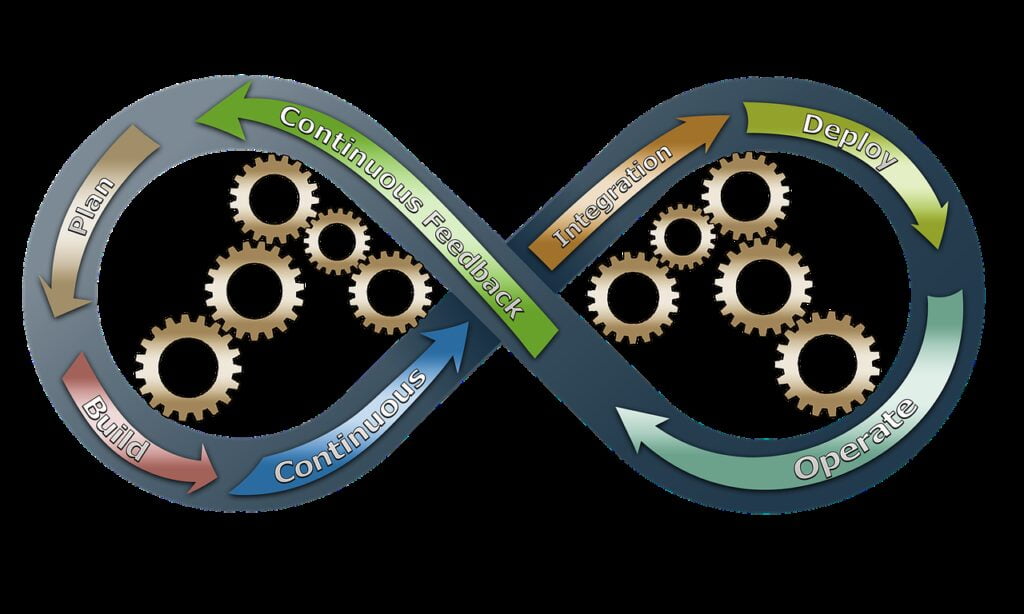
What is Devops? Examples and characteristics
DevOps is a way to automate and streamline the software development process.
DevOps is a way to automate and streamline the software development process. It's not just an IT job; it involves both developers and operations teams working together to improve communication, efficiency, and effectiveness.
DevOps is a culture, not just a job title. The term “DevOps” refers to the collaboration between developers (who build applications) and IT operations professionals (who maintain them).

DevOps is a culture, not just a job title.
When people ask me to describe DevOps in one word, I always say “culture.” And it’s true: DevOps is about changing the way we think about software development and delivery by adopting a new set of values and practices. The goal is to create an environment where developers can collaborate with other team members (including operations) to build better software faster.
It's not just an IT job.
DevOps is not just a job title. The DevOps movement is about changing the way we work and think as an organization, from the top down. It's about collaboration, communication, and organizational structure.
DevOps has its roots in agile software development methods, which emphasize the frequent release of working code rather than long development cycles with no final product in sight. But it goes much further: DevOps represents a cultural shift within IT organizations in which everyone involved is more accountable for the success of their products, and expected to act accordingly.
This means developers need to communicate with operations staff more regularly, operations staff need access to more information than ever before (e.g., what features are coming soon), companies need to learn how best practices are shared across departments, and so on.
It involves both developers and operations teams working together to improve communication, efficiency, and effectiveness.
DevOps is a way to improve communication between developers and operations teams. It also helps reduce the time it takes to deliver new features, products, or services by using continuous integration tools, automated testing, and deployment.
DevOps is a culture, not just a job title. It involves both developers and operations teams working together to improve communication, efficiency, and effectiveness.

Focusing on automation and monitoring, rather than manual workflows, helps increase productivity.
DevOps is a way to automate and streamline the software development process. It involves both developers and operations teams working together to improve communication, efficiency, and effectiveness.
It's not just an IT job; it's a culture that aims to make your company more responsive to customers by streamlining communication between departments so teams can work together faster than they could separately. It emphasizes monitoring systems as much as building them, which means you'll need people who can keep an eye on things when they break (or when they're working well).

There are many tools that make DevOps easier to do.
There are many tools that make DevOps easier to implement. These include Jenkins, Chef, Puppet, and Ansible.
In this section we will look at an example of this type of tool and see how they can help with DevOps.
Jenkins is an open-source automation server used for continuous integration of projects. It supports multi-language build scripts, including Ant, Maven, and Rakefile, and has plugins for other programming languages such as C# and .NET. Jenkins can run on various operating systems, including Windows, Linux, and macOS.
DevOps Benefits
DevOps is a culture of collaboration between developers and operations teams that focuses on automating and streamlining the software development process. DevOps involves both developers and operations teams working together to improve communication, efficiency, and effectiveness.
It's not just an IT job: it's about breaking down barriers between departments so everyone can work together to create better products faster than ever before.

Example of tools used in DevOps
Here are some examples of common tools and practices used in the DevOps approach:
Version control: Git, SVN.
Git is a widely used version control tool for managing and versioning a project's source code , allowing teams to collaborate and track changes efficiently.
Build Automation: Jenkins, Travis CI.
These tools allow teams to automate the compilation and building of their software, reducing errors and ensuring the build process is fast and efficient.
Automated deployment: Ansible, Puppet, Chef.
These tools allow teams to automate the deployment of their software across different environments, helping to ensure consistent and reproducible deployments.
Monitoring and continuous integration: Nagios, Prometheus.
These tools enable teams to monitor the performance and availability of their infrastructure and applications on an ongoing basis. They also help identify issues and make adjustments in real time.
Infrastructure as Code (IaC): Terraform, CloudFormation.
These tools allow teams to manage and provision the infrastructure needed for their applications using code, facilitating scalability and efficiency, fundamental aspects in the era of scalability.
Collaboration and communication: Slack, Jira.
These tools enable development and operations teams to collaborate and communicate efficiently, facilitating problem resolution and improving overall effectiveness.
These are just a few examples of tools and practices used in DevOps. It is worth mentioning that the DevOps approach also involves a cultural shift in collaboration and communication between development and operations teams.
Conclusion
DevOps is a fantastic way to improve productivity and efficiency. Best of all, it benefits not only developers and operations teams but also the end user. In fact, we can all benefit from the increased productivity and efficiency that DevOps brings, as our websites will load faster and more reliably than ever before.