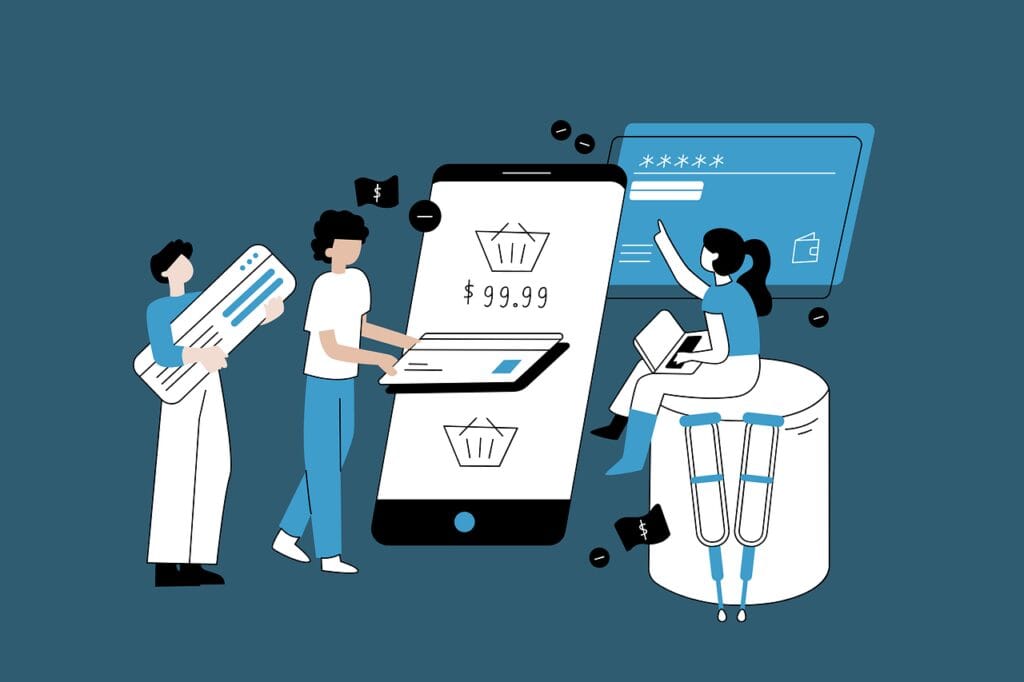
The world of commerce has undergone a revolution in recent decades, and e-commerce has been the undisputed protagonist of this transformation. But what is e-commerce and why is it so important in today's business landscape? Let's unravel the mysteries of e-commerce and show you how it can change the way you do business.
Imagine being able to buy anything, anytime, anywhere. That's precisely what e-commerce has made possible. From books to household appliances, consulting services to online courses, e-commerce has opened up a range of possibilities for both consumers and businesses.
Are you ready to dive into the fascinating world of e-commerce? Join us on this journey where we will discover the keys to understanding and making the most of the potential of electronic commerce.
What is e-commerce: Definition and basic concepts
Let's start with the basics: what is e-commerce ? The term e-commerce, short for "electronic commerce," refers to the buying and selling of goods or services over the internet. But it goes beyond a simple online transaction. E-commerce encompasses the entire process of marketing, sales, delivery, customer service, and data management that takes place in the digital environment.
Imagine a physical store, but without the limitations of space or hours. That’s essentially what e-commerce is. It allows businesses to reach a global audience 24/7 by offering a convenient and personalized shopping experience.
But why is it so important to understand what e-commerce is today? The answer is simple: because it is radically changing the way we do business. According to a report by eMarketer, global e-commerce sales are expected to reach $6.3 trillion by 2024. These figures show us that e-commerce is not just a passing trend, but the future of commerce.
The basics you should know about e-commerce include:
- Online store: The virtual space where products or services are displayed and sold.
- Cart: Tool that allows users to select and save the products they wish to purchase.
- Payment gateway: System that processes financial transactions securely.
- Logistics: Inventory management, shipping and product returns.
- CRM : System for managing relationships with the clients.
Understanding these concepts is essential for anyone who wants to enter the world of e-commerce, whether as a seller or as an informed consumer.
History and evolution of electronic commerce
E-commerce didn't just happen overnight. Its history is fascinating and reflects the rapid evolution of technology over the past few decades. Have you ever wondered how it all began?
The seed of e-commerce was planted in the 1960s, with the development of Electronic Data Interchange (EDI). This system allowed companies to conduct electronic transactions and transfer business documents. Although it was far from what we know as e-commerce today, it was the first step towards digital commerce.
The real boom in e-commerce came with the popularization of the Internet in the 90s. In 1995, Amazon opened its virtual doors as an online bookstore. Who would have imagined that this small bookstore would become the e-commerce giant it is today?
Shortly after, in 1998, PayPal was born, revolutionizing the way online payments were made. This platform made online transactions safer and more accessible to the general public.
With the arrival of the new millennium, e-commerce experienced explosive growth. The emergence of smartphones and social media in the 2000s brought e-commerce into the pockets of consumers. Brands like Alibaba in China and MercadoLibre in Latin America began to dominate their respective markets.
Today, e-commerce has evolved to include concepts such as:
- M-commerce: Commerce through mobile devices.
- S-commerce: Sales through social networks.
- v-commerce: Trading through virtual reality.
Can you imagine buying a sofa by virtually trying it out in your living room? That's exactly what e-commerce is making possible.
The COVID-19 pandemic in 2020 further accelerated the adoption of e-commerce. According to a report by UNCTAD, the share of e-commerce in global retail trade increased from 14% in 2019 to 17% in 2020.
This evolution shows us that e-commerce is not just a trend, but a fundamental transformation in the way we buy and sell. And the most exciting thing is that its history is still being written. What do you think the future of e-commerce holds for us?
Types of e-commerce: B2B, B2C, C2C and more
When we talk about what e-commerce is, it's crucial to understand that there isn't just one model. In fact, there are several types of e-commerce , each with its own characteristics and challenges. Let's explore the main ones:
- B2B (Business to Business)This type of e-commerce refers to transactions between businesses. Imagine a furniture factory purchasing wood from a supplier through an online platform. That’s B2B. According to a Forrester report, the B2B market is expected to reach $1.8 trillion by 2023.
- B2C (Business to Consumer)This is probably the best-known type of e-commerce. These are companies that sell directly to end consumers. Amazon is a perfect example of B2C.
- C2C (Consumer to Consumer)Here, consumers sell to other consumers. Platforms like eBay or Wallapop are examples of C2C. Have you ever sold something you no longer used on one of these platforms? Congratulations, you have participated in C2C e-commerce.
- C2B (Consumer to Business)This less common model involves consumers offering products or services to businesses. An example would be a freelance photographer selling their images to a company through a stock platform.
- B2G (Business to Government)This refers to companies that sell products or services to government entities. Imagine a software company that sells management systems to city councils.
- G2C (Government to Consumer)While not technically “commerce,” it refers to electronic transactions between governments and citizens, such as paying taxes online.
Each of these types of e-commerce has its own particularities:
| Type | Example | Main Feature |
|---|---|---|
| B2B | Alibaba | Large volumes, long-term contracts |
| B2C | Amazon | Variety of products, user experience |
| C2C | eBay | Brokerage platform, reputation system |
| C2B | Shutterstock | Crowdsourcing, gig economy |
| B2G | SAP | Compliance with regulations, bidding processes |
| G2C | Tax Agency | Security, accessibility |
Have you noticed how e-commerce has transformed virtually every form of commercial exchange? From large corporations to individuals, everyone can participate in e-commerce in one way or another.
The question is: what type of e-commerce do you see yourself participating in? As a B2C consumer, as a C2C seller, or perhaps you are thinking of starting your own B2B business? Whatever your choice, understanding these different models is the first step to succeeding in the world of e-commerce.
Advantages and challenges of e-commerce for businesses and consumers
E-commerce has revolutionized the way we do business and shop, but like every revolution, it brings with it both opportunities and challenges. Let’s explore both sides of the coin.
Advantages of e-commerce
- Global reach:Can you imagine having a store that never closes and can reach customers all over the world? That is exactly what e-commerce offers. A small store in Spain can sell to customers in Australia or Canada without needing to have a physical presence there.
- Costs reductionBy eliminating the need for a physical store, e-commerce saves on rent, staff, and other associated expenses. Did you know that Amazon started in Jeff Bezos' garage? That's the beauty of e-commerce.
- Personalization.Online stores can offer personalized recommendations based on each customer's browsing and purchasing history. Have you noticed how Netflix always seems to know which series to recommend to you? E-commerce uses similar techniques.
- Convenience for the consumer: Shopping from the comfort of your couch, at any time of day or night. Who hasn't placed an order at 3am because they couldn't sleep?
- Data analysisE-commerce enables more efficient collection and analysis of customer data, helping to make more informed business decisions.
E-commerce challenges
- SecurityCybersecurity is a constant concern. According to a report by Juniper Research, e-commerce fraud is expected to reach $25 billion annually by 2024. How can businesses protect themselves and their customers?
- Fierce competition: With lower barriers to entry, competition in e-commerce is intense. How do you stand out in a sea of similar options?
- Logistics and returns:Managing shipping and returns can be complex and expensive. Amazon invests billions in its logistics network. How can small businesses compete?
- Lack of physical contact:In some product categories, customers prefer to see and touch before buying. How can this barrier be overcome?
- technological dependency: A downed website can mean lost sales. According to a Gartner study, the average cost of IT downtime is $5,600 per minute.
To better illustrate these advantages and challenges, consider the following hypothetical case:
Maria owns a small clothing store in Madrid. She decides to open an online store to expand her business. In her first month, she manages to sell to customers in Barcelona, Paris, and even New York, something that would never have been possible with her physical store. However, she also faces new challenges: she has to learn how to manage international shipping, deal with returns from customers who cannot try on clothes before buying, and compete with online fashion giants that offer lower prices.
This example shows us how e-commerce can open up new opportunities, but also presents challenges that require adaptation and constant learning.
The key question is: how can businesses maximize the benefits of e-commerce while mitigating its challenges? The answer lies in strategic planning, investment in technology and security, and constant innovation to improve the customer experience.
And you, as a consumer or business, what advantages of e-commerce have you experienced? What challenges have you found most difficult to overcome?
Key technologies in e-commerce
E-commerce would not be possible without a number of key technologies that work together to create a seamless and secure shopping experience. Let’s explore some of the most important ones:
- e-commerce platformsThese are the heart of any online store. Platforms like Shopify, WooCommerce, or Magento provide the infrastructure needed to create and manage a virtual store. Did you know that Shopify powers more than 1 million businesses in 175 countries?
- Electronic payment systemsPayPal, Stripe, and bank payment gateways are all examples of systems that enable secure online transactions. According to Statista, the value of digital payment transactions is expected to exceed $6.6 trillion by 2024. When was the last time you bought something online without worrying about the security of the payment?
- Customer relationship management (CRM) systemsTools like Salesforce or HubSpot help companies manage their interactions with current and potential customers. A good CRM can increase sales by up to 29%, according to a study by Salesforce.
- Analysis of data and Big DateData analytics technologies enable e-commerce companies to understand customer behavior and personalize their experience. Amazon, for example, generates 35% of its revenue through its data-driven recommendation system.
- Artificial Intelligence (AI) and Machine Learning These technologies are revolutionizing e-commerce with chatbots for customer service, personalized recommendation systems, and demand forecasting. Have you ever interacted with a chatbot without realizing it wasn't a real person?
- Augmented Reality (AR) and Virtual Reality (VR) These technologies are changing the way consumers interact with products online. IKEA, for example, has an app that lets you see how their furniture would look in your home using AR.
- Inventory management systems Tools like TradeGecko or Brightpearl help companies manage their stock in real time, avoiding overstock or out-of-stock problems.
- Blockchain technology Although still in the early stages of adoption in e-commerce, blockchain promises to improve transaction security and transparency in the supply chain.
Let's look at a practical example of how these technologies work together:
Imagine you are browsing an online clothing store. The recommendation system, powered by AI, suggests a jacket based on your previous purchases. You decide to try it on virtually using the app’s AR feature. You like it and add it to your cart. At checkout, the CRM system recognizes that you are a frequent customer and offers you a discount. You pay with your card through a secure gateway. Immediately, the inventory management system updates the stock and sends an alert to the warehouse to prepare your order.
This example shows how various technologies intertwine to create a seamless and personalized shopping experience.
Adopting these technologies is not just an option, but a necessity for e-commerce companies that want to stay competitive. According to a McKinsey report, companies that adopt advanced digital technologies are 1.8 times more likely to report revenue growth above that of their industry peers.
Have you ever wondered what technologies are working behind the scenes when you make an online purchase? Next time you buy something online, think about all the technologies that are making that experience possible.
Popular platforms and tools for creating an online store
If you're thinking about launching your own e-commerce business, one of the most important decisions you'll make is choosing the platform for your online store. There are many options available, each with their own strengths and weaknesses. Let's explore some of the most popular ones:
- Shopify Shopify is one of the most popular e-commerce platforms in the world, especially for SMEs. Offers an all-in-one solution that includes hosting, shopping cart, and a wide range of themes and apps. Advantages: Easy to use, great support, lots of integrations. Disadvantages: Commissions can be high, customization limited in some aspects.
- WooCommerce WooCommerce is a free WordPress plugin that turns your site into an online store. It's popular with those who already have a WordPress site or want full control over their store. Advantages: Free, highly customizable, large developer community. Disadvantages: Requires more technical knowledge, hosting and security are your responsibility.
- Magento Magento is an open-source platform known for its flexibility and scalability. It is popular among large enterprises and those with complex needs. Advantages: Very powerful and flexible, ideal for large catalogs. Disadvantages: Steep learning curve, can be expensive to implement and maintain.
- PrestaShop PrestaShop is another popular open source platform, especially in Europe. It offers a good balance between ease of use and customization. Advantages: Free, relatively easy to use, good Spanish community. Disadvantages: Some features require paid modules.
- Squarespace Squarespace is known for its sleek designs and ease of use. It's a good choice for small businesses that value aesthetics. Advantages: Beautiful designs, easy to use, good marketing tools. Disadvantages: Less flexible than other options, more limited e-commerce functionalities.
Here is a comparison table of these platforms:
| Consumer Relations Platform | Ease of use | Personalization. | Cost | Ideal for |
|---|---|---|---|---|
| Shopify | High | Media | $ $ $ | Small and medium businesses |
| WooCommerce | Media | High | $ | Existing WordPress Sites |
| Magento | Low | Very high | $$$$ | Big enterprises |
| PrestaShop | Media | High | $ | European companies |
| Squarespace | Very high | Low | $$ | Small businesses focused on design |
Choosing the right platform will depend on several factors, including your budget, technical skills, catalog size, and growth plans.
For example, if you're a startup entrepreneur who doesn't have much technical knowledge, Shopify might be a great option. On the other hand, if you already have a WordPress site and want to add e-commerce functionality, WooCommerce would be a natural choice.
It's important to remember that the platform is just the beginning. You'll also need other tools to manage different aspects of your e-commerce business:
- For email marketing: Mailchimp or Klaviyo
- For customer support: Zendesk or Intercom
- For web analytics: Google Analytics or Hotjar
- For inventory management: TradeGecko or Brightpearl
Have you had experience with any of these platforms or tools? Which one do you think would best suit your needs or those of your business?
Remember, choosing the right platform is crucial, but it's just the first step. Success in e-commerce depends on many factors, including your marketing strategy, the quality of your products or services, and your ability to deliver an excellent customer experience.
Digital marketing strategies for e-commerce
In the world of e-commerce, having a great online store isn’t enough. You need customers to find it and want to buy from it. This is where digital marketing comes in. Let’s explore some key strategies that can help you boost your e-commerce business:
- SEO (Search Engine Optimization) SEO is essential to getting your store to appear in search results on Google and other search engines. This includes optimizing your content with relevant keywords, improving your site's speed, and creating a user-friendly URL structure. Curious fact: 93% of online experiences begin with a search engine. Is your store optimized to appear in those results?
- Content Marketing Creating valuable and relevant content for your audience can drive traffic to your site and establish you as an authority in your niche. This can include blogs, buying guides, video tutorials, etc. Example: Outdoor clothing brand Patagonia has a blog called “The Cleanest Line” that shares stories of adventure and conservation, attracting its target audience.
- Email marketing Email remains one of the most effective forms of digital marketing. You can use it to send personalized offers, abandoned cart reminders, or newsletters. Statistics: According to Campaign Monitor, for every 1 invested in email marketing, an average return of 44 is obtained.
- Social Media Marketing Social media is great for building a community around your brand and driving traffic to your store. Each platform (Facebook, Instagram, TikTok, etc.) has its own strengths and audience type. Tip: Instagram Shopping allows users to purchase products directly from Instagram posts and stories.
- Pay Per Click (PPC) Advertising Platforms like Google Ads and Facebook Ads allow you to show ads to specific users based on their interests and search behavior. Interesting fact: Google Ads can increase brand awareness by up to 80%.
- Influencer Marketing Collaborating with influencers in your niche can help you reach new audiences and build trust in your brand. Example: Fashion brand Fashion Nova has built much of its success through collaborations with Instagram influencers.
- Retargeting This strategy allows you to show ads to people who have already visited your website, reminding them of your products and encouraging them to complete a purchase. Statistics: According to AdRoll, retargeting can increase conversions by up to 150%.
- Conversion Rate Optimization (CRO) CRO involves constantly improving your website to increase the percentage of visitors who make a purchase. This can include A/B testing, improving usability, optimizing product pages, etc.
Let's look at an example of how these strategies could work together:
Maria runs an online store selling natural beauty products. She uses SEO to optimize her product pages with relevant keywords. She creates blog content about skincare and shares it on her social media channels. She uses email marketing to send personalized offers to her existing customers. She runs PPC campaigns on Google to attract new customers searching for specific products. She collaborates with beauty influencers on Instagram to showcase their products. She uses retargeting to remind her site visitors about products they viewed. She constantly performs A/B testing on her site to improve the conversion rate.
It’s important to remember that not every strategy will work equally well for every business. The key is to experiment, measure the results, and adjust your approach based on what works best for your audience and your products.
Which of these strategies do you think would work best for your e-commerce business? Have you tried any of them? Remember, digital marketing is a continuous process of learning and optimization. Don't be afraid to try new things and always pay attention to what your data says.
Security and trust in online transactions
In the world of e-commerce, security and trust are paramount. Consumers need to feel safe providing their personal and financial information online. As an e-commerce business owner, it's your responsibility to ensure this security. Let's explore some key aspects of e-commerce security :
- Secure Sockets Layer (SSL) SSL is a security protocol that creates an encrypted channel between the web server and the client browser. It is essential for protecting sensitive information during online transactions. Important fact: Google considers SSL as a ranking factor, meaning that sites with HTTPS (that use SSL) are more likely to appear in search results.
- PCI DSS Compliance If you accept credit card payments, you must comply with the Payment Card Industry Data Security Standards (PCI DSS). This involves a set of requirements designed to ensure that businesses process, store, and transmit credit card data securely.
- Two-factor authentication (2FA) 2FA adds an extra layer of security to the login process by requiring users to provide two different forms of identification before accessing their account. Statistics: According to Google, 2FA can block 100% of automated bot attacks, 96% of mass phishing attacks, and 76% of targeted attacks.
- Clear privacy policy A transparent privacy policy that explains how you collect, use and protect customer data can help build trust.
- Secure payment gateways Using well-known and trusted payment gateways such as PayPal, Stripe, or those provided by major banks can increase customer confidence in your site.
- regular security updates Keeping your e-commerce software, plugins, and operating systems up to date is crucial to protecting yourself against the latest security vulnerabilities.
- Customer education Educating your customers about security practices, such as creating strong passwords and identifying secure websites, can help prevent security issues.
- Regular security monitoring and audits Conducting regular security audits and constantly monitoring your site for suspicious activity can help you detect and address security issues quickly.
Let's look at an example of how these security elements could be implemented in an online store:
Maria's online store uses SSL to encrypt all communication between her server and customers' browsers. It complies with PCI DSS standards for processing card payments. It offers two-factor authentication (2FA) for customer accounts. It has a clear and easy-to-understand privacy policy on its website. It uses PayPal and Stripe as secure payment options. Maria ensures that her e-commerce platform and all plugins are always up to date. She regularly sends security tips to her customers via email. In addition, she hires a security company to conduct quarterly audits of her site.
It's important to remember that e-commerce security isn't just a technical issue, it's also a perception issue. Customers need to feel like they can trust your site. Some ways to build this trust include:
- Show third-party trust seals (such as Norton Secured or TRUSTe)
- Provide clear and accessible contact information
- Offer transparent return and refund policies
- Show customer reviews and testimonials
According to a study by Baymard Institute, 17% of online shoppers have abandoned a shopping cart due to concerns about payment security. This underscores the importance of not only implementing security measures, but also clearly communicating them to your customers.
Have you ever had concerns about online shopping security? What makes you feel safe when shopping at an online store? As an e-commerce business owner, it is crucial to put yourself in the customer’s shoes and address all of their potential security concerns.
Remember, e-commerce security is an ongoing process, not a final destination. Security threats are constantly evolving, so it’s essential to stay up to date and be proactive in protecting your business and your customers.
Future trends in e-commerce
The world of e-commerce is constantly evolving, driven by technological advancements and changes in consumer behavior. Let’s take a look at some of the trends that are shaping the future of e-commerce:
- Conversational Commerce and Chatbots AI-powered chatbots are transforming customer service in e-commerce, offering 24/7 assistance and personalized recommendations. Interesting fact: According to Juniper Research, chatbots will generate cost savings of $8 billion annually for businesses by 2022.
- Voice Commerce With the growing popularity of voice assistants like Alexa and Google Home, voice-activated shopping is gaining ground. Prediction: Gartner predicts that by 2025, 30% of web searches will be screen-free (mostly by voice).
- Augmented Reality (AR) and Virtual Reality (VR) These technologies are improving the online shopping experience, allowing customers to virtually “try on” products before purchasing them. Example: IKEA Place, an AR app, allows users to see how furniture would look in their homes before purchasing.
- AI-powered personalization Artificial Intelligence is enabling increasingly sophisticated personalization, from product recommendations to individualized offers. Statistics: According to Segment, 49% of shoppers have made an impulse purchase after receiving a personalized recommendation.
- Stores social networks Social media is becoming a shopping platform in its own right, with features like Instagram Shopping and Facebook Marketplace. Curious fact: 60% of Instagram users say they discover new products on the platform.
- Sustainability and ethical trade Consumers are increasingly concerned about the environmental and social impact of their purchases, which is leading to a boom in sustainable and ethical trade. Trend: According to a Nielsen study, 73% of millennial consumers are willing to pay more for sustainable products.
- Omni Channel Seamless integration between online and offline channels is gaining importance, with options such as buy online, pick up in store (BOPIS) becoming increasingly common.
- Subscriptions and recurring business models Subscription models are gaining popularity across a range of categories, from consumer products to software. Example: Dollar Shave Club revolutionized the shaving industry with its subscription model.
- Blockchain and cryptocurrencies Although still in their early stages, these technologies promise to transform online transactions, offering greater security and transparency.
Let's imagine how these trends could transform the shopping experience in the future:
Maria is at home and asks her voice assistant to buy a new pair of sneakers. The assistant suggests several models based on her previous purchases and preferences. Maria selects one and uses her smartphone’s AR feature to see how the sneakers would look on her feet. Satisfied, she confirms the purchase with her voice. Payment is automatically made with cryptocurrency. Maria chooses to pick up the sneakers at the nearest physical store. When she arrives at the store, a chatbot sends instructions to her phone to find her order. While there, Maria tries out a smart mirror that suggests outfits to match her new sneakers.
This scenario may seem futuristic, but many of these technologies are already in use or in advanced development.
Which of these trends excites you most as a consumer? And as a business owner? It's important to stay on top of these trends and consider how they might impact your e-commerce business.
Remember, not all trends will be relevant to every business. The key is to understand your audience and adopt the technologies and approaches that best fit their needs and expectations.
Success stories in e-commerce
The world of e-commerce is full of inspiring stories of companies that have achieved extraordinary success. These stories are not only fascinating, but they also offer valuable lessons for anyone considering getting into e-commerce. Let’s explore some notable success stories:
- Amazon You can't talk about success in e-commerce without mentioning Amazon. Founded by Jeff Bezos in 1994 as an online bookstore, Amazon has grown into the e-commerce giant we know today. Key lesson: Obsession with customer satisfaction and constant innovation are critical to long-term success. Curious fact: Amazon started in Bezos' garage and is now worth more than $1 trillion.
- Alibaba Founded by Jack Ma in 1999, Alibaba is China's equivalent of Amazon, but with a different business model. It focuses primarily on B2B and connects Chinese manufacturers with buyers around the world. Key lesson: Adapting your business model to the specific needs of your market can lead to global success.
- Zappos Zappos revolutionized online shoe sales with its focus on customer service, including free shipping and returns. Key lesson: Exceptional customer service can be a key differentiator in e-commerce. Interesting fact: Zappos was acquired by Amazon in 2009 for $1.2 billion.
- Warby parker This eyewear company disrupted the optical industry by offering designer glasses at affordable prices, complete with a try-at-home model. Key lesson: Finding creative ways to overcome online shopping barriers can open up new markets.
- Glossier Starting out as a beauty blog, Glossier has grown into a cult cosmetics brand, harnessing the power of community and user-generated content. Key lesson: Building a community around your brand can drive organic growth.
- Dollar Shave Club This subscription-based shaving startup went from unknown to being acquired by Unilever for $1 billion in just five years. Key lesson: Creative marketing and an innovative business model can disrupt even the most established industries.
Let's look at a comparison table of these success stories:
| Company | Fundación | Sector | Key innovation | Main lesson |
|---|---|---|---|---|
| Amazon | 1994 | General retail | Personalized recommendations, Prime | customer obsession |
| Alibaba | 1999 | B2B, B2C | Global connection of manufacturers and buyers | Adaptation to the local market |
| Zappos | 1999 | Footwear | Exceptional customer service | Service as a differentiator |
| Warby parker | 2010 | Optics | Try glasses at home | Overcoming online shopping barriers |
| Glossier | 2014 | Cosmetics | Community and user-generated content | Power of the community |
| Dollar Shave Club | 2011 | Personal Care | Subscription model, viral marketing | Creative marketing |
Each of these companies found a unique way to stand out in the competitive world of e-commerce. Some common lessons we can draw from these success stories are:
- The importance of understanding and satisfying customer needs.
- The power of an innovative business model.
- The need to constantly adapt to market changes.
- The value of building a strong brand and a loyal community.
- The effectiveness of creative and differentiated marketing.
Which of these success stories do you find most inspiring? Can you see elements of these strategies that you could apply to your own e-commerce business?
Remember, every business is unique and what worked for these companies may not be exactly what you need. However, by studying these success stories, we can gain valuable insights and inspiration for our own e-commerce ventures.
Conclusion on what is e-commerce in the global economy
Throughout this article, we have explored in depth what e-commerce is and how it is transforming the way we buy and sell. Now, it is time to reflect on the broader impact that e-commerce is having on the global economy.
E-commerce has revolutionized the economic landscape in ways that were difficult to imagine just a few decades ago. It has broken down geographic barriers, allowing small businesses to reach global markets and consumers to access an almost infinite range of products and services from the comfort of their homes.
Some of the most significant impacts of e-commerce include:
- Globalization of trade: E-commerce has made it easier than ever for businesses to sell internationally, fostering a truly global marketplace.
- Changes in employmentWhile e-commerce has created new types of jobs (such as SEO specialists and online community managers), it has also displaced some traditional retail jobs.
- Retail transformation: Physical stores are reinventing themselves, focusing more on customer experience to compete with the convenience of e-commerce.
- Technological innovationThe need to constantly improve the online shopping experience has driven innovations in areas such as AI, augmented reality and payment systems.
- Changes in consumer habits: E-commerce has changed the way consumers research, compare and purchase products.
- Environmental impactWhile e-commerce may reduce the need for physical stores, it has also increased the demand for packaging and delivery, posing new environmental challenges.
- Democratization of entrepreneurship: E-commerce has lowered the barriers to entry for entrepreneurs, allowing even small startups to compete with large companies.
According to a report by eMarketer, global e-commerce sales are expected to reach $6.3 trillion by 2024, accounting for 21.8% of total retail sales. These figures underscore the growing importance of e-commerce in the global economy.
However, e-commerce also poses challenges. Data security, consumer privacy and fair competition are constant concerns that require the attention of businesses, consumers and regulators alike.
Looking ahead, it’s clear that e-commerce will continue to evolve and transform our economy. Companies that can quickly adapt to new technologies and consumer trends will be best positioned to succeed in this ever-changing landscape.
As consumers and businesses, it is crucial to stay informed about these trends and consider how we can take advantage of the opportunities offered by e-commerce, while navigating its challenges responsibly and ethically.
E-commerce isn’t just a passing trend, but a fundamental transformation in the way we do business and consume. Whether you’re considering launching your own online store, looking for ways to grow your existing business, or simply trying to be a more informed consumer, understanding what e-commerce is and how it works is essential in today’s digital world.
Let's recall the key points we've covered:
- What is E-commerce? E-commerce covers a wide range of activities, from B2B to C2C.
- Technology plays a crucial role in the functioning of e-commerce.
- Security and trust are essential for success in e-commerce.
- El Digital marketing is essential to stand out in an increasingly competitive market.
- Future trends such as AI and augmented reality promise to further transform the online shopping experience.
- Success stories show us that innovation and customer service are key to success in e-commerce.
At the end of the day, e-commerce is all about connecting buyers and sellers in new and exciting ways. Whether you're on the selling or buying side, e-commerce offers unprecedented opportunities to access products, services and information.
Are you ready to dive into the world of e-commerce? Whether you’re planning your first online sale or looking for ways to improve your digital shopping habits, the journey promises to be exciting and full of possibilities.
Remember, e-commerce is a constantly evolving field. Stay curious, keep learning, and don’t be afraid to experiment. The future of commerce is digital, and you can be a part of it.