- The Retroid Pocket 6 aims for maximum power with the Snapdragon 8 Gen 2, a 120 Hz AMOLED display, and Wi-Fi 7, while the Pocket G2 balances price/performance with the Snapdragon G2 Gen 2.
- Two memory configurations (8/128 and 12/256) and prices that vary by currency and pre-sale; the G2 starts at €182 and the Classic opts for a vertical format with Android 14.
- Design with under-screen buttons, front-facing speakers, and symmetrical sticks; a 5.000-6.000 mAh battery with fast charging up to 27W.
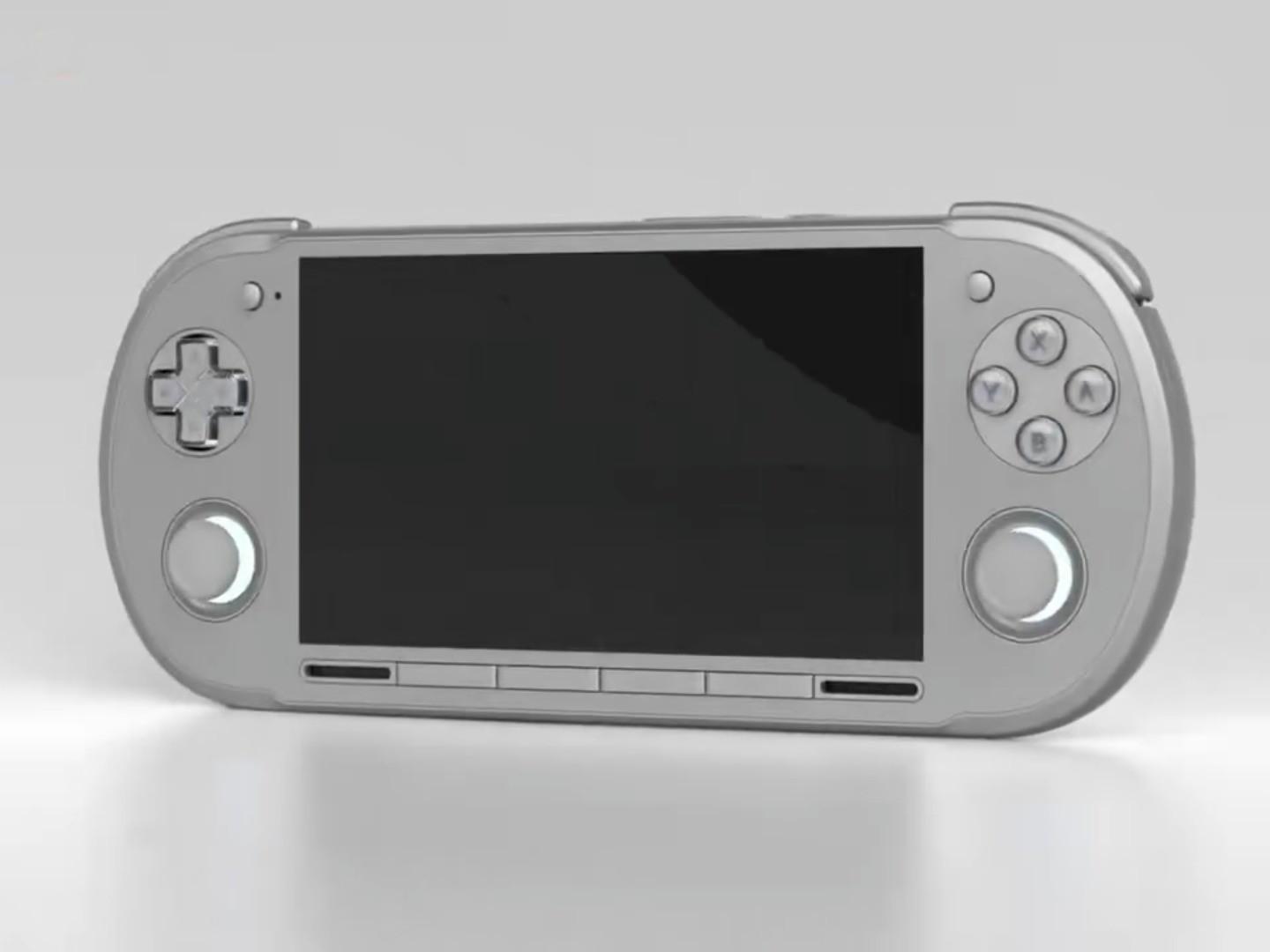
If you're wondering exactly what the Retroid Pocket 6 is, you've come to the right place: it's Retroid's next Android handheld console, poised to be their most powerful model to date. It arrives at a time when the brand has been dropping hints and making pricing moves that suggest an imminent launch. The company has hinted at a "futuristic" announcement and kicked things off with discounts across its catalog , setting off alarm bells among retro gaming and cloud gaming enthusiasts.
Over the past few weeks, various sources have been outlining the landscape of this new generation: there is talk of a significant leap in chip, screen and connectivity, with a proposal that also comes accompanied by another model, the Pocket G2, and that coexists with a simpler classic format, the Pocket Classic, in a market where Microsoft plans to launch its portable console.
What is the Retroid Pocket 6 and how is it different?
Retroid Pocket 6 is an Android handheld console geared towards emulation, native games, and streaming, designed to replace the Pocket 5 at the top of the gaming market. Its goal is to offer a significant generational leap in CPU, GPU, screen, and connectivity , making it suitable for demanding consoles and services like Xbox Cloud or PC streaming.
There was a time when clues pointed to the Pocket 6 integrating the Snapdragon G2 Gen 2 (Qualcomm's new gaming chip announced in March), but the current picture is clearer: various media outlets are already placing the Pocket 6 with the Snapdragon 8 Gen 2 , while the Pocket G2 would be the one debuting the Snapdragon G2 Gen 2. This split fits with the promise of two devices: one designed for "balance" (G2) and another for "maximum power" (Pocket 6).
The current state of the catalog reinforces this interpretation: Retroid has lowered prices by around $20 on existing models like the Pocket 5, Pocket Flip 2, and Pocket Mini V2 , a classic stock clearance tactic before the arrival of new products. Furthermore, the brand has set a date to reveal more details: October 27th, with pre-orders potentially opening shortly thereafter.
Hardware and performance: from the Snapdragon 8 Gen 2 to the Qualcomm gaming ecosystem
The heart of the Retroid Pocket 6 would be the Snapdragon 8 Gen 2, a high-performance SoC that, compared to the Snapdragon 865 in the Pocket 5, represents a significant leap in CPU and GPU performance. Configuring the Pocket 6 with 8/12 GB of LPDDR5x RAM and 128/256 GB of UFS 3.1 storage aims to improve loading times, stability, and multitasking with frontends and emulators.
On screen, the bet is raised to a 5,5-inch Full HD AMOLED panel with a 120 Hz refresh rate, double that of the Pocket 5. This increase to 120 Hz promotes a feeling of fluidity when moving through menus, frontends and compatible games , as well as reducing ghosting in action or driving titles.
Connectivity also takes a step forward with Wi-Fi 7 and Bluetooth 5.3, plus a USB 3.1 Type-C port with DisplayPort for video output up to 4K at 60 fps. Having DisplayPort opens the door to low-latency gaming on a monitor/TV and using the console as a mini entertainment center , something many users consider essential.
Regarding the battery, two figures are circulating: 5.000 mAh on one hand and 6.000 mAh on the other. Some specifications and previews mention 6.000 mAh with 27W fast charging , while others maintain 5.000 mAh, so the final capacity could vary by batch or revision. In any case, wired fast charging is expected.
It's worth remembering that Qualcomm's gaming ecosystem includes technologies like Adreno Frame Motion Engine 2.0 and Snapdragon Game Super Resolution. While these are associated with the Snapdragon G2 Gen 2 (powered by the Pocket G2) , Qualcomm's suite of optimizations facilitates frame upscaling and smoothing, key for emulation and streaming.
Design and ergonomics: buttons, front speakers and symmetrical levers
The Retroid Pocket 6 introduces obvious design changes: more rounded sides and a control layout that maintains the symmetry of the analog sticks. The D-Pad is redesigned, the ABXY buttons are framed, and dedicated buttons (back, home, M1, and M2) appear below the screen, flanked by front-facing speakers for more direct audio.
This approach differs slightly from the Pocket 5 by giving greater prominence to the additional buttons. The symmetry of the analog sticks is retained , something that divides the community: some find it more comfortable for 2D games and classic emulation; others would prefer offset sticks for modern 3D.
There's also talk of it being available in several colors (up to six, according to leaks and previews), reinforcing the brand's aesthetic. Within the community, there's debate about the number of front buttons : some prefer four for comfort and aesthetics, although some color options may be linked to models with six buttons.
Comparative references suggest that the grip, while not exactly the same, is reminiscent of models like the AYN Odin 2 Mini, due to its curved sides. The aim is to improve ergonomics without sacrificing the compact design , crucial for long sessions emulating demanding consoles.
Displays and Visual Experience: 120Hz vs. 60Hz
On the Pocket 6, the 5,5″ Full HD AMOLED panel with a 120Hz refresh rate makes a significant difference compared to the 60Hz panels of previous generations. The Full HD clarity allows for frontends with detailed themes and emulator scaling filters without sacrificing readability.
The Pocket G2, meanwhile, opts for a 5,5″ Full HD OLED display at 60 Hz, a configuration that seeks a balance between cost, battery life, and contrast. For many users focused on 8/16/32-bit color, 60 Hz is already sufficient , maintaining deep blacks and vibrant colors.
At the more retro end of the spectrum is the Retroid Pocket Classic, with a 3,92″ vertical AMOLED screen and a 1240 × 1080 resolution in a 5:4 aspect ratio with 500 nits of brightness. This panel is ideal for laptops that evoke the Game Boy , offering high pixel density and good brightness while maintaining a classic look.
Connectivity, system and storage
The Retroid Pocket 6 adds Wi-Fi 7, Bluetooth 5.3, a USB-C 3.1 port with 4K60 DisplayPort, a 3,5 mm headphone jack, and a microSD card slot. This configuration facilitates everything from Bluetooth peripherals and wired audio to monitor output , as well as storage expansion for ROMs and media.
In terms of software, multiple advancements point to Android 13 coming pre-installed on the Pocket 6, with a complete ecosystem of apps and frontends. The Pocket Classic jumps directly to Android 14 , with OTA update support, allowing emulators and the system to be kept up-to-date without complications.
One thing to keep in mind if you plan to emulate Windows or use PC containers: several PC emulators don't read libraries from the microSD card . In that case, the 128 or 256 GB of internal storage might not be enough for large games, so it's a good idea to carefully plan what to install on the internal storage.
Battery and charging: capacity and actual consumption
As already mentioned, the Pocket 6's battery capacity ranges from 5.000 to 6.000 mAh, with fast charging up to 27W. Effective battery life will depend on what you're doing : emulating PS2 or GameCube games consumes significantly more power than 16-bit titles or simple Android games.
The Pocket G2 shares a 5.000 mAh battery and, choosing 60 Hz, should offer slightly longer battery life than the Pocket 6 at 120 Hz in similar scenarios. The Classic also boasts a 5.000 mAh battery with 27 W , a remarkable figure for its size and promising good retro gaming sessions.
Models, prices and availability
The Retroid Pocket 6 is expected to come in two memory configurations: 8+128 GB and 12+256 GB. The prices mentioned vary depending on the currency and source : pre-orders are around €191/€237 (which would rise to €209/€255) or $229/$279, with reservation offers of $209/$259.
The Pocket G2 is expected to launch soon, with a promotional price of €182 for the first two weeks, after which it will rise to around €200. Five initial colors have been mentioned : GC, 16-bit, and Black, with shipments expected on October 29th; turquoise and yellow on November 5th. The website is reportedly already live, although orders are not yet being accepted at the time of these reports.
For context, Retroid has cut the price of the Pocket 5, Pocket Flip 2, and Pocket Mini V2 by about $20, which usually indicates a bigger announcement is on the horizon. The date set for more details is October 27th , with pre-orders potentially opening a few weeks later.
Pocket G2: Balance with Snapdragon G2 Gen 2
The Pocket G2 comes with the Snapdragon G2 Gen 2, a Qualcomm gaming chip unveiled in March. Its 8-core CPU features 1 Prime core, 4 performance cores, and 3 efficiency cores , while its Adreno A22 GPU incorporates technologies like Adreno Frame Motion Engine 2.0 and Snapdragon Game Super Resolution.
Initial comparative data indicates almost double the performance compared to the Pocket 5 with Snapdragon 865. For emulation of systems like PSP, Dreamcast or GameCube, and for Android games, the leap should be noticeable in stability and frame rates.
The screen is a 5,5″ Full HD OLED display with a 60Hz refresh rate, a 5.000 mAh battery, and a single configuration of 8 GB of RAM and 128 GB of storage. It includes sticks with Hall Effect sensors , which are more precise and durable because they lack physical contact that can wear out over time.
Retroid Pocket Classic: vertical format and retro soul
The Retroid Pocket Classic is the vertical option with a "classic" aesthetic and Android 14. It integrates a 3,92″ 1240 × 1080 AMOLED screen at 500 nits and a 5:4 ratio , very comfortable for old portable systems and vertical arcades.
In terms of hardware, it features a 4nm Snapdragon processor, 6GB of LPDDR4X RAM, and 128GB of storage (eMMC 5.1/eMCP is mentioned in some specifications), with active cooling. It includes dual-band Wi-Fi, Bluetooth 5.1, USB-C OTG, a 3,5mm headphone jack, and a microSD card slot , as well as OTA support for updates.
Its emulation list includes PS1, PSP, Dreamcast, GameCube, N64, Neo Geo, MAME, and classic Sega and Nintendo games, among many others. The battery remains at 5.000 mAh with 27W fast charging , promising hours of gameplay in a compact and lightweight body.
Available in seven colors and with fast shipping from Europe in some stores (24/72 hours), it aims to position itself as "the" vertical console with a good price-quality ratio. It's an ideal alternative if you prioritize nostalgia and a vertical format over maximum power.
How far does emulation go? PS2, GameCube, Wii, Switch, and PS3
With its Snapdragon 8 Gen 2 processor, the Pocket 6 aims to handle 8/16/32-bit systems with ease, already offering very good performance on PS2, GameCube, and Wii with the right configuration. For Switch and PS3, the experience will depend heavily on the game, the emulator, and its updates , and not all titles will achieve perfect performance.
Some marketing descriptions of the brand mention compatibility ranging from NES/SNES/MD/GB to Switch or even PS3. In practice, compatibility will vary depending on the title and settings ; it's advisable to adjust expectations and rely on compatibility lists and recommended profiles from the community.
Streaming from PCs and services like Xbox Cloud Gaming are areas where the Pocket 6 shines thanks to Wi-Fi 7 and its 120Hz screen. Lower latency and improved perceived fluidity help bring the experience closer to high-end devices without the price spike.
Buying Tips: Frequently Asked Questions and Preferences
If you're coming from a previous handheld console and your budget is around €250, the Pocket 6 looks like a great all-in-one option. However, it doesn't perform miracles with Switch/PS3: some games will run well and others won't . Where the console truly shines is in its emulation of up to PS2/GC/Wii games and its cloud gaming capabilities.
In terms of ergonomics and layout, some users prefer four front buttons for comfort, while others look for six for compatibility with arcade/classic fighting games. There are also those who regret that this particular color is only available on the six-button version , so it's advisable to carefully review the different options and finishes before making a decision.
If storage is a concern, consider the 256GB version for more internal space, especially if you plan on using PC emulators or installing many Android games. Keep in mind that some PC emulators don't support microSD cards for game libraries , making internal storage even more valuable.
Key dates, announcements, and where to follow the news
Retroid has hinted at a "futuristic" announcement dated October 27th, which aligns with the timeline of catalog discounts and the activation of informational pages. Pre-orders could open in November, based on the proposed timeframes , and shipments of certain Pocket G2 colors are expected between late October and early November.
If you want to stay up-to-date on official confirmations, configurations, and real-world tests, the community and specialized media are your best allies. Some websites encourage you to follow them on social media platforms like Facebook, Twitter, Instagram, Threads, BlueSky, YouTube, and Telegram to receive notifications as soon as new features, tutorials, and comparisons are published.
The Retroid Pocket 6 aims to be "the powerful one" with a Snapdragon 8 Gen 2 processor, a 120Hz AMOLED screen, next-generation connectivity, and meticulous finishes, while the Pocket G2 offers an excellent balance with a Snapdragon G2 Gen 2 processor, and the Classic remains a very capable and affordable vertical option; depending on your priorities between power, price, form factor, and colors, you'll have a clear niche within the Retroid ecosystem to enjoy both pure retro gaming and modern cloud gaming.
