- The Turing Test measures a machine's ability to exhibit human-like intelligent behavior.
- It originated in a 1950 article by Alan Turing on artificial intelligence.
- It assesses the imitation of human behavior, not necessarily true intelligence.
- Criticisms include its superficiality, anthropocentrism, and limited focus on verbal communication.
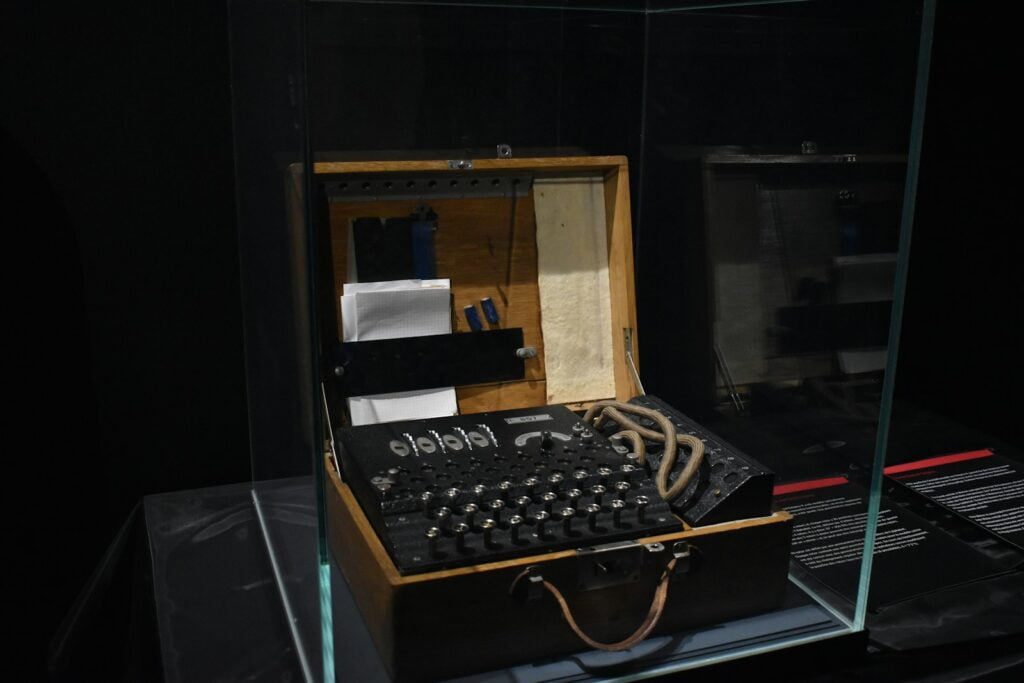
The Turing Test
The origin of the Turing Test
How does the Turing Test work?
- Configuration: A written conversation is established between a human (the judge) and two hidden participants: a human and a machine.
- Soil-structure: The judge asks questions and holds a conversation with both participants, without knowing which is which.
- Evaluation: After a certain time, the judge must decide which of the two participants is the machine and which is the human.
- Result: If the judge cannot reliably distinguish between the machine and the human, the machine is deemed to have passed the test.
Evaluation criteria in the Turing Test
- Coherence: Do the machine's responses make sense in the context of the conversation?
- Naturalness: Does the language used sound human or artificial?
- Adaptability: Can the machine handle unexpected questions or changes of topic?
- Knowledge: Does the machine demonstrate a wide range of knowledge, similar to that of a human?
- Emotions: Can the machine express or interpret emotions convincingly?
Philosophical implications of the Turing Test
- Is thinking the same as imitating thought? If a machine can perfectly imitate human thought, does that mean it is thinking?
- Does intelligence require consciousness? A machine could pass the test without being self-aware. Is this enough to consider it intelligent?
- What defines human intelligence? The test forces us to reflect on which aspects of our cognition we consider uniquely human.
- Is there a fundamental difference between the human mind and advanced AI? This question touches on the heart of the debate over mind-body dualism.
Criticisms and limitations of the Turing Test
- SuperficialityIt is argued that the test only assesses the ability to imitate, not true understanding or intelligence.
- Anthropocentrism:The test assumes that intelligence must manifest itself in a human-like manner, ignoring other possible forms of intelligence.
- Subjectivity: The evaluation depends largely on the human judge, which introduces an element of subjectivity.
- Linguistic limitation:Because it relies primarily on verbal communication, the test may not capture other forms of intelligence.
- Deception vs. Intelligence: A machine could pass the test by means of tricks or deception strategies, without being really intelligent.
Modern variants of the Turing Test
- Visual Turing Test: Evaluates the ability of an AI to interpret and describe images in a human-like manner.
- Auditory Turing Test: It focuses on the machine's ability to recognize and process human speech.
- Loebner test: An annual competition where AI programs compete to be the most “human.”
- Total Turing Test: Proposed by Stevan Harnad, it includes sensory-motor skills in addition to conversation.
- Reverse Turing Test: Where a human tries to convince a judge that he is a machine.

The Turing Test in popular culture
- Blade Runner: In this classic film, the "Voight-Kampff test" is similar to the Turing Test, used to detect replicants.
- Ex Machina: The plot revolves around a sophisticated Turing Test performed on an android.
- Her: Although not explicitly stated, the relationship between the protagonist and the AI Samantha raises questions similar to those of the Turing Test.
- WestworldThe series explores themes of consciousness and artificial intelligence, with the hosts undergoing tests similar to the Turing Test.
Famous examples of Turing Test attempts
- ELIZA (1966): One of the first chatbots, designed to mimic a psychotherapist. Although simple, it managed to fool some users.
- PARRY (1972): Designed to simulate a paranoid patient. In tests, psychiatrists had difficulty distinguishing it from real patients.
- Eugene Goostman (2014): A chatbot that posed as a 13-year-old Ukrainian boy. It supposedly passed the Turing Test, although this claim was disputed.
- Cleverbot (2011)At a technology festival, it managed to fool 59.3% of human judges, approaching the 60% threshold often considered “passing” the test.
- GPT-3 (2020): Although not specifically designed for the Turing Test, this language model has demonstrated an impressive ability to generate human-like text.
The future of the Turing Test and artificial intelligence
As artificial intelligence continues to advance in leaps and bounds, the future of the Turing Test and its relevance in the field of AI are topics of intense debate. Some trends and considerations for the future include:
- Passing the test: Many experts believe it is only a matter of time before AIs routinely pass the classical Turing Test.
- New challengesMore sophisticated tests are being developed to evaluate AI, going beyond mere language imitation.
- Ethics and regulation: The advancement of AI raises ethical questions about its use and the need for regulation, especially in areas such as autonomous decision-making.
- AI and creativity: The ability of AI to generate creative content is increasingly being explored, challenging traditional notions of creativity as an exclusively human domain.
- Human-AI integration:Rather than seeing AI as something separate, there is increasing talk of integration and collaboration between humans and AI.
Conclusion of what the Turing Test is
The test invites us to reflect on our own intelligence and consciousness. What makes us uniquely human? Is it our reasoning ability, our creativity, our emotions? These questions, prompted by the Turing Test, remain as relevant today as they were when Turing first posed them.
As we continue to develop more advanced AI systems, it is crucial that we maintain a balance between technological progress and ethical considerations. The Turing Test is not only a test of machines’ capabilities, but also a mirror that reflects our own expectations, fears and hopes for the future of artificial intelligence.
Ultimately, the legacy of the Turing Test goes beyond being a simple test of imitation. It is a catalyst for critical thinking about the nature of intelligence, consciousness, and what it means to be human in an increasingly digitalized world.
What do you think? Do you think that one day a machine will be truly indistinguishable from a human being in every way? Or will there always be something intangible, something uniquely human, that no AI will be able to replicate?
I invite you to reflect on these questions and continue exploring the fascinating world of artificial intelligence and its implications for our future.
Table of Contents
- 1 The Turing Test
- 2 The origin of the Turing Test
- 3 How does the Turing Test work?
- 4 Evaluation criteria in the Turing Test
- 5 Philosophical implications of the Turing Test
- 6 Criticisms and limitations of the Turing Test
- 7 Modern variants of the Turing Test
- 8 The Turing Test in popular culture
- 9 Famous examples of Turing Test attempts
- 10 The future of the Turing Test and artificial intelligence
- 11 Conclusion of what the Turing Test is