- Artificial Intelligence presents ethical and socioeconomic disadvantages that must be considered.
- Algorithmic biases can lead to discriminatory decisions in a variety of areas.
- Technological dependence can erode fundamental human skills.
- An ongoing dialogue on the regulation and ethical development of AI is crucial.
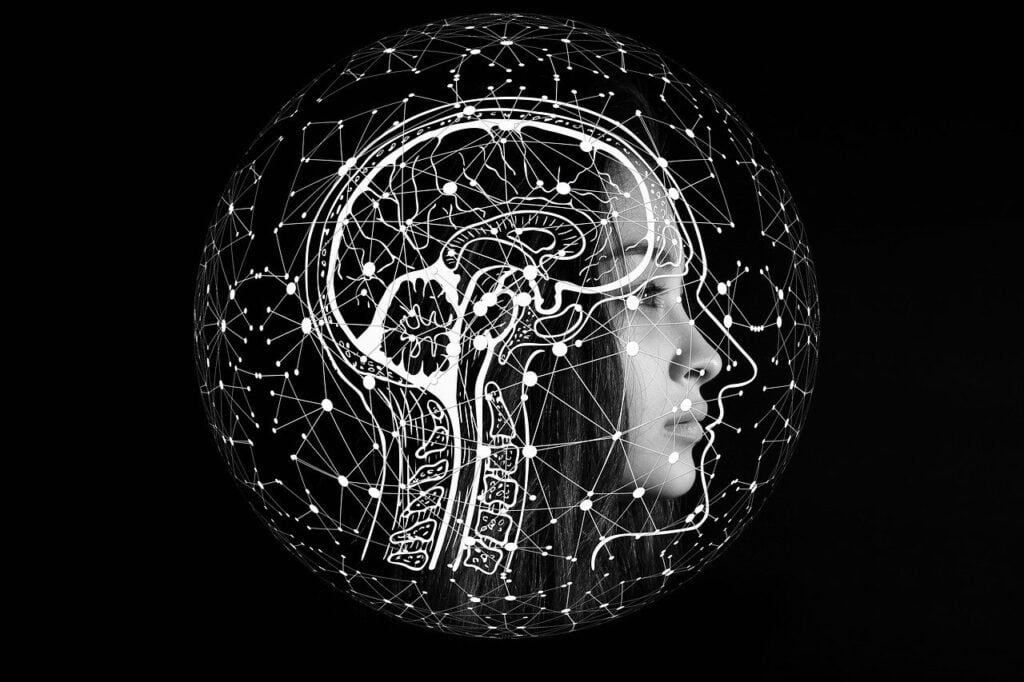
The Disadvantages of Artificial Intelligence: Challenges and Limitations in the Digital Age
Disadvantages of Artificial Intelligence: An Overview
The downsides of Artificial Intelligence are numerous and complex, ranging from ethical concerns to socioeconomic impacts. As AI becomes more deeply integrated into our lives, understanding these limitations is essential to addressing them effectively.
One of the main disadvantages is the potential loss of jobs. While AI creates new job opportunities, it also threatens to automate many existing jobs. This poses significant challenges for society and the global economy.
Another major concern is algorithmic bias. AI systems can perpetuate and amplify existing biases, leading to discriminatory decisions in critical areas such as hiring, bank lending, or even the criminal justice system.
Over-reliance on AI technology can also result in the atrophy of certain human abilities. For example, reliance on GPS navigation systems has led to a decline in spatial orientation skills in many people.
These are just a few examples of the disadvantages of Artificial Intelligence that we will explore in depth throughout this article.
Job losses and transformation of the labour market
AI-powered automation is radically transforming the workplace landscape. While some industries benefit from improved efficiency, others face significant disruption.
According to a McKinsey study , up to 30% of working hours globally could be automated by 2030. This raises critical questions about the future of employment and the need for large-scale professional retraining.
The most vulnerable sectors include:
- Manufacturing
- Transport and logistics
- Client services
- Finance and Accounting
However, it is important to note that AI is also creating new jobs in fields such as:
- Data science
- AI Engineering
- AI ethics
- Management of automated systems
The challenge lies in managing this transition in a way that minimizes job displacement and maximizes opportunities for the human workforce.
Algorithmic biases and discrimination in decision-making
One of the most worrying drawbacks of artificial intelligence is its potential to perpetuate and amplify existing biases. AI algorithms, trained on historical data that may contain prejudices, often reproduce these biases in their decisions.
For example, there have been documented cases of AI systems used in hiring processes favouring male candidates over female candidates, simply because historical data showed a preponderance of men in certain positions.
These biases can have serious consequences in areas such as:
- Criminal Justice: Risk Assessment Systems Biased Against Ethnic Minorities.
- Financial Services: Loan approval algorithms that discriminate by zip code or race.
- Healthcare: Less accurate diagnostic models for certain demographic groups.
To address this issue, it is crucial to implement more inclusive and diverse AI development practices, as well as rigorous algorithmic auditing methods.
Technological dependence and loss of human skills
As we rely more on AI to perform everyday tasks, we risk losing fundamental human skills. This technological dependence can have long-term consequences on our cognitive and problem-solving abilities.
Some examples of at-risk skills include:
- Navigation and spatial orientation
- Mental calculation and basic arithmetic
- Memory and information retention
- Handwriting skills
How does this affect our cognitive development? Studies suggest that excessive use of technology can alter brain plasticity and the formation of neural connections, especially in children and adolescents.
To counter this trend, it is important to foster a balance between the use of technology and the development of traditional human skills. This could include educational programs that emphasize critical thinking and problem solving without relying exclusively on digital tools.
Data privacy and security in the age of AI
The massive data collection required to power AI systems raises serious concerns about the privacy and security of personal information. The downsides of artificial intelligence in this area are particularly worrying.
The risks include:
- Large-scale data breaches
- Misuse of personal information
- Invasive surveillance
- Data-driven behavior manipulation
An emblematic case is the Cambridge Analytica scandal, where the data of millions of Facebook users was used without consent to influence electoral processes.
To address these concerns, the following are needed:
- Stricter regulations on data collection and use
- Greater transparency from technology companies
- Consumer education on digital privacy
- Developing privacy-first AI technologies

Environmental impact and energy consumption of AI
Often overlooked, the environmental impact of AI development and use is one of the most pressing drawbacks of artificial intelligence . Training AI models on a large scale requires enormous amounts of energy, significantly contributing to the technology sector's carbon footprint.
Some alarming data:
- Training a single natural language processing model can emit as much CO2 as five cars over their entire lifetime.
- Data centers, essential for AI, consume about 1% of global electricity.
To address this problem, several solutions are being explored:
- Developing more energy-efficient hardware
- Use of renewable energy in data centers
- Optimization of algorithms to reduce computational complexity
- Implementing “green AI” practices in the industry

Ethical and moral dilemmas in the development of AI
The development of AI raises a series of complex ethical and moral dilemmas that society must address. These ethical issues represent some of the most profound and philosophical drawbacks of Artificial Intelligence .
Some of the most pressing dilemmas include:
- Responsibility and accountability: Who is responsible when an AI system makes a mistake? The developer, the user, or the AI itself?
- Autonomy and free will: As AI becomes more advanced, how do we preserve human autonomy in decision-making?
- AI Rights: If we develop AI with consciousness or emotions, should they have rights?
- Bias and discrimination: How do we ensure that AI systems are fair and do not discriminate?
- Privacy vs. public benefit: Where do we draw the line between using data for the common good and protecting individual privacy?

Lack of transparency and explainability in AI systems
One of the most critical drawbacks of artificial intelligence is the lack of transparency in many AI systems, especially those based on deep learning. This problem, known as the "black box problem," raises serious concerns about the reliability and accountability of decisions made by AI.
Why is explainability important?
- User trust: People are reluctant to trust systems that cannot explain their decisions.
- Regulatory compliance: Many industries require that decisions be explainable and auditable.
- error detection: Without explainability, it is difficult to identify and correct errors in AI reasoning.
- Continuous improvementUnderstanding the decision process is crucial to improving AI systems.

Technological inequality and digital divide
The advancement of AI has the potential to exacerbate existing inequalities, creating a new kind of digital divide. This is one of the downsides of Artificial Intelligence with far-reaching socioeconomic implications.
Key aspects of this inequality:
- Access to technology: Not everyone has access to the devices or internet connections needed to benefit from AI applications.
- digital literacy: Lack of tech skills could leave many behind in an AI-driven economy.
- Concentration of power: Companies and countries that are leaders in AI can accumulate a disproportionate advantage.
- Bias in development:AI developed primarily in wealthy countries may not address the needs of marginalized populations.

Security risks and vulnerabilities in autonomous systems
The increasing reliance on AI-based autonomous systems presents significant new security risks. These vulnerabilities represent some of the most concerning downsides of artificial intelligence from a national and personal security perspective.
Some of the main risks include:
- Cyber attacks:AI systems can be attractive targets for hackers, potentially compromising critical infrastructure.
- Data manipulation: Malicious alteration of training data can lead to unintended behavior in AI systems.
- Vulnerability Exploitation: Weaknesses in AI algorithms can be exploited to cheat the system.
- Uncontrolled autonomy: Autonomous systems that make decisions outside of intended parameters can cause significant harm.

One of the less tangible but equally worrying downsides of artificial intelligence is its potential to dehumanize social interactions. As AI becomes more integrated into our daily lives, there is a risk that authentic human relationships will be compromised.
Key aspects of this dehumanization:
- Replacing human interactions: Chatbots and virtual assistants replacing human contact in customer service and healthcare.
- Emotional dependence on AI: Development of attachments to AI entities that cannot genuinely reciprocate.
Loss of empathy : Reduction of
- the ability to empathize with others due to frequent interaction with non-human entities.
- Social isolation: The comfort of interacting with AI can lead some people to isolate themselves from real human interactions.
- Unrealistic expectations:The perfection and efficiency of AI systems can create unrealistic expectations in human interactions.
To counteract this trend, it is important to:
- Fostering a healthy balance between technology and human interactions
- Designing AI systems that complement, rather than replace, human relationships
- Educate on the importance of social and emotional skills in the digital age
- Promote activities and spaces that foster direct human connection
It is crucial to remember that while AI can improve many aspects of our lives, it must not do so at the expense of our fundamental humanity and social connections.
The future of AI: Where are we headed?
When considering the downsides of Artificial Intelligence , it's important to look to the future and reflect on the directions this technology could take. AI development is at a critical crossroads, and the decisions we make now will shape its impact for decades to come.
Some potential scenarios include:
- super intelligent AI: The possibility of AI surpassing human intelligence, raising existential questions about our place in the world.
- Ubiquitous integration:AI is becoming so ubiquitous that it is practically invisible, influencing every aspect of our lives.
- Strict regulation: Rigorous legal and ethical frameworks that limit the development of AI in certain areas considered too risky.
- Human-AI collaboration: A future where humans and AI systems work in synergy, complementing each other's strengths.
To navigate this uncertain future, we need:
- Interdisciplinary research involving not only technologists, but also ethicists, sociologists and policymakers
- Ongoing public dialogue on the impacts of AI on society
- Developing flexible ethical frameworks that can adapt to rapid technological advances
- Investing in education to prepare future generations for an AI-driven world
The future of AI is not predetermined. It depends on the collective decisions we make as a society to direct its development in a responsible and beneficial way.