Have you ever had a small part break on an appliance or industrial machine, only to discover it's no longer manufactured when you go looking for a replacement ? It's a frustrating situation that can leave you with a useless appliance or a production line shut down for weeks. Fortunately, additive manufacturing has arrived to break down these barriers, allowing us to design and create the solution ourselves in a matter of hours.
3D printing isn't just for decorative figures; it has become a strategic ally for maintenance . Whether you're talking about a washing machine button, a classic car bracket, or a complex factory gear, this technology gives us complete control. Forget praying that the replacement part arrives from China and fits perfectly the first time; now you can be the master of your own destiny and optimize each part to outlast the original.
Advantages of integrating 3D printing into maintenance
Using printed spare parts offers a flexibility that traditional catalogs can only dream of. The most obvious benefit is the reduction in downtime , since you can manufacture the component the same day without relying on external logistics. Furthermore, it allows for massive inventory savings: instead of having shelves full of plastic and metal that you may never use, you can manage a digital inventory of print-ready STL files.
Another key point is the ability to iterate quickly. If a part fails, you can redesign and improve it on the fly, making it more robust or efficient. This is especially valuable in Industry 4.0, where customization and immediate response are essential for maintaining business profitability.
Internal or external? Choosing the service model
When a company decides to take the plunge, it faces the dilemma of buying its own printing equipment or hiring an expert. An in-house printing service offers unbeatable speed and complete confidentiality regarding designs, although it requires a significant initial investment in hardware and a learning curve for staff. It's the ideal option if the volume of prints is high and the need is urgent.
On the other hand, outsourcing the service is perfect for those who want to avoid technical complications and high fixed costs. Working with specialized suppliers guarantees access to high-end technologies and complex materials that would be prohibitively expensive for a small workshop to purchase, although we sacrifice some control and become dependent on the third party's deadlines.
Materials and technologies according to use
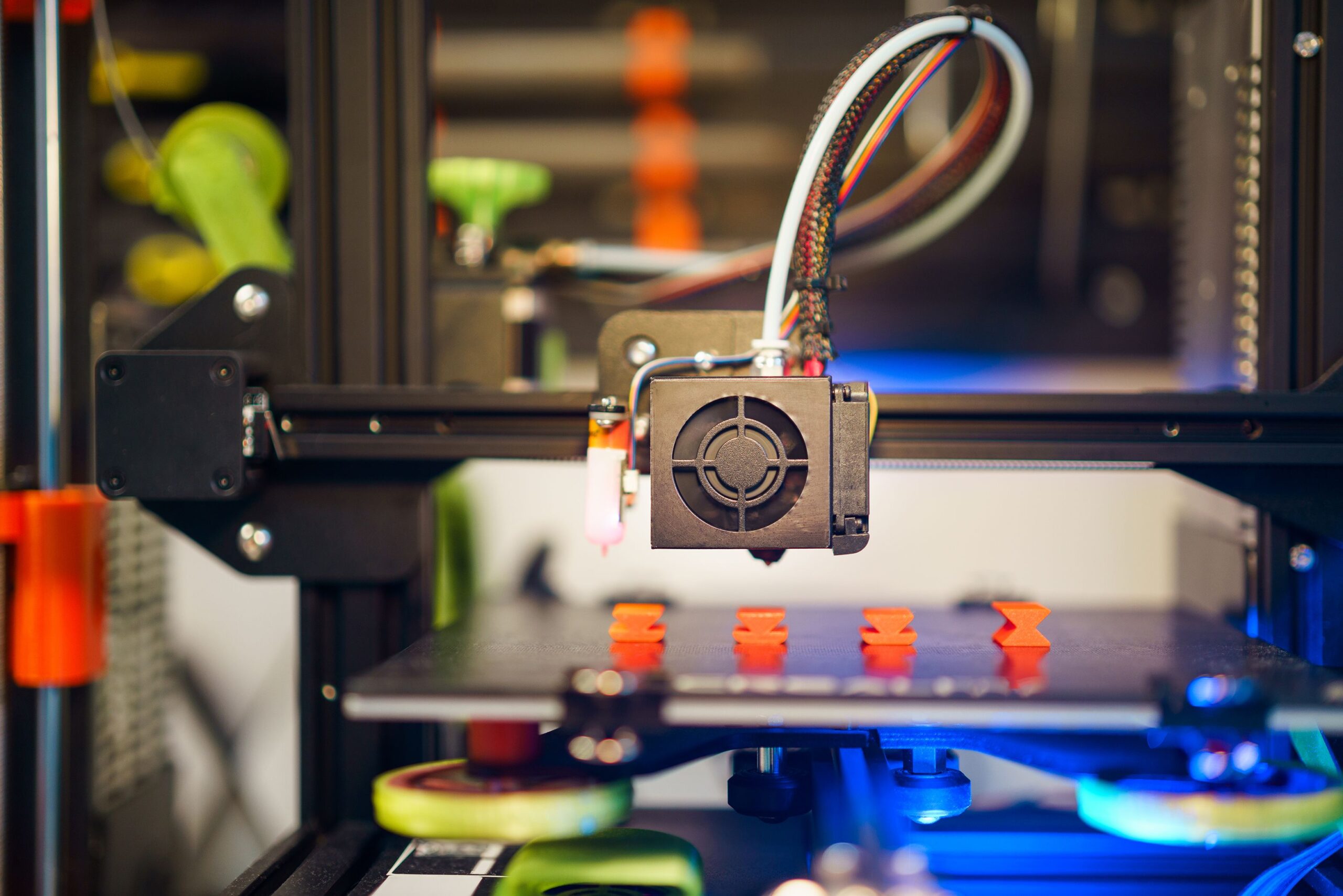
Not all plastics are created equal, and choosing the wrong one can cause your part to melt or break on first use. For parts subject to wear and tear or movement, such as gears, nylon (PA) is a safe bet due to its durability. If you need impact and heat resistance, ABS is the standard, while PETG is an all-rounder that combines toughness and chemical resistance.
For more demanding environments, there are high-performance plastics such as polycarbonate (PC) or carbon fiber reinforced polymers (PA-CF), ideal for the automotive sector. And if the part is critical and must withstand extreme pressures, metal printing (aluminum, steel, or titanium) using DMLS is the ultimate solution, although its cost is considerably higher.
In terms of technology, FDM is the cheapest and most common option for simple, functional parts. SLS is the professional-grade option par excellence, as it doesn't require supports and creates very strong parts. If you're looking for millimeter-precise detail and smooth finishes, SLA (resin) is the best, while MJF offers the perfect balance between speed and quality for short production runs.
Step-by-step process to create your spare part
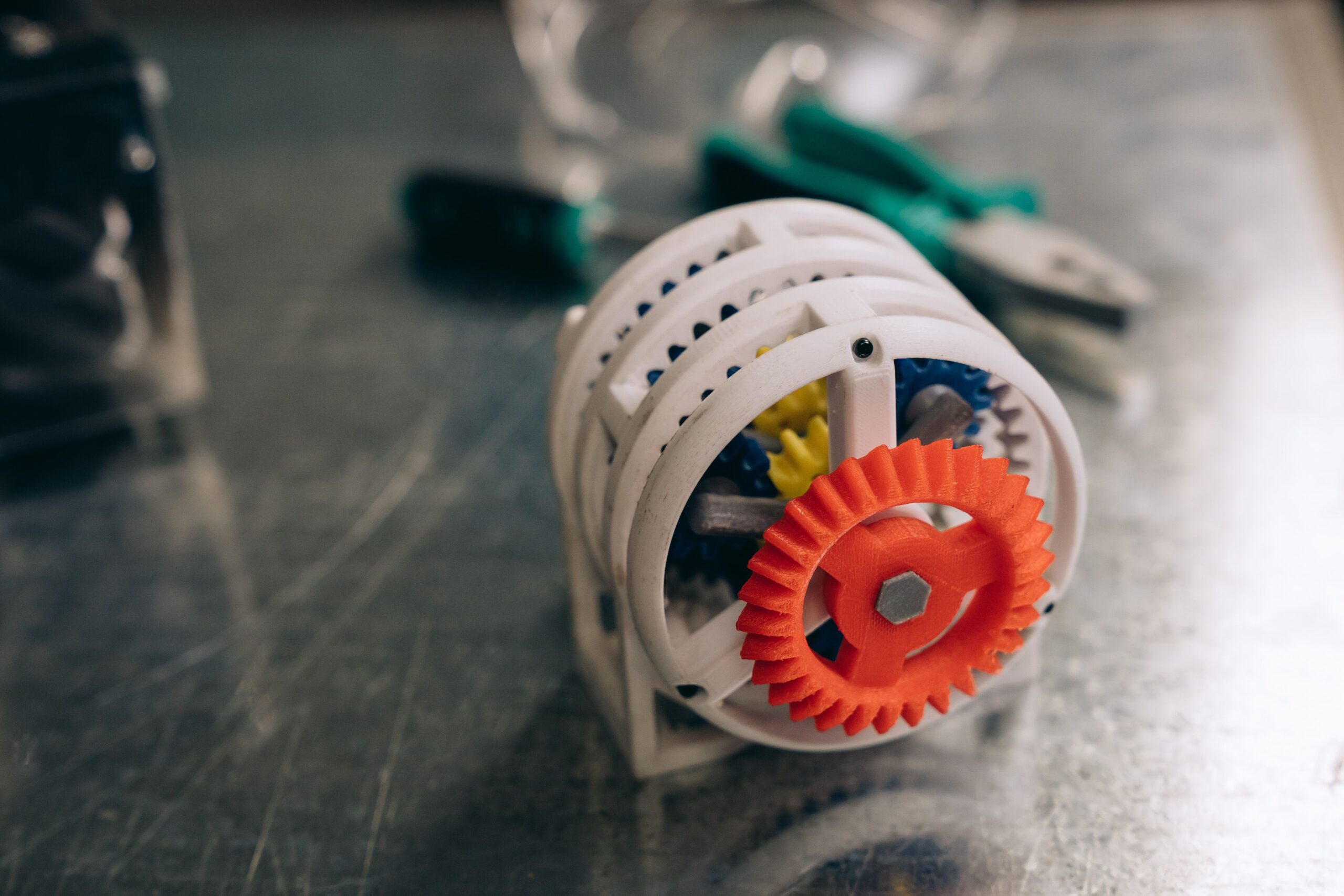
To ensure the part is more than just an experiment and actually works, a rigorous workflow must be followed. The first step is verifying technical requirements : analyzing whether the part will be exposed to UV rays, chemicals, or high temperatures to choose the appropriate material and ensuring the dimensions fit within the printer's build volume.
The next step is digitization or modeling . If you have the CAD file, great; if not, you'll need to reverse engineer it using 3D scanning or by measuring everything with an electronic caliper. Once we have the model, we configure the printing. For structural parts, it's vital to increase the infill density to 100% and adjust the part's orientation so that the layers better withstand mechanical stress.
Finally, post-processing begins . Simply removing the part from the machine isn't enough; supports must be removed, surfaces sanded, and, in the case of ABS, acetone vapor can be used for a mirror finish. To complete the process, load and vibration tests are essential before installing the replacement part in the final machine to prevent accidents.
Practical applications: From the kitchen to the workshop
In the realm of household appliances, we can salvage devices simply by printing a control knob, a ventilation grille , or an internal component that has become brittle over time. This is the most sustainable way to combat planned obsolescence, extending the lifespan of our household equipment.
In the automotive sector, the applications are endless. From rearview mirror housings and trim pieces to critical parts for classic cars that are no longer available. The same is true in the food or chemical industries, where a custom-designed bracket can prevent an entire production line from being halted due to a minor issue.
Legal considerations and limitations
Be mindful of the law: Printing a part for your own or internal use within your company is generally safe, but you must not infringe on existing patents or sell registered designs as your own. Especially for automotive or healthcare safety components, it is crucial to prioritize certified parts to avoid compromising anyone's safety.
We also have to be realistic: 3D printing doesn't work miracles. The maximum size is limited by the printer, and the surface finish can require a lot of manual work. Furthermore, some plastics don't withstand the same friction as a part injection-molded in steel, so you should always assess the technical feasibility before starting.
The ability to manufacture spare parts on demand transforms the way maintenance is understood, allowing any individual or company to move from the frustration of waiting to the efficiency of immediate creation . By combining the right choice of technical materials with optimized design and rigorous quality control, it's possible to refurbish obsolete machinery and optimize operating costs sustainably and professionally.