- Integration of local language models with ZIM files to eliminate cloud dependency.
- Implementation of RAG architectures that allow small models to access massive amounts of knowledge.
- Hardware and software optimization through quantization and context servers to improve factual accuracy.

Imagine suddenly losing your internet connection or deciding you're fed up with your personal data feeding the servers of a megacorporation. In a world where we're completely dependent on the cloud, the idea of having a sovereign artificial intelligence that doesn't need Wi-Fi to respond to you seems like something out of a novel, but it's entirely possible today. The key lies in combining the power of local language models with Kiwix's storage capacity.
Basically, we're talking about creating a digital brain on your own computer that not only reasons but also has an encyclopedic library at its disposal. By integrating ZIM files, which are compressed versions of sites like Wikipedia or Stack Overflow, we prevent the AI from having to invent things, giving it a real and verifiable database to work with, turning any modest laptop into a powerful information survival tool.
The problem of small models and the RAG solution
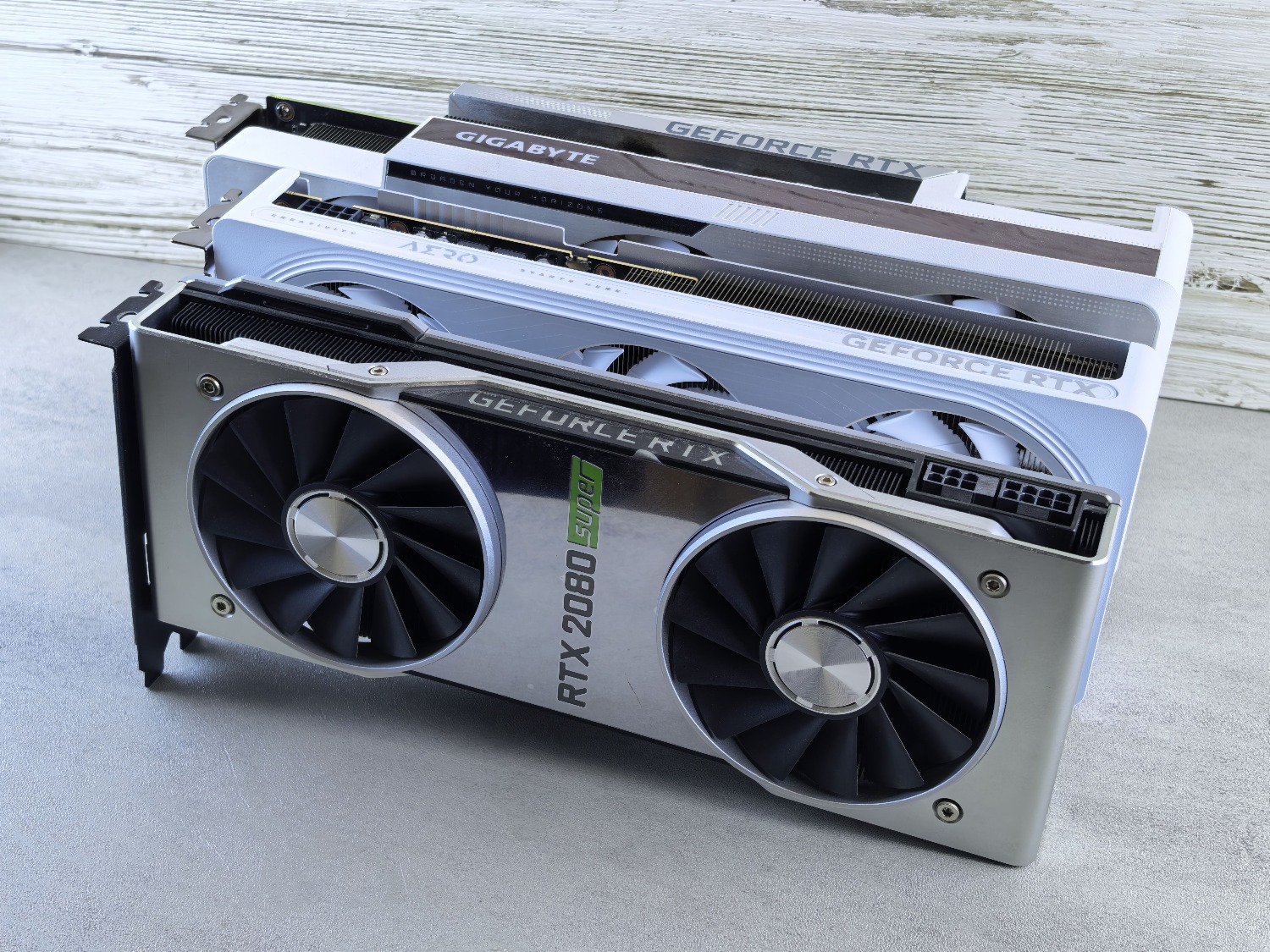
When we install an LLM on our machine, we usually hit a wall: the hardware. To run massive models without being overwhelming, you'd need an investment in GPUs that would make anyone tremble. That's why we tend to resort to more compact models (with 3 or 7 billion parameters), but these have a serious problem: their knowledge base is limited , and they tend to invent data with astonishing certainty when they don't know the answer.
This is where Recall Augmented Generation (RAG) comes in. Instead of expecting the model to know everything by heart, we give it the ability to consult external documents . By connecting the LLM to Kiwix, the AI no longer tries to guess who founded a company or how a technical protocol works; it simply searches for the relevant article in the ZIM archive, reads the information, and summarizes it for you. This drastically reduces wishful thinking and allows a small model to perform almost like a giant one on factual tasks.
Key tools for integration

There are several ways to set up this ecosystem. One of the most direct is using plugins like llm-tools-kiwix , which allows LLM's command-line interface (CLI) to automatically detect ZIM files on your disk. This tool exposes specific functions so that AI can search for and collect content without using a browser, facilitating transparent access to developer documentation or entire encyclopedias.
Another more robust option is the use of MCP (Model Context Protocol) servers. These act as an intelligent bridge connecting the Kiwix server to the model. In real-world tests, a model with only 4 billion parameters, which typically fails most general knowledge questions, has been shown to achieve overwhelming accuracy when it has access to a Kiwix server with the complete Wikipedia, going from answering a third of the questions correctly to almost all of them.
Indexing strategies and vector databases

To ensure instant searches and avoid taking an eternity to read gigabytes of text, vector databases like ChromaDB or FAISS are used. The process involves fragmenting Wikipedia articles into smaller pieces, called chunks, and converting them into mathematical vectors. A highly effective strategy is recursive character splitting , which avoids splitting sentences in half and preserves paragraph structure, ensuring that the context reaching the LLM is coherent and useful.
It's important to note that the initial indexing can be a slow process, taking several hours depending on your CPU's processing power. However, once the database is created, queries are virtually instantaneous. To optimize space usage, it's recommended to use efficient embedding models like BGE-small, which balance processing speed with data retrieval quality.
Hardware optimization and deployment
You don't need a NASA-level workstation for this to work. Thanks to quantization , which reduces the precision of model weights (like the Q4_K_M format), we can save a significant amount of VRAM without any noticeable loss in response quality. On Macs with Apple Silicon, unified memory is a huge advantage, allowing you to load larger models than on a conventional PC with limited RAM.
For those working in teams, a masterstroke is to set up a shared Ollama server on a powerful machine on the local network. This way, all developers can take advantage of the same GPU and the same downloaded models without overloading their own laptops. If you need to access it from outside, tools like ngrok can open a secure tunnel, although it's always vital to configure authentication to prevent unauthorized access to your computing resources.
Privacy and digital sovereignty
Beyond the technical aspects, the true value of this setup is privacy. By running everything locally, your prompts and your company's code don't travel to any external server . This is crucial in regulated sectors like healthcare or finance, where uploading data to the cloud could pose serious legal problems. Having complete control over the infrastructure allows you to decide exactly which model to use and how to handle the information.
Ultimately, we're creating a resilient system. While paid APIs can change their prices or restrict access, a local LLM powered by Kiwix is an asset you physically own. It's the difference between renting knowledge in the cloud and owning your own smart library, capable of functioning even in the most extreme scenario of a complete outage.
The combination of efficient language models, data retrieval techniques using RAGs, and Kiwix's massive storage allows any computer to be transformed into an infinite and private source of knowledge. By optimizing hardware through quantization and organizing information in vector databases, we achieve AI that is accurate, fast, and, above all, network-independent, guaranteeing data sovereignty and information availability under any circumstances.
FAQ
How does Kiwix help reduce hallucinations in a local LLM?
Kiwix provides an external factual database using ZIM files, which the model consults before responding. This allows the AI to base its response on real, verifiable data instead of trying to predict information from its limited memory.
What minimum hardware do I need to run an LLM with local RAG?
A minimum of 8GB of RAM is recommended, although 16GB or more is ideal for smooth operation. Using a dedicated GPU or Apple Silicon chips significantly speeds up response times and the indexing process.
What is quantization and what is its purpose in this context?
It's a technique that reduces the model size by decreasing the precision of its internal data. This allows powerful models to run on consumer hardware while consuming significantly less VRAM.
What is the difference between using a CLI plugin and an MCP server?
The CLI plugin is a more straightforward tool for quick searches from the terminal, while the MCP server establishes a more standardized and robust communication protocol for integrating AI with other applications.
Do I have to index the ZIM files every time I restart the system?
No, indexing in the vector database is done only once and saved to disk. Subsequent queries access these already created vectors, making responses almost instantaneous.
Is it safe to expose my local LLM server to the internet?
It's risky if you don't take precautions, as anyone with the URL could consume your GPU resources. Configuring authentication methods like Basic Auth or IP restrictions is essential when using tools like ngrok.
