
You've probably wondered how those old scientific calculators worked inside, or why some programming languages seem to write math backwards. Even though we've been taught since school that addition and subtraction symbols always go in the middle of numbers, there's a fascinating world out there called Reverse Polish Notation that breaks with everything we know.
This system is not a modern invention; it has its roots in pure logic and the desire to make algebraic expressions more efficient. Unlike what we usually do, here the order of the factors does alter the way we write them, allowing us to forget about parentheses completely and simplify data loading into computer systems.
The origin: From Jan Łukasiewicz to computing
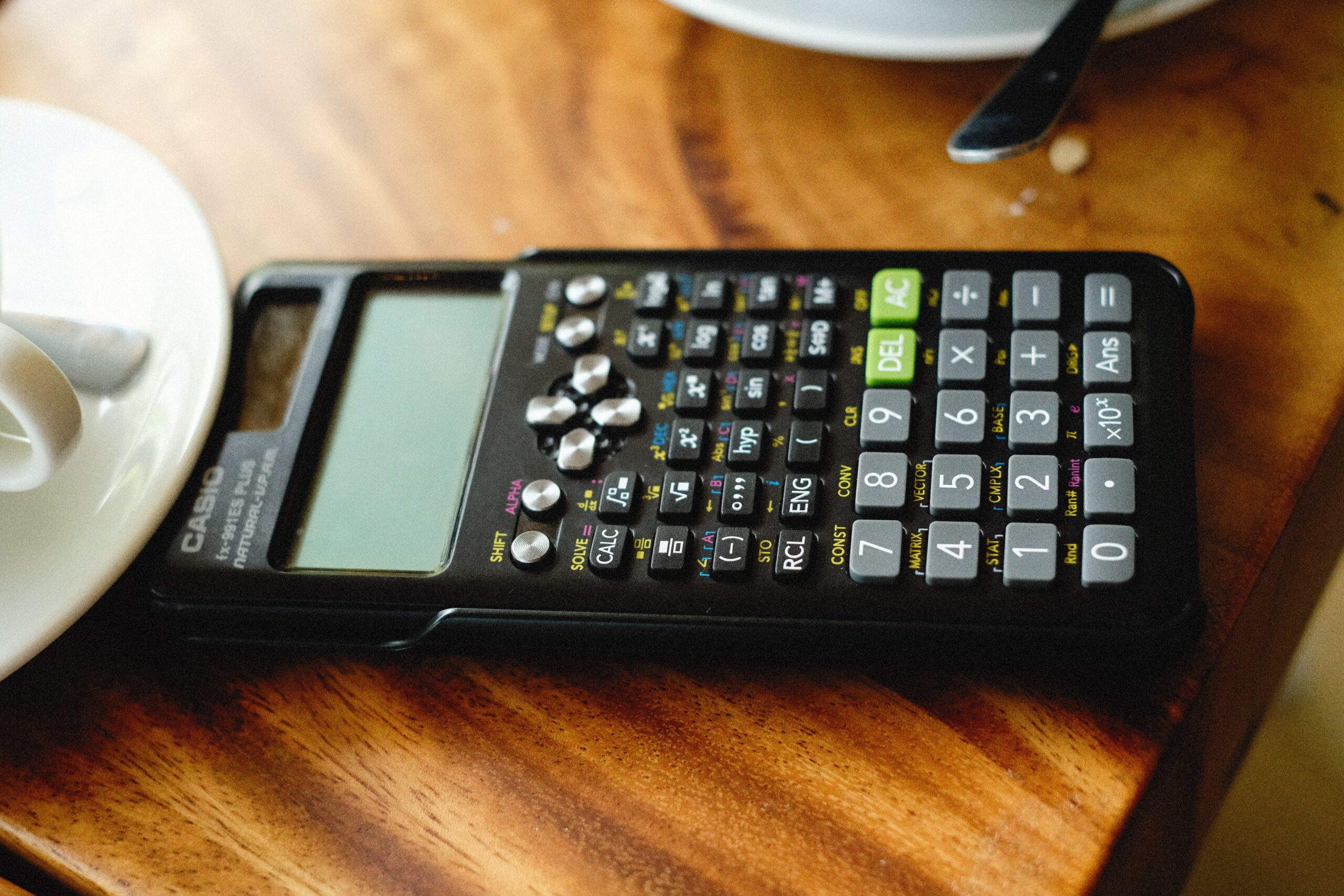
It all started back in 1924 thanks to a brilliant Polish mathematician, logician, and philosopher named Jan ŁukasiewiczThis gentleman set out to simplify propositional logic and created what is known as prefix notation (or Polish notation), where the operator is placed before the operands. For example, if we want to add 3 and 4, instead of writing 3 + 4, we would write + 3 4.
Although at first it seemed like a curiosity for logicians and philosophers, and was even mentioned by Alonzo Church in his texts on mathematical logic, the idea eventually landed in the world of computer science. In fact, the programming language LISP bases its syntax precisely in this prefix model, demonstrating that what was born for logic ended up being a brutal tool for code.
What exactly is Reverse Polish Notation?
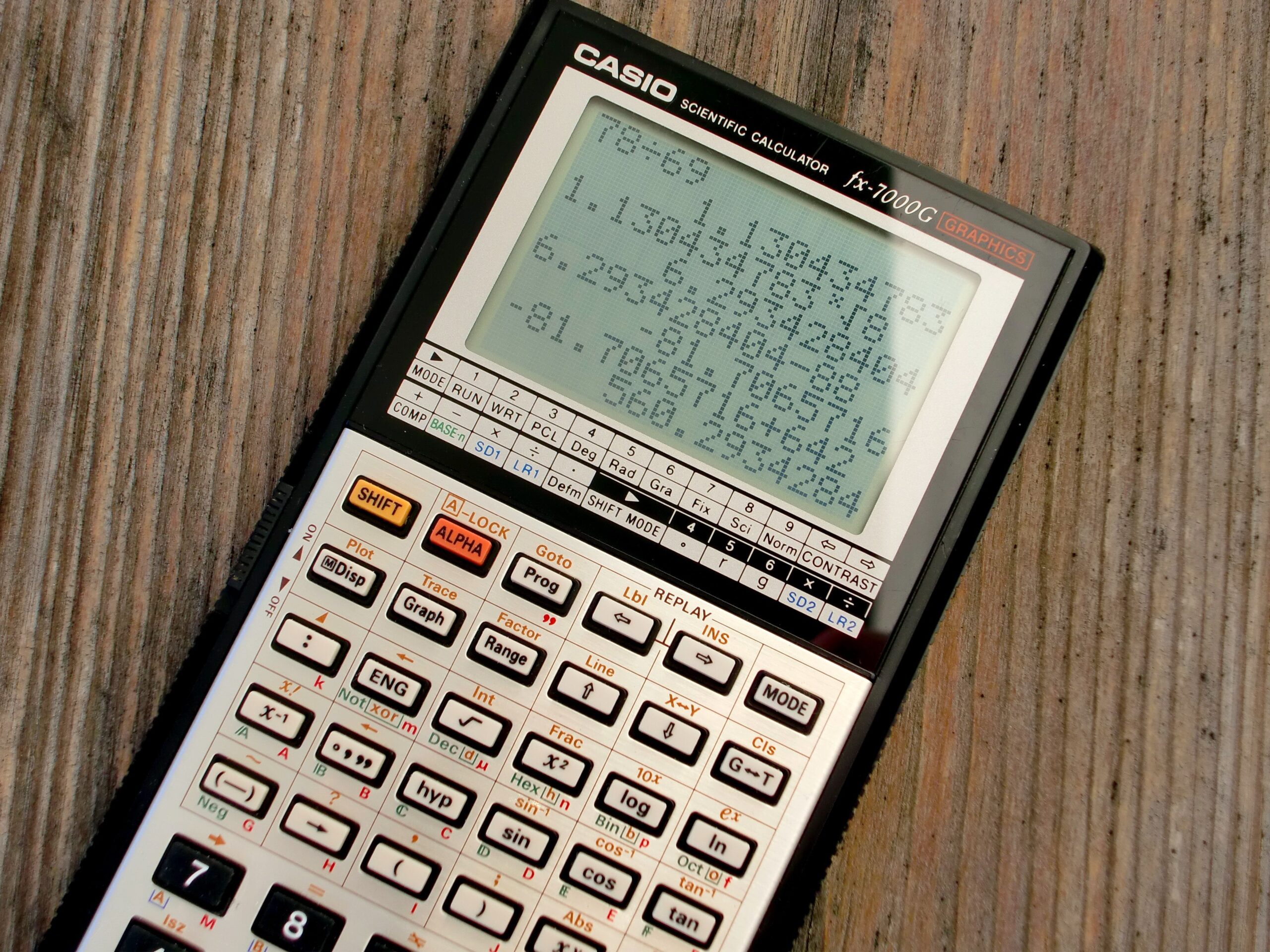
If prefix notation puts the operator in front, Reverse Polish Notation (also known as RPN) Reverse Polish Notation or postfix notation) does just the opposite: it places the operators after the operands. Thus, our usual sum of 2 and 5 becomes 2 5 +.
The most powerful aspect of this system is that, as long as the operators have a fixed number of operands, The parentheses can be removedLet's take the operation 5 * (12 + 4) as an example. In the traditional system, we need parentheses to force the addition first; however, in RPN this is simply written as 5 12 4 + *It's much cleaner and more straightforward for a machine.
The golden age of Hewlett-Packard and calculators
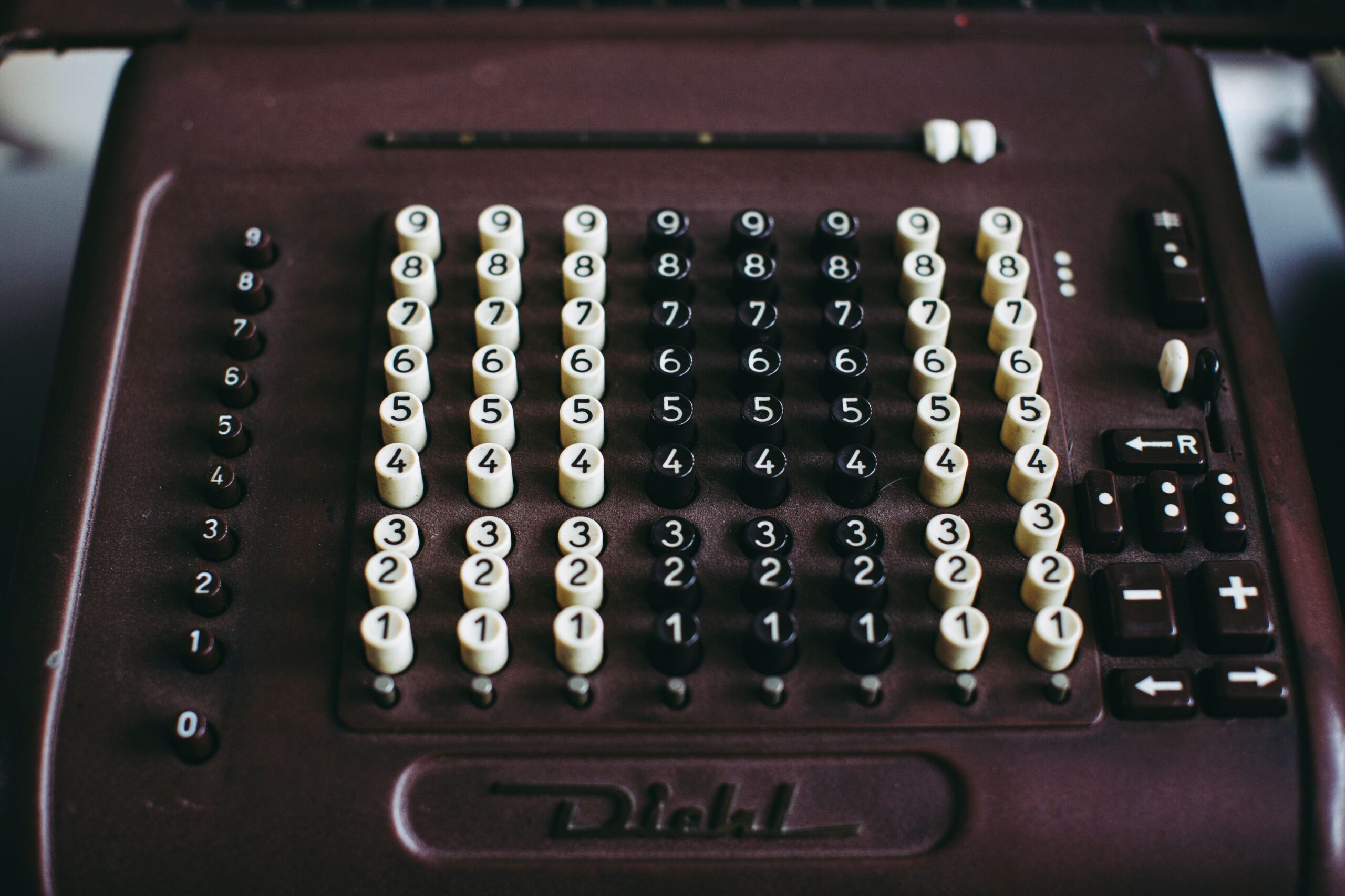
In the mid-60s, Australian scientist Charles Leonard Hamblin perfected the algorithms for implementing this system in electronic devices. It was then that the company Hewlett-Packard They decided to take a chance, launching the HP-9100A in 1968, a desktop calculator that changed the game. Shortly after, the legendary HP-35, the first pocket scientific calculator, which put the RPN in the hands of thousands of engineers and students between 1972 and 1975.
Using these machines required a little extra mental effort to interpret the result, but it was much more economical in terms of number of pulsesInstead of writing a long equation and pressing equals, you would enter numbers and operators that were processed instantly, making the workflow much more agile.
Technical implementation: Stacks and pipes

From a programming perspective, RPN is wonderful because it is extremely easy to implement using a data structure called stackThe system stores the numbers in the stack and, as soon as an operator appears, it extracts the last values entered, performs the calculation and puts the result back into the stack.
This efficiency is the reason why, although we no longer see as many physical calculators with this system, RPN lives on in the guts of current technology. It is widely used in stack-oriented languages and in operating systems based on pipelines or data flow, a classic example being its presence in the environment of Unix.
Curiosities about Łukasiewicz and logic
Jan Łukasiewicz not only left us this way of writing math. He was a pioneer in multivalued logics and modal logic. He even tackled intellectual challenges such as... liar paradox (the phrase "this is false"). His solution was brilliant: he argued that logical principles only apply to objects that can be variable values, and since that contradictory phrase cannot be the value of a variable, simply It's illogical and traditional logical analysis cannot be applied to it.
This fascinating journey from the mind of a Polish logician to the circuits of HP calculators and the Unix kernel shows us how an alternative way of organizing information can optimize data processing. By eliminating the need for parentheses and relying on the use of stacks, Reverse Polish Notation remains an invisible but fundamental pillar in the architecture of many modern computer systems.