- The creation of deepfakes combines artificial intelligence, neural networks, and large volumes of data.
- Techniques such as diffusion networks, GANs, face-swapping, and lip-syncing facilitate realistic results.
- Responsible use and detection of deepfakes are key to curbing misinformation and fraud.

Deepfakes have become one of the most surprising and, at the same time, controversial technological advances of recent years. It's increasingly common to encounter videos or images showing public figures and anonymous individuals making statements or performing actions that never actually happened. The key to this phenomenon lies in the use of artificial intelligence to manipulate and generate visual and audio content almost indistinguishable from reality. If you've ever wondered how deepfakes are made or what technologies are behind them, here's a complete guide that reveals all their secrets: from the techniques used to the risks and responsible uses.
The popularity of deepfakes is no coincidence: right now, anyone with a decent computer and a little curiosity can access free or paid tools and start experimenting. However, the profound social, ethical, and technical impact of deepfakes requires going beyond simple curiosity: understanding how they work, what risks they entail, and how they can be used positively is crucial in the midst of the rise of artificial intelligence.
What is a deepfake and why are they so realistic?
Essentially, a deepfake is manipulated audiovisual content—primarily videos, but also images and audio—generated using deep learning algorithms . These algorithms , specifically neural networks , are capable of analyzing and recreating patterns of facial expressions, movements, tone of voice, and even body gestures from large datasets. In this way, it's possible not only to change a person's face in a video, but also to put words in their mouth or imitate their voice with remarkable realism.
The most impressive thing about current deepfakes is their level of realism . Early versions were clumsy and unconvincing, but advances in AI have made it increasingly difficult to distinguish a genuine video from a manipulated one. All of this has led to intense debate about their use and their potential social and legal consequences.
The most advanced technologies for creating deepfakes
Creating a convincing deepfake can be achieved in several ways today. The most advanced and popular techniques include:
- Broadcast networks: AI models that generate images and videos by adding and removing digital “noise,” producing entirely new faces from the original data.
- Antagonistic Generative Networks (GANs): Two opposing neural networks generate and validate fake content until they achieve a result that is almost indistinguishable from the real thing.
- Face-swapping: The well-known face swap, where one person's face is superimposed, in great detail, onto another's face in a video or image.
- Lip-syncing: A technique that adjusts mouth and voice movements to match a chosen speech, even more effective when combined with synthetic voice.
Broadcast networks: creating images from noise
Diffusion networks represent the final frontier in deepfakes. They work by "dirtying" original images by adding random noise until they become unrecognizable. The model then learns to reverse this noise and reconstruct the image, but with specified modifications (such as a different person's face or expression). This produces surprisingly realistic results that can be taken directly from a distorted version, making it extremely difficult to detect the original manipulation.
According to recent research, so-called consistency models are already beginning to outperform conventional broadcast networks, turning noise into useful data more directly and efficiently.
GAN: the double control technique
Before broadcast networks, the standard was generative adversarial networks ( GANs ). Here, a generator creates fake content (images or videos), while a discriminator evaluates its authenticity. Both are trained against each other, like in a cat-and-mouse game, until the deepfake becomes virtually impossible for the human eye to detect.
This technique was key to the first high-quality deepfakes, but it was more expensive and less efficient than current systems. Even so, it remains a widely used foundation for most commercial tools and open-source projects.
Lip - syncing is a popular technique, both for its simplicity and how easily it can be automated. The process involves adjusting mouth movements in a video to match any chosen audio, even using AI-generated synthetic voices.
In many cases, a powerful computer isn't even necessary: mobile apps can create deepfake videos in just a few minutes. The quality and realism increase when more reference images are used and better hardware is employed.
Face-swapping: the classic face swap
Face -swapping is the basis of many of the deepfakes circulating online. It involves superimposing the face of the person you want to impersonate onto another person's face in a real video. The more images and angles used to train the model, the more believable the result will be.
Famous examples range from humorous videos of celebrities "turned" into other characters to initiatives like the Salvador Dalí Museum, which used thousands of images to create an interactive version of the artist. The danger is that, with current tools, virtually anyone can create a minimally convincing deepfake with just a reference photo, multiplying the possibilities for use (and abuse).
How to create a deepfake step by step?
Creating a quality deepfake requires understanding the basics of AI and having the right resources. To achieve this, the process typically follows these steps:
- Search and select images or videosThe more high-quality images and videos you can collect of the person you're impersonating (and the original), the better the result will be. Varying facial expressions, angles, and lighting conditions help a lot.
- Training the AI modelDeep learning algorithms process all this material to learn the particular features and movements of the face to be copied.
- Use of specific toolsPrograms like DeepFaceLab, Zao, FaceApp, and Deepfakes Web offer simple interfaces for face swapping, lip-syncing, or generating synthetic voices. Some require powerful computers with GPUs, while others operate in the cloud or directly on a mobile device.
- Processing and adjustmentThe AI model composes the video by blending the impersonated face and, if necessary, adapting lip movements and voice to make everything fit together perfectly. Manual adjustments can be made to perfect details (expressions, lighting, etc.).
- Final touchesSome programs allow you to improve video quality, remove defects, or even add watermarks to indicate manipulated content.
Sometimes the process can take just a few minutes; other times, it can take days of training and very expensive hardware, depending on the desired realism and available resources.
Popular tools and programs for creating deepfakes
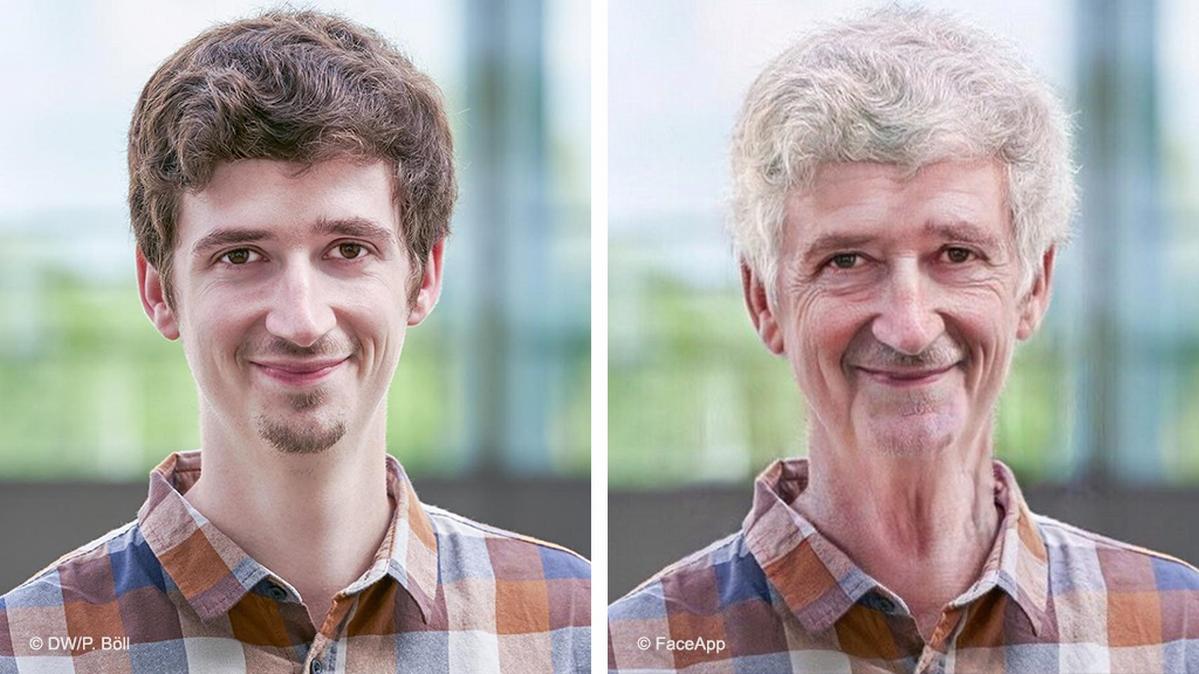
Today, you can find everything from mobile apps to complex open-source programs. Some of the most widely used and accessible are:
- DeepFaceLab: A benchmark in the world of deepfakes, it offers a wide variety of tutorials and advanced features for face swapping.
- Zao: A very popular Chinese mobile app that allows you to quickly create deepfake videos using a reference photo.
- Snapchat y Lens AI: Apps that make it easy to swap faces and apply advanced filters, ideal for users looking for quick and fun results.
- Deepfakes Web: Online platforms that offer everything from animation of old photographs to more elaborate videos, often with paid or freemium tools.
- wombo y DeepBrain: They stand out for the realism of the voices generated and the ease of use in creating music videos and memes.
- Faceapp: Allows you to modify faces and create impressive effects with just one click.
In addition, services like Speechify AI Voice Generator specialize in creating AI voices that sound natural, making it easy to include realistic voiceovers in any deepfake video.
Positive uses and risks of deepfakes
The technology behind deepfakes is neither good nor bad in itself: it depends entirely on the intention. On the one hand, we find positive applications ranging from entertainment —memes, jokes, and viral videos—to film, advertising, and education. For example, creating multilingual advertising campaigns without the need for travel or filming, resurrecting historical figures, or protecting the identity of people in documentaries (as in Welcome to Chechnya ).
However, the risks are very real. Deepfakes can be used to spread misinformation, manipulate elections, perpetrate scams, or harass . There are documented cases of voice impersonation of executives to commit multimillion-dollar frauds. The ease of use of many tools multiplies the threat of irresponsible or malicious use.
Therefore, it is essential to promote responsible use : clearly indicating when content is fake , adding watermarks, and educating people about the existence and risks of these videos. Furthermore, AI itself is being used to create increasingly effective deepfake detectors, although the race between creators and detectors remains very close.

Deepfakes in society: media cases and current applications
In recent years, deepfakes have gone from being a curiosity to becoming a culturally and socially relevant phenomenon. In politics, they have been used both to manipulate discourse and to satirize public figures. From videos in India where politicians' language is changed to attract more voters, to viral manipulations in the United States related to election campaigns.
In the world of film and television , deepfakes have revolutionized the production of advertisements and movies, allowing for the creation of content where the protagonists were never physically present. Examples include the Cruzcampo campaign featuring Lola Flores and David Beckham's appearance in different languages for a charity initiative.
Similarly, AI has been used in documentaries and journalism to recreate historical narratives or protect the identities of witnesses and victims. Education and culture are also exploring the potential of deepfakes, as seen in the Dalí Museum, where the artist himself "comes to life" to interact with visitors.
In the medical field , GANs are used to generate synthetic images of tumors or lesions, which are key to training diagnostic models when there is not enough real data.
Challenges, ethics, and the future of deepfakes
Advances in AI make detecting deepfakes a constantly evolving challenge. Major tech companies and regulatory agencies are working to identify these manipulations and protect users, implementing everything from social media labels to restricting dangerous apps.
The main challenge lies in balancing innovation and security . Increasing access to deepfake creation tools compels society to stay informed, develop a critical perspective, and demand accountability when this technology is used for harmful purposes. However, if managed properly, deepfakes can open the door to new forms of expression, creativity, and learning.
Deepfake technology is here to stay, and it will continue to evolve rapidly. Understanding its techniques and applications—and learning how to use it ethically and responsibly—is the best way to harness its full potential while minimizing its risks. Stay tuned for developments and don't hesitate to explore the possibilities, always with a critical eye and respect for privacy and truth.
