- Metaprogramming allows you to treat code as data, dynamically generating or modifying code to automate tasks and reduce repetition.
- It excels in dynamic languages (Python, Ruby, JavaScript) through decorators, proxies and reflection; it also exists in C++ and Julia with macros and templates.
- It offers flexibility, less repetitive code and abstraction, but increases complexity and can affect performance and maintainability.

Metaprogramming is a fascinating concept in the field of modern programming. It consists of the ability of programs to modify or generate code dynamically during their execution, which allows for optimizing processes and creating more efficient solutions. Although at first glance it may seem abstract or even complex, understanding it opens the door to new ways of approaching development problems.
In this article, we will explore in depth what metaprogramming is, its applications, benefits, and challenges. We will also discuss its variants and how it is implemented in different programming languages, from the most conventional to the dynamic ones. Thus, we will discover how metaprogramming can revolutionize the way we write and understand code.
What is metaprogramming?
Metaprogramming is a technique that allows a program to treat code as data. This means that the software can analyze, modify, generate, or even transform itself during execution. In simple terms, it's "programming that writes programming ." This feature facilitates the automation of repetitive tasks and the creation of more generic and flexible solutions.
This technique acquires particular relevance in dynamic languages such as Python, Ruby o JavaScript, where you have access to tools such as eval or proxies, which allow for greater manipulation of the code at runtime. However, it is also present in static languages such as C++, albeit with significant limitations.
History and origin of metaprogramming
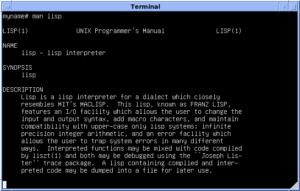
The concept of metaprogramming is not new. It emerged over 40 years ago with languages like Lisp , a pioneer in providing tools to manipulate code as data. Later, Smalltalk took this idea to a new level during the 80s, and since then, it has been a recurring feature in many modern languages. Although these languages initially suffered from performance limitations, they have evolved significantly thanks to advances in hardware and software optimization.
For example, the inclusion of proxies and reflection in JavaScript starting with ES6 marked a turning point in its metaprogramming capabilities. Similarly, languages like Ruby and Python have popularized the use of elements such as decorators and macros , which facilitate metaprogramming tasks in an intuitive and powerful way.
Types and techniques of metaprogramming
Metaprogramming can be classified into several types depending on its application and the time at which it is carried out. Here are the most prominent ones:
Reflective Metaprogramming
This type focuses on the program's ability to inspect and modify itself at runtime. For example, in JavaScript, using the object Reflect, the internal structure of other objects can be inspected.
- Introspection: Allows you to analyze the properties, methods, or structures of an object. In dynamic languages, this is used to validate data or perform code audits.
- Self-modification: It implies that the program can change its own code or behavior as it runs, although this technique should be used with caution.
Generative Metaprogramming
This approach focuses on writing code that generates more code, either at compile time or run time. A classic example in Julia It is the macro @eval, which allows you to create methods in an automated way, reducing repetitive code.
Domain Specific Languages (DSLs)
Metaprogramming is also used to create DSLs, which are small extensions to the base language designed for a specific task. In Ruby on RailsFor example, it is common to see statements like validates_presence_of, which validate data in a readable and specific manner.
Key tools and concepts in different languages
Metaprogramming is not unique to any particular language, but each language implements it with unique tools. Here are some relevant ones:
JavaScript
En JavaScript, the arrival of ES6 He brought with him tools such as objects proxy y Reflect, which facilitate introspection and object manipulation:
- Proxy: It allows you to intercept operations such as property assignment or method calls, defining custom behavior in the process.
- Reflect: Provides an API for interacting with object properties, simplifying previous tasks that required more detailed code.
Python
In Python , metaprogramming is made possible through elements such as decorators and metaclasses :
- Decorators: Functions that modify the behavior of other functions or classes. For example, in Flask, decorators are used to define HTTP routes.
- Metaclasses: These are classes of classes. They control how classes are created and provide an extra level of customization for program behavior.
Ruby
Ruby: language and ecosystem It is one of the languages where metaprogramming is most frequently used. Its method eval is a clear example of how it dynamically generates classes during the execution of the program. In addition, the reflectivity in Ruby allows you to easily inspect methods and properties of an object.
Advantages of metaprogramming
Adopting metaprogramming techniques brings several significant benefits:
- Reducing repetitive code: Many repetitive or similar tasks can be automated.
- Greater flexibility: It allows for solving problems in a more adaptable and generic way.
- More readable code: Abstraction improves code understanding and reading.
Challenges and precautions
Despite its advantages, metaprogramming is not without its challenges. The main ones are:
- Complexity: Metaprogramming code can be difficult to understand and maintain.
- Performance Impact: Generating and modifying code at runtime can slow down your program.
Metaprogramming is a powerful tool that, when used properly, can transform the way we develop and maintain software. By understanding its foundations, limitations, and applications, developers can reap its benefits without compromising code quality and sustainability.