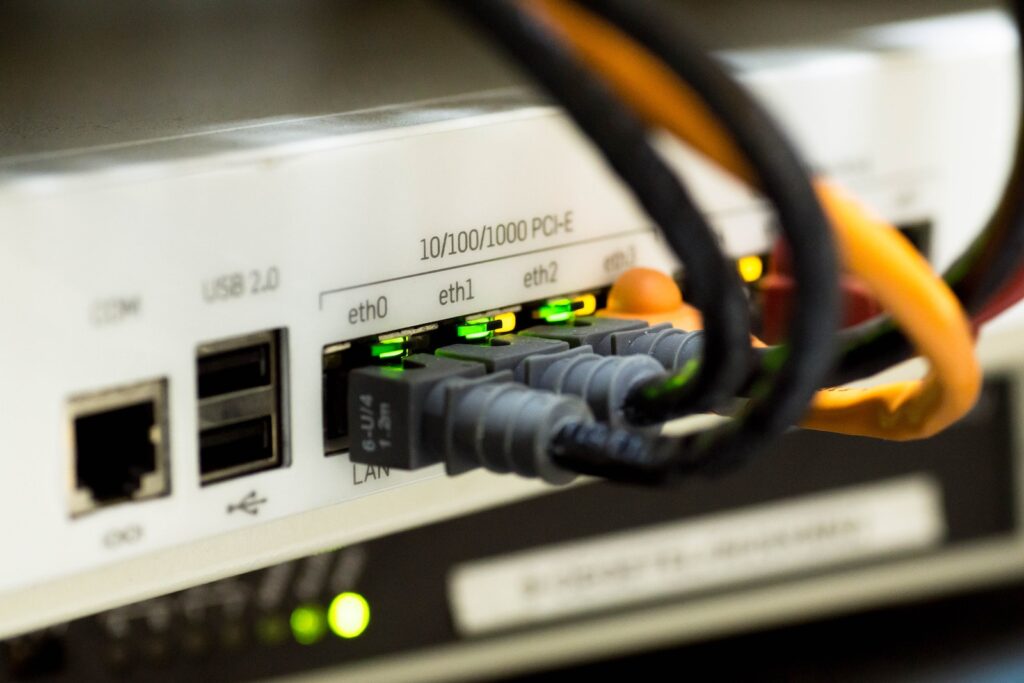
The OSI model is a 7-layer framework that helps us understand how networks work and the protocols used to communicate between different devices. Let’s take a deeper look at this model.
OSI Model: Uses and characteristics
It is a framework for data communication
The OSI model is a data communication framework. It is a conceptual model that describes how data should be transferred between end nodes in a network. The OSI model consists of seven layers, each with specific functions and responsibilities:
- Stratification
- Flow control
- Buffering and synchronization
- Detection and error correction
The first four layers (Physical layer, Data link layer, Network layer, and Transport layer) are responsible for providing reliable transmission of information over networks. They provide mechanisms to ensure error-free delivery of messages over unreliable networks like Ethernet or WiFi, etc., while the last three layers (Session layer, Presentation layer, and Application layer) are responsible for higher-level functions like authentication/authorization, etc., which cannot be handled at the lower levels because they require knowing the destination addresses before sending each message.
It is not a physical model
The OSI model is not a physical model. It does not describe how the network is physically built, nor how the network is physically connected.
The OSI model is simply a way of describing how data is transmitted over a network.
Outline the logical functions of a network.
The Open Systems Interconnection (OSI) model is a conceptual framework that divides a network into seven layers. Each layer performs specific functions and uses protocols to communicate with other layers. The model was developed by the International Organization for Standardization (ISO) in 1984 and has been widely adopted in many industries, including computer networking and telecommunications.
The OSI reference model is not intended to be an exact model of how networks actually work, but rather to help users understand how the various network components work together at different levels of abstraction. The goal of this article is not only to explain what each layer does, but also why it exists and what role it plays in the overall system architecture.
Divide the protocol stack into layers.
The OSI model is a conceptual framework for understanding how data is transmitted across a network. It divides the protocol stack into layers, each of which performs a specific set of tasks. Each layer is independent of the others, but they interact with each other to transmit information between two devices at opposite ends of the network.
In addition to dividing tasks by function and providing an organized structure for communication between devices on different computers or networks, OSI also provides guidelines on how these interactions should occur within each layer so that there is consistency across all platforms that use its model.
Layer 1 is the physical layer.
- Layer 1 is the physical layer.
- La transport layer is responsible for the physical transmission of data.
- The data link layer is responsible for the physical transmission of data.
- The network layer is responsible for the physical transmission of data.
Layer 2 is the data link layer.
The data link layer is responsible for defining the physical characteristics of the network. In other words, it defines how data is encoded on a carrier and how that carrier travels through a physical topology (e.g., bus or star).
The data link layer also specifies how computers within a LAN segment are addressed, including the method by which they communicate with each other using "messaging" to establish connections between them and send/receive packets across them.
This layer also provides error detection and correction schemes, so that corrupted messages can be detected before they pass to higher layers of the computer stack, where they could cause problems such as application crashes or even entire machine reboots.
Layer 3 is the network layer.
The third layer of the OSI model is called the network layer. This layer is responsible for packet routing, meaning it manages the flow of data between different networks and hosts. It is also responsible for addressing and provides an interface between upper layer protocols (such as TCP/IP) and lower layer protocols (such as Ethernet).
Layer 4 is the transport layer.
The transport layer is responsible for end-to-end data transfer . It ensures that data reaches its destination and helps correct errors that may occur during transmission.
The main functions of this layer are:
- Error control and flow control (provides reliable delivery).
- Avoid congestion (make sure there is enough bandwidth for everyone who needs it).
Layer 5 is the session layer.
This layer is responsible for establishing, managing, and terminating sessions between applications. The session layer provides services to the presentation layer, such as dialog control, synchronization, and flow control. It also provides services to the transport layer, ensuring reliable data transmission across an internal network without loss or duplication of information units (packets).
The session layer supports protocols such as HTTP (Hypertext Transfer Protocol), FTP (File Transfer Protocol), SMTP (Simple Mail Transfer Protocol), etc., which are used by client/server applications such as web browsers or email clients, respectively.
It is important to understand the OSI model because it explains how networks work and what their components do.
The OSI model is a framework for understanding how networks work. It is not a physical model, but it divides the protocol stack into layers. Each layer has a specific function and only communicates with adjacent layers above or below it in the stack.
OSI Model Layers: Summary
The OSI (Open Systems Interconnection) model is a conceptual model that provides a framework for understanding and designing network communication systems. This model is divided into seven different layers, each of which has a specific purpose in the network communication process. Each of the layers of the OSI model is described below.
physical layer
This layer handles the physical characteristics of the connection, such as cable type , network topology, and voltages used. Its main purpose is to transmit data bits between network devices.
Data link layer
This layer is responsible for the reliable transmission of data over a physical link. It verifies the integrity of the data and can correct errors if necessary. In addition, this layer defines protocols such as Ethernet to organize the data flow into frames.
network layer
This layer is responsible for routing data across multiple networks. It uses IP addresses to determine the most efficient path for sending the data. Additionally, this layer ensures data delivery by using fragmentation and reassembly techniques if the data is too large to be transmitted all at once.
transport cover
This layer handles end-to-end data transfer between end devices. It establishes communication sessions, segments data, and uses flow control and error detection and correction mechanisms to ensure reliable communication.
session layer
This layer allows communication sessions to be established, maintained, and terminated between two end devices. It is responsible for generating and managing session identifiers, as well as synchronizing communication to ensure that data arrives in the correct order.
presentation layer
This layer is responsible for data representation to ensure that end devices can interpret and process the data correctly. It performs tasks such as data compression and encryption, as well as format conversion to ensure interoperability between systems.
application layer
This layer provides network services to user applications. It includes protocols and services such as HTTP, FTP, DNS, SMTP, etc. It allows applications to establish communication and transfer data over the network.
Each layer of the OSI model breaks down communication functions into smaller, more manageable tasks, making it easier to design, implement, and maintain network communication systems.
Conclusion: OSI Model: Uses and characteristics
The OSI model is a good way to understand how networks work and what their components are. It is also useful if you want to design one yourself.