- PLC programming controls and automates industrial processes, improving efficiency, safety, and reducing costs.
- It requires knowledge of automation, electricity, and logic to design reliable solutions.
- Tools: Physical PLCs, simulators, manufacturer software, and libraries facilitate development and testing.
- Advances such as Industry 4.0 and AI increase professional demand and intelligent control capabilities.
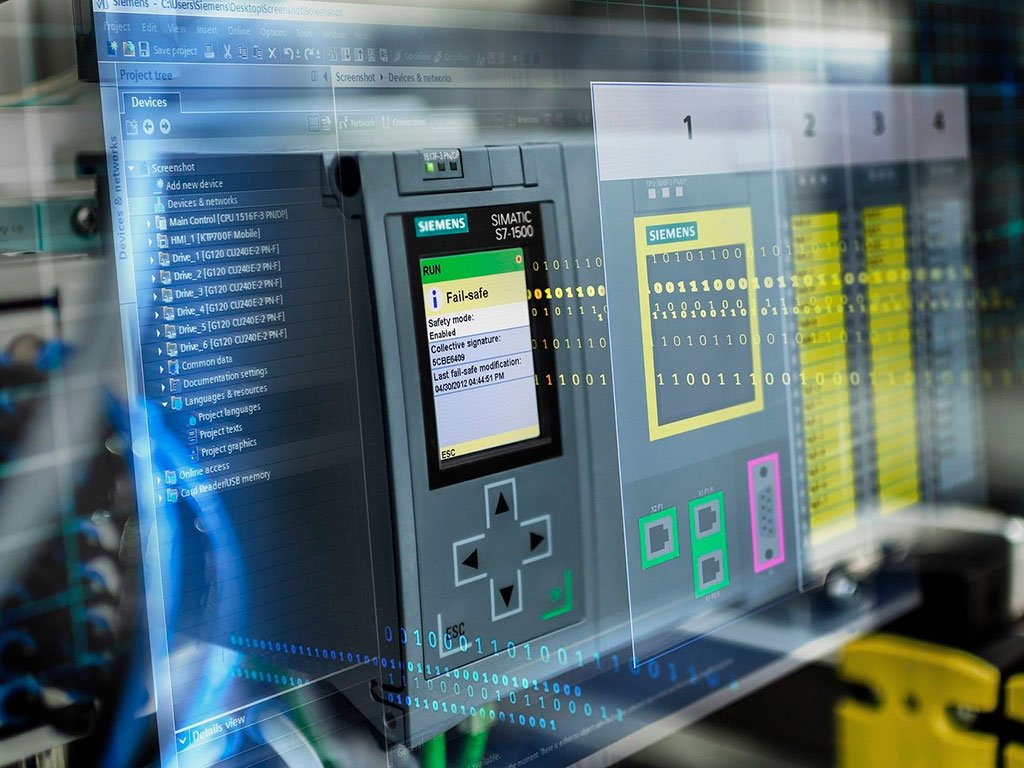
In this article, we will take you into the exciting world of Programmable Logic Controller (PLC) Programming. Whether you are a curious beginner or a professional looking for additional knowledge, here you will find everything you need to know to understand and master PLC programming.
PLC Programming: What is it and why is it essential?
PLC programming is the process of writing code for programmable logic controllers, fundamental devices in industrial automation. These controllers allow for the monitoring and control of a wide variety of industrial machines and processes, from production lines to HVAC systems. Why is it essential? Because it simplifies the management of complex tasks, increases efficiency, and reduces operating costs.
Why learn PLC Programming?
Logic controller programming opens up a range of opportunities in the field of industrial automation. It allows you to:
- Improve the eficiency: Automate repetitive tasks to optimize the production.
- Diagnose and solve problems: Facilitates rapid identification and correction of faults.
- Increase security: Contributes to the prevention of industrial accidents.
- increase flexibility: Easily adapt processes to changing needs.
- Boost your career: The demand for PLC programmers is constantly growing.
Getting Ready for PLC Programming
Before diving into the world of PLC programming , it's essential to establish a solid foundation of knowledge. Here are some key steps to get started:
1. Understand the Fundamentals of Automation
Industrial automation is at the heart of PLC programming. Familiarize yourself with concepts such as sensors, actuators, and control systems to understand how they integrate with PLCs.
2. Acquire Basic Knowledge of Electricity
Electricity is essential in automation. Learn about voltage, current, and electrical circuits to have a solid understanding.
3. Explore Programming Logic
PLCs work based on logic. Learn about Boolean logic, ladder diagrams, and truth tables, which are fundamental to logic controller programming.
4. Familiarize yourself with PLCs and their Software
Research different brands of PLCs and familiarize yourself with their programming software. Programs such as Siemens TIA Portal, Allen-Bradley Studio 5000, and Omron CX-Programmer are popular in the industry.
5. Set up your Work Environment
Prepare a suitable workspace with access to PLC, a computer and reference material.
PLC Programming: The Basics
Now that you've established a solid foundation, let's dive into the basics of PLC programming.
What is a PLC?
A PLC (Programmable Logic Controller) is an electronic device that uses programmable logic to control machines and industrial processes. It operates based on sensor inputs and logical decisions, generating outputs to actuators to control processes.
PLC Programming Languages
PLCs can be programmed using several languages. The most common ones are:
- Ladder Logic Language: Uses ladder diagrams to represent control logic.
- C language: It uses a more traditional programming-oriented approach.
- Function Block Diagram Language: It is based on interconnected functional blocks.
PLC Scan Cycle
PLCs follow a continuous scanning cycle consisting of three steps: input, processing, and output. During this cycle, the PLC checks the inputs, executes the program, and updates the outputs.
PLC Programming: Practical Examples
To better understand PLC programming, let's consider a simple example: a beverage vending machine. Logic controller programming of the machine can be programmed to:
- Read user selection.
- Verify payment.
- Dispense the drink.
- Update inventory.
Logic Controller Programming allows these steps to be executed efficiently and without errors.
Tools and Software for PLC Programming
Mastering logic controller programming involves knowing the available tools and software.
1. Laboratory PLC
Purchasing a lab PLC allows you to practice safely in a controlled environment. Brands such as Siemens and Allen-Bradley offer training PLCs.
2. Simulation Software
PLC simulation software allows you to develop and test programs without a physical PLC. This is useful for beginners and for designing projects before actual implementation.
3. Function Libraries
Many PLC manufacturers offer libraries of predefined functions that simplify programming. These libraries contain ready-to-use code blocks.
4. Online Training Platforms
Take advantage of online platforms that offer courses on Logic Controller Programming. This will provide you with tutorials, exercises, and projects to improve your skills.
Advanced PLC Programming
Once you have mastered the basics, you can venture into advanced PLC programming.
1. Communication between PLCs
Learn how to configure communication between multiple PLCs to coordinate complex processes.
2. Motion Control
Advanced PLCs can control motion systems such as industrial robots and automated conveyors.
3. Industrial Safety
Explore how PLCs are used in industrial safety systems to protect workers and equipment.
4. Continuous Process Control
PLCs are also used in the chemical and petrochemical industries to control continuous and hazardous processes.
Troubleshooting in PLC Programming
As a PLC programmer, it is essential to know how to troubleshoot effectively.
1. Error Diagnosis
Learn how to use PLC diagnostic tools and interpret error codes to identify problems.
2. Tests and Simulations
Use testing and simulations to verify program operation before implementation in the plant.
3. Preventive Maintenance
Regular maintenance of logic controller programming is essential to prevent problems and ensure optimal performance.
The Future of PLC Programming
Logic controller programming is constantly evolving with technological advancements such as Industry 4.0 and Artificial Intelligence. These developments promise even smarter and more efficient automation.
Conclusion
In short, PLC programming is an invaluable skill in the world of industrial automation. With a solid foundation, the right tools, and constant practice, you can become an expert in process control and open up a world of career opportunities.
So, are you ready to embark on this exciting learning journey? Together, we can drive knowledge and excellence in PLC Programming.