- Information security programs combine software, processes, and policies to manage risks according to frameworks such as ISO 27001.
- There are specialized solutions for IT risks, XDR, asset management, network security, email, cloud, and third-party providers.
- Best practices include AI, antivirus, firewalls, PKI, pentesting, vulnerability management, and continuous training.
- A robust program reduces incidents, speeds up response, and strengthens the confidence of customers, partners, and regulators.
La informatic security It has become a matter of survival For businesses, government agencies, and everyday users. We're no longer just talking about installing antivirus software and crossing your fingers: cyberattacks are more frequent, more sophisticated, and exploit any human error or technical failure to infiltrate your systems.
In this complete guide you will find computer security programsTypes of tools, methods, and best practices used by everyone from small businesses to large corporations. We'll see specific solutions for managing risks, protecting networks, endpoints, and data in the cloud, but also plans, training, and techniques like penetration testing that make all the difference when things really get serious.
What exactly is a computer security program?
When we talk about a computer security program We're not just referring to software, but to a set of tools, processes, and policies designed to protect information and systems against interruptions, data leaks, ransomware attacks, phishing, DDoS and much more.
Market trends have taken this concept a step further, integrating cybersecurity platforms based on artificial intelligence and continuous monitoring that detect anomalous behavior, correlate events in real time, and automate incident response to minimize the impact on operations and reputation.
In a business context, a good program relies on a Information Security Management System (ISMS), normally aligned with the ISO/IEC 27001 standard, which establishes how to implement, monitor and continuously improve security, supported by specialized software to inventory assets, assess risks, define controls and demonstrate regulatory compliance.
Types of cybersecurity tools and software most commonly used
In an increasingly complex digital environment, organizations combine different categories of computer security programs to cover all fronts: from the endpoint to the cloud, including networks, identities, and applications.
A first large family are the endpoint protection agents and EDR/XDR solutionswhich are installed on computers, servers and mobile devices to monitor processes, block malware, detect ransomware and automatically respond to anomalous behavior, including fileless attacks.
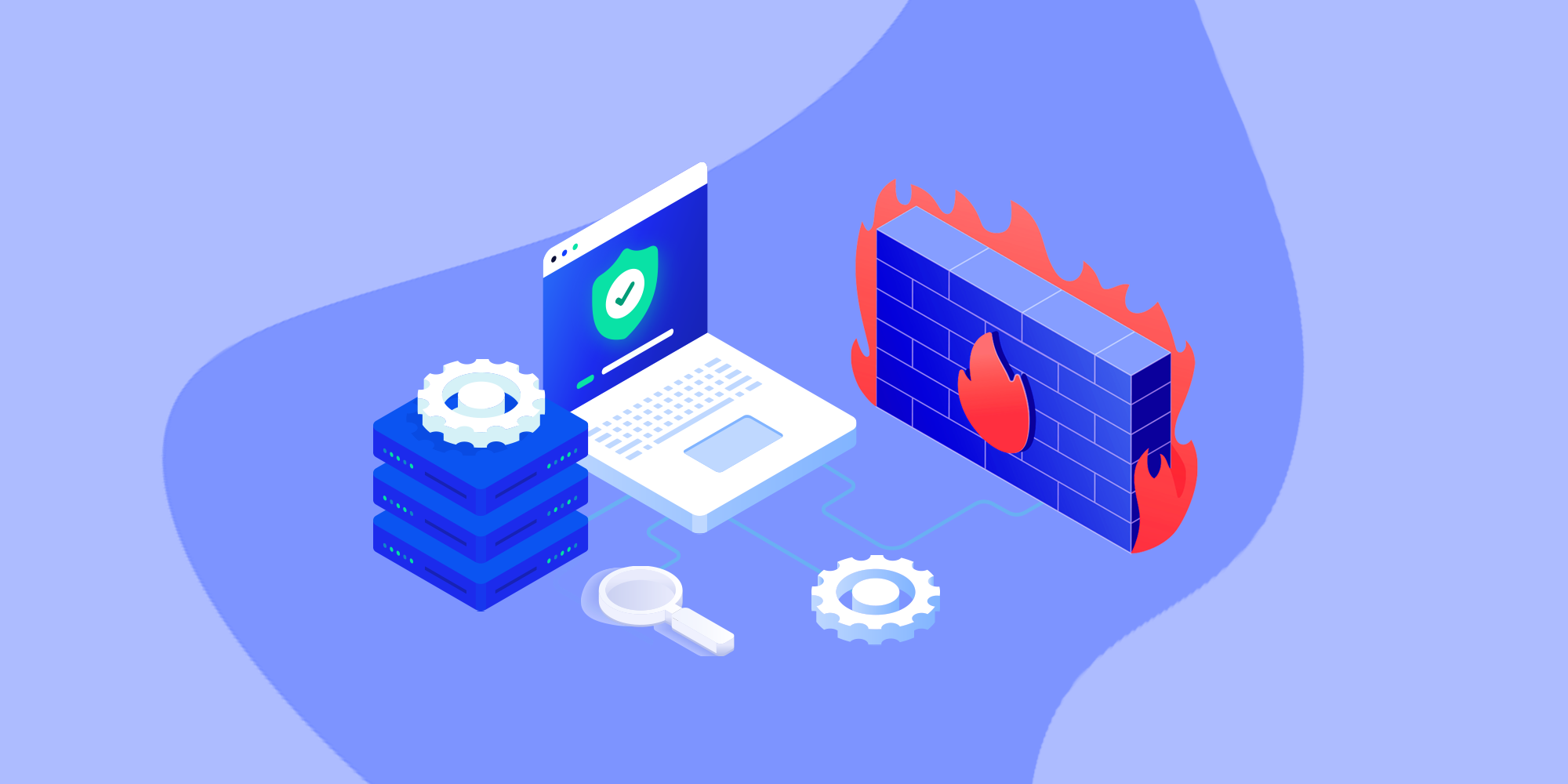
Alongside them, the following remain essential next-generation antivirus and firewallsboth traditional and next-generation (NGFW), which filter traffic, block suspicious connections, and enforce security policies at the network and application level.
For communications and remote access, companies use advanced authentication and VPN services that encrypt connections and apply Zero Trust models, continuously verifying user identity, device status, and access context.
In the data and application layer, tools such as the WAF (Web Application Firewalls), the solutions DLP (Data Loss Prevention) and privileged access and identity management (PAM) programs, key to controlling what each user can do within critical systems.
Why cybersecurity is more critical than ever
In recent years, the number of attacks has skyrocketed to the point that attempted intrusions per weekwith a dramatic increase compared to previous periods. The rise of ransomware, data breaches, and supply chain attacks has put companies of all sizes at risk.
Offensive strategies are no longer limited to the classic virus: Attackers exploit vulnerabilities in third-party software, cloud services, and IoT devices poorly protected to move laterally and compromise multiple companies from a single weak point.
All of this is combined with an increase in the internal threats and the human errorsresponsible for a significant portion of security breaches. A click on a phishing email, a weak password, or sharing data where it shouldn't be shared can be enough to open the door wide to an attack.
Added to this is the increasing complexity of IT: hybrid architectures, multi-cloud environments, widespread remote work, and personal devices connected to the corporate network, which forces the adoption of Cybersecurity software capable of covering local environments, public and private clouds with a unified vision.
To make matters worse, cybercriminals are targeting high-value information: intellectual property, financial data, customer files, and massive databasesTheft of which can result in fines, loss of competitive advantage, and reputational damage that is very difficult to overcome.
Information security risk management software
Beyond purely technical solutions, more and more organizations are adopting specific platforms for managing information security and cybersecurity risks, very much in line with the requirements of ISO/IEC 27001 and frameworks such as NIST.
This type of software allows inventory information assets, identify threats and vulnerabilities, assess risks by probability and impactPrioritize which risks to address first and document controls, incidents, and action plans, centralizing all information in a single repository.
Among the usual functions we find process records, risk matrices, regulatory compliance monitoring (GDPR, PCI DSS, etc.), approval workflows, dashboards, and configurable reports for management and risk committees, facilitating data-driven decision-making.
Furthermore, these solutions typically include mechanisms to involve staff in risk managementFrom simple forms for reporting incidents to assigning responsibilities, tasks, and deadlines, this helps cybersecurity move beyond being just an "IT thing" and become part of the corporate culture.
Eight key IT security and risk management programs
There are a number of specialized solutions on the market, but some The programs stand out for their focus on information security, cybersecurity, and comprehensive technological risk management.The following is a summary of their strengths, weaknesses, and hiring models.
1. Pirani ISMS
Pirani ISMS is a Latin American solution focused on Manage information security risks and align the ISMS with ISO/IEC 27001 and 27002It allows mapping processes, registering information assets, and assessing their criticality in terms of confidentiality, integrity, availability, and traceability.
Its capabilities include risk identification and assessment, threat and vulnerability registrationDefinition of controls and assessment of their strength, structured documentation of incidents, action plans and graphic reports showing the level of exposure and the progress of mitigations.
One of its strengths is the ease of use and intuitive interfaceIt's well-suited to organizations that don't want to get bogged down in an overly complex tool. It's flexible in terms of field and form configuration, so each company can adapt the platform to its specific needs.
Also highlights the centralization of information on processes, assets, controls, incidents and indicatorsand the possibility for any employee to report incidents from mobile devices, which improves reaction time and the quality of information reaching the security area.
Among its current limitations, it is mentioned that It does not have a fully automated criticality-based asset matrix nor automatic incident monitoring; furthermore, continuous monitoring relies more on user action than on technical integrations with other systems.
Offers a free plan with no time limit to test the tool and several annual payment plans (Starter, Basic and Enterprise), with different price ranges and functionalities, the advanced plan being under a budget tailored with the sales team.
2.Archer IT & Security Risk Management
Archer's IT risk and security solution is a veteran platform with a special focus on to document and control technological risks, vulnerabilities, regulatory obligations and infrastructure problemsin addition to generating reports geared towards senior management.
Its great asset is the High level of customization in forms, workflows, and reportsThis makes it very powerful for organizations with mature processes and complex reporting requirements to committees and regulators.
It is especially useful for to periodically monitor technological risk and complianceconsolidating the information into dashboards that allow the detection of trends and control gaps.
Conversely, for many companies the learning curve and implementation effort They are larger than expected, and difficulties may arise when integrating it with other systems already deployed in the organization.
Prices and configurations are worked out under Pre-demonstration and customized commercial proposal, which is requested through contact forms on their website.
3. MetricStream IT and Cyber Risk Management
MetricStream offers a solution for IT and cybersecurity risk-oriented governance, risk and compliance, with capabilities to assess risks, implement controls, monitor vulnerabilities, and manage incidents and mitigation actions.
One of its differentiating points is the advanced data-driven risk and control analysis, with the possibility of identifying patterns, trends and correlations, and even estimating economic exposure to cyber risk in order to prioritize investments.
The platform provides a holistic and near real-time view of cyber risk Thanks to centralized repositories of processes, assets, threats, and vulnerabilities, supported by fully user-configurable dashboards.
In return, the user experience may be complex and not user-friendly for non-specialized usersAnd the time and resources needed to get the most out of it are usually significant.
The company provides detailed documentation and demos available upon request, while the final rate depends on the scope and must be negotiated directly with the provider.
4. ServiceNow Security Operations (SecOps)
ServiceNow's SecOps solution is designed to orchestrate incident response and vulnerability management leveraging the intelligent workflows of the ServiceNow platform.
Its main objective is shorten detection and response timeInvestigate threats collaboratively between security and IT teams, and automate repetitive tasks to close gaps more quickly.
It has specific workspaces according to role (SOC analyst, IT manager, etc.) and with panels that allow measuring the performance of the security function, also integrating with numerous external tools (Microsoft, Tenable, Veracode, CrowdStrike, Zscaler, among others).
Its power makes the Implementation and learning can be demandingAnd often, personnel with advanced technical knowledge are needed to maintain and adapt the solution, which can lead to dependence on the supplier or specialized integrators.
The hiring process is structured through Contact with the sales department, guided demonstrations, and a commercial proposal, without a standard public price list.
5. Solve Security Risk Management
Security Risk Management, offered by Kroll, is a cloud-based solution focused on collect and analyze physical and logical security risk data to prioritize actions that reduce the frequency and impact of incidents.
Allows you to register critical assets, risks, and controls by business area, analyze whether they are sufficiently protected, consolidate all threat and incident data sources in one place, and generate automated reports for security managers.
Among its advantages we find pre-designed templates for structured risk assessments, automatic notifications of overdue tasks and reminders that facilitate compliance with deadlines and alignment with regulations.
However, some users experience complexity in the configuration and nomenclature of reports and formsin addition to a learning curve that may be longer than planned.
The business model is based on We provide demos upon request via form and customized quotes, without publishing fixed prices.
6. UpGuard
UpGuard is very clearly geared towards the third-party risk management and data breach prevention, continuously monitoring the attack surface of suppliers and partners.
It allows you to assess the level of exposure of third parties, comply with frameworks such as ISO 27001 and the NIST Cybersecurity FrameworkAutomating the detection of external vulnerabilities and generating detailed reports on the state of cybersecurity in the supply chain.
Their ease of use, intuitive interface and speed in generating reportsas well as the existence of a specialized data breach investigation team that tracks incidents on a global scale.
On the less positive side, the Integration with other security tools may not always be so straightforward. as some customers would like, and the costs of advanced plans are high for companies with tight budgets.
It has a 7-day free trial of all features and different annual plans (Basic, Starter, Professional, Corporate and Enterprise), with tiered prices according to the level of service and the need for direct contact with the sales team for the higher ranges.
7. Let's think
Pensemos offers a platform focused on manage information security in a comprehensive mannerhelping to maintain the confidentiality, integrity and availability of digital assets through the administration of security policies, procedures and activities.
From a single interface you can Identify attacks to consider, adjust IT infrastructure, review relevant threats, and align the entire organization with the information management guidelines.
Among its advantages is alignment with ISO/IEC 27001 as a reference for the ISMSintegrating different elements of the security program into a single tool to facilitate coordination.
As an area for improvement, some users perceive a less attractive and intuitive interface compared to other market alternatives, which may affect adoption by non-technical profiles.
The commercial approach involves Schedule demonstrations through their website and expressly request the economic conditions from the supplier.
8. Symantec Asset Management Suite (Broadcom)
Symantec Asset Management Suite, now under Broadcom, focuses on the hardware and software asset lifecycle management, from acquisition to retirement, including licenses and supplier contracts.
Its contribution to safety comes from enabling a comprehensive inventory of assetsIdentifying which equipment and applications are in use, which are obsolete or improperly licensed, and thus avoiding unnecessary purchases and penalties for non-compliance.
Thanks to its detailed reports, it offers visibility into the status and use of each assetfacilitating decisions to update, replace or reinforce security measures on critical systems.
Compared to broader cybersecurity solutions, their functionalities are considered somewhat more limited and implementation can be complex, which impacts deployment costs and the need for qualified personnel.
The company channels the hiring both through contact forms as well as through a network of authorized distributors and partners, making it necessary to request pricing information directly.
Key cybersecurity technologies to protect endpoints, network, and cloud
Alongside risk management platforms, there are cybersecurity solutions widely used in large business environments that combine endpoint protection, XDR, next-generation firewalls, SIEM, and cloud security.
SentinelOne, for example, with its Singularity XDR platform, bases its approach on AI and machine learning to analyze the behavior of systems and processes, detect deviations from normal and respond autonomously to ransomware, malware and zero-day exploits.
Its unified console brings together detection, incident response, and forensic investigation of endpoints, cloud loads and identities, relying on modules such as ActiveEDR (advanced endpoint detection and response) and Ranger, which discovers unsupervised devices within the network.
Cisco, for its part, integrates components such as the following into its SecureX ecosystem Umbrella for DNS security, Zero Trust architectures and a powerful threat intelligence (Talos) that feeds its network and endpoint solutions in near real time.
Microsoft combines different pieces such as Defender for Endpoint, Azure Sentinel as a cloud SIEM, and 365 Defender, which unifies mail, identity, and equipment protection, leveraging its vast global telemetry to continuously adjust signatures, rules, and AI models.
Other great actors such as Palo Alto Networks (Cortex XDR, WildFire), Trend Micro (XDR platform and container protection), Fortinet (FortiGate and Security Fabric), CrowdStrike (Falcon) Rapid7 (InsightVM and InsightIDR) provide complete architectures that combine vulnerability analysis, threat detection, automated response and proactive threat hunting, with strong use of big data and machine learning.
Essential cybersecurity tools for SMEs
Small and medium-sized enterprises do not need to replicate the deployment of a multinational, but they should at least have a basic set of well-configured tools that cover the critical points.
At the device level, it is key to have Modern endpoint protection with EDR capabilitiescapable of detecting suspicious behavior, isolating equipment and facilitating incident investigation, complemented by a good antivirus that is constantly updated.
At the network layer, it is advisable to implement next-generation firewalls (NGFW), IDS/IPS systems and DNS security that block malicious traffic, identify attack patterns, and prevent users from connecting to dangerous domains even before a web page loads.
Email security remains critical: a Secure email gateway with anti-phishing and anti-malware filters It drastically reduces the attack surface, especially against well-crafted massive deception campaigns using generative AI.
Solutions must not be forgotten for event logging and monitoring (logs)that allow detecting anomalies, complying with legal requirements and reconstructing what happened after an incident, nor password management and PAM tools to control privileged access.
Cybersecurity methods and best practices for businesses
In addition to programs and platforms, a robust security strategy relies on methods, processes and continuing education that reduce the probability of an incident and allow for a quick recovery if something goes wrong.
Artificial intelligence and advanced detection
AI has ceased to be a futuristic concept and has become a central component of the most modern defense systemsThanks to machine learning and deep learning, current solutions can anticipate attacks, identify unknown patterns, and react without human intervention.
A clear example is the services of Managed Detection and Response (MDR), which combine technology and specialized equipment to search, monitor, analyze and respond to threats 24 hours a day, ideal for organizations that do not have their own security operations center (SOC).
Antivirus and firewall software
However advanced other layers may be, it is still essential to have good corporate antivirus software and well-configured firewallsThe antivirus protects against Trojans, worms, adware, ransomware, and other types of malware, acting as the last line of defense in many scenarios.
The firewall, for its part, is responsible for inspect traffic, control what comes in and what goes out, and enforce access policies to internal resources. Current versions incorporate application filtering, deep packet inspection, and the ability to segment the network and isolate sensitive areas.
Information security plan and vulnerability management
Beyond installing tools, a company needs a documented cybersecurity plan, describing critical assets, threats, acceptable risk levels, implemented controls, and incident response procedures.
This plan should be reviewed periodically, adapt to new vulnerabilities and business changesand communicate this to all staff so they know what to do in situations such as possible phishing, a lost device, or the detection of strange behavior on the network.
Vulnerability management is another essential aspect: regularly scan servers, applications, and devices By searching for known vulnerabilities, prioritizing their correction and verifying that patches are applied correctly, you greatly reduce the likelihood of exploitation.
Public Key Infrastructure (PKI) and Electronic Signature
Public key infrastructure (PKI) provides the necessary framework for issue, distribute and validate digital certificates and encryption keysensuring that communications and transactions are authentic and confidential.
Solutions like this work on this basis advanced electronic signaturewhich allows the identification of the signatory of a document, guarantees that the content has not been modified and gives legal validity to processes that previously required paper and physical presence.
Although the primary function of an electronic signature is not to block cyberattacks, it is part of a comprehensive security program aimed at protecting the integrity and traceability of digital contracts, improve process efficiency and reduce the risk of manipulation or impersonation.
Pentesting and security audits
Pentesting, or penetration testing, consists of simulate real attacks on the organization's systemsusing techniques similar to those of an adversary, but in a controlled environment and with authorization.
Typically, teams are organized into "red" and "blue" teams: the former attempts to exploit vulnerabilities, escalate privileges, and access sensitive information; the latter defends, detects and reacts using the available tools and processes. The result is a very realistic snapshot of the company's defense capabilities.
These tests help to Identify gaps, assess the level of security maturity and prioritize investments, and are usually complemented by formal cybersecurity audits that review policies, configurations and regulatory compliance.
Trained personnel and cybersecurity culture
No technology is effective if there is no support behind it. educated and aware peopleHaving professionals capable of designing secure architectures, managing tools, and responding to incidents is just as important as buying the best software on the market.
At the same time, it is essential train the rest of the staff in basic good practicesUse of strong passwords, detection of suspicious emails, caution with external devices, secure handling of personal data, etc., because most breaches begin with a simple human error.
Levels and types of computer security in practice
Information security is structured in various levels of protection, from the most basic to the most advancedand it applies to different areas: hardware, software, networks and cloud.
At the basic level we find measures such as strong keys, regular updates, and easy backups, sufficient for individual users and small environments that are starting to take cybersecurity seriously.
The intermediate level adds corporate firewalls, intrusion detection systems, and specific trainingThis is common in SMEs that handle sensitive information and need a certain degree of formalization without going to a very sophisticated deployment.
At the advanced level, the following are combined: cutting-edge technologies (XDR, Zero Trust, DLP, high-level encryption), continuous monitoring, and strict access protocols, needed in sectors such as finance, health, higher education or research with extremely sensitive data.
By type, we can talk about hardware security (physical access control, biometrics, video surveillance), software security (antivirus, IDS/IPS), network security (encryption, VPN, segmentation) and cloud security (redundant backup, encryption in transit and at rest, well-defined access controls).
Benefits of maintaining a robust cybersecurity program
Investing in security tools and processes is not a wasteful expense, but a way to to protect business continuity and strengthen market confidenceOrganizations that take it seriously suffer fewer serious incidents and recover better when something does happen.
A good strategy allows adapt to market and technological changes, mitigate the impact of malicious software, improve decision-making, comply with data protection regulations, and provide safer working environments for employees and collaborators.
Furthermore, well-managed cybersecurity translates into increased productivity and less downtimeBy reducing system crashes, data loss, and blockages resulting from attacks, this has a direct impact on the bottom line.
In terms of image, companies that demonstrate responsible information management They gain credibility and authority with clients, partners, and regulatorsThis facilitates new trade agreements and opens doors in particularly demanding sectors.
This entire set of cybersecurity programs, from risk management platforms based on standards like ISO 27001 to XDR solutions, intelligent firewalls, PKI, electronic signatures, and methods such as penetration testing or MDR, forms an ecosystem that It allows you to drastically reduce the attack surface, respond quickly when something goes wrong, and keep your most valuable digital assets protected.so that companies and users can continue to operate in a hostile digital environment with an acceptable and controlled level of risk.

Table of Contents
- What exactly is a computer security program?
- Types of cybersecurity tools and software most commonly used
- Why cybersecurity is more critical than ever
- Information security risk management software
- Eight key IT security and risk management programs
- Key cybersecurity technologies to protect endpoints, network, and cloud
- Essential cybersecurity tools for SMEs
- Cybersecurity methods and best practices for businesses
- Levels and types of computer security in practice
- Benefits of maintaining a robust cybersecurity program