- Gadgets integrate technology into daily life, improving communication, productivity, and entertainment with portable devices such as smartphones.
- Wearables offer real-time health monitoring (smartwatches, headphones), increasing well-being and raising challenges of privacy and dependence.
- Drones and action cameras expand professional perspectives and applications in agriculture, rescue, inspection, and content creation.
- Trends: AI, AR/VR and smart homes promise personalization and automation, but demand discussions about ethics, security and sustainability.
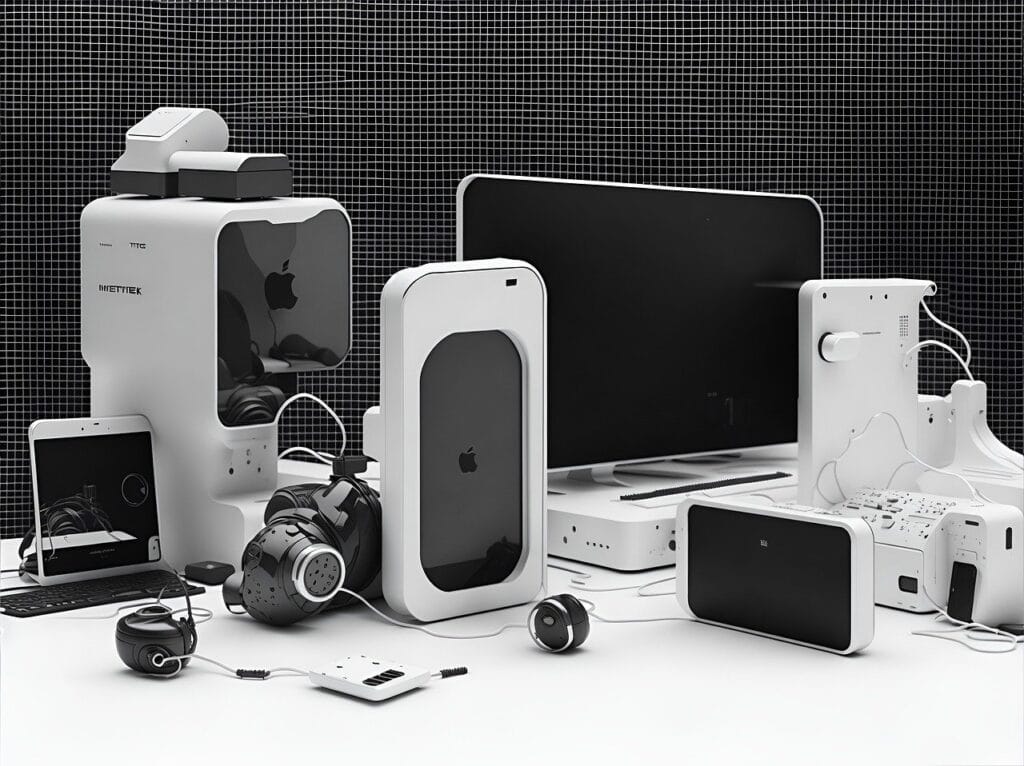
In the 21st century, technological gadgets have become an integral part of our lives. These smart devices have radically transformed the way we communicate, work and entertain ourselves. From smartphones that fit in our pockets to drones that fly over our skies, technological innovation is advancing by leaps and bounds, offering us increasingly sophisticated and versatile tools.
Introduction: The impact of technological gadgets on today's society
In this comprehensive document, we will take a closer look at ten of the most influential technological gadgets of our era. We will see how these innovations are shaping our society and reflect on the implications they have on our daily lives. Are you ready to delve into the fascinating world of wearable technology? Join us on this journey through the present and future of gadgets!
Technological gadgets: Definition and evolution
But what exactly are technological gadgets? Essentially, they are portable electronic devices designed to perform specific functions in an efficient and practical manner. Their evolution has been rapid in recent decades, going from simple calculators and digital watches to sophisticated pocket computers and internet-connected devices.
The key to the success of technological gadgets lies in their ability to simplify everyday tasks and improve our quality of life. Whether facilitating communication, monitoring our health or providing entertainment, these devices have become indispensable for many of us.
When did the gadget revolution really begin? Although it is difficult to pinpoint an exact date, we could place the turning point in the 80s, with the popularization of the Walkman and the first portable video game consoles. Since then, the miniaturization of components and advances in processing capacity have allowed the creation of increasingly powerful and versatile devices.

Smartphones: The revolution in our pockets
Without a doubt, the smartphone is the undisputed king of tech gadgets. These devices have evolved from simple mobile phones to veritable pocket computers, capable of performing countless tasks. But how did they become so important in our lives?
Advanced features of modern smartphones
Today's smartphones are true technological marvels. They feature powerful processors, high-resolution cameras, biometric sensors and high-definition screens. In addition, their constant Internet connectivity makes them gateways to a world of information and services.
One of the most revolutionary features of smartphones is their geolocation system. Have you ever wondered how navigation apps work? Thanks to built-in GPS, your smartphone can determine your exact location and give you precise directions in real time. This has transformed the way we move around cities and explore new places.
Another notable feature is facial and fingerprint recognition. These biometric security systems not only protect our personal data, but also facilitate tasks such as unlocking the device or making mobile payments. Did you know that some smartphones can even measure your heart rate using the camera?
Impact on communication and productivity
Smartphones have revolutionised the way we communicate. Instant messaging apps and social media allow us to stay in constant contact with friends and family all over the world. Do you remember the last time you sent a letter by post? For many, that form of communication is already a thing of the past.
In the workplace, smartphones have become indispensable tools for productivity. From checking emails to participating in video conferences, these devices allow us to work remotely and flexibly. Have you noticed how your work routine has changed since you got a smartphone?
However, this constant connectivity also poses challenges. Mobile addiction is an increasingly common phenomenon. How many times a day do you check your phone? According to a study conducted by RescueTime, the average user spends 3 hours and 15 minutes a day on their smartphone. This data invites us to reflect on our digital habits and the need to find a healthy balance.
Wearables: The technology we wear
Wearables represent the next step in the evolution of technological gadgets. Designed to be worn as accessories, these devices integrate technology into our daily lives in an even more intimate and personal way.
Smartwatches and their integration with health
Smartwatches are perhaps the most popular wearables today. These intelligent watches have evolved from simple extensions of our smartphones to powerful health and wellness monitoring tools.
(PPG). Basically, they shine green light on your skin and measure the amount of light reflected back. As the green light is absorbed by your blood, the changes in the reflection indicate your heartbeat. Fascinating, right?!
But smartwatches go much further. They can monitor sleep quality, count steps, measure blood oxygen levels and even detect falls. Some more advanced models can even perform electrocardiograms. Can you imagine being able to wear a mini hospital on your wrist?
This integration with health is changing the way we relate to our well-being. We no longer need to wait for the annual check-up to obtain data on our health. Smartwatches provide us with real-time information, allowing us to make more informed decisions about our lifestyle.
Wireless headphones and the listening experience
Wireless headphones are another example of how wearables are transforming our daily experience. Remember the frustration of untangling the wires from your old headphones? Those days are long gone thanks to Bluetooth technology.
But modern wireless headphones are much more than just audio players. Many models incorporate virtual assistants, allowing us to control our devices with voice commands. Others include active noise cancellation features, creating a personalized sound bubble in any environment.
Did you know that some wireless earbuds can even translate languages in real time? Imagine being able to hold a conversation with someone who speaks a different language, with the earbud whispering the translation into your ear. This technology, though still in its early stages, promises to break down language barriers in ways we could only dream of before.
Wearables are redefining our relationship with technology, making it more personal and ubiquitous than ever before. As these devices become more sophisticated and more deeply integrated into our lives, it’s important to consider both their benefits and their ethical and privacy implications. Are you ready to embrace this new era of personal technology?
Virtual Assistants: Artificial Intelligence at Home
Virtual assistants represent one of the most significant advances in the integration of artificial intelligence into our daily lives. These technological gadgets have gone from being a futuristic novelty to becoming indispensable helpers in many homes. But how do they really work and what impact are they having on our lives?
Smart speakers and their functionality
Smart speakers, such as Amazon Echo with Alexa or Google Home, are the most visible face of virtual assistants. These devices use natural language processing to understand our verbal commands and respond to them. But have you ever wondered how a small speaker is able to understand what you say to it?
The magic lies in the combination of highly sensitive microphones, voice recognition algorithms and powerful cloud servers. When you say “Hey, Alexa” or “OK, Google,” the device wakes up and starts listening. Your voice is converted into digital data that is sent to the company’s servers, where it is processed and a response is generated in a matter of milliseconds. It’s like having a supercomputer in your living room!
But smart speakers are much more than just question-answering machines. They can control other devices in your home, play music, make calls, set reminders, and even tell jokes. Did you know you can use your smart speaker to order a pizza or a taxi? The variety of “skills” these devices can learn is virtually limitless.
Smart home integration
One of the areas where virtual assistants really shine is in their integration with other smart home devices. Can you imagine being able to control the lights, the heating or even the coffee machine with just your voice?
Virtual assistants can act as the central brain of an ecosystem of connected devices. For example, you can set up routines that are triggered by a single command. Imagine saying “Good night” and having all the lights automatically turn off, the blinds close, and the alarm go off. Or waking up in the morning and having your assistant give you the weather forecast and the most important news while the coffee machine starts brewing your coffee.
This integration not only offers convenience, but can also contribute to the energy efficiency of the home. Smart thermostats, for example, can learn your habits and optimize heating or air conditioning to save energy.
However, the adoption of these devices also raises questions about privacy and security. Are we comfortable having devices that constantly listen to us in our homes? What happens to the data they collect? These are legitimate concerns that both manufacturers and consumers need to address.
Despite these challenges, it’s undeniable that virtual assistants are changing the way we interact with technology in our homes. As they become smarter and more capable, their role in our lives is likely to continue to grow. Are you ready to welcome a virtual assistant into your home?
Drones: Aerial perspectives within everyone's reach
Drones, small unmanned aerial vehicles, have gone from being niche toys to technological gadgets with endless applications. Their ability to offer unique aerial perspectives and access difficult locations has made them invaluable tools in a variety of fields. But how do these flying machines actually work and what impact are they having on our society?

Recreational and professional uses of drones
Drones have revolutionized multiple industries and recreational activities. In the realm of entertainment, they have become a fascinating tool for photography and video enthusiasts. Have you ever dreamed of capturing spectacular aerial images of landscapes or events? With a drone, that possibility is within your reach.
But drones go far beyond simple entertainment. In the professional field, these technological gadgets are transforming entire industries:
- AgricultureDrones equipped with special cameras can analyze crops, detect pests and optimize irrigation, significantly improving agricultural efficiency.
- Construction:In construction sites and engineering projects, drones carry out structural inspections, map land and monitor construction progress safely and efficiently.
- Search and rescueIn emergency situations, drones can explore dangerous or hard-to-reach areas, locating people in danger and guiding rescue teams.
- Package deliveryCompanies like Amazon are experimenting with drones for package delivery, promising ultra-fast delivery times. Can you imagine receiving your order in a matter of minutes?
- Environmental conservationDrones are used to monitor wildlife, detect forest fires and even plant trees in hard-to-reach areas.
Did you know that some drones can fly autonomously following pre-programmed routes? This capability makes them especially useful for repetitive tasks such as inspecting power lines or mapping large areas of land.
Regulations and ethical considerations
With the rise of drones, new concerns have arisen about privacy, security and responsible use of airspace. What if someone used a drone to spy on your garden? Or interfered with air traffic?
To address these concerns, many countries have implemented specific regulations for the use of drones. In Spain, for example, the State Agency for Air Safety (AESA) sets clear rules:
- Drones weighing more than 250 grams must be registered.
- Pilots must obtain a license to operate drones under certain conditions.
- There are restrictions on where drones can be flown, especially near airports or populated areas.
These regulations seek to balance technological innovation with public safety and individual privacy. However, the rapid advancement of drone technology poses ongoing challenges for lawmakers.
From an ethical perspective, the use of drones raises interesting questions. Where do we draw the line between public utility and invasion of privacy? How do we ensure that drones are not used for malicious purposes?
Despite these challenges, it’s undeniable that drones are opening up exciting new possibilities. From allowing us to see the world from new perspectives to revolutionizing entire industries, these technological gadgets are redefining what’s possible from the air.
Can you imagine what the drones of the future will look like? With the constant miniaturization and improvement of flight autonomy, we may soon see insect-sized drones capable of performing incredibly precise tasks. Or perhaps, long-duration drones that can stay in the air for days or weeks, providing communication services or continuous environmental monitoring.
Drones are a clear example of how technological gadgets are expanding our capabilities and transforming our interaction with the world around us. As this technology continues to evolve, it will be fascinating to see what new applications and challenges will emerge. Are you ready to take flight in this era of aerial perspectives?
Action Cameras: Capturing the Adventure
In the world of technological gadgets, action cameras have revolutionized the way we capture and share our most exciting experiences. These small but powerful devices allow us to immortalize moments of pure adrenaline from perspectives that were previously unimaginable. But what makes these cameras so special?

Key Features of Modern Action Cameras
Today's action cameras are true marvels of miniature engineering. Despite their compact size, they are packed with advanced technology that makes them ideal for capturing action on the move. Let's take a look at some of their most notable features:
- Ultra HD resolution: Many action cameras can record video in 4K and even 8K, offering amazing sharpness and detail. Can you imagine being able to relive your adventures in such impressive quality?
- Image stabilization: Stabilization technology has evolved greatly, allowing for smooth footage even in the most extreme conditions. Some models use gyroscopes and accelerometers to compensate for motion in real time.
- Water and shock resistance: Designed to survive harsh environments, these cameras are typically waterproof and shockproof. Deep diving? Skydiving? No problem.
- Wide field of view: Wide-angle lenses capture an extra-wide field of view, allowing you to capture the entire action scene.
- Wireless connectivity: Most modern action cameras include Wi-Fi and Bluetooth, making it easy to transfer files and remote control from your smartphone.
- Advanced Capture Modes: From slow motion recording to time-lapse capture, these cameras offer a variety of creative modes to express your vision.
Did you know that some action cameras can even live stream directly to streaming platforms? Imagine sharing your whitewater rafting or skydiving in real time with your followers.
Applications in extreme sports and beyond
Although initially associated primarily with extreme sports, action cameras have found their place in a wide range of activities and professions:
- extreme sportsFrom surfing to snowboarding, these cameras allow athletes to capture their unique perspective of the action.
- Underwater videography: Their water resistance makes them ideal for exploring the underwater world.
- Nature documentaries: They allow filmmakers to capture intimate images of wildlife without disturbing the surroundings.
- Vlogs and content for social networks: Their portability and image quality make them popular tools among content creators.
- Professional applications: They are used in security inspections, police and military training, and even in surgeries for educational purposes.
But the impact of action cameras goes beyond just capturing stunning images. They have changed the way we perceive and share our experiences. Have you ever watched a first-person video of someone snowboarding and felt the adrenaline rush as if you were there? That's the magic of action cameras.
Plus, these cameras are democratising the production of high-quality content. You no longer need expensive filming equipment to create impressive videos. With an action camera, a little creativity and the right editing apps, anyone can become a compelling visual storyteller.
However, the widespread use of action cameras also raises interesting questions about privacy and ethics. Where do we draw the line between documenting our experiences and potentially invading the privacy of others? It's an important conversation we need to have as a society as these technological gadgets become increasingly ubiquitous.
Looking ahead, it's exciting to imagine how action cameras will evolve. Will we see models with built-in artificial intelligence that can automatically edit our videos? Or perhaps cameras so small that they can be invisibly integrated into our glasses or helmets?
Action cameras are a testament to the power of technological gadgets to expand our capabilities and change our perspective on the world. They allow us to capture and share moments that were once ephemeral, creating a visual archive of our most exciting adventures and experiences. Are you ready to see the world through the eyes of an action camera?
E-readers: Entire libraries in the palm of your hand
In the world of technological gadgets, e-readers have revolutionized the way we consume literature. These devices have managed to combine the magic of traditional books with the advantages of digital technology . But what makes these gadgets so special, and how are they changing our relationship with reading?
Advantages of electronic books
E-readers offer a number of advantages that have made them inseparable companions for many reading enthusiasts:
- Portability: Can you imagine carrying your entire library on a book-sized device? E-readers can store thousands of books in minimal space, perfect for travelers and avid readers.
- Electronic ink technology: Most e-readers use electronic ink screens that mimic the appearance of printed paper. This reduces eye strain and allows for comfortable reading even in direct sunlight. Did you know that these screens only consume power when you turn the page?
- Reading customization: You can adjust the font size, spacing, and even the typeface to suit your preferences. This is especially helpful for readers with vision problems.
- Integrated dictionary: Have you ever come across a word you don't know while reading? With e-readers, you can instantly look up definitions without interrupting your reading.
- Adjustable lighting: Many models include a built-in light, allowing you to read comfortably in any lighting conditions. Some even automatically adjust the color temperature to reduce blue light at night.
- Synchronization between devices:Have you started a book on your e-reader and want to continue reading on your smartphone? Many e-book services allow you to sync your progress between different devices.
- ecological:Although the production of e-readers has an environmental impact, in the long run they can be more sustainable than printed books, especially for voracious readers.
But perhaps one of the most revolutionary advantages is instant access to millions of books. Have you ever finished a book late at night and wanted to immediately start the next one? With an e-reader, you can download the next book in seconds, regardless of the time or your location.
Impact on the publishing industry
The arrival of e-readers and e-books has shaken the foundations of the traditional publishing industry. This change has brought with it both challenges and opportunities:
- Self-publishing: E-books have democratized publishing, allowing independent authors to reach readers directly without the need for intermediaries. Did you know that some of the most recent bestsellers began as self-published books?
- New business models: E-book subscription services have emerged, offering unlimited access to digital libraries for a monthly fee. It's like having a Netflix for books.
- Interactivity: E-books can include interactive elements, links, videos and audio, expanding narrative possibilities.
- Reading analysis: Publishers can gain detailed data on how readers interact with books, which can influence future editorial decisions.
- Cultural preservation: Digitization of old and rare books helps preserve literary heritage and make it accessible to a wider audience.
However, the rise of e-readers has also posed challenges. Physical bookstores have had to adapt, and there are concerns about the long-term preservation of digital books in the face of technological changes.
Despite these changes, it's important to note that e-readers have not completely replaced physical books. Many readers enjoy both formats, appreciating the convenience of e-books for traveling or reading in bed, while still maintaining a physical collection of their favorite books.
Looking ahead, it's exciting to imagine how e-readers will evolve. Will we see flexible screens that further mimic the feel of a real book? Or perhaps devices that integrate augmented reality to enrich the reading experience?
E-readers are a perfect example of how technological gadgets can transform an activity as ancient and fundamental as reading. They have opened up new possibilities for authors and readers, democratizing access to literature and changing the way we interact with books. In an increasingly digital world , these devices remind us that the magic of reading remains as powerful as ever; only now we carry it in the palm of our hand. Are you ready to explore the vast world of digital reading?
Handheld Game Consoles: Entertainment on the Go
In the fascinating world of technological gadgets, handheld gaming consoles hold a special place. These devices have transformed the way we enjoy interactive entertainment, bringing immersive gaming experiences anywhere. But how have these consoles evolved and what does the future of mobile gaming hold?
Evolution of portable consoles
Portable video game consoles have come a long way since their humble beginnings . Let's see how they've evolved:
- Game & Watch (1980): Released by Nintendo, this series of handheld electronic games pioneered the concept of gaming on-the-go. Did you know that its creator, Gunpei Yokoi, was inspired by seeing a man playing with a calculator on the train?
- Game Boy (1989): This iconic Nintendo console revolutionized the market with its portability and library of games. Who doesn't remember Tetris or Pokémon marathons?
- PlayStation Portable (PSP) (2004): Sony entered the market with this powerful console that offered almost home console-level graphics and multimedia capabilities.
- Nintendo DS (2004)With its innovative touchscreen and dual-screen design, the DS opened up new gaming possibilities and attracted a wider audience.
- PlayStation Vita (2011): Although it was not as successful as expected, the Vita stood out for its power and its high-quality OLED screen.
- Nintendo Switch (2017): Handheld or home console? Both! The Switch blurred the lines between portable and home gaming with its innovative hybrid design.
This evolution hasn't just been in terms of power and graphics. Modern handheld consoles offer online connectivity, digital stores, and in some cases, like the Switch, local multiplayer gaming experiences without the need for additional cables. Can you imagine being able to play Mario Kart with your friends anywhere, each with their own screen?
The future of mobile gaming
The mobile gaming landscape is constantly changing, influenced not only by traditional handheld consoles, but also by smartphones and emerging technologies:
- Cloud Gaming: Services like Google Stadia, Xbox Cloud Gaming, and NVIDIA GeForce Now promise to bring high-quality gaming to any device with a stable internet connection. Can you imagine playing the latest AAA titles on your phone?
- Augmented Reality (RA): Games like Pokémon GO have demonstrated the potential of AR in mobile gaming. What if we could see and interact with elements of the game in our real-life surroundings?
- 5G: With the arrival of 5G networks, mobile gaming could experience a qualitative leap in terms of latency and connection speed, making online experiences even more fluid.
- adaptive controls: The trend toward more ergonomic and adaptable controls could lead to innovative designs that improve the gaming experience on mobile devices.
- Cross-platform Play: The ability to play with friends regardless of the platform they use is gaining ground. Can you imagine a future where it doesn't matter if you play on a portable console, a PC or a smartphone?
However, the future of mobile gaming also presents challenges . Concerns about video game addiction , especially among younger users, have led to the implementation of parental controls and timers on many platforms. How do we balance the enjoyment of gaming with healthy technology use?
Furthermore, the monetization of mobile games, often through microtransactions and loot boxes, has sparked debates about ethics and regulation. How can we ensure that mobile gaming remains fun and accessible without falling prey to predatory practices?
Despite these challenges, the future of mobile gaming looks bright and full of possibilities. Handheld consoles and smartphones are converging, offering ever richer and more varied gaming experiences. Whether you prefer the epic adventures of The Legend of Zelda on your Switch or quick matches of Candy Crush on your phone, mobile gaming has something for everyone.
Handheld gaming consoles are a testament to the power of technological gadgets to transform our free time and create new forms of entertainment and social interaction. They have evolved from simple single-game devices to powerful machines capable of delivering immersive experiences comparable to those of home consoles.
Are you ready to see how mobile gaming will evolve in the coming years? What kind of gaming experiences would you like to see in the future? Whatever direction this technology takes, one thing is certain: on-the-go entertainment will continue to be a fundamental part of our digital lives.
Smart Home Gadgets: Automating Everyday Life
In the fascinating world of technological gadgets, smart home devices are revolutionising the way we live and interact with our domestic environment. These ingenious gadgets promise to make our lives more comfortable, efficient and safe. But how do they actually work and what impact are they having on our daily lives?
Smart thermostats and lights
Smart thermostats and lights are perhaps the most popular gadgets in the connected home space. Let's take a look at how these devices are changing our homes:
- Smart thermostats:
- They learn your habits and adjust the temperature automatically.
- They can be controlled remotely from your smartphone.
- Some models even detect when you are close to home and begin heating or cooling in advance.
Did you know that a smart thermostat can help you save up to 15% on your heating and cooling bill? Imagine coming home on a hot day and finding your home perfectly cool, without having wasted energy while you were away.
- Smart lights:
- They can change color and brightness according to your preferences.
- They can be programmed to turn on and off automatically.
- Some even simulate natural light to help you maintain your circadian rhythm.
Imagine being able to create the perfect ambiance for any occasion with just a voice command. Romantic dinner? Dim, warm lights. Study session? Bright, cool lighting. The possibilities are endless.
But these gadgets aren't just about convenience. They can also significantly contribute to energy savings. For example, smart lights can automatically turn off when they detect that a room is empty, preventing energy waste.
connected appliances
Connected appliances are taking home automation to the next level. From refrigerators to washing machines, these devices are changing the way we manage our household tasks:
- Smart refrigerators:
- They can inventory your contents and alert you when something is running low.
- Some can even do automatic food ordering.
- They offer recipes based on available ingredients.
Can you imagine never running out of milk or eggs again? Or better yet, receiving a notification on your phone suggesting recipes with ingredients that are about to expire?
- Smart washers and dryers:
- They can be programmed and controlled from your smartphone.
- Some can detect the type of fabric and adjust the wash cycle automatically.
- They notify you when the cycle has finished or if there is a problem.
- Vacuum robots:
- They map your home and clean autonomously.
- They can be programmed to clean at specific times.
- Some models even empty their own dust container.
Imagine coming home after a long day at work to find floors freshly vacuumed, clothes clean and dry, and dinner ready to be prepared with fresh ingredients from your fridge. Connected appliances are making this scenario more and more a reality.
However, the adoption of these technological gadgets also poses challenges and concerns:
- Privacy & SecurityWith so many connected devices collecting data about our household habits, how can we ensure this information is protected?
- technological dependency: Are we becoming too dependent on technology for basic tasks?
- Initials costs: While these devices can generate long-term savings, the initial investment can be significant.
- CompatibilityWith so many different brands and standards, how can we ensure that all our smart devices work well together?
Despite these challenges, the future of the smart home looks promising. As technology advances, we can expect to see even more sophisticated and integrated gadgets. Imagine a home that doesn’t just respond to your commands, but anticipates your needs based on your habits and preferences.
Smart home gadgets are redefining what it means to live comfortably in the 21st century. They offer us a level of control and customization over our home environment that was previously unimaginable. Whether it's saving energy, simplifying household tasks or creating perfect ambiances for every occasion, these devices are transforming our homes into more efficient, comfortable and tailored spaces.
Are you ready to make the leap to the smart home? What gadgets would you like to see in your home of the future? Whatever your vision, one thing is certain: the smart home revolution is just beginning, and the future promises to be exciting and full of possibilities.
The future of tech gadgets: Emerging trends
As we enter the third decade of the 21st century, the tech gadget landscape continues to evolve at a dizzying pace. Innovations that once seemed like science fiction are quickly becoming reality, promising to further transform the way we live, work and play. But what are the emerging trends that will shape the future of our gadgets?

Augmented and virtual reality
Augmented reality (AR) and virtual reality (VR) are on the cusp of a quantum leap, taking our digital experiences to a new level of immersion:
- AR glasses:
- Devices like Apple Glass promise to seamlessly integrate digital information into our physical environment.
- Imagine walking down the street and seeing navigation directions overlaid in your field of view, or looking at a building and instantly seeing its history and architecture.
- More accessible RV:
- VR headsets are becoming lighter, more powerful and more affordable.
- Can you imagine attending virtual concerts, exploring digital museums or even having work meetings in shared virtual spaces?
- Advanced Haptics:
- Haptic technology is evolving to provide more realistic tactile feedback in virtual environments.
- You might soon be able to “feel” virtual objects or experience textures in VR games and apps.
Did you know that some companies are already using VR to train their employees in risky situations without compromising their safety? From surgery simulations to firefighter training, the applications are endless.
Artificial intelligence and machine learning
Artificial intelligence (AI) and machine learning are increasingly permeating our gadgets, making them more intuitive and personalized:
- Smarter virtual assistants:
- Assistants like Siri and Alexa will become even more contextual and capable of more natural conversations.
- Imagine an assistant that not only answers your questions, but anticipates your needs based on your behavior and preferences.
- AI cameras:
- The cameras on our smartphones and other devices will use AI to automatically optimize every shot.
- Some can already recognize scenes and adjust settings accordingly. The next step? Cameras that can edit and enhance photos and videos in real time.
- Predictive health devices:
- Wearables that not only track your activity, but can predict health problems before they occur.
- Can you imagine a smartwatch that can detect early signs of heart disease or diabetes?
- Truly smart homes:
- Home automation systems that learn from your habits and automatically adapt to your needs.
- A home that adjusts lighting, temperature and music to suit your mood and activity, without you having to give any commands.
AI will not only make our gadgets smarter, but also more energy efficient. Imagine devices that can optimize their energy consumption based on usage patterns and environmental conditions.
However, the advancement of AI also raises ethical and privacy challenges. How do we balance the convenience of smart devices with the protection of our personal data? What if a virtual assistant becomes too intrusive or makes decisions we don’t approve of?
Looking further ahead, we can glimpse a future where the line between the physical and digital worlds blurs even further:
- Brain-computer interfaces: Devices that can directly interpret our thoughts to control gadgets or navigate in virtual environments.
- Nanotechnology: Microscopic gadgets that can monitor our health from inside our body or repair damage at the cellular level.
- Portable quantum computing:Although still a long way off, the miniaturization of quantum computing could lead to devices with processing power unimaginable today.
These emerging trends promise to revolutionize not only our gadgets, but also the way we interact with technology and the world around us. Imagine a future where technology is so seamlessly integrated into our lives that we almost forget it’s there, silently working to improve every aspect of our existence.
However, with these exciting possibilities also come important ethical and social considerations:
- Privacy & Security: As our gadgets collect and process more personal data, how can we ensure that this information is kept secure and used ethically?
- Digital divide: With technology evolving rapidly, how can we ensure that everyone has access to these advancements and the gap between the haves and the have-nots does not widen?
- technological dependency: Are we at risk of becoming too dependent on our gadgets? How do we maintain a healthy balance?
- Environmental impact: As we create more devices, how can we ensure they are sustainable and minimize their ecological footprint?
The future of technological gadgets is exciting and full of possibilities, but it also raises important questions for us as a society. What do we want our technological future to look like? What values do we want to guide the development of these devices?
As we move towards this future, it is crucial that we actively participate in these conversations. As consumers, we have the power to influence the direction technology takes with our choices and demands.
Are you ready to embrace the future of tech gadgets? Which innovations excite you the most? Which ones worry you the most? Whatever your vision of the future, one thing is certain: tech gadgets will continue to evolve and surprise us, offering us new ways to interact with the world and each other.
The technological gadget revolution is just beginning, and the future promises to be more exciting than ever. Can you imagine what our devices will look like in 10, 20 or 50 years? The only limit is our imagination.
Conclusion: Adapting to an increasingly connected world
Throughout this journey through the fascinating world of technological gadgets, we have seen how these devices are transforming practically every aspect of our lives. From the smartphones we carry in our pockets to the virtual assistants that manage our homes, technology is becoming more and more integrated into our daily lives.
Technological gadgets have opened doors to new forms of communication, entertainment, productivity, and healthcare. They have broadened our horizons, allowing us to explore virtual realities , capture moments from previously unimaginable perspectives, and access entire libraries of knowledge with a simple touch.
But with these incredible possibilities also come new challenges. Privacy, data security, the digital divide and technological dependency are all issues that require our attention and action. As we move towards an increasingly connected future, it is crucial that we find a balance between reaping the benefits of technology and preserving our autonomy and well-being.
The key to navigating this new technological world is adaptability and continuous learning. Gadgets are evolving rapidly, and with them, our skills and knowledge must also be updated. It is no longer enough to know how to use a smartphone or a computer; we now need to develop a deeper understanding of how these technologies work and how they can impact our lives.
Furthermore, it is important to maintain a critical and reflective attitude. Not all gadgets or technological innovations are necessarily beneficial or suitable for everyone. We must learn to carefully evaluate which technologies to adopt and how to integrate them into our lives in ways that truly improve our quality of life without compromising our values or privacy.
At the same time, it's exciting to think about the possibilities that lie ahead. Advances in artificial intelligence, augmented reality, the Internet of Things, and other emerging technologies promise to revolutionize our world even further. Imagine a future where gadgets can anticipate our needs, where virtual reality allows us to experience any place or time, or where nanotechnology can cure diseases from within our bodies.
Ultimately, the impact of technological gadgets on our lives will depend on how we choose to use them. These devices are powerful tools, but it is up to us to decide how we employ them. Will we use them to connect more deeply with others, to learn and grow, to solve global problems? Or will we allow them to isolate us, to invade our privacy, to dictate our decisions?
The future is in our hands. As we adapt to this increasingly connected world, we have the opportunity to shape technology in a way that reflects our values and aspirations as a society. Tech gadgets have the potential to improve our lives in ways we can barely imagine, but it is up to us to direct that potential toward a future that benefits everyone.
Are you ready to embrace this technological future? How do you plan to use technological gadgets to improve your life and the lives of others? The journey has just begun, and it promises to be an exciting adventure full of discovery. Go ahead, the future awaits!
Did you find this article about tech gadgets interesting? Share it with your friends and family so they can stay up to date with the latest tech trends too!
Table of Contents
- 1 Introduction: The impact of technological gadgets on today's society
- 2 Technological gadgets: Definition and evolution
- 3 Smartphones: The revolution in our pockets
- 4 Wearables: The technology we wear
- 5 Virtual Assistants: Artificial Intelligence at Home
- 6 Drones: Aerial perspectives within everyone's reach
- 7 Action Cameras: Capturing the Adventure
- 8 E-readers: Entire libraries in the palm of your hand
- 9 Handheld Game Consoles: Entertainment on the Go
- 10 Smart Home Gadgets: Automating Everyday Life
- 11 The future of tech gadgets: Emerging trends
- 12 Conclusion: Adapting to an increasingly connected world