- PoE integrates data and power into one Ethernet cable using IEEE 802.3af/at/bt standards.
- Plan by class and PSE power budget to avoid outages.
- Standard range 100m; extenders and extended modes allow for further distance.
- PoE++ opens up high-power applications such as lighting, PTZ, and high-performance Wi‑Fi.
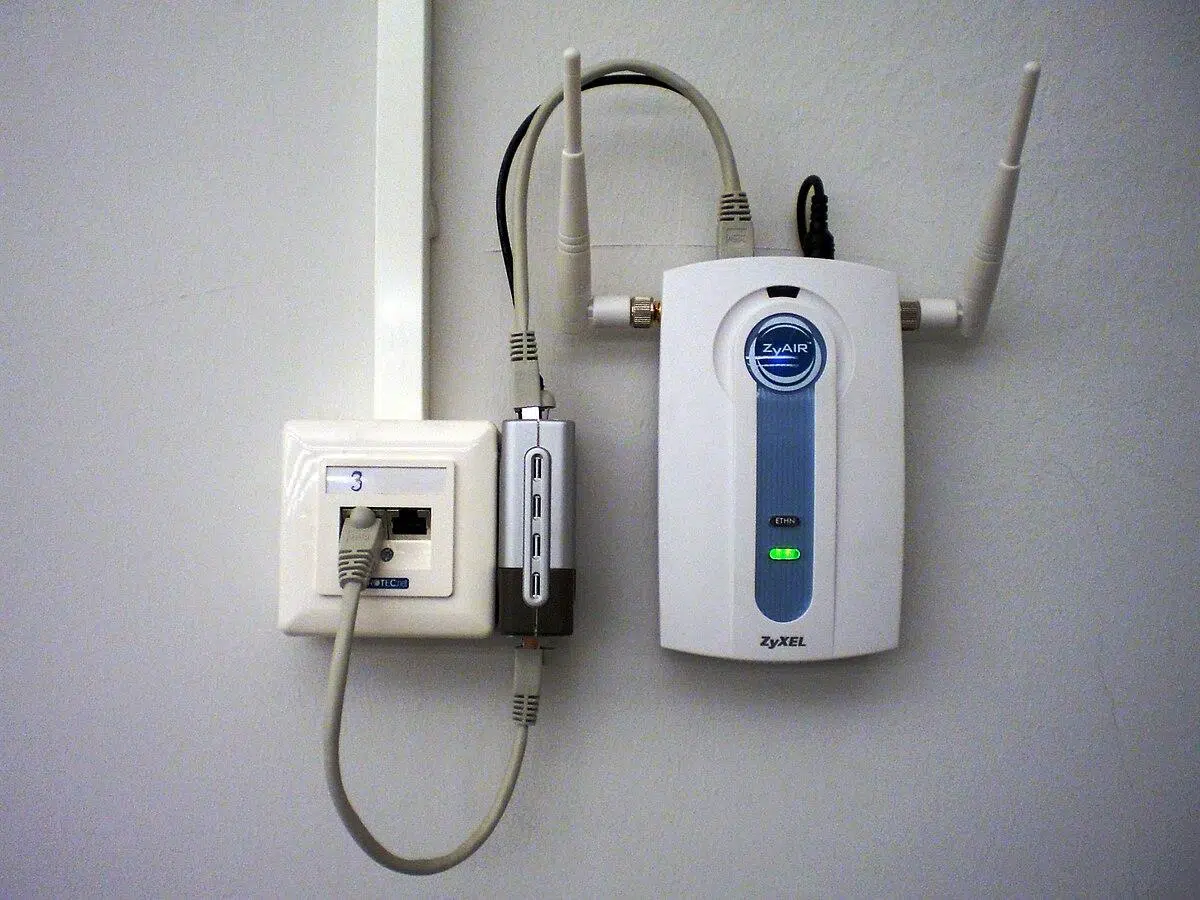
If you've ever wondered how to power IP cameras, Wi-Fi access points, or VoIP phones without a nearby power outlet, the answer is Power over Ethernet (PoE) . This technology allows data and power to travel over the same network cable, simplifying installations and reducing costs without compromising security or interoperability.
Beyond the headline, PoE is a set of IEEE standards that defines voltages, currents, power classes, pins used, and the negotiation process between the power supply equipment (PSE) and the powered device (PD). Understanding how it works internally helps you properly size your network, avoid voltage drop problems, and choose the right switch or injector.
What is PoE and how does it work?
PoE integrates power into a standard Ethernet infrastructure . The power injector (PSE, typically a PoE switch or injector) detects whether the target device (PD) supports PoE; if it doesn't, it doesn't apply power. This automatic detection is key to safely mixing PoE-enabled and non-PoE-enabled devices on the same LAN.
In its standardized version, PoE uses a four-stage procedure: discovery , classification , startup , and operation . During discovery, the PSE checks for a characteristic resistance between 15 and 33 kΩ in the PD; in classification, the PD declares its power class; after that, the PSE applies voltage to initiate power and enters stable operation. All of this happens transparently and without affecting data traffic.
With Fast Ethernet, power can travel over the data pairs (1/2 and 3/6) or the "free" pairs (4/5 and 7/8). In Gigabit and higher, all four pairs are used and power injection is performed using phantom power techniques , maintaining throughput of up to 10 Gbps with suitable cabling (Cat6 or higher).
One practical detail: PoE eliminates the need to install power outlets in false ceilings or on building facades, and allows for centralized backup power in a UPS. If the PoE switch is protected by an uninterruptible power supply , all critical PDs (cameras, access control, Wi-Fi) remain operational 24/7 during a power outage.

Standards and power classes
IEEE standards ensure interoperability between manufacturers. Currently, three main families coexist: 802.3af (PoE), 802.3at (PoE+), and 802.3bt (PoE++). Each defines maximum power per port, voltage ranges, current, and class compatibility.
IEEE 802.3af (PoE) : Up to 15,4 W delivered by the PSE and a guaranteed minimum of 12,95 W at the PD. Ideal for VoIP phones, sensors, basic access points, and fixed cameras. The recommended link distance is 100 m, the limit of the Ethernet standard; greater distances result in higher voltage drop and lower usable power at the PD end.
IEEE 802.3at (PoE+) : Increases power to 30W per port and guarantees 25,5W at the PD. It is ideal for access points with multiple radios, PTZ cameras (depending on the model), and information panels. PoE+ PSEs maintain backward compatibility with PoE PDs.
IEEE 802.3bt (PoE++) : ratified in 2018, it adds two levels. Type 3 reaches 60 W (with ~51 W usable in PD) and Type 4 reaches 100 W (with ~71 W usable). It uses all 4 pairs for power and allows demanding devices— PoE LED lighting, digital signage, thin clients, Wi-Fi 6/6E/7 —to operate with sufficient headroom.
In addition to IEEE standards, some manufacturers offer proprietary variants such as UPoE (Cisco), historically rated at 60 W and with extensions to 90 W in recent generations. Although 802.3bt has now standardized the market, it's advisable to check compatibility if you're mixing solutions from various vendors.

Power classes
To avoid over-allocation, power distribution devices (PDs) are classified, and the PSE reserves budget based on that class. In 802.3af, classes 0 to 3 appear (with class 4 reserved for af), while in 802.3at/bt, the range is expanded to include higher classes . Be careful with class 0: if a manufacturer doesn't specify, the PSE usually assigns power by default as if it were class 3, which can waste budget if the configuration isn't fine-tuned.
| Class | typical use | Approx. power in PD |
|---|---|---|
| 0 | By default (manufacturer does not specify) | up to ~12,95 W |
| 1 | Very low power | ~ 3,84 W |
| 2 | Low power | ~ 6,49 W |
| 3 | Medium power | ~ 12,95 W |
| 4 | High (PoE+) | ~ 25,5 W |
Power supply phases and voltage ranges
During the negotiation process, different voltage ranges are used. Understanding these ranges is useful for diagnostics and design, as the controller chipsets (e.g., LM507x and similar) operate within very specific windows.
| Phase | What happen | Typical V range |
|---|---|---|
| Detection | The PSE verifies a resistance of 15–33 kΩ on the PD | ~2,7–10 V |
| Classification | The PD communicates its power class | ~12,5–25 V |
| start | Voltage is applied to start supply | > ~38–42 V |
| Operations | Stabilized feeding to the PD | ~36–57 V |
Power modes, pins and topologies
There are two classic power injection methods in Fast Ethernet: Mode A (power supplied via data pairs 1/2 and 3/6) and Mode B (power supplied via pairs 4/5 and 7/8). In Gigabit Ethernet (1000BASE-T), all four pairs are used for data, and power is supplied simultaneously without interference, thanks to the coupling methods defined by the standard.
Speaking of architecture, we distinguish between PSE Endspan (a PoE switch that provides direct power) and PSE Midspan (a PoE injector or hub sandwiched between a non-PoE switch and the PD). This conceptual separation helps with expansion planning: you can keep your main switch and add midspans only where needed; also review the network components to better define the topology.
Active PoE vs Passive PoE
Active PoE (IEEE standardized) performs detection and classification before applying power; it is the recommended option for safety, efficiency, and compatibility. It adjusts power per port, protects against short circuits, and disconnects when it does not detect a valid power source.
Passive PoE, on the other hand, injects a fixed voltage (12/24/48/54 V are common) without negotiation and typically uses pins 4/5 and 7/8. It's cheap and simple, but it involves risks: if you connect unsuitable equipment, you can damage it. Furthermore, its effective range tends to be shorter and it doesn't benefit from the safeguards of the standard.
Real advantages and limitations
Among the advantages: cost reduction (a single cable for data and power), less civil works, quick installation in complicated areas (false ceilings, masts, corridors), remote power on/off capability and PD restart via management (SNMP/web), and ease of integrating everything under a central UPS.
The main limitations are: a standard range of 100 m per Ethernet segment, finite power budgets for PSEs (you can't always power all ports at full power simultaneously), and the "centralized risk": if the PoE switch powering many cameras fails, all associated cameras will go down. High-performance models (PoE++) are also available, but these increase the cost of the infrastructure.
An important point: with 802.3af, the usable power (12,95 W) may fall short for demanding PTZ cameras or access points; in that case, it is advisable to make the jump to PoE+ or PoE++ depending on the needs.
Power budget and equipment selection
When buying a PoE switch, check two things: the power per port (which standard each port supports) and the total power budget of the chassis. For example, an 8-port switch with a total power budget of 150W can power five 25,5W PoE+ devices simultaneously; the rest will need to be of lower power consumption or not have PoE enabled at all.
Managed switches allow you to set limits per port, prioritize power (so critical ports don't go down if the budget runs out), and monitor consumption. Some modern models even let you override the power limit of a Class 0/3 PD to prevent waste.
Distance: 100m, extended mode and extenders
The 100m limit is not due to power consumption, but rather to the Ethernet physical layer. Even so, voltage drop increases with distance, so the cable cross-section and category calculations affect the usable power at the power distribution point (PD).
To go further, there are two approaches: the extended mode of some switches (which reduces the link to 10 Mbps and extends it to approximately 250 m in specific scenarios) and active PoE extenders that regenerate the signal and repeat PoE. With daisy-chained extenders, it's possible to reach approximately 400 m in practical deployments, and there are dedicated solutions that advertise up to approximately 1.200 m , always with some speed compromise.
Electrical Safety, EMI and Reliability
Active PoE detects, classifies, and cuts off any abnormalities, reducing the risk of overload and protecting against short circuits. Regarding EMI, the use of twisted pair and couplings designed for coexistence minimizes interference; choose high-quality Cat5e/6 cabling and adhere to bend radii and shielding requirements where applicable.
The attack surface is not negligible: a poorly updated PD can be a gateway into the network. That's why it's so welcome that PoE simplifies electrical deployment and, at the same time, allows you to apply segmentation (VLANs), QoS, and security at the managed switch level to mitigate risks.
PoE Switches: Types and Scenarios
Unmanaged : plug and play. They are economical and perfect for homes, small offices, or simple installations without prioritization requirements or detailed metrics.
Managed : total visibility and control. They allow VLAN, QoS, port mirroring, port limits, SNMP/Telnet/CLI, and are the choice for businesses, industry, professional video surveillance, and managed Wi-Fi.
You can also choose by density: there are models with 4, 8, 16, 24, and 48 ports, with or without SFP/SFP+ uplinks. Scale according to the number of PDs and leave room for growth; if you anticipate PTZ cameras, displays, or high-end Wi-Fi access points, opt for switches with 802.3bt or hybrid (PoE+ and PoE++ ports).
Injectors, hubs and splitters
A PoE injector converts a non-PoE switch into a PoE-compatible switch for 1–2 devices. It is inexpensive and quick to deploy. A PoE hub groups several injectors into a single chassis: it does not switch traffic between ports, its role is to inject power in parallel across multiple lines.
If the target device is not PoE-enabled, a PoE splitter separates data and power, delivering, for example, Ethernet + 12V DC to the device's input. This is a simple way to upgrade older cameras or access points without adding local power sources.
Featured applications
IP video surveillance : fixed and PTZ cameras, with the option to power outdoor heaters or IR sensors (check power requirements). Integration with video surveillance VLANs and prioritization to ensure smooth video streaming.
Wi-Fi : Access points in ceilings or hallways powered without electrical work. In dense/high capacity environments (Wi-Fi 6/6E/7), it is advisable to plan for PoE+ or PoE++ depending on peak consumption.
VoIP telephony : Ethernet-powered phones simplify internal moves, eliminate adapters, and allow scheduled shutdowns for energy savings.
PoE lighting : LED luminaires, sensors, and controllers managed by software. Brightness and color adjustment, occupancy analytics, and custom scenarios that can improve comfort and productivity.
IoT and control : industrial sensors, access control, digital signage, payment kiosks, thin clients, and even small telecommunications cells.
Good implementation practices
Use high-quality Cat5e or higher cabling , with cable certification if possible. The cross-section and category affect losses and EMI; avoid improper connections to power lines.
Respect the 100m limit per link (or apply extended mode/extenders where appropriate). If you use "Long Range PoE" from a switch, expect throughput reductions to 10 Mbps on that line.
Calculate the power budget by adding up the power consumption of all the PDs. Add margin for peak loads and for DC/DC conversion overhead at the end. In PoE++, the switch's heat dissipation is also a factor.
Use active IEEE PoE over passive PoE to minimize risks. Only use passive injectors when required by specific equipment and you are familiar with its voltage tolerance .
Electrical detail and DC/DC converters
The nominal operating voltage is around 48–54 V DC, but many PDs require 12 V, 5 V or 3,3 V. Therefore, the PD integrates a DC/DC converter (often a buck type) with a wide input range (e.g., 36–57 V) that stabilizes the output and protects against fluctuations.
During the classification phase, the DC/DC converter usually remains off to avoid interference. Once the PSE applies startup voltage, the PD turns on its power stage when the input exceeds the threshold defined by the controller.
Management, monitoring and automation
Managed PoE switches allow you to monitor power consumption per port, schedule power-up/down windows, and restart hung devices remotely. With SNMP, syslog, or APIs, you can automate maintenance and save energy during off-peak periods.
In critical deployments (hospitals, security, industry), integrate the PoE switch into your UPS and monitoring platform. If the switch fails, the impact is widespread; that's why redundancy ( stacking, backup links) and load prioritization are essential.
Equipment compatibility and mixing
PoE and non-PoE devices can be mixed on the same network; non-PoE devices simply don't receive power and require their own power source. If your PoE switch supports granular configuration , adjust the power limit per port to avoid wasting power with Class 0 PDs.
With fiber optics there is no power conduction; the solution involves a media converter at the end, followed by a PoE switch or injector to power the connected PDs.
Physical aspects of pinout and modes
In 10/100, Mode A uses 1/2 (positive polarity) and 3/6 (negative polarity) combining data and DC; Mode B uses 4/5 for DC+ and 7/8 for DC−, keeping data and power separate. In 1000BASE-T, all four pairs carry data, and the standard couples the power without degrading the signal.
Finally, remember that low-cost passive injectors usually wire pins 4/5 (DC+) and 7/8 (DC−) without negotiation; they may “work” with certain compatible PDs, but not all 802.3at/bt devices will operate correctly in passive mode.
Industrial and foreign cases
In harsh environments, look for industrial-grade ( hardened ) PoE equipment with a wide temperature range, protection against vibration, dust/water (IP rating), and redundant power supplies. For outdoor applications, weatherproof enclosures, surge suppressors, and UV- and moisture- resistant cabling are essential.
Typical applications: substations, ITS (intelligent traffic), automated factories, ports, tunnels, perimeters with PTZ cameras and sensors, where remote maintenance and robustness reduce downtime.
PoE and smart lighting
PoE lighting combines LED luminaires, occupancy sensors, and controllers under a central software interface. A PoE switch distributes power and data; the system adjusts brightness/color temperature, schedules lighting times, and uses analytics to save energy when unoccupied.
With 802.3bt, powering hallways, classrooms, offices, and retail with PoE is feasible, in addition to enabling integrations with HVAC, access, and security to build smart buildings with greater comfort and efficiency.
Quick FAQs that clear up common doubts
Does PoE affect speed? Not noticeably: the coexistence of data and power is included in the standard; with Cat6 or higher you can reach 10 Gbps if the rest of the infrastructure supports it.
Can I connect a non-PoE device to a PoE port? Yes: the PSE detects compatibility before powering. If it's not compatible, it won't supply power. Use extra caution with older or non-standard equipment, but with PoE enabled, there shouldn't be any risk.
Can I power non-PoE devices? With a PoE splitter, yes: it separates data and delivers 12/9/5 V DC to the device. It's useful for older cameras, routers, or small single-board computers (SBCs) like the Raspberry Pi.
What is the maximum distance? 100 m per Ethernet link according to the standard. With PoE extenders or extended modes you can go further (250–400 m is typical, and even specific solutions of around 1.200 m) with bandwidth compromises.
PoE has matured into the cleanest way to deliver data and power to network and IoT devices. With careful planning of standards (af/at/bt), power classes, budget, and distances, you'll have a simpler, safer, and more efficient installation, capable of scaling seamlessly and ready for 24/7 operation.
