- TensorFlow enables you to design and deploy AI models in any environment
- Its ecosystem includes tools such as Keras, TensorBoard and TensorFlow Lite
- It is used in computer vision, NLP, medicine, finance and more
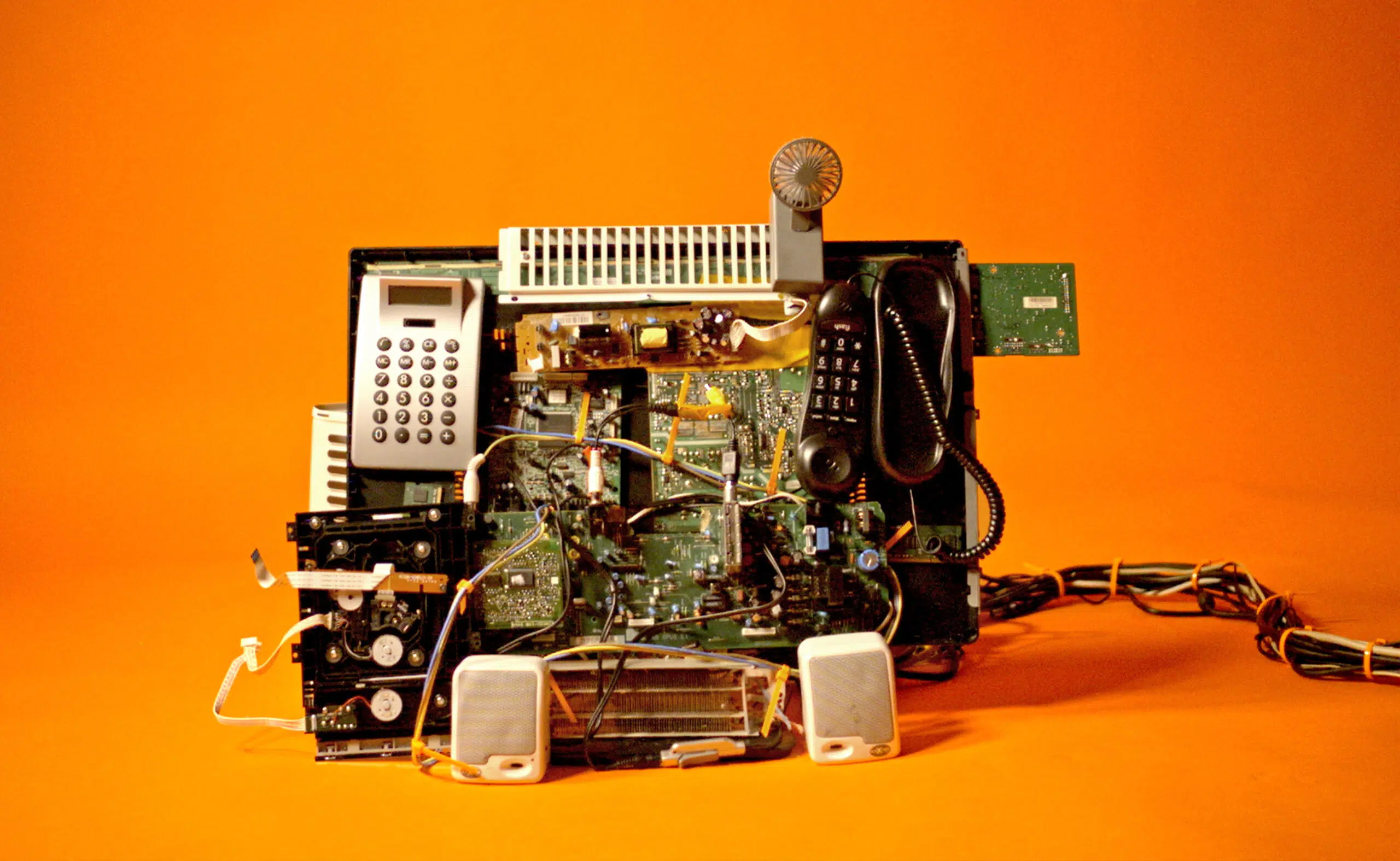
TensorFlow has become one of the most influential tools in the modern artificial intelligence landscape . Its advanced processing capabilities, adaptability, and ease of use, along with its powerful ecosystem of libraries and APIs, have positioned it as a benchmark in the sector. Initially developed by the Google Brain team, this framework has revolutionized how developers, researchers, and companies apply machine learning and deep learning to real-world problems.
Today we want to tell you in detail what TensorFlow is, how it works, what it's used for exactly, in what cases it's used, and why it has become one of the fundamental pillars of modern intelligent systems development. Get ready for a complete and well-explained tour of one of the key technologies of the present and future of digital technology.
What exactly is TensorFlow?
TensorFlow is an open-source library developed by Google for machine learning and deep learning . Its primary purpose is to facilitate the creation, training, and deployment of neural network models , although its flexibility allows it to be used for other advanced numerical computing tasks as well.
This tool was released in 2015 after years of internal development at Google, where it was already widely used in the form of a preliminary system called DistBelief. TensorFlow's arrival as an open-source project democratized access, and its popularity skyrocketed thanks to its cross-platform compatibility (it works on Windows, Linux, macOS, Android, and iOS) , its powerful APIs , its integration with Python , and its huge community . Furthermore, if you want to explore more about the fundamentals of artificial intelligence software , you can delve deeper into it here.
The name “TensorFlow” refers directly to the processing of tensors , which are multidimensional data structures (such as vectors or matrices) on which a sequence of operations is applied through a computational graph or data flow.
What is TensorFlow used for and what is its real use?
TensorFlow enables you to quickly and efficiently build, train, and deploy machine learning models . It includes tools like TensorBoard, TensorFlow Lite, TensorFlow Hub, and TensorFlow Extended that streamline the entire model lifecycle. From data ingestion to final prediction, it can be deployed in the cloud or on resource-constrained devices such as smartphones or IoT devices.
Its main applications include:
- Computer vision: image recognition, visual classification and object detection.
- Natural language processing: machine translation, sentiment analysis, and chatbots.
- Prediction and classification: medical diagnosis, financial analysis and logistics.
- Recommendations: suggestion engines for movies, music or shopping.
Origins and evolution of TensorFlow
TensorFlow emerged from Project DistBelief, an internal Google system developed by the Google Brain team . While it delivered good results, it was complex, inflexible, and difficult to scale to other use cases or share across teams . Therefore, Google initiated a complete redesign of its machine learning backend, which resulted in TensorFlow.
Its release in 2015 under the Apache 2.0 license allowed academics, companies, and developers to contribute to, improve, and adapt the tool for various sectors. Subsequent versions, such as TensorFlow 2.0, significantly improved usability, offering more natural programming through eager mode and high-level APIs like Keras. If you want to understand how machine learning works in depth, we invite you to visit the article on machine learning myths.
Fundamental components of TensorFlow
TensorFlow is made up of multiple modules that, when integrated, form a comprehensive ecosystem. Its main components include:
- Neural layers: key structures in the models, which allow the overall architecture to be organized.
- Models: mathematical representation of the system to be trained and evaluated
- Preprocessing: tools to clean, transform, and normalize data before training
- Training algorithms: such as Adam, RMSProp or SGD, which adjust the weights and improve the model's performance
How to use TensorFlow in real-world projects?
TensorFlow's versatility is reflected in multiple sectors, from startups to large enterprises and educational organizations. Below are some notable examples:
Image recognition
One of the most popular and developed uses of TensorFlow is in visual recognition . Convolutional neural networks analyze layers of pixels to identify shapes, edges, and patterns. They are applied in security (facial recognition), healthcare (detecting anomalies in X-rays), and mobile technology (unlocking with photos). If you want to delve deeper into the usefulness of programming in this field, check out the article on software development.
sentiment analysis
Models that evaluate opinions, reviews, or comments on social media can identify emotions and classify content . This provides valuable information for business strategies, marketing, and customer service. TensorFlow processes text and extracts emotional patterns with great accuracy.
Medical diagnostic
In healthcare, TensorFlow is used to analyze medical images, diagnoses, and clinical signs . Its ability to handle large volumes of data helps detect signs of pathologies such as cancer, lung conditions, or eye diseases.
Personalized Recommendations
Companies like Netflix and YouTube use TensorFlow to create intelligent recommendation engines that suggest content based on each user's browsing history . Similar systems are also used in e-commerce and social media.

What is Keras and how does it relate to TensorFlow?
Keras is a high-level API integrated into TensorFlow that simplifies the creation of deep learning models . It stands out for its simplicity and intuitive approach. It allows you to build neural networks quickly, with just a few lines of code, making it ideal for prototyping and rapid testing. If you want to learn more about careers related to this technology, visit our computer science careers page.
The main ways to define models in Keras are:
- Sequential model: where each layer is stacked in a line, suitable for simple models.
- Functional API: allows the construction of more complex structures, with multiple inputs or outputs.
Complementary tools and associated libraries
TensorFlow also has several extensions that extend its capabilities, including:
- TensorFlow Lite: to deploy models on mobile and low-power devices.
- TensorFlow Extended (TFX): to automate data and model pipelines in production.
- TensorBoard: Interactive dashboard showing training metrics, architectures, and losses.
- TensorFlow Probability: to incorporate statistical and probabilistic models.
- TensorFlow Quantum: to integrate quantum computing into hybrid algorithms.
What languages and platforms does TensorFlow support?
Initially based on Python, TensorFlow has expanded its support to other languages such as JavaScript (TensorFlow.js), C++, R, Java, Go, Rust, and Swift. This facilitates development in web environments, servers, and embedded systems. Furthermore, it can run locally or in the cloud, on clusters with multiple GPUs, and on specialized hardware such as TPUs, designed by Google to accelerate performance. If you want to learn more about the most used programming languages in 2024 , here is some updated information.
Its modular architecture allows models to be deployed from a Raspberry Pi to a distributed system.
With these capabilities, TensorFlow is a complete and adaptable environment for any artificial intelligence project.
How do you train and deploy a model with TensorFlow?
The typical process for developing a model with TensorFlow includes:
- Prepare the data: cleaning, parsing, normalizing and segmenting the data set.
- Design the model: choose the type of network, number of layers, activation functions, etc.
- Train: feed the model with data, adjust weights and optimize.
- Evaluate: calculate metrics on validation and test sets.
- Deploy: export the model for use in real applications or integrate it into other systems.
This flow can be fully automated for production projects.
Code examples and complete cases
From basic examples to complex systems, TensorFlow allows you to implement cases such as:
- Classification with MNIST: handwritten digit recognition with convolutional networks.
- Sentiment Rating with IMDB: analyze movie reviews as positive or negative.
- Recommendation systems like Netflix: using network embeddings for users and products.
In all these cases, there are guides, tutorials, and specific libraries within the ecosystem that facilitate implementation. The versatility and support it offers make TensorFlow a fundamental tool in today's technological advancement, enabling the democratization of advanced and sustainable artificial intelligence solutions. Regardless of experience level, TensorFlow provides the tools to turn ideas into practical solutions, ranging in difficulty from simple projects to highly complex systems.

Table of Contents
- 1 What exactly is TensorFlow?
- 2 What is TensorFlow used for and what is its real use?
- 3 Origins and evolution of TensorFlow
- 4 Fundamental components of TensorFlow
- 5 How to use TensorFlow in real-world projects?
- 6 What is Keras and how does it relate to TensorFlow?
- 7 Complementary tools and associated libraries
- 8 What languages and platforms does TensorFlow support?
- 9 How do you train and deploy a model with TensorFlow?
- 10 Code examples and complete cases