- Business data integrates financial, commercial, and contact information to evaluate companies and reduce risks.
- The sources combine official records, open data, chambers of commerce, and specialized private platforms.
- Business databases are key for B2B marketing, customer segmentation, and business intelligence.
- Verification and legal compliance processes ensure responsible and up-to-date use of information.
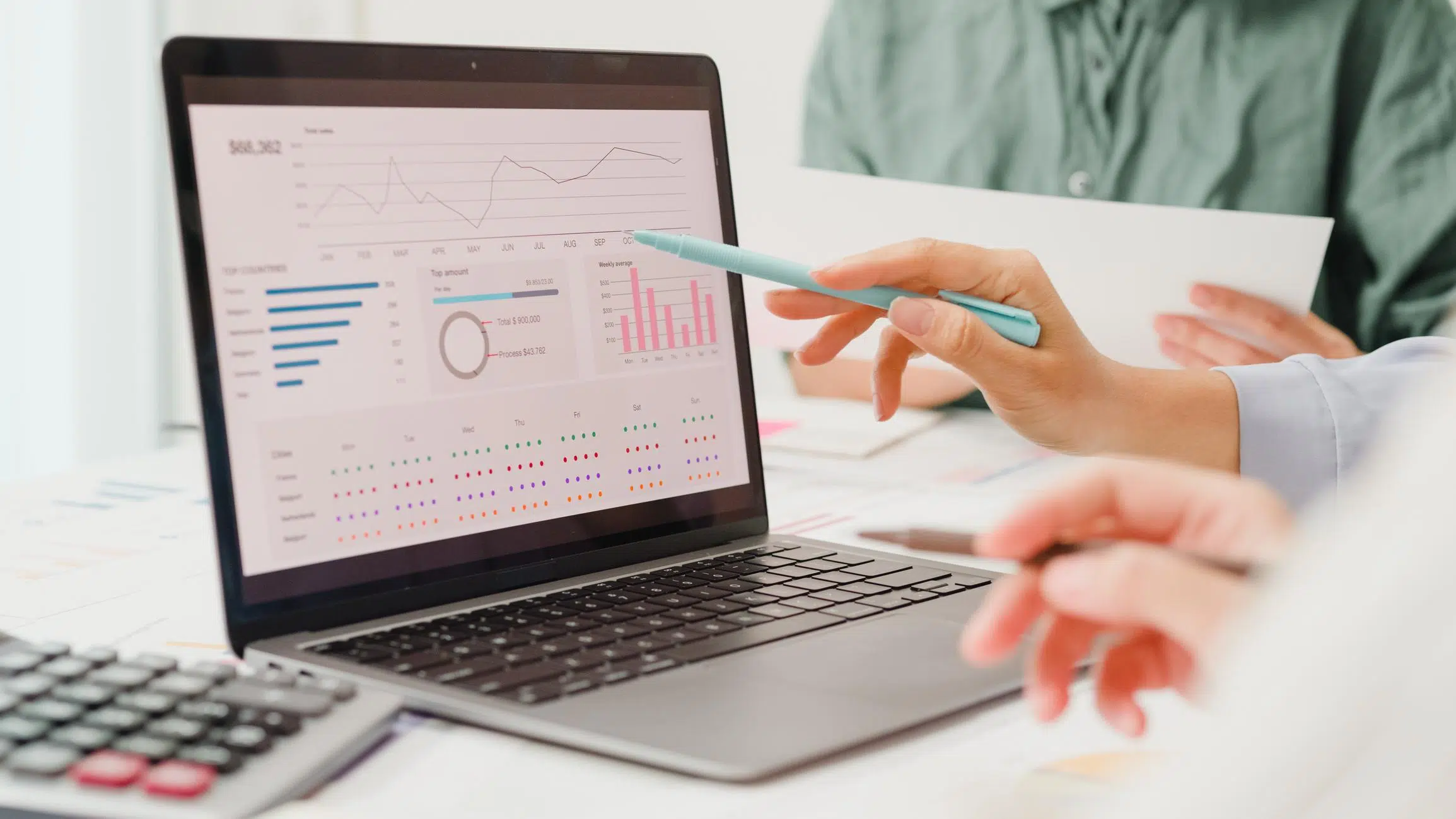
Business data has become the fuel that drives decision-making in any organization, from a small local business to a large multinational corporation. Having access to reliable information about companies, executives, and economic activity is no longer a luxury; it's a necessity for reducing risk, finding customers, and understanding what's happening in the market.
Today, thanks to public sources, chambers of commerce, and specialized platforms, it's possible to consult reports, databases, and official records with an enormous level of detail: contact information, financial statements, risks, inter-company relationships, and much more. The key is knowing what kind of information exists, where it comes from, and how to use it effectively to benefit your business.
What exactly is business data and what is it used for?
When we talk about business data, we're referring to the set of information that describes a company, its activities, financial situation, management, legal history, and relationships with other companies. It's not just the typical name, address, and phone number: the scope is much broader and more strategic.
This type of information allows, for example, evaluating whether a company is a good business partner , analyzing its financial performance, studying the competition, or segmenting customers for marketing campaigns. For a freelancer looking to sell B2B, a bank considering granting a loan, or a public administration analyzing the productive sector, this data is invaluable.
In the Spanish market, there are various platforms and portals that collect and organize data from all Spanish companies , from micro-enterprises to large corporations. Some focus on detailed financial reports, others on marketing databases, and still others on the large-scale reuse of public information.
Furthermore, we are not just talking about private companies: open data from the Administration is also a key source of economic and business information , especially when reused through national portals that concentrate datasets from different public bodies.
In practice, having good business data allows you to save time, reduce costs and minimize risks : you filter potential customers who are a good fit for your product, detect companies with late payments, identify managers with multiple important positions or check if a supplier has financial problems before signing anything.
Types of information offered by the main enterprise data platforms
When consulting information on companies in Spain, specialized platforms usually provide predefined reports and segmented databases , designed to respond to very specific needs: risk analysis, marketing, business intelligence, regulatory compliance, etc.
In many cases, you can choose between detailed financial reports, sector reports by economic activity, specific solutions to consult default files (such as Badexcug or ASNEF), as well as access to databases of companies classified by very diverse criteria.
A typical company report usually includes complete contact information (registered address, phone numbers, emails, website), a description of the main activity, its CNAE classification or similar code, sales volume if it's a publicly traded company, its legal structure, and how long it's been in business. All of this helps to provide a quick overview of the business.
From an economic standpoint, these services typically include financial statements , balance sheets, and profit and loss accounts when available, as well as key indicators of solvency, credit rating, and financial risk. This allows for an assessment of whether the potential partner has financial strength or could pose a risk of default.
Another key element is the commercial and business information data : current management, legal representatives, key executives, changes in positions, capital increases or reductions, mergers, insolvency proceedings, as well as the acts published in the BORME (Official Gazette of the Mercantile Registry). This provides a commercial history that helps to interpret the company's trajectory.
Primary and secondary sources of business information
One of the most important differences between data providers is where they obtain their information and how frequently they update it . Generally, two main groups of sources are discussed: primary and secondary.
Primary sources of business information are those that come directly from the company being analyzed. Specialized platforms collect data such as the balance sheet, profit and loss statement, specific contact information, or details of its business situation through interviews or questionnaires with the company's managers and executives.
This primary approach allows for supplementing or refining official information with more current and qualitative data , such as forecasts, key business lines, or billing details not yet reflected in public records. However, it does require verification processes to ensure that the company is not misrepresenting its true situation.
On the other hand, secondary sources of business information come from official bodies and specialized media. In Spain, the Mercantile Registry and its official bulletin (BORME) stand out, as well as other registries and economic publications that record corporate acts, filed annual accounts, and other regulatory information.
In addition to these organizations, many platforms draw on specialized business media , industry newsletters, and public databases of tenders and grants. All of this is integrated into internal systems that cross-reference and enrich the information to provide the most comprehensive overview possible.
The added value of these services lies in the standardization, cleansing, and enrichment of the data : it is not enough to simply dump the raw information from a public registry; formats must be unified, errors corrected, duplicates eliminated, and companies, groups, and managers properly linked to make the database truly useful.
Links between companies and executives: a snapshot of the business landscape
Beyond the profile of each company, some business data solutions allow you to analyze the connections between companies and managers to understand how the business fabric behind a brand or corporate group is structured.
These tools identify which executives hold positions in multiple companies, which companies share administrators or partners, and how business groups and subgroups are structured. This allows for a very clear visualization of corporate relationships and the detection of patterns that might otherwise go unnoticed.
The results are usually displayed through simple and intuitive visual representations , where each node represents a company or executive, and the lines show the links between them. This makes it easy to understand at a glance who controls what, which companies are associated with them, and how decision-making power is distributed.
These networks are built using data from official sources, updated daily , combined with big data technologies and entity-relationship algorithms . The more information incorporated, the more detailed the resulting map of connections.
One of the advantages of these solutions is that, in some cases, they offer a free company database with a certain level of detail and basic visualization, enough to get a general idea without needing to purchase a report. This is very useful for quickly determining whether a company warrants further investigation.
For the world of investment, compliance, and due diligence, this type of relationship analysis helps detect potential conflicts of interest, opaque structures, or concentrations of power that could be problematic. It also serves to identify business opportunities between companies that share key personnel.
Open data and national public information portal
In addition to private platforms, Spain has a significant institutional effort to make reusable public data related to the economy and the business sector available to citizens and businesses . This is where the national open data portal comes in.
This portal organizes and manages the Public Information Catalog of the General State Administration . From there, you can access open datasets from multiple ministries and agencies, as well as training materials, legal documentation, and news about reusing public sector information.
In the economic and business sphere, the Ministry of Economy, Trade and Business plays a key role. In accordance with regulations on the reuse of public sector information, it makes available to reusers a series of datasets designed to promote economic activity, transparency, and innovation.
The Ministry's open datasets, included in the Data Catalog, are offered in a basic, general format, with no additional requirements beyond those outlined in the portal's legal notice. This means any user can download and use them, assuming responsibility for their use.
Those who reuse this information must accept the general terms and conditions and are liable to third parties for any damages that may arise from improper use or misinterpretation of the data. This includes companies that integrate these datasets into their own business information products or services.
Thanks to this legal and technical framework, it is possible to combine open public data with private information to build advanced analytics solutions, dashboards, and economic intelligence systems. For many technology SMEs, these datasets are the foundation upon which to build value-added services.
Chambers of commerce and business databases with a guarantee
Another key player in the business data ecosystem in Spain is the chambers of commerce and their information services . Some of them, through specific platforms, offer very comprehensive databases of companies from the region, the rest of Spain, and even other countries.
The main advantage of these services is the guarantee of the data's origin . Much of the business information comes from the Ministry of Finance and official records, ensuring a high degree of consistency and traceability of companies' core information.
Furthermore, the databases undergo normalization, cleansing, and enrichment processes , ensuring that records are homogeneous, free of duplicates, and include supplementary fields useful for sales and analysis. This significantly improves the accuracy of B2B marketing campaigns.
Another highly valued aspect is the systematic updating of data , which is carried out periodically (for example, on an annual basis) to reflect new hires, terminations, changes in company structure, modifications to business activities, or changes in contact information. Having outdated data can ruin a marketing campaign, which is why keeping it up-to-date is critical.
Finally, chambers of commerce guarantee the legality of data processing , ensuring compliance with data protection regulations and the conditions for reusing official sources. This legal backing provides peace of mind to companies that will later use this information for their campaigns.
Thanks to this combination of guaranteed origin, technical reliability, regular updates, and legal compliance, business databases linked to chambers of commerce are a very solid option for business prospecting, market research, and customer segmentation.
Business databases for marketing and business development
One of the most direct applications of business data is the design of marketing campaigns and customer acquisition . To this end, some platforms focus on offering large databases specifically geared towards commercial use.
In Spain, there are services that provide users with an extensive database of hundreds of thousands of companies , easily exceeding 400.000 companies across multiple sectors and economic areas. The classification typically follows a structure similar to the CNAE (National Classification of Economic Activities), based on the activity description provided by each company.
Most of these databases are comprised of SMEs and the self-employed , who make up the bulk of the Spanish business sector. They cover a wide variety of sectors: manufacturers, producers, exporters, distributors, wholesalers, retailers, shops, workshops, stores, hospitality businesses (HORECA), clinics, professional offices, consultancies, educational centers, residences, and much more.
If a company is looking for detailed information for marketing activities, market segmentation, or advertising campaigns , these types of databases become a strategic tool. They allow companies to select contacts by sector, size, province, estimated revenue, legal structure, or other relevant criteria. Market segmentation is one of the most common applications.
When acquiring this type of database, you typically receive an Excel file with a large volume of records , where each row corresponds to a company and each column to a specific field (company name, tax ID, municipality, sector , contact person, etc.). This format greatly simplifies subsequent work.
Excel allows you to filter, sort, combine, and cross-reference information with other internal company files to fine-tune the selection of potential clients. For example, you can exclude existing clients, prioritize certain strategic sectors, or focus on specific geographic areas.
Using these databases effectively helps optimize sales and marketing resources : instead of firing blindly, you focus your efforts on those who are most likely to be interested in your offer. This means less wasted time, lower costs, and better conversion rates.
Email verification and user identification on data platforms
When you access some business information platforms, you'll often be asked to confirm your email address before using the service . This isn't arbitrary: it's part of security, access control, and, in some cases, regulatory compliance processes.
The process is usually simple: after registering, the tool sends a verification email to your inbox . Your account isn't activated, and you won't have full access to company data, news, or other features until you click the confirmation link.
These verifications help prevent fake registrations, automated bots, and misuse of information . Furthermore, they allow the platform to maintain a minimum level of control over who accesses what, which is crucial when handling sensitive or regulated data.
Once the email is validated, the user usually has access to an environment where they can consult certain basic information for free , and sometimes contract more advanced reports or premium services if they need more detail or larger volumes of data.
From the perspective of the company offering the platform, this process also helps to communicate with the user more effectively , sending them notices about legal changes, service improvements or information related to the correct use of data, always within the limits of data protection regulations.
Taken together, email verification and user identification are part of a broader strategy to ensure responsible and secure use of business information , in a context where data protection and transparency are increasingly demanding.
This entire ecosystem of public portals, chambers of commerce, and private platforms forms a rich landscape of business data useful for analysis, prospecting, and decision-making . Knowing how to combine financial reports, trade databases, official records, and open datasets allows companies of any size to navigate the market with greater confidence and build better-informed strategies.
