- The AI infrastructure is divided into critical layers of computing, data management, and model deployment to ensure enterprise scalability.
- The rise of AI factories and native inference allows for optimized performance and reduced latency in real-time applications.
- Data sovereignty and hybrid approaches are fundamental to complying with strict regulations in regulated sectors.

Today, building an artificial intelligence system is not just a matter of writing a good prompt or choosing a popular model; the real crux of the matter lies in the technological support that underpins the entire process . Many companies jump in headfirst with very promising proofs of concept, but realize, sooner or later, that their current systems are inadequate for handling massive volumes of data or real-time processing, causing the vast majority of these projects to fall by the wayside without ever reaching a real-world deployment.
For AI to move beyond experimentation and become a business engine, an architecture specifically designed for these workloads is essential . Simply adding another server is no longer enough; we're talking about a complex ecosystem encompassing everything from highly specialized chips to hybrid cloud strategies, enabling organizations not only to train models but also to run them efficiently, securely, and, above all, in compliance with the privacy laws that guide us.
The fundamental pillars of the AI infrastructure
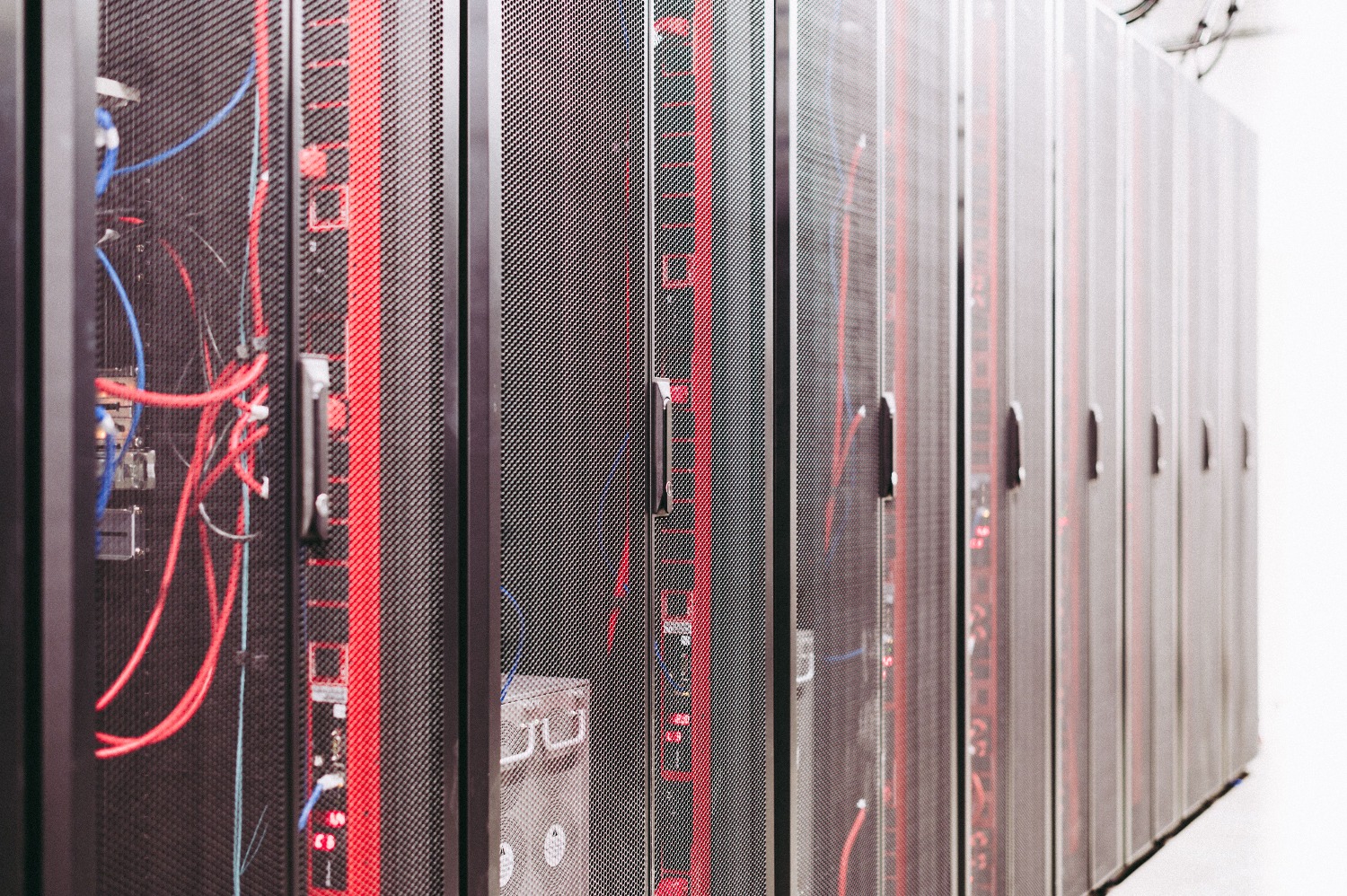
To understand how this system works, imagine the infrastructure as a stack of layers working in coordination. At the base is the computing layer , where the hardware takes center stage. This is where GPUs and AI accelerators come into play, capable of performing thousands of mathematical calculations in parallel—vital for neural network training to be quick and efficient. While some choose to purchase their own hardware, others prefer the flexibility of the cloud to scale their resources as needed.
Moving up a level, we find the data layer . Without clean, well-organized data, any AI model is essentially an empty shell. Therefore, it's crucial to have data pipelines that allow for the efficient capture, transformation, and storage of information. Analytics platforms, which organize business data, and annotation services, which help the machine learn from human feedback to become more accurate, are key here.
Finally, we arrive at the model layer . This is where the magic of design, optimization, and monitoring happens. Depending on the objective, we can use anything from massive language models (LLMs) to multimodal models capable of understanding video and audio. To manage this entire lifecycle, MLOps tools are used that facilitate the transition from the lab to production without system crashes.
From traditional infrastructure to AI Factories

The term "AI factories" has been circulating a lot lately , and for good reason. While infrastructure refers to individual components (chips, disks, networks), an AI factory is an integrated environment geared towards mass production. It's like going from woodworking tools to an automated assembly line. These ecosystems combine supercomputing, human talent, and orchestration software to continuously generate AI applications at scale.
This approach is especially useful in scenarios where latency is a critical issue or where absolute control over information is required. For example, in sovereign AI , governments use these factories to train models while keeping data within their own borders, preventing sensitive information from traveling to servers on other continents. Similarly, agentic AI , which allows systems to reason and act autonomously, demands far greater computing power than a simple chat application, making these factories the only viable option for scaling.
The shift towards native inference and hybrid environments

For a long time, the focus was on training, but now the balance is shifting toward native inference infrastructure . Inference is the moment when the trained model provides a response to the user. As more and more users interact with AI, demand is shifting from large central data centers to regional nodes closer to the end user. This reduces response time and makes the experience much smoother.
In this context, the hybrid approach has become the norm. Companies leverage the raw power of the public cloud for the training phase, which is the most resource-intensive, but shift inference to local servers or even the AI edge (end devices such as cameras or sensors). This allows for immediate response without relying on a constant internet connection and maintains data privacy at the point of generation.
Real-world applications and sectors that benefit
A well-established infrastructure enables the deployment of solutions that transform entire sectors. In the business sphere, Retrieval Augmented Generation (RAG) pipelines allow AI to search for real information in company documents rather than invent answers—a vital skill in the legal or customer service sectors.
- Cybersecurity: Models are used to detect anomalies in network traffic and stop attacks in real time thanks to high-speed data ingestion.
- Health and Science: Supercomputing allows us to simulate molecular interactions to create new drugs or analyze complex climate models.
- Physical World: Machine vision and autonomous systems, such as drones or warehouse robots, depend on low-latency processing that only a native infrastructure can provide.
For IT managers, there's also AI applied to infrastructure . Unlike the previous example, here AI isn't the product, but the tool. It involves using intelligent models to monitor the hardware itself, eliminate information silos, and optimize server performance, allowing administrators to check the status of their network using natural language, as if speaking with an expert colleague.
The success of digital transformation today depends on having a technological foundation that isn't a bottleneck. By integrating specialized hardware, robust data strategies, and a flexible architecture that combines the cloud with on-premises processing, organizations can move beyond experimentation and start achieving tangible results that boost their competitiveness in the market.
FAQ
What is the difference between AI infrastructure and AI factories?
The infrastructure comprises the basic elements such as hardware and software, while AI factories are integrated ecosystems designed to produce and scale applications in an industrial and continuous manner.
What does native inference infrastructure consist of?
It is a technological design optimized specifically to run pre-trained models, shifting the workload to regional data centers to reduce latency and improve response speed.
Why is a hybrid approach recommended in AI?
It allows combining the enormous computing power of the public cloud to train heavy models with the security and speed of the local infrastructure to run the inference.
What is sovereign AI and how does it relate to infrastructure?
It is the ability of a country or entity to control its own models and data. It requires dedicated, local infrastructure to ensure that information does not leave its legal jurisdiction.
What functions does the data layer perform in the AI stack?
It is responsible for the acquisition, cleaning and storage of information, ensuring that the models receive relevant and organized data for effective training.
How does AI applied to IT infrastructure help companies?
It uses artificial intelligence models to analyze the functioning of technological systems in real time, optimizing performance and eliminating information fragmentation.
What role do GPUs play in AI computing?
They are processors specialized in matrix and vector calculations, essential for handling the highly parallel workloads required by deep learning.
