- Decentralized social networks distribute control between servers and users, avoiding a single authority and reducing censorship.
- Two major models coexist: federated platforms (Fediverso, ActivityPub) and on-chain social networks based on blockchain and distributed storage.
- They offer more privacy, identity portability and new ways to monetize, but face challenges of usability, network effect, moderation and regulation.
- Ethereum and its ecosystem drive many of these solutions, creating bridges between traditional Web2 and social Web3 focused on user sovereignty.
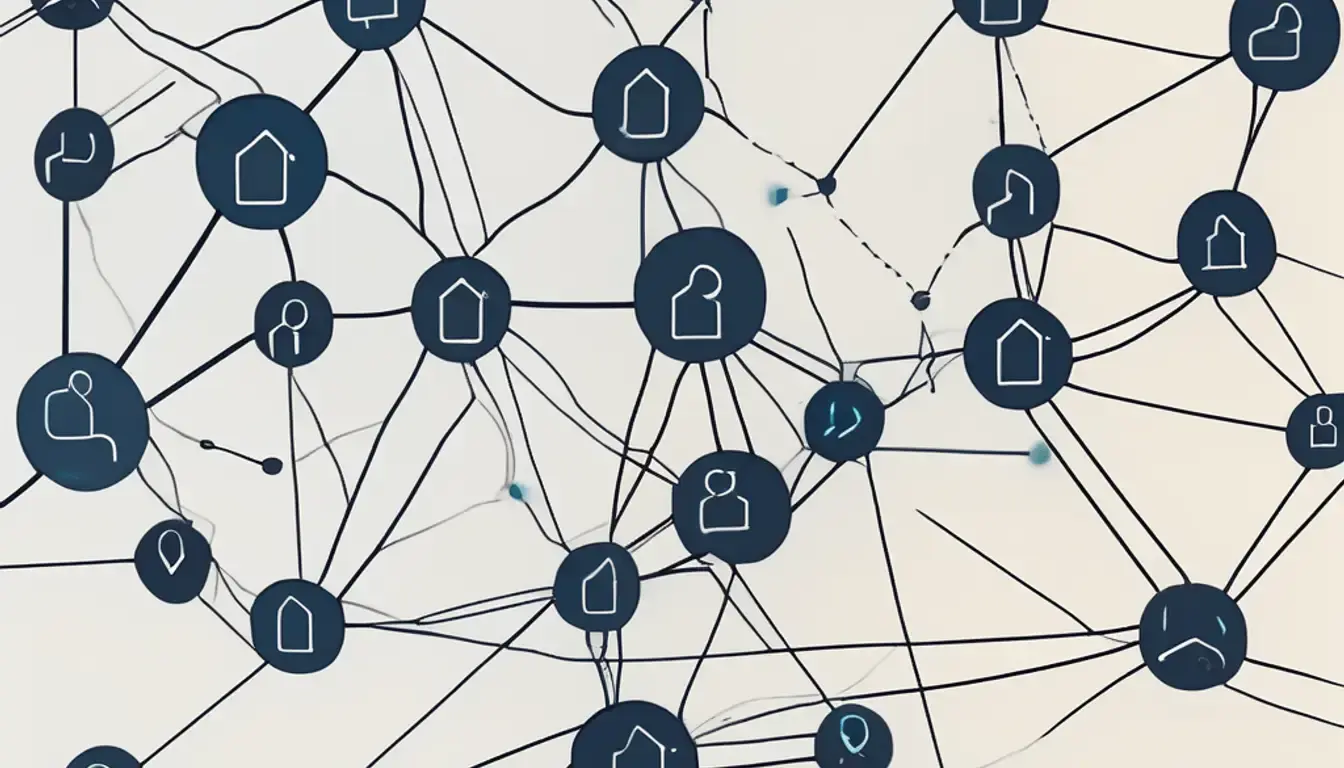
Decentralized social networks have gone from being a niche curiosity to becoming a real alternative to Facebook, Instagram, or Twitter. In a context of privacy scandals, unpredictable policy changes, and opaque algorithms, more and more people are questioning whether it makes sense to continue giving away their data to a handful of large platforms.
This new ecosystem from Web3 and Fediverso proposes the exact opposite: distributing power, giving users more control, enabling the portability of identities and content, and even introducing direct monetization models with less intermediation. It may sound very technical, but at its core lies a simple idea: that your online presence shouldn't depend on the whims of a single company or server.
When we talk about decentralized social networks, we're referring to platforms where there isn't a single authority (a company or a central server) that controls all the data, accounts, and decisions. Instead, they operate on a distributed network of independent servers (nodes, instances, pods, etc.) or directly on a blockchain.
In federated models like Mastodon, Pixelfed, PeerTube, or Lemmy, each server functions as a small community with its own rules, but all can communicate with each other . It's very similar to how email works: you can have Gmail and easily write to someone with Yahoo. The same applies here, but with posts, comments, videos, or photos.
In the most radical approach, so-called on-chain social platforms (like Lens Protocol or Farcaster) take this logic a step further: your profile, your posts, and your social graph (who follows whom) live on the blockchain as digital assets. This means that no one can take them away from you overnight, and you can transfer them to other compatible apps.
This entire movement is framed within Web3: decentralized identities, wallets, tokens, and smart contracts that enable new forms of authentication, governance, and monetization, without depending on a closed back-end owned by a single company.
Why decentralization matters so much now
Traditional social media has enabled unprecedented global connectivity , but it has come at a high price: massive data collection, aggressive advertising targeting, constant algorithm changes, and opaque moderation. In practice, users have very little control over how their data is used and what they are shown.
In recent years, both the rise of blockchain and several data management scandals have raised alarm bells. The idea of digital sovereignty (owning your identity and content) has gone from being a geeky concept to a widespread concern. When a network decides to change its monetization model or tighten its moderation rules, millions of creators are left without easy alternatives.
The growth of alternatives like Bluesky and Mastodon between 2022 and 2025 is no coincidence. It coincides with controversial changes in established networks (Twitter/X, Instagram, Reddit), link blocking, API modifications, and business decisions that have left many users and developers feeling uneasy. It's not just a technical issue: it's a clash of power models on the internet.
In parallel, a whole discourse has emerged in the crypto world around the rights of the creator and the community : transparency in the rules, resistance to censorship, fairer distribution of value and direct participation in the governance of platforms through tokens or similar mechanisms.
How they work: federation, blockchain, and distributed storage
Within the umbrella of decentralized social networks, we can distinguish three main technological pillars that often combine to offer more complete and resilient experiences to users.
1. Federated platforms (Fediverso and ActivityPub)
The federated model is based on independent servers that communicate with each other using open protocols . The leading standard today is ActivityPub, approved by the W3C. This protocol allows a post created on your Mastodon server to be distributed to your followers on other servers, or for someone on Pixelfed to see your photos even if they don't share an instance with you.
Historically, prior to ActivityPub, there were already attempts at federation: Laconica, StatusNet, GNU Social, and the OStatus standard. The term "Fediverse" became popular starting in 2017, and from 2018-2019 onward, most open-source projects migrated to ActivityPub . The major boost came in 2022 with Elon Musk's acquisition of Twitter, which triggered a surge in sign-ups to Mastodon and other federated platforms.
ActivityPub's architecture ensures that each server has its own database and rules, but "activities" (following, posting, sharing, replying) are exchanged with other servers on the network. This reduces dependence on a single actor and facilitates the emergence of highly specialized communities , with moderation tailored to each user profile.
2. On-chain platforms and social graphs in blockchain
The other major area is social networks built directly on blockchain, especially on Ethereum and its scaling solutions (like Polygon or Optimism). These are social dApps whose back-end isn't a traditional database, but rather smart contracts deployed on the network.
Clear examples include Lens Protocol, Farcaster, Mirror, Ethereum Follow Protocol, and Ethereum Comments Protocol. In these cases, your identity is usually linked to an Ethereum address or a complementary system (such as ENS or SIWE), and many social actions (following, commenting, supporting content) are recorded on the blockchain as transactions.
This approach has several consequences: the social graph is portable and composable (you can use the same set of followers across different apps), monetization can be programmed (NFTs, tips, subscriptions, tokenized governance), and content control is no longer in the hands of a single company. However, it also introduces technical friction and usage costs (although these are becoming increasingly lower thanks to Layer 2 technologies like Optimism).
3. Distributed storage and hosting (IPFS, Arweave, etc.)
Beyond the identity layer, many decentralized networks opt for systems like IPFS or Arweave to store large files (long texts, images, audio, or video). The idea is to prevent a single server from being the custodian of all the data, reducing single points of failure and censorship risks.
In Mirror, for example, articles are permanently stored on Arweave and can be tokenized as writable NFTs; in Audius, music is distributed across nodes, and the blockchain is used for rights management and the AUDIO token. This ensures that even if one node goes offline, the content remains available as long as other nodes are serving it.
Although the volume of users is still much lower than the giants of Web2, the decentralized ecosystem is growing and diversifying according to specific use cases and very specific communities.
Fediverse: Mastodon, Pixelfed, PeerTube, Lemmy and company
Mastodon is probably the most visible face of the Fediverse . Its approach is similar to Twitter/X, with short posts and a microblogging culture, but without intrusive advertising or a single algorithm that decides what you see. Each instance defines its own moderation rules, languages, main topics, and so on.
Pixelfed is, broadly speaking, a free Instagram clone focused on photography, while PeerTube specializes in video and Lemmy in Reddit-like forums. All these platforms share the ActivityPub foundation, allowing a Mastodon user to easily follow someone else's PeerTube channel or WordPress blog if the latter has the ActivityPub plugin enabled.
Bluesky and the AT protocol
Bluesky began as a project driven by members of the original Twitter team and, over time, has become the most mainstream decentralized alternative , with tens of millions of users. It uses its own AT protocol, designed to make identity and the social graph portable across different server providers.
This architecture allows you to switch servers without losing your identity or followers, similar to what Mastodon offers but with a different protocol approach. Bluesky's growth has gone hand in hand with controversies surrounding X and a desire to return to a simpler, "early Twitter" experience, but with more control options.
Social Web3: Lens, Farcaster and other dApps
In the realm of Web3, Lens Protocol (based on Polygon) has established itself as a leading platform for creators and developers. In Lens, your profile, posts, and connections are represented as composable NFT assets that any compatible application can reuse. If a new social app built on Lens emerges tomorrow, you can take it directly with your community.
Farcaster, for its part, embraces the concept of "sufficiently decentralized": some of the logic runs on-chain (on Optimism), but it delegates other functions to off-chain infrastructure to improve the user experience. Its offering resembles a blend of Twitter and Reddit, with easily navigable channels, threads, and casts.
Alongside these, we find projects like Minds, MeWe, Hive Social, and token-based platforms that reward active participation. Not all are equally decentralized, nor do they all use blockchain, but they share the idea of less dependence on a central authority and a greater focus on privacy and freedom of expression.
Decentralized social networks promise to solve many of the most talked-about problems of centralized platforms, although in practice the degree of success varies depending on the specific design of each project.
More control over your data and your digital identity
On most of these platforms, users have greater control over what they share and with whom . On Ethereum-based platforms, for example, you can log in using a wallet without having to provide your email, phone number, or real name. Your identity is linked to a cryptographic key, not to a business profile built to show you ads.
Furthermore, by not depending on a single company, you have the option to choose the server that best aligns with your values, and even set up your own if you have the technical skills or hire someone who does. This also means that usage policies are more transparent and, in many cases, discussed with the community.
Resistance to censorship and unique points of failure
In a decentralized environment, it's much more difficult for a single entity to globally delete content or bring down the entire network. Moderation can exist (and indeed it does), but it's usually done at the instance or community level, not as a top-down order applicable to the entire system.
From a technical standpoint, distributing data across multiple servers or nodes means that if one fails, the network continues to function . The global Facebook outage in 2021 perfectly illustrates what happens when the entire infrastructure relies on just a few data centers.
Open source, algorithm transparency, and direct monetization
Many of these platforms are open-source software, which allows for auditing how the code works , what data it collects, and how it is processed. There are no algorithmic "black boxes" on the same level as those found in large commercial networks, which reduces the feeling of arbitrariness when content is promoted or suppressed.
On the other hand, on-chain and token-based models eliminate a significant portion of intermediaries. Instead of relying exclusively on advertising revenue, they open the door to mechanisms such as:
– Direct tips in cryptocurrencies.
– Tokenized subscriptions.
– Collectible content NFTs.
– Rewards for quality curation and moderation.
The result is that the value generated by communities can be distributed more horizontally , instead of being concentrated in a single company that takes almost the entire advertising pie.
It's not all advantages. These platforms come with a number of significant challenges that are still far from being fully resolved, which explains why their mass adoption is progressing more slowly than that of centralized networks.
Learning curve and user experience
For a user accustomed to opening an app, registering with their email, and forgetting about the rest, concepts like instances, private keys, wallets, or L2 can be intimidating. Choosing a server on Mastodon or understanding which Ethereum network a social dApp is using isn't always straightforward if you're coming from the Web 2 ecosystem.
This added complexity is also noticeable in migration flows: moving an account from one instance to another in the Fediverse or changing servers in BlueSky is possible, but it requires several steps that not everyone is willing to take. That's why one of the major current efforts is focused on refining the interfaces and reducing friction.
Network effect and critical mass of users
Another clear limitation is the size of the communities. Compared to Instagram's billions of users or X's hundreds of millions, most decentralized networks operate with much more modest numbers (millions or even hundreds of thousands). This means that many regular contacts (family, clients, colleagues) are not yet present.
For a social network to be appealing, you need people to interact with. When you log into Mastodon or a new dApp and see little activity in your language or niche, it's easy to revert to traditional platforms. Overcoming this network effect is complex and requires both time and very clear value propositions.
Moderation, governance, and legal issues
Decentralization doesn't eliminate the classic problems of social media (hate speech, spam, disinformation), it simply distributes them. Determining who moderates what and according to what criteria when there is no central authority is a serious challenge.
In the Fediverse, the typical response is for each entity to draw its own red lines and block or silence other entities that don't fit its criteria. On blockchain platforms, experimentation is underway with tokenized governance and community voting. All of this also raises regulatory questions: how does it fit within local legislation, who is responsible for abuses, what data obligations exist, and so on.
Performance, scalability and costs
From a technical standpoint, coordinating a network of nodes or a dApp that handles millions of users is not trivial. Some blockchains have capacity limitations and confirmation time constraints , making it unrealistic to record every "like" as an on-chain transaction without resorting to layer-2 solutions, sidechains, or hybrid models.
Added to this are the costs: although many networks operate with cheap transactions, when traffic skyrockets, gas and infrastructure expenses also increase. Designing sustainable systems for the long term, without relying solely on investment rounds or donations, is one of the critical points for their survival.
Specific cases regarding Ethereum and bridges with Web2
Ethereum and its ecosystem have established themselves as the technical foundation for a large part of decentralized social networks and projects that integrate blockchain into existing Web2 platforms.
Ethereum-native social networks
Mirror is a publishing platform where writers and communities can fund ideas, tokenize articles, and create Writing NFTs . Content is stored on Arweave, while Writing NFTs are minted on Ethereum (often at L2 to reduce costs), allowing for transparent collection and support of texts.
Minds works similarly to Facebook, but with its own token, $MIND, which is earned by publishing popular content, contributing to the ecosystem, or recommending the platform. Farcaster, as we've already seen, positions itself as a "sufficiently decentralized" network with casts and channels that partially runs on Optimism to keep transactions affordable.
Other projects like Ethereum Follow Protocol or Ethereum Comments Protocol explore specific social primitives: fully on-chain follow graphs or programmable comment systems that can be integrated into multiple applications.
Web2-Web3 integrations: Brave, Audius, X/Twitter and others
Not only are there new networks; there are also Web2 platforms that are moving towards decentralized logic using Ethereum as a value layer. The Brave browser is a clear example: it integrates the BAT token, with which users can earn rewards for viewing privacy-friendly ads and send automatic contributions to creators on sites like YouTube, X/Twitter, or GitHub.
Audius, focused on music, uses a hybrid architecture: IPFS for content, blockchain for rights and the AUDIO token, and partnerships with platforms like TikTok to bring Web3 to mass audiences. Meanwhile, X/Twitter has experimented with cryptocurrency tips and NFT-linked verification, creating a small bridge between traditional social media and decentralized digital ownership.
Making the leap to these platforms doesn't have to be traumatic. In fact, you can use them alongside your existing networks and experiment without abandoning what you already have.
In the Fediverse, the typical process for joining Mastodon involves choosing an instance (by language, topic, country, etc.), creating your account, and starting to follow people. From there, you can discover users and content from other federated platforms (PeerTube, Lemmy, WordPress blogs with ActivityPub) as if it were a single, large, distributed social network.
If you have a WordPress site, you can install the ActivityPub plugin and make your articles followable just like any other Mastodon account . Each new post is distributed across the Fediverse to your followers, without depending on the algorithm of any commercial network—a very interesting feature for media outlets, blogs, and brands that want independence.
In the Web3 environment, the entry point is usually an Ethereum-compatible wallet (like MetaMask or similar). From there, you can connect to dApps such as Lens, Mirror, Farcaster, or Status and explore their features. It's important to fully understand how private keys and wallet security work, because on these platforms, the responsibility falls much more heavily on the user.
Security and custody: protecting your identity and digital assets
As more parts of our digital lives — profiles, posts, tokens, subscriptions — move to decentralized environments, the issue of security becomes critical: if you lose your wallet's private key, you lose access to everything , with no "I've forgotten my password" service to fix it.
That's why there's a growing emphasis on using secure storage solutions, such as hardware wallets like OneKey and other similar devices. These devices allow you to store keys and credentials offline, isolated from malware and remote access, greatly reducing the risk of hacking.
For anyone serious about social Web3, having a clear security strategy (backing up seed phrases, using secure physical devices, and being careful when signing transactions) is just as important as choosing the right social network. Decentralization offers freedom, but it also demands greater individual responsibility.
Taken together, decentralized social networks represent a profound shift in how we understand online communication: they prioritize digital sovereignty, interoperability between services, technological transparency, and new forms of monetization more aligned with the interests of creators and communities. They are not without their challenges or doubts about their viability as a mass-market business, but they have already demonstrated that there is a real demand for spaces where users have more voice and more control over what they share, where it is stored, and how it is monetized.

Table of Contents
- 1 What exactly are decentralized social networks?
- 2 Why decentralization matters so much now
- 3 How they work: federation, blockchain, and distributed storage
- 4 Who is using decentralized social networks
- 5 Key benefits compared to traditional social networks
- 6 Challenges and limitations of decentralized social networks
- 7 Specific cases regarding Ethereum and bridges with Web2
- 8 How to get started in the Fediverse and social Web3
- 9 Security and custody: protecting your identity and digital assets