- GPT-5.1 reorganizes the family into two variants: Instant (quick chat) and Thinking (deep reasoning) with Auto mode that routes according to the query.
- Key improvements: adaptive reasoning, more human tone, instruction following, and granular style customization.
- Availability: first paid plans and then free ones; in API, mapping to gpt-5.1-instant and gpt-5.1-thinking.
- Thinking offers a wide window (~196K), Instant prioritizes low latency; both reduce token waste on simple tasks.
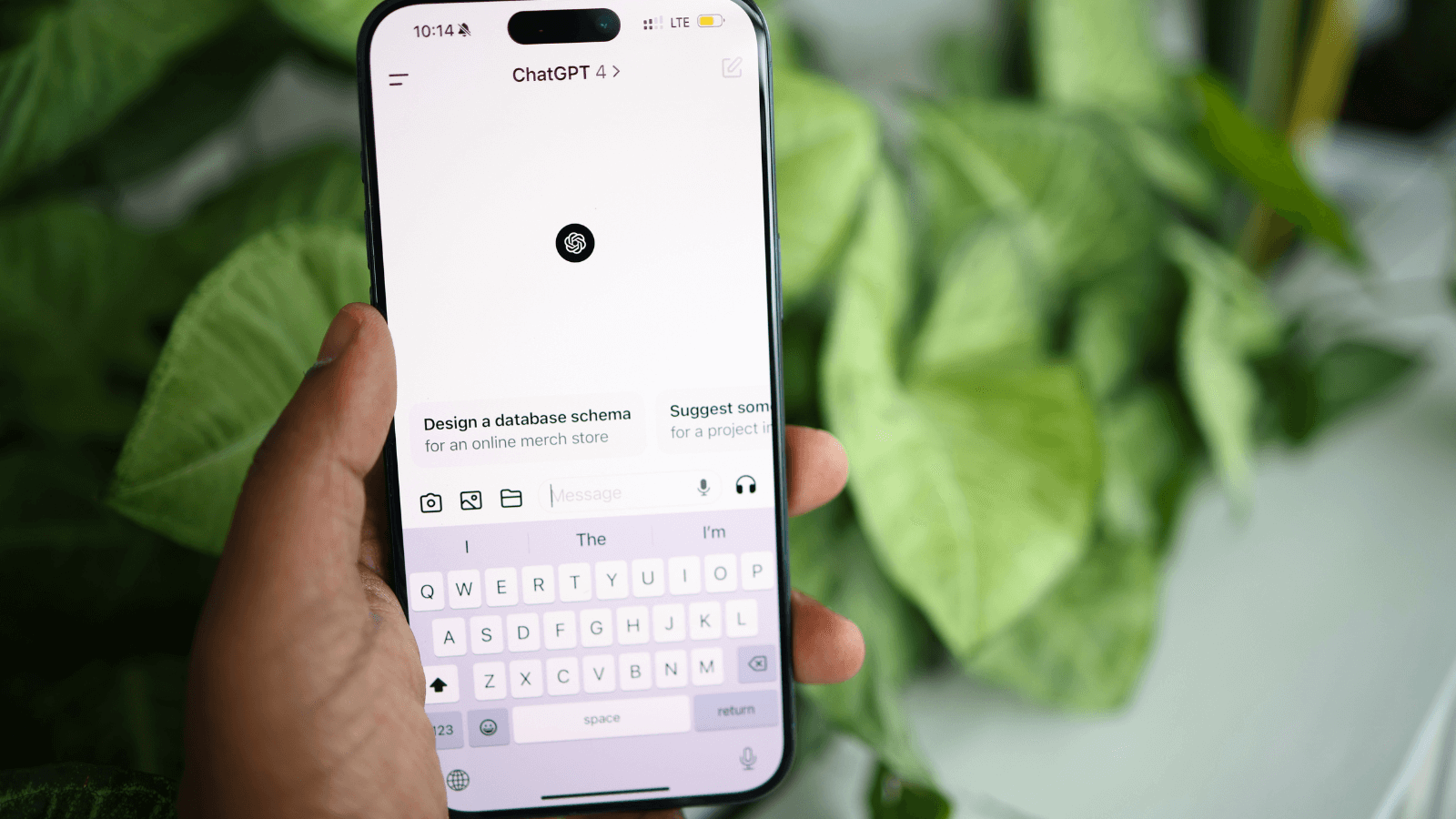
The conversation surrounding OpenAI models has intensified once again because, according to the public announcement, GPT-5.1 aims to refine what GPT-5 did well and fix what wasn't convincing . We're not talking about a radical leap in capabilities, but rather a revision that focuses on handling, how reasoning adapts to each task, and the ability to customize the style with much greater control.
If you were waiting for a model that combines intelligence and charisma, this is it: two complementary variants (Instant and Thinking) and automatic routing that decides for you when to think more or get straight to the point. In addition, there are practical changes for those integrating via API: new model identifiers, clearly differentiated context windows, and improvements in security and metrics that directly impact real-world projects.
What is GPT-5.1, when is it coming, and why now?
OpenAI unveiled the update on November 12 (various sources indicate 2025), positioning it as an iteration on GPT-5 rather than a completely new product. The stated goal is to improve conversational quality, instruction following, and adaptive reasoning , reorganizing the family around two main variants and maintaining an Auto mode that routes the query to the most appropriate engine.

The company is rolling out GPT-5.1 first to paid plans (Plus, Pro, Go, and Business) , with early access for Enterprise and Education accounts and a phased rollout to free accounts with potential usage limits. GPT-5 will remain as a legacy model for a few months to facilitate comparisons and migrations, and GPT-5 Pro will be upgraded to GPT-5.1 Pro as soon as it becomes available.
In a context where part of the community perceived GPT-5 as "fast but somewhat cold", GPT-5.1 attempts to close that gap with warmer, clearer and context-appropriate responses , without sacrificing performance on complex tasks or inflating the cost on light workloads.
The two sides of GPT-5.1: Instant and Thinking (with Auto mode)
OpenAI structures the series into two complementary variants: GPT-5.1 Instant (daily use, agile chat, better instruction guide) and GPT-5.1 Thinking (deep reasoning, clearer explanations and less jargon) . A router, often called Auto, operates on both, capable of dynamically choosing which engine to use depending on the query.
Instant is designed to converse naturally and respond quickly when your request doesn't require much deliberation. Its key feature is a "lightweight" adaptive reasoning system that decides when to think a little more before answering, while avoiding over-processing easy tasks.
Thinking, for its part, emphasizes deliberation: it more precisely adjusts the time spent on internal thought processes based on the difficulty of the problem. The result is more in-depth answers when needed and faster responses when the challenge is simple, using less cryptic language than in previous versions.
Auto mode uses prompt and conversation history cues , as well as learned patterns about which model best solves similar problems, to decide whether to "think more" or respond instantly.
Direct comparison: objectives, speed, style and context
To quickly visualize the differences, it's helpful to look at practical categories: purpose, reasoning behavior, latency, response style, and context window . In everyday use, these factors determine which variant performs better for you.
| Category | GPT-5.1 Instant | GPT‑5.1 Thinking |
|---|---|---|
| Purpose | Quick conversationReliable following of instructions and daily tasks | Multistage analysiscomplex problems and deep reasoning |
| Reasoning | Adaptive lightDecide when to think a little more | Precise deliberationThinking time is proportional to the difficulty |
| Speed | Very low latency as a priority | Variable: faster with simple things, slower with complex things |
| Style | Direct and friendlyoptimized for chat | Structured explanationsLess jargon and greater clarity |
| Context | More compact windows depending on plan (e.g. 16K/32K/128K) | Broad context up to ~196K tokens |
| Better for | quick ideasbrief writing, short summary, small code | ResearchCode auditing, analysis of extensive documents |
| Cars | Default option in most consultations | It activates in clearly complex tasks |
| Manual selection | Eligible for maximum speed | Eligible; in some plans, with weekly quotas |
| Accuracy/Depth | Highbut it prioritizes speed | Highest for long or twisted problems |
| Compensation | ⚡ Speed > Depth | 🧠 Depth > Speed |
What really changes compared to GPT-5 (and the route from GPT-4)
The first vector is adaptive reasoning . Compared to the extended reasoning of GPT-5 (especially in Thinking and Pro modes), GPT-5.1 more precisely decides how much to think in each case : less for trivial matters, more for complex ones. This results in less wasted tokens and response times more consistent with the difficulty.
Second, the conversational style . The default experience is now warmer and more human; and when you activate Thinking, jargon is reduced and explanations become clearer without sacrificing rigor. For those who use the model daily, this change in tone eliminates friction.
Third, personalization . GPT-5.1 incorporates a more granular system for setting the assistant's personality: you can choose predefined tones or adjust features such as conciseness or level of closeness, and even control curious details such as the frequency of emoticons.
Performance, benchmarks, and real-world cost of use
OpenAI reports leaps in tests like AIME 2025 and Codeforces-type programming challenges , maintaining or improving upon GPT-5's performance in complex tasks with more efficient token usage thanks to adaptive reasoning. Under mixed workloads, Thinking can be twice as fast as GPT-5 Thinking in simple cases and take more time when the problem demands it.
Beyond the specific record, the key is how it's reflected in your bill and your processing times. Less wasted processing power on simple queries means fewer tokens and less unnecessary latency. For pipelines with thousands of daily requests, this fine-tuning translates into noticeable stability and predictable costs.
In professional settings, improvements are observed in coding, mathematics, and step-by-step reasoning , with a decrease in technical jargon in Thinking that facilitates understanding by non-specialist profiles.
Tone and personality controls: options and fine-tuning
OpenAI adds a style selector with variations such as Default, Friendly, Efficient, Professional, Sincere, and Original , and retains profiles like Nerd and Cynical. Additionally, some interfaces display labels such as Simple/Direct or Enthusiastic with an alternative twist , and allow you to adjust how concise or personal the responses should be.
This layer of customization doesn't change the model's capabilities, but it better aligns the assistant's voice with each use case : from formal customer service to more engaging creative content. For brands, support teams, or sales, it's a leap forward in consistency and control.
- Common profiles: By default (balanced), Friendly (warm and talkative), Efficient (concise and direct), Professional (formal and precise), Sincere (open), Original (creative).
- Other visible labels: Simple and straightforward; Enthusiastic with an alternative edge; Nerd and Cynical preservation.
Context windows and retention in long conversations
Context management is also improved. GPT-5 already expanded upon GPT-4 , and GPT-5.1 inherits that foundation with behavioral adjustments: Instant typically offers smaller windows depending on the plan (e.g., 16K in Free, 32K in Plus/Business, and up to 128K in Pro/Enterprise) , while Thinking aims for larger windows close to 196K tokens for extensive analysis.
In addition to raw capacity, context retention in long threads is more stable , reducing coherence breaks in multi-turn conversations. This is especially useful in support, knowledge bases, and multi-stage internal processes.
Safety, production testing, and behavioral changes
OpenAI indicates improvements or parity in security metrics in categories such as harassment, hate speech, and image input in the Instant variant, with a system card that includes comparative tables against previous iterations. In Thinking, security is comparable to previous models , with slight regressions in specific monitored categories.
The combination of greater warmth and more personality control necessitates reinforced boundaries: assessments of mental health and emotional dependency are being expanded , and safeguards against hazardous biology, safety concerns, and misinformation are being maintained. In short, the push toward the “human” comes with additional safeguards.
Availability in ChatGPT and API: models, IDs, and transition
In the ChatGPT interface, paid users will see ChatGPT 5.1 activated with a selector to choose between Instant , Thinking , or Auto mode . The rollout will come to free accounts later , presumably with limitations. The transition will keep GPT-5 as a legacy system for approximately three months.
In the API, the initial mapping indicated by OpenAI associates gpt-5.1-chat-latest → gpt-5.1-instant and gpt-5.1 → gpt-5.1-thinking , exposing adaptive reasoning in the chat endpoints. gpt-5.1-instant stands out for its production robustness, and gpt-5.1-thinking for its fine-tuned deliberation.
OpenAI has also indicated that GPT-5 Pro will be updated to GPT-5.1 Pro soon. In the meantime, teams can continue comparing its performance with previous models in the "Legacy Models" menu.
Practical impact by profile: content, marketing, programming, and analytics
For those who work with text (copywriters, scriptwriters, editorials), Instant is more fluid and format-compliant , while Thinking is better at breaking down long analyses or complex arguments. The new personality control brings the assistant's tone closer to the brand's voice without sacrificing accuracy.
In programming, Thinking shines at debugging, reviewing repositories with long contexts, and explaining decisions with less jargon; Instant accelerates short, repetitive tasks. For analytics and business, adaptive reasoning provides more robust answers in multi-stage scenarios , focusing effort where it truly makes a difference.
Quick FAQ
What are the main new features of GPT-5.1?
Two variants (Instant and Thinking), adaptive reasoning , a more human tone , and granular style customization.
How do Instant and Thinking differ?
Instant prioritizes speed and chat with light reasoning; Thinking deliberates more according to complexity, with clearer explanations and less jargon.
Is it already available to everyone?
It is first rolled out to paid plans and then reaches free accounts with limitations.
Ecosystem, third parties and alternative access
Beyond the official channels, some providers offer alternative access or pricing. Platforms like CometAPI claim to offer recent models at a lower cost than the official one and recommend logging in and generating your key before integrating. As always, verify actual availability and terms of use before basing your production on a third party.
You'll also see articles and communities on X, Discord, or VK sharing comparisons and prompts. Use these to gauge expectations , but remember that each environment has its own particularities (data, tools, context limitations) that can alter results.
Startups and founders: deadlines, efficiency and opportunities
Pre-announcement reports mentioned estimated release dates in late November and improvements in latency and context handling. With the rollout underway, what matters most to a startup is practical efficiency : lower cost per simple task, greater depth of detail where it matters, and less model babysitting thanks to style control and improved instruction follow-up.
For SaaS and internal workflows, this enables more enjoyable user experiences , chatbots that consistently adhere to formats, and agents that don't overthink things unnecessarily. If you sell to Latin America, the improved multilingual consistency and natural tone boost adoption.
How it fits into your stack: model choice and flows
If you don't want to complicate things, just leave it in Auto mode . For well-defined workloads, force Instant on low-complexity bulk operations and activate Thinking on critical reasoning steps (e.g., hypothesis testing or audits). In the API, monitor spending and adjust token limits according to the task type.
In organizations that require consulting and custom development, there are specialized integrators. Firms like Q2BSTUDIO offer services such as AI agents, custom software, BI with Power BI, cybersecurity/pentesting, and cloud deployments (AWS/Azure) aimed at bringing models like GPT-5.1 to production securely and scalably.
Technical details and best practices worth remembering
In your prompts, clearly explain the goal and constraints , and let the model adapt its reasoning. Avoid redundant over-instructions: GPT-5.1 is better at following formats and boundaries (words, structure, styles), which reduces unnecessary iterations.
In multi-stage workflows, combine partial summaries with thread references to effectively manage context. If your use case relies on massive context, Thinking with a wide window will provide more headroom; for high-frequency queues, Instant will give you the latency you need.
What tests and the community say about depth of reasoning
In competitive mathematics and coding, improvements over GPT-5 are cited (e.g., AIME 2025 and Codeforces-type challenges ). In non-mathematical reasoning, there is still no definitive consensus , and some advanced users continue to conduct A/B tests between GPT-5.1 Thinking and variants of GPT-5 Pro to compare nuances of abstract analysis.
The general perception is that GPT-5.1 "thinks" more efficiently when necessary and doesn't waste time when it's not needed. However, like any LLM, it can still make mistakes , and it's advisable to validate responses in sensitive domains.
Models, IDs, and Implementation Notes
Keep the following identifiers handy: gpt-5.1-instant (default chat experience), gpt-5.1-thinking (deep reasoning), and the API mappings gpt-5.1-chat-latest → Instant and gpt-5.1 → Thinking . With the transition, GPT-5 will be available as a legacy system while you compare behavior and plan your migration.
In free or intermediate plans, expect more limited context windows and possible weekly usage limits for Thinking. In enterprise settings, take advantage of customization options to align the tone with the brand and document styles and templates so the entire organization produces consistent output.
Finally, it's worth noting that OpenAI strengthens its system cards and security metrics with each iteration, although it doesn't publish exhaustive architectural details or training data. It treats the model as a powerful assistant that collaborates with you , not as an infallible oracle.
Anyone who has experienced somewhat "flat" responses in GPT-5 will immediately notice that GPT-5.1 gains in naturalness and control without losing any power . Between Instant for everyday tasks, Thinking for tricky situations, and an Auto that decides when to accelerate, the system offers a balance that is noticeable both in the conversation and in the token count.