- Expert Systems imitate human decision making through logical rules and databases.
- They are key in the optimization of manufacturing processes and predictive maintenance.
- Accurate data acquisition is critical to your effectiveness in Industry 4.0.
- Its integration with artificial intelligence promises a future of greater automation and efficiency.
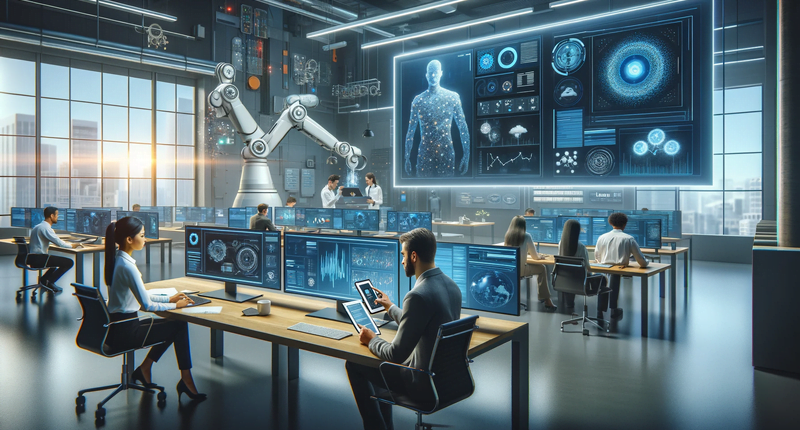
Welcome to the era of Industry 4.0! In this exciting journey through Expert Systems, we'll explore how they are revolutionizing modern industry and addressing ever-evolving challenges. From process optimization to intelligent decision-making, Expert Systems are transforming how businesses operate in Industry 4.0. In this article, dive into the fascinating world of Expert Systems in Industry 4.0 and discover their applications and challenges.
Expert Systems: The Basis of Industry 4.0
In this section, we will delve deeper into what Intelligent Systems are and how they are fundamental to Industry 4.0.
Expert systems are computer programs designed to mimic human decision-making based on specialized knowledge. These systems use logical rules and databases to solve problems and provide recommendations.
How do Expert Systems Work?
Expert Systems use a combination of rules and facts stored in their knowledge base. These rules are like the system's "thinking" and are used to evaluate the information provided and come to a conclusion.
These systems can be used in a wide variety of applications, from medical diagnostics to industrial process optimization. Their ability to process large amounts of data and provide accurate recommendations makes them an invaluable tool in Industry 4.0.
Expert Systems Applications in Industry 4.0
Expert Systems are playing a crucial role in various applications within Industry 4.0. Below, we will explore some of the areas where these systems are making a difference.
Manufacturing Process Optimization
In Industry 4.0, efficiency is key. Smart Systems are used to analyse data in real time and automatically adjust manufacturing processes. This leads to increased productivity and reduced operating costs.
Predictive Maintenance
Predicting when a machine might fail is essential to avoiding costly downtime. Smart Systems can analyze sensor data and operating patterns to anticipate problems and schedule maintenance efficiently.
Supply chain management
The supply chain in Industry 4.0 is complex and highly interconnected. Expert systems help optimize inventory management, production planning, and distribution, ensuring an efficient flow of products.
Medical diagnostic
In the healthcare field, Intelligent Systems are used by doctors to analyse patient symptoms and data, helping in diagnosing diseases and choosing appropriate treatments.
Challenges in the Implementation of Expert Systems
Despite its advantages, implementing Expert Systems in Industry 4.0 presents unique challenges that must be addressed.
Accurate Data Acquisition
For Smart Systems to make accurate decisions, accurate and reliable data is crucial. Collecting data from sensors and systems can be expensive and requires appropriate infrastructure.
Systems Interoperability
In a modern industrial environment, various systems and devices must work together. Ensuring the interoperability of expert systems with other systems is a significant technical challenge.
Continuous Update of the Knowledge Base
Specialized knowledge changes over time. Keeping an Expert System's knowledge base up to date is essential to ensure its long-term effectiveness.
Data security
With the increasing amount of data being used in Industry 4.0, information security becomes a critical concern. Expert Systems must be protected against cyber threats.
Expert Systems in Action: Case Study
An illustrative example of the successful application of Intelligent Systems in Industry 4.0 is the case of a cutting-edge automobile factory.
Assembly Line Optimization
The factory uses an expert system to optimize the assembly line. The system analyzes real-time data, such as production speed and parts availability, and makes automatic adjustments to maximize efficiency.
Predictive Machine Maintenance
To avoid costly downtime, the factory employs an Intelligent System that constantly monitors the status of the machines. When a potential problem is detected, the system notifies the maintenance team for intervention.
The Future of Expert Systems in Industry 4.0
Intelligent Systems are constantly evolving and their role in Industry 4.0 will continue to grow. What does the future hold?
Artificial Intelligence Integration
The integration of AI with Expert Systems will enable continuous learning and even more accurate decision making.
Greater Automation
Expert Systems-driven automation will continue to expand across various industries, leading to increased efficiency and productivity.
Advances in the User-Machine Interface
User interfaces of Smart Systems will become more intuitive and user-friendly, facilitating their adoption in different areas.
Conclusion
Expert Systems are the cornerstone of Industry 4.0, driving efficiency and intelligent decision-making. Although they face challenges, their ability to transform entire industries is undeniable. The future of Industry 4.0 looks exciting with the continued evolution of Intelligent Systems. Join the revolution and discover how these systems are shaping the industrial world of tomorrow!
In short, Expert Systems in Industry 4.0 are critical for process optimization, intelligent decision making, and efficiency in various applications. As we move into the future, these systems will continue to play a crucial role in transforming the industry. Share this article to let more people know about the impact of Intelligent Systems in Industry 4.0!