- The presence of women in technology and STEM remains a minority, with particularly serious gaps in computer science, AI, and cybersecurity.
- Gender stereotypes, lack of role models, and structural barriers in education and employment limit the development of female talent.
- Educational programs, universities, foundations and companies are promoting concrete initiatives for training, mentoring and female leadership.
- The active participation of women in technological innovation improves competitiveness, AI ethics, and the quality of solutions for society as a whole.

The debate surrounding women's talent in technological innovation is no longer a passing trend tied only to March 8th or February 11th; it has become a strategic issue for competitiveness, equality, and economic development. In a context of artificial intelligence , cybersecurity, data, and automation shaping the labor market, excluding half the population is a luxury no country can afford.
At the same time, reality shows that the gender gap in technology and STEM careers remains stubborn : progress is being made, but it is slow, uneven, and highly unequal across disciplines. From official reports in Spain and the European Union to programs from universities, foundations, technology companies, and specialized conferences, the diagnosis is consistent: structural, cultural, and educational barriers still exist that hinder women's participation in science and technology, but powerful initiatives to reverse the situation are also proliferating.
Gender gap in technology and STEM: what the data says
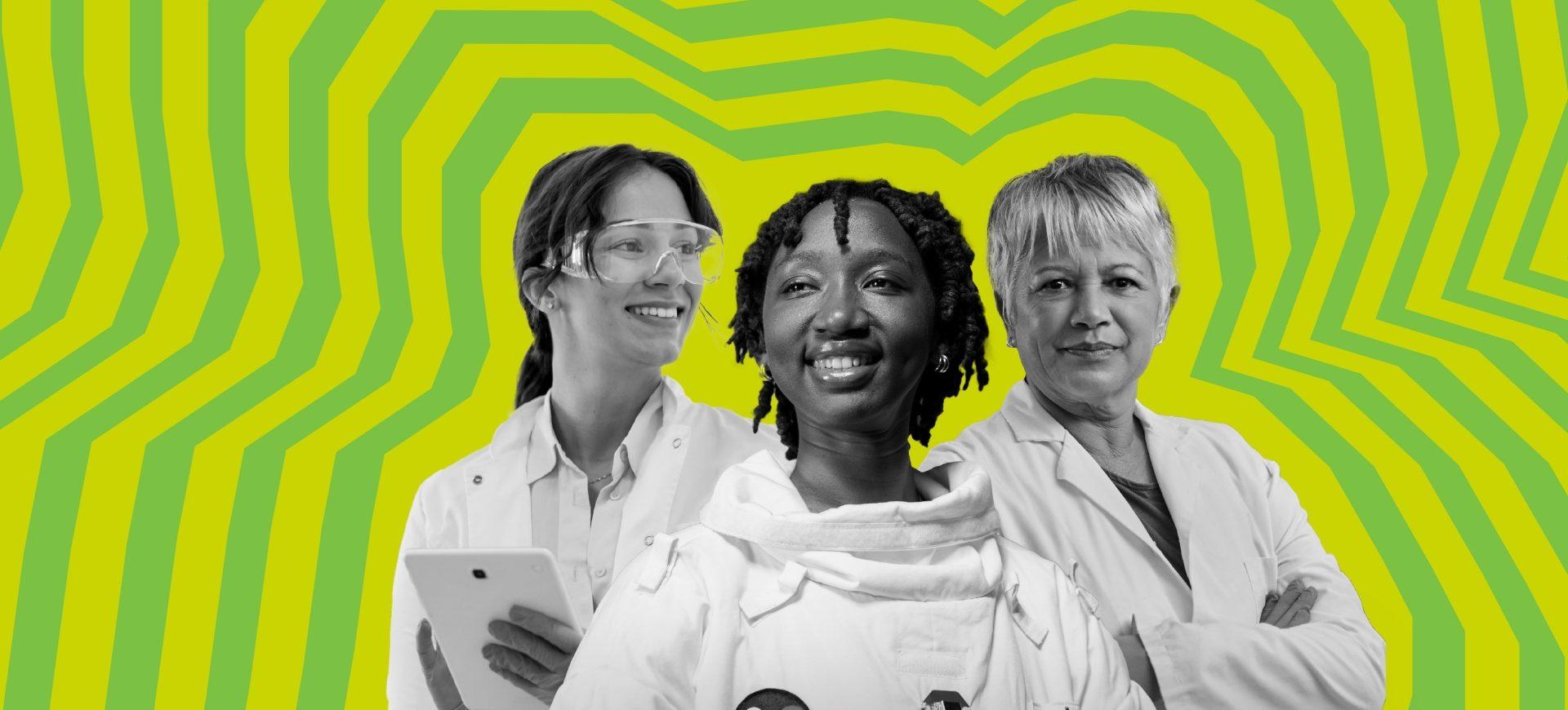
Looking at the figures at the European level , women barely make up around 19% of Information and Communication Technology specialists . This percentage has remained almost frozen in recent years, indicating that the problem is not temporary, but structural. There is no shortage of talk about equality, but the actual integration of women into technology jobs is not taking off at the expected pace.
In Spain, data from the "Digital Gender Divide 2025" report by the National Observatory of Technology and Society (ONTSI) paints a very similar picture: the presence of women among specialized ICT profiles remains slightly below 20%. In other words, two out of every ten technology professionals are women, even though they represent more than half of the population with university degrees.
If we focus specifically on STEM fields (Science, Technology, Engineering, and Mathematics) , the picture doesn't improve much. According to the STEM Women Annual Report 2024, in Spain women make up approximately 29% of university students in STEM degrees, and this proportion has remained virtually stagnant for years. While this percentage shows progress compared to past decades, it is still far from true equality.
The situation is particularly worrying in certain specific fields. In university computer science studies, female representation hovers around only 14,8% of the student body , far from parity and below that of other scientific fields. This confirms that the problem doesn't only appear when entering the job market, but rather develops much earlier, during educational stages and in the messages that girls and young women receive about "what is for them" and what is not.
Despite this, signs of change are beginning to emerge in the professional landscape. According to the same ONTSI report, women now represent around 19,5% of digital specialist positions , with a slight upward trend in recent years. This is a modest but significant improvement, indicating that when opportunities arise and myths are dispelled, female talent responds and enters the sector in force.
An uneven map of female talent in technological innovation
Within the technology sector itself, the presence of women is not uniform . There are areas where their participation is in the majority or at least balanced, and others where they remain a very visible minority. This uneven distribution helps to explain why it is not enough to talk about "technology" in the abstract.
In fields such as data analysis, certain branches of software development, and technology consulting , female representation is relatively higher. These are areas where analytical skills, business acumen, and a cross-functional perspective converge—competencies in which many professionals excel and find opportunities for growth and leadership.
In contrast, highly technical disciplines such as cybersecurity and artificial intelligence remain dominated by men. The low representation of women in these fields is not due to a lack of ability or interest, but rather to a combination of prejudice, a lack of role models, exclusionary environments, and selection and promotion processes that, often unintentionally, perpetuate gender bias.
This unequal distribution is also evident in technology leadership positions . Although there are increasingly more female directors and project managers in technology-based companies, their proportion relative to the total number of management positions is still low. The scarcity of women at the top of organizations perpetuates a vicious cycle: lacking sufficient role models, many young women doubt whether they can go far in their STEM careers.
Furthermore, progress in recent years has been uneven. Some sectors have advanced, while others have even experienced setbacks or plateaus. Factors such as work-life balance, the burden of unpaid care work, lack of job flexibility at certain stages of life, and the culture of long working hours particularly penalize women and make it difficult for them to maintain continuous career paths in technology.
Factors that fuel the gap: stereotypes, role models, and culture
When we ask ourselves why there are fewer women in STEM careers and technological innovation , the answer doesn't boil down to a single cause; it's a complex web of social, educational, and cultural factors that operate from childhood to adulthood. Many of them are subtle, but their cumulative effect is enormous.
On the one hand, gender stereotypes about "who science or technology is for" remain very prevalent. From a young age, many girls receive messages, sometimes explicit and sometimes subtle, that associate mathematics, programming, or engineering with boys, while they are steered toward areas considered more "human" or caregiving. These messages appear in the family, at school, in the media, and even in toys and children's stories.
Added to this is the lack of visible female role models in science and technology . The history of science has rendered key female researchers and technologists invisible for years, and although names like Marie Curie, Rosalind Franklin, Katherine Johnson, Margarita Salas, and Ada Lovelace are now being rediscovered , it is still difficult for girls to see contemporary women leading AI teams, directing cutting-edge laboratories, or piloting major engineering projects on television, social media, or in books.
This lack of role models also extends to the academic and professional spheres. In many engineering or computer science faculties, the number of female professors and administrators is very small , which contributes to students feeling isolated or questioned. In the workplace, the underrepresentation of women in leadership positions reinforces the idea that reaching the top is exceptional, not the norm.
Another key element is the structural barriers to career advancement . Biases in selection and performance evaluation processes, less access to influential networks, additional difficulties in balancing work and personal life, and less inclusive corporate cultures weigh more heavily on women's career paths. Although these biases are often unintentional, their consequences are very real.
During university and the first years of study, the lack of support networks and specific mentoring programs also takes its toll. In environments where women are a minority, it is not uncommon for them to face discouraging comments, isolation, or the feeling of having to constantly prove their technical worth, which increases the pressure and encourages them to drop out of these programs.
Inclusive education and early vocations: sowing the seeds of change
Changing this situation requires action from the ground up. Fostering interest in technology among girls and young women is one of the fundamental pillars for closing the gap in the future, and that involves reviewing how we teach science and technology in classrooms and what messages we send from childhood.
One of the priority areas is to promote inclusive STEM education from the earliest stages , where girls have the same opportunities to participate in robotics projects, programming, science experiments, or math clubs. The goal is for them to become familiar with these disciplines naturally, without associating them with a particular gender.
The Ministry of Education and other public bodies are already promoting initiatives to boost female talent in STEM careers , but the data shows there is still a long way to go. For these measures to have an impact, it is essential to involve families, teachers, schools, government agencies, and the business sector.
Eliminating prejudices and myths is another key task. Education, both inside and outside the classroom, must actively challenge ideas that link technology with masculinity or that portray certain careers as "too difficult" for girls. Showcasing examples of women already in STEM positions, especially in cutting-edge fields like AI, cybersecurity, and data science, helps to dismantle these narratives.
Furthermore, highlighting current female role models in science and technology is a powerful transformative strategy. Awards such as the Top 50 Women in Engineering, promoted by the Women's Engineering Society (WES), or rankings like the Top 100 Leaders, which include technology executives like MIOTI CEO Fabiola Pérez, reinforce the message that women can not only be present in these sectors, but also lead them.
Business initiatives: diversity, flexibility and female leadership
The private sector has a crucial responsibility. Technology companies that invest in diversity and female talent not only help reduce the gender gap, but also gain in innovation, creativity, and responsiveness to market challenges.
A good example can be found in organizations like TRC, a Spanish company with over three decades of experience in advanced technology solutions. TRC has incorporated equal opportunities and diversity as cornerstones of its corporate culture , with multidisciplinary teams in which female talent occupies key positions from human resources and finance to technology development and project management.
Within the company itself, there are prominent women experts in advanced technological products and solutions , who lead the design and deployment of innovative capabilities for demanding sectors such as healthcare, defense, critical infrastructure, and public administration. The company's sales team also boasts a significant female presence, driving business growth and strengthening strategic relationships.
But companies' efforts cannot be limited to simply adding women to existing teams. It is essential to build truly inclusive cultures that foster female leadership, guarantee equitable professional development plans, design effective work-life balance policies, and promote flexible work models. Without these conditions, many professionals end up leaving the sector or hindering their career advancement.
In parallel, a growing number of technology companies are connecting with universities and young talent through trade fairs, technical workshops, outreach programs, and specialized internships. The goal is to bring the technology sector closer to new generations, showcase real career paths, and offer relatable role models so that more students, especially women, can envision themselves building a career in this field.
University programs and foundations that promote female talent
Universities and non-profit organizations play a fundamental role in creating opportunities. Program after program, specific spaces are opening up for women to enter and remain in technological innovation , with initiatives that combine training, mentoring, and access to professional networks.
A prime example is Talento Mujer 4.0 (Women Talent 4.0) , a pioneering program linked to the STRADA-UGR Chair of Talent and Leadership and aimed at students of the University of Granada. This project connects talented female university students with leaders in the digital sector, focusing on final-year undergraduate and graduate students in STEM fields such as Mathematics, Physics, Computer Engineering, Statistics, and the Master's in Business Process Management and Technology.
Thanks to financial support from STRADA Global, a firm specializing in human resources management and technology, the 15 selected participants have free access to an intensive nine-month training program . During this time, they receive training in professional skills, soft skills, leadership, and applied knowledge in key areas such as artificial intelligence, big data, and cybersecurity.
These types of programs not only improve participants' technical and soft skills, but also strengthen their network and confidence to successfully navigate a highly competitive digital job market. Interaction with managers, mentors, and industry professionals breaks down feelings of isolation and reveals possible and realistic career paths.
On a complementary level, projects like those of the TecnoVitae Foundation focus on facilitating equitable access to STEM knowledge and opportunities . Through training programs, scholarships, and outreach activities, this organization works to encourage more girls and young women to consider studying science and engineering, and to ensure that women already in these fields can thrive on equal terms.
The work of these foundations also includes raising the profile of current female scientists and technologists , promoting meetings between professionals and students, and supporting research projects that integrate a gender perspective. All of this contributes to building an ecosystem where female talent is recognized, valued, and has long-term potential.
Conferences and female leadership in the AI era
Beyond classrooms and businesses, spaces for debate and professional networking have an enormous capacity to set the agenda and accelerate cultural change. The Women Evolution (WE) congress, held at Esade, is a good example of how the conversation about technological innovation and female leadership can be geared towards human well-being and ethics.
This event brings together female executives, entrepreneurs, academics, and institutional representatives with the aim of strengthening the role of women in decision-making spaces and promoting purposeful leadership . Its roundtables address how artificial intelligence is transforming the way we work, organize businesses, and relate to one another, emphasizing the need for this transformation to incorporate a feminist and inclusive perspective.
From the healthcare sector, the emphasis is on how AI can improve medical care if used responsibly, while also warning of the risk of creating a kind of "bubble" around the technology without focusing it on real problems. Institutional representatives reiterate that the best innovation is that which improves people's lives and that digitalization can perpetuate inequalities if it is not designed with equity in mind.
In organizations, AI introduces new challenges: faster processes, more accelerated work environments, and the need to re-evaluate what we consider valuable . Experts in social vulnerability and data management show examples of how advanced analytics can identify water leaks or situations of energy poverty to act precisely in conjunction with social services, provided that professionals with ethical standards and social awareness are behind it.
Female leadership in this digital age is described as a combination of innovation and empathy . Lawyers, executives, and entrepreneurs emphasize that algorithms can analyze, but not inspire; the ability to connect with people, manage uncertainty, and maintain purpose in complex times becomes a competitive advantage often associated with more collaborative leadership styles, where many women see themselves reflected.
Artificial intelligence, “augmented professional” and opportunities for women
The rise of artificial intelligence in the business world is reshaping professional profiles. The figure of the "augmented professional ," capable of combining solid technical knowledge, critical thinking, and intelligent use of AI-based tools, is emerging as one of the key players in the near future.
In this context, it is emphasized that AI is not meant to automatically replace people , but rather to transform what we do and how we do it. Those who can strategically integrate the technology will have a clear advantage over those who ignore it or delegate it without understanding it. For women, this opens a window of opportunity if they are given access to up-to-date training in AI, data science, automation, and cybersecurity.
Specialized schools like MIOTI have developed advanced master's programs in Artificial Intelligence, Data & Cloud Engineering, Data Strategy & Business Analytics, and Data Science & Big Data , preparing professionals to work in the most dynamic STEM sectors. These programs, in addition to covering cutting-edge tools and methodologies, emphasize business analysis and the practical application of technology to specific problems.
Continuous training is, in fact, one of the key pillars for consolidating female talent in technological innovation. Ongoing updates to digital skills allow women to access and maintain specialized positions, assume leadership roles, and move into emerging sectors without being left behind by the rapid evolution of tools.
When women have a strong foundation in science and technology, and are supported with mentorship programs, networking opportunities, and inclusive work environments, they can become key agents of digital change . From algorithm design to data strategy development, their participation broadens the diversity of perspectives and helps build more humane, equitable, and effective solutions.
Technology centers and role models that inspire new vocations
Technology centers are also crucial spaces for showcasing female talent. AIMPLAS, the Technological Institute of Plastics , is a good example of how applied research and industrial innovation can naturally integrate a high presence of female scientists.
This institute works in areas such as the circular economy, advanced materials, sustainable chemistry, and recycling , developing projects that have a direct impact on everyday life: from safer materials to more environmentally friendly solutions. Women make up almost half of its research staff, breaking the stereotype of laboratories dominated exclusively by men.
Researchers like María Expósito Delgado, head of research lines in flame-resistant materials and polymer synthesis , demonstrate how applied science can have a tangible effect on society even when it's not visible to the general public. Every project that improves material safety or reduces environmental impact contributes to the more sustainable future that innovation strives for.
These professionals also emphasize the importance of being role models: seeing women in scientific and technological leadership positions inspires girls and young women, and sends the clear message that science and innovation are also “their territory.” Without relatable role models, it is much harder for new generations to imagine themselves following that same path.
To attract and retain young talent, these centers advocate for inclusive environments, real development opportunities, and a society that values innovation . Only in this way will it be possible to spark interest in STEM fields and keep young women in science and technology, preventing them from dropping out due to a lack of prospects or recognition.
With this wealth of data, initiatives, and examples, it's clear that promoting female talent in technological innovation is not just a matter of social justice , but an essential strategy for competitiveness, progress, and building a more balanced digital future. When inclusive educational policies, specific support programs, open corporate cultures, and inspiring role models are combined, the likelihood of more women leading technological transformation increases significantly, and society as a whole benefits.
