- Biometric authentication uses unique physical traits to verify identities.
- It offers high security, convenience and prevents password-related fraud.
- There are various modalities such as fingerprints, facial and iris recognition.
- It impacts multiple sectors, including finance, health, and public safety.
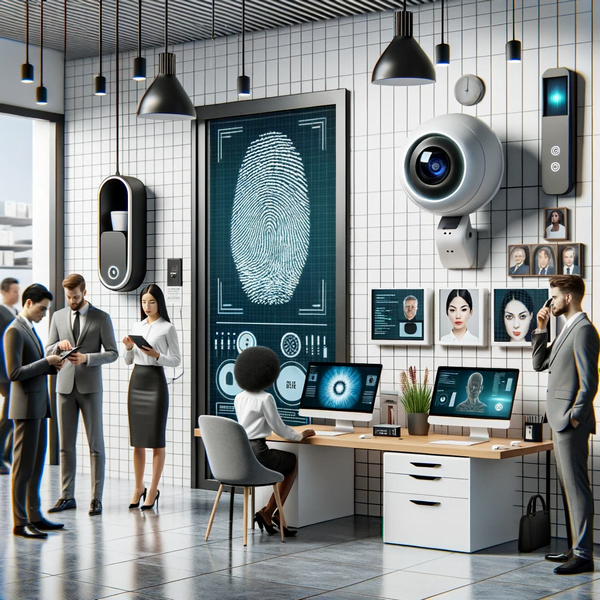
What is biometric authentication?
Biometric authentication is an identity verification method that uses a person's unique physical or behavioral characteristics. Instead of passwords or tokens, it analyzes features such as fingerprints, voice patterns, iris, face, or palm geometry to confirm that you are who you say you are. Two-factor authentication can also be combined with these methods to increase security.
Growing importance of biometric authentication
As more interactions and transactions move online, the need for robust and convenient authentication solutions becomes crucial. Biometric authentication offers a robust alternative to traditional methods, reducing the risk of data breaches, fraud, and identity theft. This demonstrates the growing importance of two-factor authentication in digital security.
Key benefits of biometric authentication
Some of the key advantages of biometric authentication over other methods include:
- Increased security and reduced fraud
- Convenience for the end user
- No need to remember complicated passwords
- Fast and frictionless access
- Improved compliance with regulations
With so many benefits, it's no wonder biometric authentication adoption is rapidly increasing across a variety of industries and use cases, as well as in cybersecurity, where a robust approach is in demand.
Main Types of Biometric Authentication
There are several biometric modalities commonly used for authentication, each with its own strengths and limitations. Let’s explore some of the main ones:
Facial Recognition
- How it works Facial recognition uses software algorithms to map and identify unique facial patterns. It first captures a digital image of the face, either with a webcam, smartphone camera or video surveillance system. It then analyses and compares features such as the shape of the eyes, nose, jaw and cheeks against a database of registered faces.
- Use on mobile devices One of the most popular use cases for facial recognition is unlocking mobile devices such as smartphones and tablets. Apple, Samsung, Google and others have incorporated this technology into their latest models for quick, contactless authentication.
- Applications In addition to mobile access, facial recognition is also widely used for physical access control, surveillance, law enforcement, retail, payments, gaming, and more. As accuracy continues to improve, we’re likely to see even more widespread adoption.
iris recognition
- scanning process Iris recognition involves scanning and mapping unique patterns within the iris of the human eye. A specialized camera sensor captures a high-resolution image of the iris, analyzing the intricate texture of lines, crypts, coronas, and other features. This information is then encoded and compared to stored iris data.
- High accuracy Iris recognition is considered to be one of the most accurate and reliable biometric methods available, with incredibly low error rates. Every human iris is truly unique, and even identical twins have different patterns.
- Use cases While not as ubiquitous as facial or fingerprint recognition, iris scanning is used in high-security environments such as military installations, prisons, airports and international border crossings. It is also being explored for use in mobile devices and financial applications.
Fingerprint
- Reading technology Fingerprint recognition is probably the oldest and most well-known biometric modality. It works by capturing a digital image of the unique valleys and ridges on the fingertips, either using an optical sensor or a solid-state reader. This information is then mapped and compared to fingerprints stored in a database.
- widely used Because of its long history and ease of use, fingerprint authentication is incredibly ubiquitous. We find it on mobile devices, laptops, physical access control systems, time and attendance scanners, and more. It is one of the most affordable and proven forms of biometric authentication.
- Examples Some prominent examples of fingerprint use include unlocking smartphones, access to government and corporate buildings, border controls, financial transactions and secure mobile payments.
Speech recognition
- Voice sampling Voice verification or speaker recognition analyzes an individual's unique speech patterns. A sample of the user's voice is first recorded and features such as pitch, timbre, cadence, and rhythm are extracted. This "voice model" is then compared to the incoming voice during authentication.
- Popular apps Voice recognition is widely used for logical access control, such as unlocking devices or online accounts. It is also widely used in interactive voice response (IVR) systems for customer identification when calling call centers. Other applications include cars, smart homes, and voice assistants.
- Challenges While convenient and contactless, voice recognition systems can be affected by environmental noise, illness, or changes in the user's voice. Accuracy and error rates also vary more than with other biometrics.
Geometry of the Palm
- Palm line scanning Palm geometry analyzes and maps the unique lines, knuckles, and contours of your palm. A specialized scanner captures an image of your palm and converts it into a biometric code that is compared to data stored in a database.
- Uses in access control This modality is commonly used to control physical access to buildings, facilities and critical infrastructure. It is well suited for these applications due to its ease of use, accuracy and the non-invasive nature of the scanning process.
- Points to consider One disadvantage of palm geometry is that it can be affected by aging, injury, or medical conditions, altering the hand's appearance. It may also require specialized hardware and be less portable than other solutions.
Other Emerging Types
- Signature Recognition Signature analysis can verify a person's identity by evaluating the unique patterns of speed, pressure, and acceleration in their handwritten signature. It can be performed using electronic devices such as digital signature pads.
- Retina Scan Similar to iris recognition, retinal scanning maps the unique blood vessel patterns in the retina of the eye. It is a highly accurate method, but requires expensive equipment and can be uncomfortable for some users.
- Vascular Patterns Vascular recognition systems analyze the unique patterns of veins present in a person's hands, fingers, or wrist. It is a promising technology that is still in an emerging stage.
Key Benefits of Biometric Authentication
User Convenience
One of the main advantages of biometric authentication is its ease of use. Instead of having to remember passwords or carry physical tokens, users simply need to present a part of their body for verification. This quick and seamless process greatly improves the user experience and is complemented by authentication systems that facilitate access.
Reinforced security
By relying on intrinsic physical or behavioral characteristics, biometric authentication is much more resilient to common threats such as password theft, token loss, or identity theft. It is extremely difficult for an imposter to fake a unique biometric trait such as a fingerprint or iris pattern. The use of authentication systems further enhances this security.
No Passwords to Remember
Forgetting, mistyped, or lost passwords is a leading cause of tech support calls and lost productivity. By eliminating the need for passwords, biometric authentication reduces this headache and its associated costs. This aligns with best practices in security and privacy.
Fraud Prevention
By requiring a direct biological link to the legitimate user, biometric authentication is highly effective at preventing fraudulent activities such as identity theft, unauthorized access, and fake transactions. It adds a layer of protection that is difficult to bypass.
Normative compliance
Many regulated industries such as financial services, healthcare, and government have strict identity authentication requirements. Biometric systems help meet compliance by providing a robust method of user verification.
Quick and Easy Access
Biometric authentication speeds up the login process without compromising security. There’s no need to remember passwords or search for physical tokens, leading to more efficient access to devices, accounts, and applications.
Challenges and Concerns
While biometric authentication offers numerous important benefits, it also poses some challenges and concerns that need to be considered:
- Privacy and Ethical Concerns Collecting and storing personal biometric data poses significant privacy risks if this information falls into the wrong hands. Ethical questions also arise about biometric monitoring and consent.
- Risks of Impersonation Although much more difficult than with passwords or tokens, it is not impossible for criminals to attempt to spoof or fool biometric systems. Threat spoofing methods may include physical forgeries, voice recordings, or injections of false data.
- High Initial Costs Implementing biometric solutions, especially for less mature modalities, can be costly due to the requirements for specialized hardware, system integration, and user enrollment. Recurring costs must also be considered.
- Variable Precision While some biometric methods such as iris recognition are extremely accurate, others such as voice or facial recognition can have higher error rates depending on the environment and technology used. Poor accuracy can cause frustration for the user.
- Problems with Certain Populations Some biometric systems may face challenges authenticating certain demographic groups. For example, error rates for facial recognition may be higher for dark-skinned people or women. Fingerprint readers may have trouble with older people or manual workers.
- User Concerns There is some public resistance and mistrust towards biometrics, especially with regard to privacy and potential misuse of data. Overcoming these negative perceptions and educating users about safeguards will be key to wider adoption.
Key Sectors and Applications
Biometric authentication finds applications in almost all industries and verticals. Here are some of the most important sectors and use cases:
- Government and Law Enforcement Biometrics are widely used by government agencies for surveillance, border control, law enforcement databases, and identity verification for benefit programs.
- Financial institutions Banks and fintech companies use biometric authentication for secure transactions, mobile banking, fraud prevention and KYC compliance.
- Medical care Biometrics protect access to medical records and assist with patient identification, restricted area control, and asset tracking.
- Travels and tourism Airports, airlines and hotels are using biometrics to streamline boarding, check-in and border control processes.
- Business and HR Companies use biometric systems for physical and logical access control, time and attendance recording, and employee monitoring.
- Consumer Electronics Many mobile devices, computers, and IoT products include biometric authentication for unlocking, logging in, and making payments.
- Education Educational institutions use biometric recognition for access control, campus security and attendance tracking.
- Mobile apps Numerous mobile applications leverage biometrics for login, payment authentication, and passwordless experiences.
The Future of Biometric Authentication
- Technological advances Biometric authentication will continue to benefit from advances in areas such as Artificial Intelligence, automatic learning, computer vision and signal processing. These will allow for greater precision, fewer errors and greater comfort for the user.
- Widespread Adoption As cost drops and consumer familiarity increases, biometrics adoption is expected to continue to accelerate across all sectors, with governments and businesses looking to phase out passwords and tokens.
- Multimodal Systems Rather than relying on a single biometric trait, “multimodal” systems will combine two or more modalities to achieve even higher levels of security. For example, facial recognition + voice or fingerprint + iris.
- Greater Regulation As the use of biometric data grows, more laws and government regulations will emerge to address privacy, data storage, consent, and other ethical and civil rights issues.
- New Use Cases Biometrics will find new use cases in areas such as contactless payments, autonomous vehicles, robotics, smart cities, connected homes and metaverse/virtual reality.
- Continuing Ethics and Privacy While biometric authentication offers significant benefits, its expansion will require a careful focus on ethics, transparency, fairness and user privacy to maintain public trust.
Conclusion on what is biometric authentication
Summary of Key Points
- Biometric authentication, what is biometric authentication?, verifies identity through unique physical or behavioral traits
- It offers advantages such as greater security, convenience and fraud prevention.
- The main modalities include fingerprints, face, iris, voice and palm.
- It poses challenges of privacy, accuracy, cost and user acceptance.
- It is used in a wide range of industries, from government to mobile.
- Greater adoption is expected driven by technological advances

Biometric Authentication Is the Future. As the world becomes more digital and mobile, the need for secure, convenient, and frictionless authentication methods will only grow. Biometric authentication meets this need by linking identity to intrinsic biological characteristics that are extremely difficult to steal or falsify.
Finding the Right Balance: While the benefits are clear, it will be important to address privacy, ethical, and accuracy concerns as biometrics adoption progresses. By striking the right balance, this transformative technology can dramatically improve security and user experience across everything from mobile devices to corporate access and critical infrastructure. Biometric authentication—what is biometric authentication?—plays a crucial role in this advancement.
