- Mechatronics and industrial electronics share a solid foundation in mathematics, physics, computer science, and control technologies.
- The enabling titles (CIN/351/2009) grant professional powers as an Industrial Technical Engineer in the electronic field.
- The plans combine theory, laboratory, integrated projects, final degree projects and, in many cases, company internships and international mobility.
- The labor market demands hybrid profiles capable of integrating mechanics, electronics, automation, robotics and industrial computing.
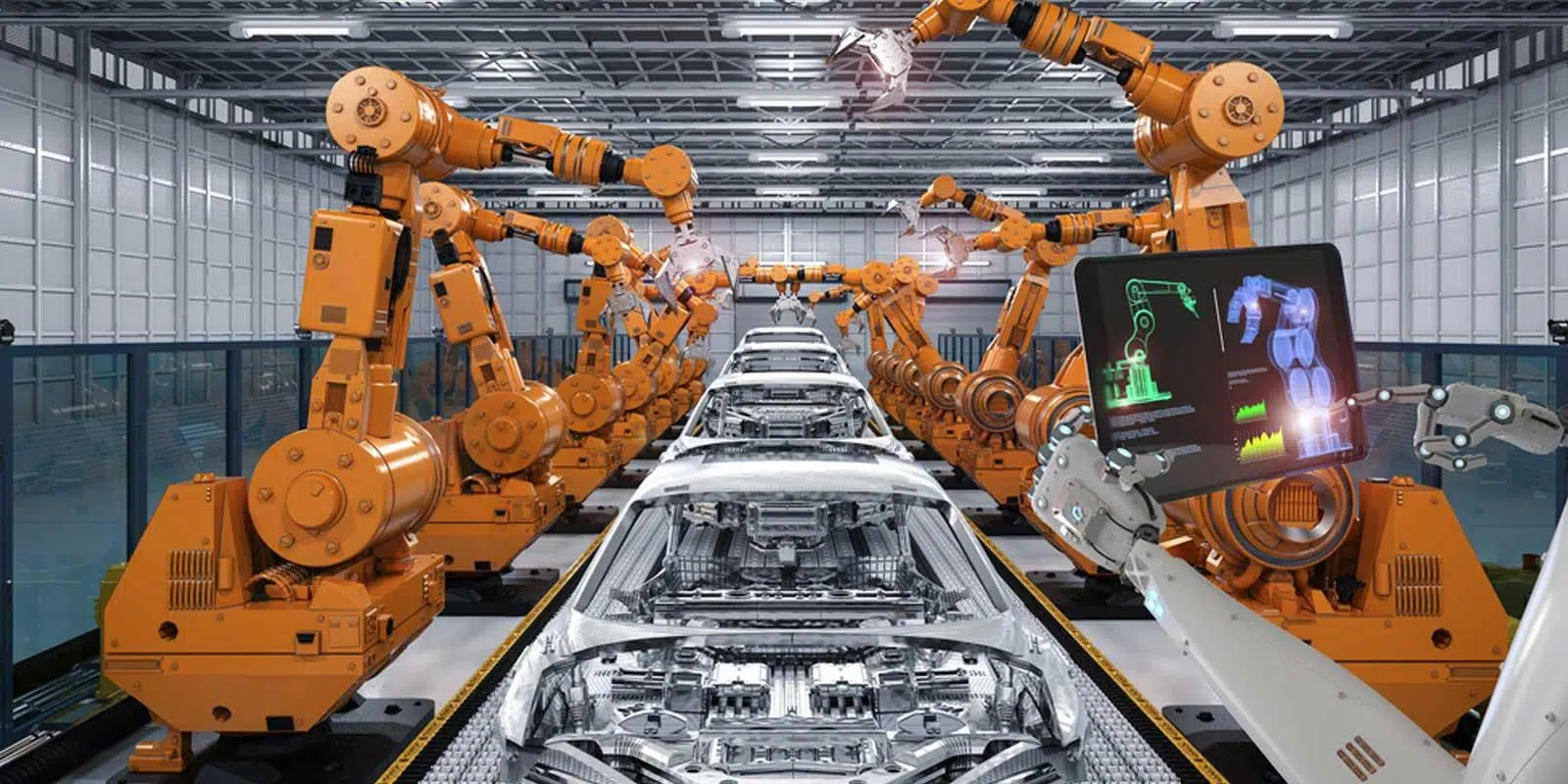
If you're torn between studying mechatronics engineering or industrial and automation electronics engineering , you're not alone. They're two very similar degrees, with strong career prospects and a key role in Industry 4.0, robotics, automation, and intelligent systems.
Throughout this guide you will find a detailed explanation in clear language about what these degrees consist of, what you study, what skills you acquire, what career opportunities they offer , how double degrees work and what mobility, internship and student support options exist in Spanish universities (and, in particular, in centers such as Zaragoza, Malaga, UNED, TecnoCampus or EUPLA).
What is mechatronics engineering?
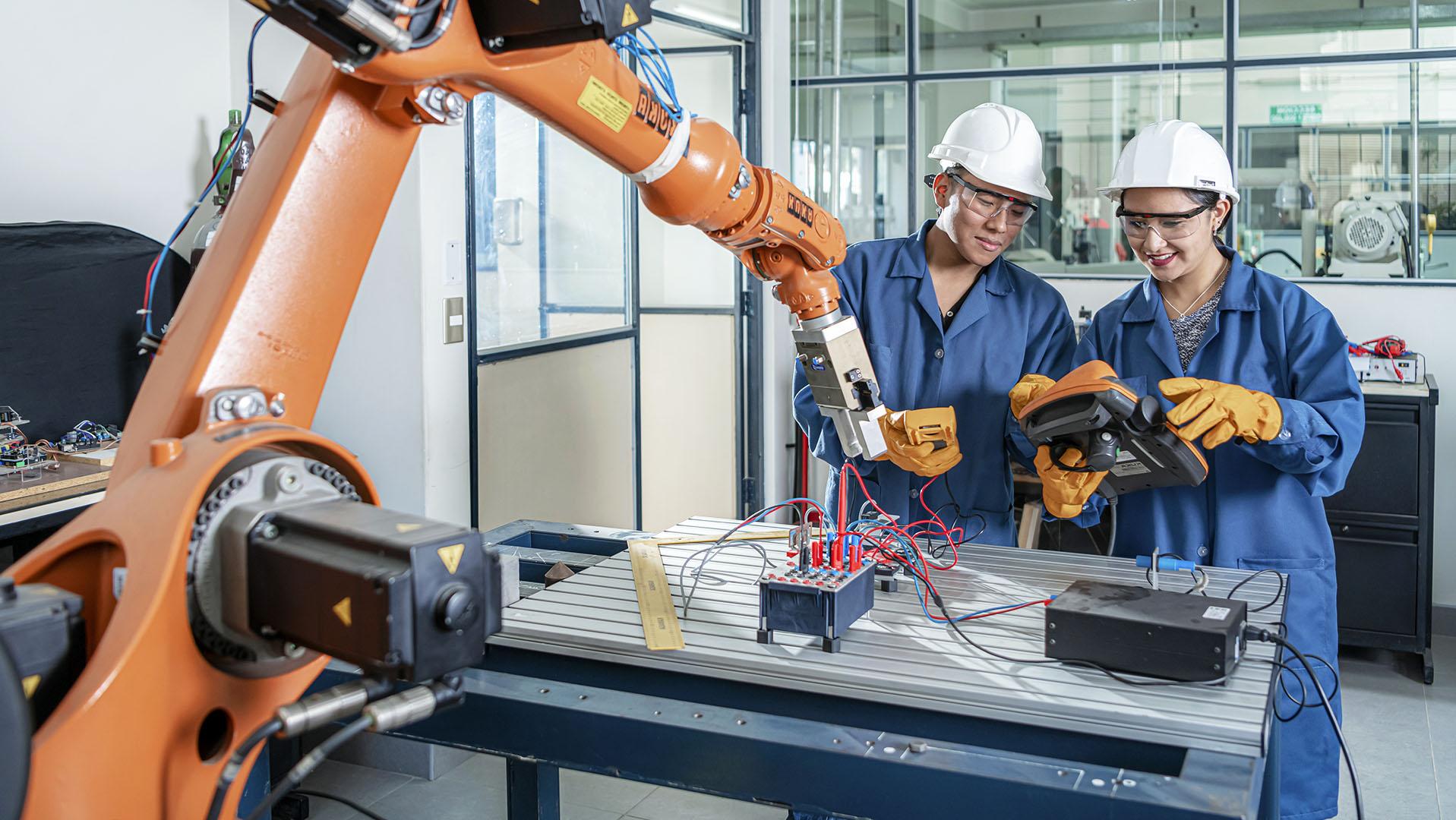
Mechatronics engineering is a distinctly multidisciplinary field that integrates mechanics, electronics, control, and computer science to design and develop "smart" products and processes. It is not simply the sum of mechanics and electronics; it seeks a true integration of technologies to create new and more efficient systems.
In the reference Spanish curricula, mechatronics is geared towards training broad-spectrum, versatile engineers with a global vision , capable of adapting to very diverse environments: from robotic production lines to vehicles, biomedical systems or building automation.
This qualification is fully established internationally: the United Kingdom, Germany, France, Denmark, Finland, the United States, Australia and Japan have been offering degrees in mechatronics for years (Bachelor of Engineering in Mechatronics, Mechatronic Systems Engineering, Robotics and Mechatronics, etc.), many of them accredited by organizations such as IET, ASIIN or Engineers Australia.
In Spain, universities such as the University of Zaragoza (EUPLA) or the University of Vic have been pioneers in implementing the Degree in Mechatronics Engineering , designing it based on these international benchmarks and an intense consultation with companies, professional associations, graduates and external experts.
The main focus is that the graduate be able to design, fine-tune, maintain and improve mechatronic products and systems , understanding both the mechanical part (machines, structures, fluids, materials) as well as electronics, automatic control and embedded software.
What is industrial and automatic electronic engineering?
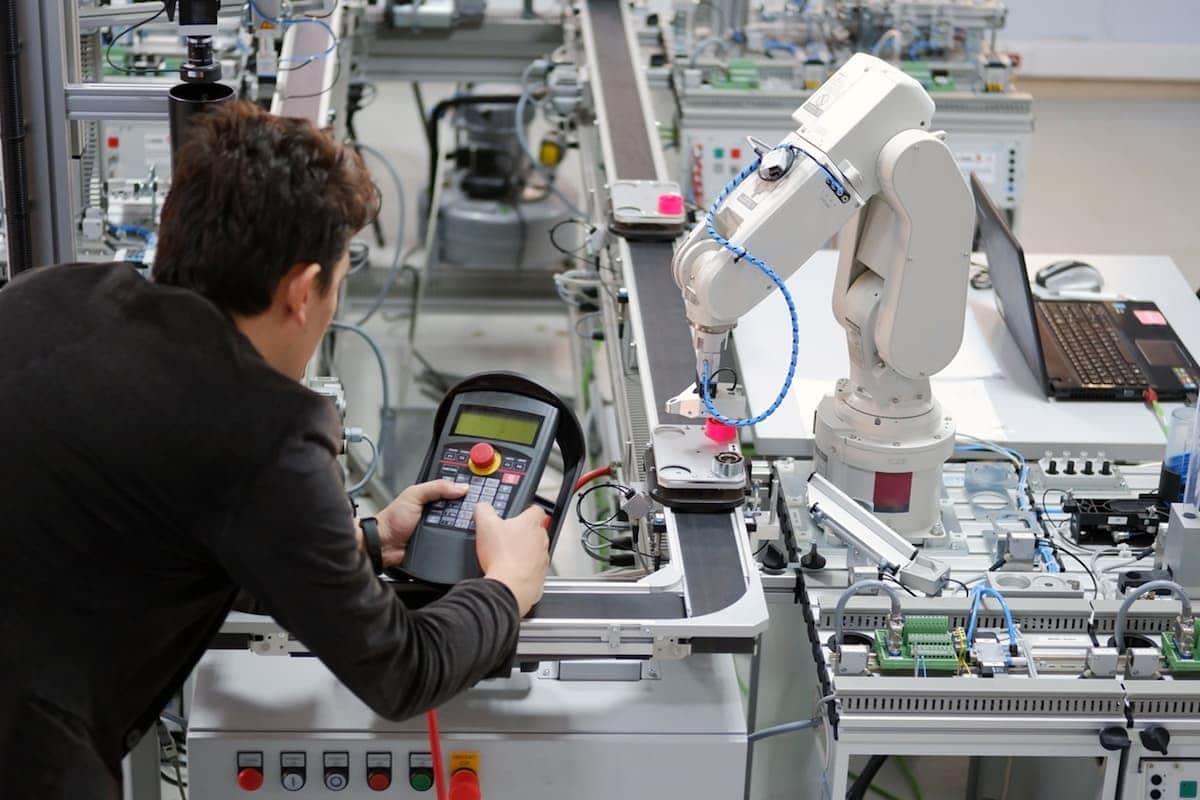
Industrial and automatic electronic engineering focuses on the design, development and application of electronic and control systems in the industrial environment: power electronics, process automation, industrial robotics, industrial communications, instrumentation and measurement systems, among others.
In Spain, this degree is regulated by Order CIN/351/2009 , which establishes the minimum competencies that students must acquire to qualify as Industrial Technical Engineers in the field of Industrial Electronics . This translates into professional authorization to sign off on projects, manage construction and installation works, and access public sector employment where this qualification is required.
Programs such as those offered by UNED or ETSI Industriales at various universities follow a structure of 240 ECTS in four courses , combining basic training, content common to the industrial branch, and specific technologies of industrial and automatic electronics.
These studies prepare the graduate to develop control and automation systems, industrial electronic systems, robotic systems and to assume maintenance engineering for these types of installations, both in process industry and in manufacturing industry.
In some centers, such as TecnoCampus, industrial electronics is also integrated into double degrees (for example, with mechanics) to better meet the needs of Industry 4.0 and automated production systems.
Key differences between mechatronics and industrial electronics
Although they are closely related, there are important nuances between studying mechatronics and studying industrial and automatic electronics that should be clear before choosing:
- Main focus: Industrial electronics focuses on the design and application of electronic (analog, digital, power, instrumentation) and control systems, while mechatronics focuses on integrated systems that combine mechanics, electronics, control and computer science.
- Scope of projects: An industrial electronics engineer usually delves deeper into circuits, power electronics, automation and communicationsThe mechatronics engineer is oriented towards the integration of mechanical, electrical, electronic and software subsystems in complete products (robots, vehicles, special machines, etc.).
- Training profile: industrial electronics is more specializing in electronics and controlwhile mechatronics offers a more transversal training, with a strong component in mechanical design, materials, manufacturing and fluid mechanics systems, in addition to the electronics and programming aspects.
- Scope: Industrial electronics is widely used in telecommunications, networks, consumer electronics, signaling, wireless communications, and military electronicsIn addition to process automation, mechatronics is emerging strongly in industrial automation, robotics, automotive sector, aerospace, special machinery and intelligent systems.
- Types of problems they solve: Industrial electronics most commonly works on specific problems in electronics and controlwhile mechatronics addresses complex problems that require integrated solutions and new syntheses between mechanics, control, and electronics.
In professional practice, many engineering teams combine both profiles: electronic engineers who master the power, communications and instrumentation aspects , and mechatronic engineers responsible for integration with mechanical systems, actuators, sensors and software.
Double degrees and industrial mechanical-electronic synergy
Some universities have gone a step further, creating dual degrees that combine mechanical engineering with industrial electronics and automation engineering . Their aim is to train even more well-rounded professionals for modern industry.
In these dual degrees, students follow a specific curriculum of approximately 270 to 342 ECTS credits, spread over five to five and a half years. An example is the dual degree program at the University of Salamanca, with 276 ECTS credits over 10 semesters (5 years), integrating the subjects of both degrees, including 60 ECTS of basic training, 186 of required courses, 6 of electives, and 24 for the Final Degree Project.
These programs usually require full-time dedication and are managed as a single itinerary: specific places are reserved, compatible theory and practice groups are organized, and exam schedules and calendars are adjusted so that the student can attend everything.
The great advantage is that the graduate obtains two official degrees (Mechanical and Industrial Electronics and Automation) with all their professional entitlements, opening doors to both more mechanical positions (design, calculation, manufacturing) and more electronic ones (automation, control, power electronics).
In practice, these double degrees directly respond to the needs of industrial companies that demand profiles capable of understanding the complete machine : structure, kinematics, drives, sensors, control and communications.
Basic, general and specific skills that are acquired
In both mechatronics and industrial and automatic electronics, official degrees share a very broad block of basic (CB), general (CG) and specific skills , in line with the European Higher Education Area and Spanish regulations (RD 822/2021, RD 1393/2007 and Order CIN/351/2009).
Basic competencies include demonstrating mastery of knowledge in the area of study at the degree level, knowing how to apply it professionally , gathering and interpreting data to make judgments with a social, scientific or ethical component, communicating ideas and solutions to both specialized and non-specialized audiences, and developing self-directed learning skills for further studies.
General skills encompass the ability to conceive, draft and manage engineering projects (energy, electrical and electronic installations, industrial plants, manufacturing and automation processes), solve problems with initiative and creativity, manage projects and human teams, work in bilingual and multidisciplinary environments and apply principles of quality, sustainability and social responsibility.
Regarding specific basic training skills , all plans emphasize a solid foundation in mathematics (linear algebra, geometry, differential and integral calculus, differential equations, numerical methods, statistics and optimization), physics (mechanics, thermodynamics, fields and waves, electromagnetism), chemistry (general, organic and inorganic), computer programming and use, operating systems, databases , spatial vision and graphic representation techniques, as well as notions of business, organization and legal framework.
Then the common skills of the industrial branch are added : applied thermodynamics and heat transfer, fluid mechanics, materials science and technology, circuit theory and electrical machines, fundamentals of electronics, automation and control methods, theory of machines and mechanisms, strength of materials, production and manufacturing systems, environmental technologies and organization of companies and projects.
Specific technologies: electronics, robotics, control and mechatronic systems
The most distinctive aspect of these degrees comes with the specific technologies that are developed from the second year onwards: electronics, robotics and control; electronic instrumentation; mechatronic systems in vehicles; renewable energies, etc.
In the field of industrial electronics , the student acquires applied knowledge of electrotechnics, analog and digital electronics, microprocessors and programmable systems, power electronics, instrumentation, modeling and simulation of electronic systems , industrial computing and communications, design of industrial control and automation systems, as well as automatic regulation techniques.
The degrees in electronic engineering, robotics and mechatronics also delve into robotic systems , perception, real-time control systems, digital signal processing, industrial communications and networks, including the ability to design and program robotic and advanced automation systems.
The specializations or pathways offered in some programs provide the option to specialize in areas such as Robotics and Automation; Electronic Instrumentation and Control; Instrumentation and Control of Energy Systems; and Mechatronic Systems in Vehicles . Each specialization incorporates specific courses in fluid mechanics drive design, power electronics for vehicles, sensor technology, industrial computing in vehicles, automation of production systems, micro and nanoelectronic systems, and control of renewable energy systems.
In the specific case of the Degree in Mechatronics Engineering, skills specific to the design, calculation and testing of machines , systems and fluid mechanics machines, manufacturing processes, metrology and quality control, and design and maintenance of mechatronic systems in a broad sense are added.
Recommended student profile and leveling courses
Before embarking on one of these degrees, it is important to assess whether you fit the recommended profile described by universities, both on-campus and online:
Special consideration is given to an interest in the workings of machines, mechanisms and electronic systems , a certain tendency to disassemble, repair or build devices, a positive attitude towards technological advances and a liking for seeking practical solutions to real problems.
Skills such as analysis and reflection, teamwork, creativity, initiative, critical thinking and argumentation skills , reasoning and spatial representation, as well as personal organization and perseverance in study, especially in distance learning modalities such as UNED, are also highly valued.
Regarding prior knowledge, a solid foundation in Mathematics, Physics, and, to a lesser extent, Chemistry is essential . Having completed a Science and Technology track in high school and possessing basic knowledge of Technical Drawing and Computer Science are highly beneficial.
For those who are somewhat unprepared in these subjects, some schools offer zero courses or pre-enrollment communities , such as the "Starting Machines" community of the UNED/School of Industrial Engineering, with free MOOCs and open materials on Mathematics, Physics, Chemistry and Drawing, designed to level students before starting their degree.
Access, admission and enrollment requirements
Access to these degrees is governed by general university regulations. For newly admitted students, the most common pathways are: a high school diploma with a passed university entrance exam (EvAU/EBAU) , advanced vocational training qualifications, access for students over 25 or 45 years of age, accreditation of work experience for those over 40, and prior university degrees.
Those coming from foreign education systems must meet the specific homologation or accreditation requirements set out in Royal Decree 412/2014 and follow the admission procedures of each university.
Normally, the application for admission is made electronically, indicating several degrees in order of preference (up to 10 in many regional pre-registration systems), which is highly recommended so as not to risk everything on a single option.
Places are allocated based on the admission grade and lists of admitted students and waiting lists are published, distributing the total number of places between a general quota (high school, vocational training and pre-university foreigners) and different reserve quotas (disability, high-level athletes, over 25, 45 or 40 years old, university graduates).
Admitted students must complete their enrollment within the deadlines specified in the official calendar. Failure to do so will result in the loss of their place and subsequent calls from the waiting list, particularly in the high-demand first years of study.
Curriculum structure and workload
The degrees in mechatronics and in industrial and automatic electronics follow the standard of 240 ECTS credits in four years , except in double degrees or special integrations, where the workload can reach 276-342 ECTS (about 5-5,5 years).
Generally, credits are distributed as follows: basic training (around 60 ECTS), compulsory courses (between 150 and 190 ECTS), elective courses (around 16-30 ECTS), and the Final Degree Project (12 ECTS) . Some programs also reserve ECTS for curricular external internships.
Studies are usually organized into modules or large thematic blocks : engineering fundamentals (mathematics, physics, chemistry), electricity and electronics, control and robotics, information and communication technologies (ICT), mechanics, instrumental subjects (business, languages, environment) and projects.
A key feature of the Bachelor's Degree in Mechatronics Engineering is the strong emphasis on integrated, multidisciplinary projects . These include courses such as "Integrated Project" (6 ECTS credits) and a Final Degree Project worth 12 ECTS credits, where students must demonstrate their ability to combine electronics, programming, control, and mechanical design into a single development.
In the later stages of the degree, semesters are reserved with few compulsory subjects and more electives , precisely to facilitate international mobility (Erasmus, agreements, etc.) and the completion of internships in companies without overwhelming the student.
Internships, projects, final degree projects and work in companies
The practical component is crucial in these degrees. In addition to theoretical content, students undertake laboratory work, simulations, and projects from the very first years of study.
In some universities, face-to-face laboratory practices are mandatory in several subjects (either in the laboratories of the School itself or in Associated Centers, in the case of UNED), combined with virtual practices, simulations and remote laboratories to gain flexibility.
In addition, external internships in companies are usually offered , either optional or curricular depending on the program, coordinated by an academic advisor and a company mentor. At EUPLA, for example, collaboration with technology companies is a key feature, allowing students to develop real-world projects such as electric racing vehicles, navigation systems for high-performance sailing, or aerospace developments.
The Final Degree Project (TFG) is the culmination of the degree: an original, professional-level project, to be carried out individually, which is presented and defended before a university panel. It must integrate and demonstrate the skills acquired in the specific technologies of electronic engineering, robotics, control, or mechatronics, depending on the degree.
International mobility and exchange agreements
Universities such as Zaragoza or EUPLA have a wide network of international agreements for study stays and internships: Erasmus+ programs, UNIZAR-Iberoamerica agreements, UNIZAR-North America, Oceania and Asia, as well as SICUE national mobility.
These stays are carried out with full academic recognition of the studies undertaken at the host university, so that the credits passed are incorporated into the student's record as if they had been completed at the home university.
The partner list includes technical universities from Europe, Canada, the United States, and Latin America , many with a long tradition in mechatronics, automation, and industrial electronics. This allows students to broaden their horizons, improve their English or other languages, and experience diverse industrial environments.
International internships are also encouraged , for example, through Erasmus for internships, often managed by university-business foundations, as well as development cooperation programs in countries with lower income levels.
Student support, services and university life
Beyond the subjects themselves, these degrees are integrated into universities that offer a wide range of guidance, support and university life services to facilitate the academic and personal success of students.
It is common to have a degree coordinator as a reference figure, in addition to a personalized tutoring system in which each student has a tutor-professor who guides them on pathways, choice of electives, academic doubts and personal project.
Universities often have career guidance and employment services , such as UNIVERSA in Zaragoza, which offer information on job placement, professional skills courses, job search workshops and management of voluntary internships in companies.
There are also facilities such as well-equipped libraries and study rooms, access to electronic resources, digital skills courses, modern language centers for studying languages (English, German, French, etc.), university residences and private accommodation services.
On a more personal level, there are usually diversity support offices and psychological counseling services , university information and complaints services, Wi-Fi networks on all campuses, sports services with complete facilities, and a cultural agenda with cinema, music, theater, exhibitions, and conferences.
Career opportunities in mechatronics and industrial electronics
The job market for mechatronics and industrial electronics is broad and expanding, especially linked to "smart" products and processes that combine mechanics, electronics, control and computer science.
Graduates in mechatronics engineering can work in the design, development, manufacturing, commissioning, maintenance and marketing of mechatronic products , in R&D departments, plant engineering, production control and planning, distribution, technical marketing or simulation and design of mechatronic systems.
Industrial and automatic electronic engineers, for their part, focus on specification, design, simulation, implementation and maintenance of industrial electronic equipment and systems , design and implementation of automated systems, instrumentation and measurement, process robotization, automated inspection and decision support systems in production.
Both profiles are suitable for sectors such as the automotive, aeronautical, metalworking, textile, food, mining, oil and gas, biomedical, renewable energy, logistics, construction and virtually any industrial or advanced service environment.
We must not forget the possibility of developing a career in Public Administration, teaching, applied research or free professional practice, taking advantage of the powers linked to the profession of Industrial Technical Engineer when the title is enabled by Order CIN/351/2009.
Taken together, the combination of skills in design, ingenuity, organization, automation, and global vision makes these graduates particularly attractive candidates for companies competing in high-tech and globalized environments.
Choosing between mechatronics, industrial electronics and automation, or a double degree in mechanical-electronic engineering involves considering the type of projects you envision yourself working on, your preference for the mechanical or electronic side, and the level of specialization or transversality you seek, but any of these paths places you at the heart of the technological transformation of modern industry.
