- Robot vacuum cleaners combine sensors, intelligent mapping, and powerful suction to clean floors autonomously and safely.
- Power, navigation (Gyro or laser), autonomy and the mopping system make the difference between ranges and real results.
- They offer significant savings in time and effort, but their effectiveness depends on the chosen model, the type of housing, and some preparation of the space.
- Choosing between dry cleaning robots, floor mopping robots, or hybrid robots, and considering options such as self-emptying or app control, is key to making the right purchase.
If you feel overwhelmed with household chores and can't get everything done , you're not alone. Keeping the floor clean, free of dust, hair, and lint, can become an impossible mission when you're short on time, work outside the home, or simply want to spend your day doing something more enjoyable than vacuuming.
That's where robot vacuums come in, little helpers that vacuum (and often mop) automatically while you do other things or aren't even home. Today, they're no longer a futuristic whim, but a very practical appliance that can be a game-changer in home cleaning.
What exactly is a robot vacuum cleaner and what can it do for you?
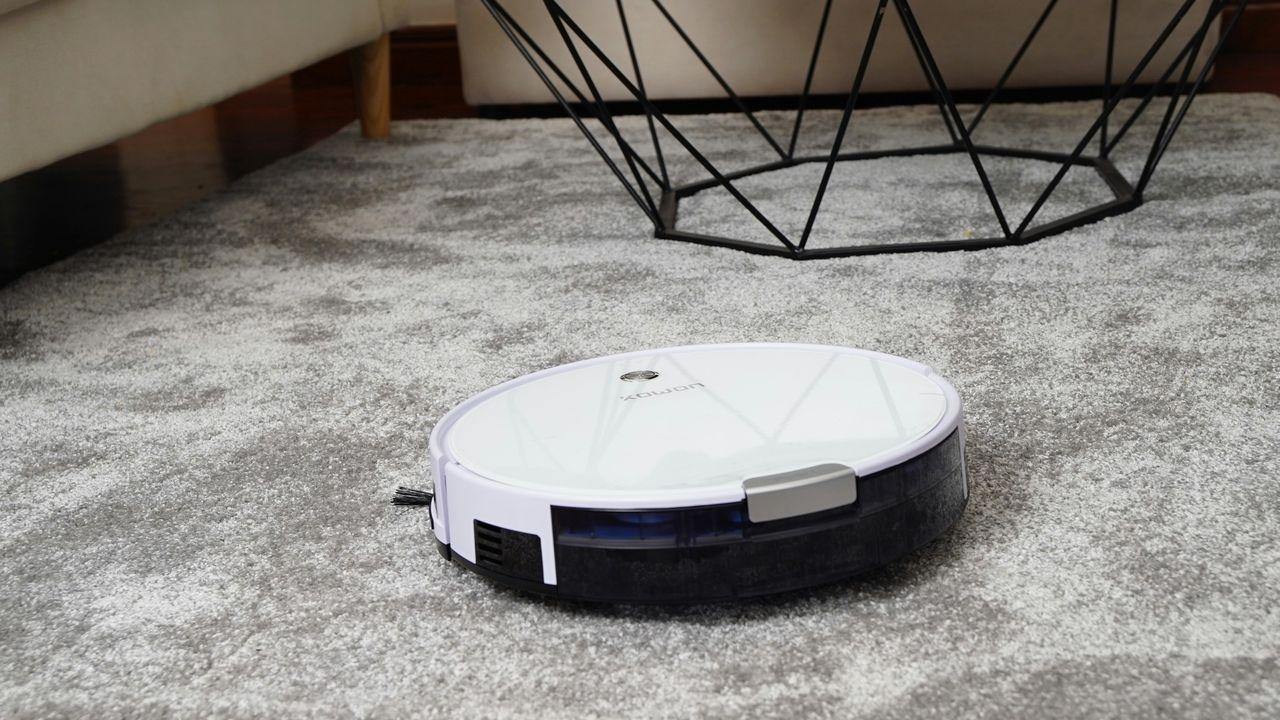
A robot vacuum cleaner is a compact device, usually circular and fairly flat, designed to clean floors autonomously without you having to push it or constantly supervise it. It moves on its own, avoids bumping into furniture, navigates around obstacles, detects changes in level, and returns to its charging base when needed.
The lower part incorporates several cleaning elements: rotating brushes, a central brush, and a suction system that sweeps dirt into a small internal reservoir. Many models also include a mopping module with a water tank and mop, allowing them to vacuum and mop or scrub the floor in the same pass.
Its main appeal is that it allows you to keep your floors clean almost daily with minimal effort . You program the schedule, adjust the cleaning modes, and from then on, the robot takes care of the routine work: dust, crumbs, food scraps, sand, pet hair, etc.
In addition, the latest generation of robots usually have WiFi connectivity and a mobile app, so you can start them from your mobile phone, create maps, configure rooms, mark forbidden zones, take advantage of WiFi Mesh networks and even control them by voice with assistants like Google Assistant or Alexa.
How a robot vacuum cleaner works step by step
The inner workings of a robot vacuum cleaner combine electronics, sensors, navigation software, firmware updates , and a fairly efficient suction system. Not all models are equally advanced, but the basic design is very similar in most devices you'll find on the market.
The key to these devices lies in their sensors. Thanks to them, the robot can detect walls, furniture, chair legs, carpets, stairs, and other obstacles , and decide in real time where to go next. Several technologies come into play here:
- Shock and infrared sensorsThese sensors allow the robot to approach walls or furniture, reduce speed, and change direction without colliding with them. They also help it "see" objects in front of it and navigate around them.
- Fall protection sensorsLocated at the bottom, these sensors detect gaps (such as stairs) to prevent the robot from falling to the lower level. When they detect a sharp edge, the device stops and turns.
- Dirt and carpet sensors In some models, they increase power when driving over carpets or areas with more accumulated dust.
In the most basic robots, navigation is based on fairly simple and somewhat random paths . They usually move in a straight line, change direction when they touch a wall or piece of furniture, and continue like this until they've covered a good portion of the space. They get the job done, but they more easily leave areas uncleaned and may repeat areas.
The most advanced models already incorporate intelligent mapping systems using cameras, gyroscopes (Gyro 3.0 navigation), or laser technology (LiDAR/LDS). These robots analyze the room, create a virtual map of the home, and plan orderly routes, usually in the form of parallel lines, to cover the entire floor with fewer passes and greater efficiency; they are a good example of advances in robotics applied to the home.
In the case of robots like those from Midea (i5C, M7 Pro, or S8+), for example, the latest generation LDS laser navigation allows for precise scanning of the home, even in the dark. With more than 30 sensors and the ability to overcome obstacles up to approximately 20 mm high, these models are able to avoid getting stuck under furniture, navigate around objects, and optimize cleaning times.
2. Suction system and brushes
At the bottom, we find the heart of the cleaning process: the brushing and suction system . Although it varies depending on the manufacturer, many robots share a very similar combination:
- Side brushesThese are usually one or two rotating arms that sweep dirt from edges and corners and push it towards the center of the robot, where the suction port is located. They are key for cleaning along baseboards and around furniture.
- central roller brush (often V-shaped): It is responsible for "trapping" dust, lint, and hair, lifting them off the floor so the airflow can suction them up more effectively. It works very well on both hard floors (tile, parquet, laminate) and carpets and rugs.
- Suction motorThis generates the airflow that draws all the material into the internal reservoir. Power is usually expressed in pascals (Pa); in mid-range and high-end robots, figures around 2000-4000 Pa are common, and even higher in some premium models.
More suction power doesn't always mean better cleaning if the internal design of the air duct isn't properly optimized . Good internal aerodynamics help ensure that the power is truly utilized and not lost. That's why some robots with lower Pa ratings, but better design and efficient brushes, clean better than others that are theoretically more powerful.
In the Midea models mentioned, for example, suction reaches up to 4000 Pa with several intensity levels . This allows you to use standard power (around 1200 Pa) for quieter daily cleaning and reserve maximum power for carpets or areas with heavily ingrained dirt.
3. Mopping function: vacuum and mop at the same time
Many modern robots don't just vacuum. They also include a water tank, an electronic pump, and a mop or microfiber cloth for wet cleaning. There are different approaches:
- Simple models with a small water tank and a fixed mop that drags moisture across the floor, sufficient for refresh the floor and remove fine dust.
- More advanced robots with electronic control of water flow (multiple levels) to adjust the humidity according to the type of soil and the dirt.
- High-end equipment with high-frequency vibration scrubbing, such as the Midea M7 Pro or the S8+, where two scrubbing plates move rapidly (around 500 vibrations per minute) to better scrub dry or sticky stains.
These hybrid systems combine up to four actions simultaneously: sweeping with the side brushes, dragging dirt with the central brush, vacuuming, and mopping . They don't replace a thorough mop on heavily soiled floors, but for daily maintenance and small stains, they are a very practical solution.
4. Battery, autonomy and automatic return to base
All these robots run on rechargeable batteries, usually lithium-ion. The capacity, measured in mAh, indicates how long the robot can work on a single charge . There are notable differences between the different models:
- An entry-level model like the Midea i5C integrates a battery of about 2600 mAh, enough for about 90 minutes standard cleaning (around 100 m²), or about 60 minutes if you are mopping at the same time.
- Higher-end models like the M7 Pro or S8+ double that figure to around 5200 mAh, with battery life of up to 180 minutes and surface coverage of around 200-250 m², depending on the power used and the distribution of the home.
When the battery drops below a certain level, the robot recognizes the situation and automatically returns to its charging station . There it recharges for a few hours (in many cases, a little over three) and, if the model supports it, resumes cleaning from where it left off, so as not to miss any areas.
In more advanced robots, the charging base may also include self-emptying or even self-cleaning functions . The Midea S8+, for example, features an S8+ Station with an internal vacuum cleaner of up to 19000 Pa that empties the robot's dustbin in seconds, storing all the dirt in a large-capacity bag. This allows you to forget about daily maintenance for up to 30 days under normal usage conditions.
5. Control via app, remote control and voice assistants
Almost all modern robots include some form of simple remote control . Depending on the model, it may be one or more of these methods:
- Physical buttons on the robot itself to start or stop a basic cleaning or return it to the base.
- Remote control In models without WiFi, you can choose cleaning modes (auto, edges, spot, etc.) and program simple schedules.
- Mobile app In robots with WiFi. Through apps like Rowenta Robots, MSmartHome (Midea) or other official ones, you can see a map of your house, choose which rooms to clean, mark restricted areas, schedule recurring cleanings and adjust power, water flow, special modes and even receive reports of each session.
- Voice control with Alexa, Google Assistant or other assistants, to launch simple commands such as "start cleaning", "stop cleaning" or "return to base".
The app becomes the robot's command center, and for many users, this is one of its biggest advantages: you can start it cleaning even when you're not home and then check which areas it has covered, how long it has been running, or if it encountered any problems. It's advisable to protect access to the app with good home network security practices to prevent unauthorized access.
Essential features in a modern robot vacuum cleaner
Given the enormous variety of models, brands, and prices, it's important to understand the features that truly make a difference and justify paying a little more. Based on what models like the Midea i5C, M7 Pro, or S8+ offer, along with other well-rated robots on the market, a very reasonable "minimum list" can be established.
1. Cleaning power and efficiency
Suction power is one of the first things anyone looks at. A low-end robot vacuum might have very modest suction, only sufficient for light dirt on hard floors . However, starting at around 2000 Pa, we begin to see solid results, and around 4000 Pa offers remarkable power, even for medium-pile carpets.
But it's not all about brute force. It's important that the robot offers several power levels or operating modes to adapt to each situation: silent mode when you're at home, standard mode for everyday use, turbo mode when you want a deeper clean or for carpets.
Equally crucial are the design of the main brush, the filtration system (HEPA or equivalent), and the shape of the chassis. A good robot vacuum should be able to fit under sofas, beds, and low furniture , where we rarely vacuum manually and where a significant amount of dust accumulates.
2. Cleaning and customization modes
When using it daily, it's appreciated that the robot offers different specific cleaning modes that you can select depending on the situation:
- Automatic or general mode: covers the entire available surface, seeking to cover the maximum area.
- Edge modeIt focuses on baseboards and room perimeters, making the most of the side brushes.
- Spot mode: Deep cleans a small area, ideal if you have dropped something or there is localized dirt.
- Specific room mode or by zones, if the robot has mapping and room division capabilities.
- Advanced modes such as spiral cleaning, restricted areas, deep or planned cleaning in mid-range/high-end robots.
This flexibility transforms the robot from a simple gadget you just press a button into a device that adapts well to your habits . If you know, for example, that the kitchen and living room get dirtier, you can schedule extra cleanings in those areas without having to go over the entire floor each time.
3. Effective and controlled scrubbing
The mopping function has gone from being a minor addition to becoming a key selling point for many users . Especially on hard floors (tile, porcelain, vinyl, laminate), a good mop system with water control provides a very noticeable improvement in cleaning.
The best results are achieved with robots that integrate:
- Water tank with electronic pump and several flow levels, to dose the moisture according to the type of soil.
- Mop made of absorbent material that can be easily washed and, if possible, replaced when it is very worn.
- Active mop movement, such as the high-frequency vibration scrubbing found in devices like the M7 Pro or the S8+, which greatly improves the results on dried-on stains.
Dragging a damp cloth is not the same as scrubbing with pressure and frequency . That's why there's such a noticeable difference between entry-level robots and models that use a more sophisticated mopping system.
4. Sensors and safety
A robot vacuum cleaner will move throughout the house, so safety is just as important as its cleaning ability. Ideally, it should have multiple sensors to prevent bumps, falls, and getting stuck.
- Infrared and proximity sensors to anticipate obstacles.
- Physical bumpers that cushion soft contacts with furniture or walls.
- Several anti-fall sensors at the bottom, essential if you have stairs or steep slopes.
- In models with a laser tower, pressure sensors on the top allow the robot to detect when it is trying to squeeze under a piece of furniture that is too low and avoid getting stuck.
Combined with good Gyro or LiDAR navigation, these sensors allow for intelligent and fairly safe cleaning , reducing the risk of the robot spending half an hour fighting with a carpet, a cable, or a chair leg.
5. Autonomy and self-recharging function
If your home is large or has several floors, battery life becomes crucial. It's not enough for the robot to last half an hour: you need it to be able to finish the job without leaving half the house unswept , or at least be able to recharge and continue where it left off.
A competent robot should offer:
- At least 90 minutes of work in standard mode for small or medium-sized apartments.
- In mid-range/high-end equipment, autonomy of 150-180 minutes for large houses or chalets.
- Function of automatic return to base and resumption of cleaningwhich is already spreading to many brands.
Without these functions, not only do you risk the robot leaving the job unfinished , but you'll also have to keep an eye on whether it has enough battery left or if you have to relocate it yourself to another room so it can continue cleaning.
Real advantages and disadvantages of robot vacuum cleaners
Like any household appliance, robot vacuum cleaners have many advantages but also limitations that are worth knowing to avoid disappointment. Looking at the experiences of various reviews and users, a fairly clear picture can be drawn.
Main advantages of using a robot vacuum cleaner
The first and most obvious benefit: saving time and effort . While the robot roams the living room collecting dust and crumbs, you can walk the dog, work, watch a show, or go out for a drink. Floor cleaning ceases to be a chore that steals an hour of your Saturdays and becomes something almost invisible, happening in the background.
Another great advantage is that, because it operates autonomously and is programmable, it keeps the house consistently cleaner . Although its power is slightly less than that of a high-end canister vacuum, the fact that it runs every day or several times a week makes up for that difference. The practical result is that dust doesn't accumulate as much, and the overall feeling of cleanliness in the home improves considerably.
Furthermore, these robots are designed to be gentle on floors and quite quiet compared to a traditional vacuum cleaner. They don't usually scratch surfaces, and the noise, while still present, is much more discreet than that of classic corded models—something that's noticeable when you work from home or have babies.
Ease of use is not a problem either: between intuitive mobile apps, simple remote controls and basic buttons, anyone can learn to use a robot vacuum cleaner in a very short time, even people who are not very familiar with technology.
Finally, there are models designed specifically for homes with pets, allergy sufferers, or other specific needs , featuring HEPA filters, increased pet hair removal power, or larger dustbins. There are also 2-in-1 hybrid robots and even 3-in-1 models (like some eufy models that combine a robot vacuum, a broom, and a handheld vacuum), which greatly enhances their versatility.
Disadvantages and limitations you should be aware of
It's not all good news. The simplest robots, especially the very cheap ones, can be imprecise when cleaning, get lost in the room , leave areas uncovered, bump into furniture too often, or get stuck on cables, thick rugs, or small objects lying on the floor.
Another sensitive issue is price. There are budget robots for under $100-$120 that, frankly, hardly replace a good traditional vacuum cleaner . They work as a light helper in small, undemanding spaces, but if you're looking for a truly deep clean, you'll have to look at higher-end models, with prices that can easily exceed $400-$700.
Since these devices are cordless, you're dependent on the battery and its degradation over time . Even with brand-name robots, after a couple of years of intensive use, the battery life can decrease, and sooner or later, you'll have to replace the battery (sometimes under warranty, other times paying for the part and labor).
It's also important to understand that the robot isn't magic: it needs a little preparation . This means removing cables from the floor, toys, clothes lying around, or anything else that might get in its way. This brief "pre-cleaning" is something many users don't appreciate at first, and depending on the house, it might require a bit of extra effort.
On very thick or long-pile carpets, and in extremely complex or heavily furnished layouts, even the best robot vacuums can struggle to move and vacuum effectively. In these cases, they remain a helpful aid, but they don't completely replace a manual vacuum cleaner.
Types of robot vacuum cleaners according to the cleaning they perform
Although they all look quite similar on the outside, when choosing one it's important to distinguish what type of cleaning each robot can do . Basically, we can talk about three main categories:
- Dry vacuuming robotsThey only vacuum up dust and solid dirt. They're a good option if you already have another way to mop the floor or if you live in a house with carpets and rugs where the mopping function isn't necessary.
- Floor mopping robot vacuum cleanersIn addition to vacuuming, they include a water tank and a mop or scrubbing system. They are ideal for hard floors, as they allow vacuum and mop in the same routeMaintaining a very high level of daily cleanliness with minimal effort.
- Mixed or hybrid cleaning robotsThey combine various cleaning modes (dry vacuuming, scrubbing, mopping) and, in some cases, even different vacuuming formats (robot + broom + handheld vacuum), offering maximum versatility in a single device.
When it comes down to it, your choice should be based on the type of flooring that predominates in your home, whether you have carpets, whether you have pets , and how you like to keep things clean (just vacuuming thoroughly once a week or maintaining a light but very consistent daily cleaning).
Examples of top-rated robotic vacuum cleaners on the market
To put all this theory into practice, it's helpful to look at some specific models that clearly illustrate the different product ranges and philosophies. Among the most representative brands and robots, we find:
Midea robots: i5C, M7 Pro and S8+
Midea, one of the world's leading manufacturers of household appliances, offers a very complete range of robot vacuum cleaners. The i5C would be the entry-level model, already featuring Gyro 3.0 navigation, multiple sensors (collision, anti-fall, infrared), and an integrated mopping system with a water tank and electronic pump.
Stepping up the range are the M7 Pro and S8+ , which add fifth-generation LDS laser navigation, over 30 sensors, improved obstacle avoidance, advanced zone cleaning modes, app-controlled no-go zones, and high-frequency vibration mopping. The S8+ tops the line with the S8+ Station self-emptying bin, which vacuums the contents in seconds , letting you forget about robot dust for weeks.
Eufy advanced models
Eufy's product range includes standout robots like the E20 3-in-1 Robot Vacuum and the E28 Omni Robot Vacuum . The E20 features a FlexiONE™ 3-in-1 design, combining a handheld vacuum, stick vacuum, and robot vacuum, with very high suction power (tens of thousands of Pa in manual mode) and an advanced filtration system.
The Eufy Omni E28, meanwhile, focuses on total autonomy: an all-in-one station with self-emptying, self-washing and mop drying , a special CornerRover™ arm to better reach corners and edges, and a portable stain removal module ideal for upholstery, stairs and carpets.
Popular robots from brands such as iRobot, Cecotec or Xiaomi
In the Spanish market , iRobot Roomba robots are very popular , offering varying levels of navigation and connectivity, as well as hybrid Roomba Combo models that include mopping functions. One notable feature is the ability of some Roomba models to return to their base automatically after cleaning and provide detailed reports of each session through their app.
Cecotec, with its Conga range, has made a strong commitment to laser mapping, multi-map modes and the combination of vacuuming and mopping in a single device, while Xiaomi and many of its sub-brands have popularized robots with a very good price-quality ratio, laser navigation and the ability to overcome obstacles such as small steps or thick carpets.
Other interesting models include robots like the Ikohs Netbot or specific versions for pet owners or allergy sufferers, with HEPA filters capable of retaining a large part of the fine particles such as dust, mites or pet dander.
With this wide range of options, the key isn't so much chasing the most expensive model, but rather carefully matching the robot vacuum's features to your home and your actual expectations . In small, simple homes, a good mid-range robot will be more than sufficient; in large houses with many carpets, pets, and multiple levels, it can be worthwhile to invest in superior navigation technology and self-emptying stations.
In the end, when you choose the right model, configure the app properly, and adapt your home a bit to facilitate the device's work, a robot vacuum cleaner ends up being one of those appliances that frees up the most time and effort on a daily basis , keeping the floor much cleaner than you would achieve with a traditional vacuum cleaner that you only use occasionally.

Table of Contents
- 1 What exactly is a robot vacuum cleaner and what can it do for you?
- 2 How a robot vacuum cleaner works step by step
- 3 Essential features in a modern robot vacuum cleaner
- 4 Real advantages and disadvantages of robot vacuum cleaners
- 5 Types of robot vacuum cleaners according to the cleaning they perform
- 6 Examples of top-rated robotic vacuum cleaners on the market