- Phishing is a very effective deception technique for stealing personal and banking information.
- There are numerous types of phishing targeted at emails, SMS, calls, social media, and apps.
- Recognizing the symptoms and acting with caution is key to avoiding becoming a victim.

Internet security is one of the biggest challenges of the digital age . Every day we browse the web, shop online, manage our bank accounts, or check our email, trusting that our data remains private and protected. However, cybercriminals never rest and employ increasingly sophisticated techniques to steal our information . One of the most frequent and dangerous threats in this area is phishing.
You'd be surprised how easy it is to fall into a phishing trap if you don't know how to recognize it . Even if you think you're safe because you don't click on suspicious links, the truth is that scammers have perfected their tricks. From emails with logos almost identical to your bank's, to alarmist messages that appeal to your emotions to trick you into revealing sensitive personal or banking information. This is where it makes sense to learn, in a clear and practical way, what phishing is, how it works, and the best ways to stay one step ahead of the bad guys.
What is phishing and why is it such a widespread threat?
Phishing is a digital deception technique whose main objective is to obtain users' confidential data . Attackers typically impersonate companies, government agencies, banks, or services we trust. Through emails, SMS messages, phone calls, or fake links, they try to trick us into voluntarily providing information such as passwords, credit card numbers, or login credentials for online services.
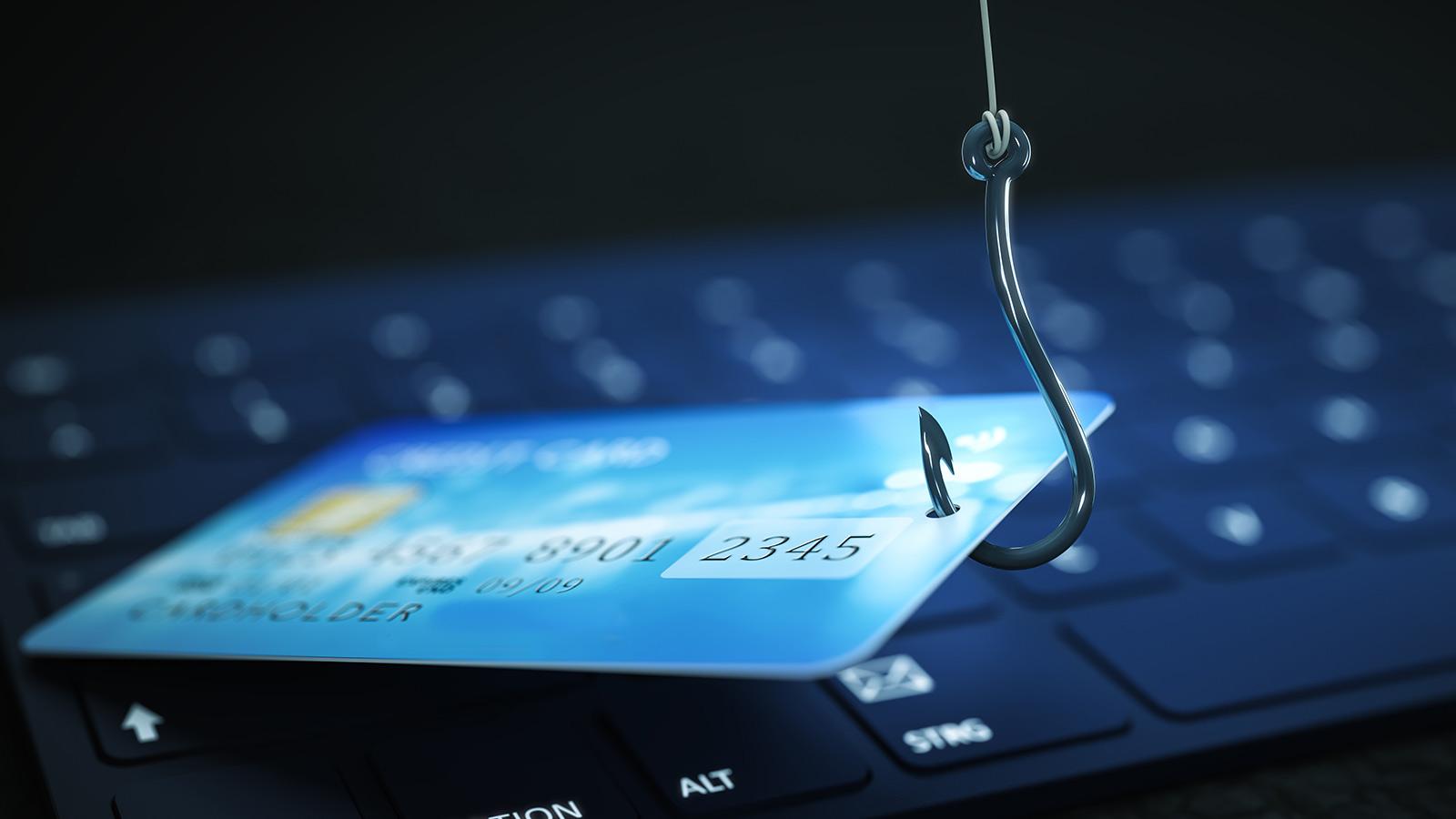
The term phishing comes from the English word "fishing," referring to 'catching' victims with bait, waiting for them to take the bait. Some claim the word originates from the combination "password harvesting fishing," although this seems more like a later explanation than the true origin. In any case, the root is clear: phishing seeks to deceive unsuspecting users in order to steal private information.
This threat occupies a prominent place in the world of cybercrime due to its enormous effectiveness and low cost for attackers . Sending thousands of malicious emails or messages is enough to trick a few victims into revealing valuable data. Furthermore, it doesn't require compromising technological systems, but rather manipulating people , which makes it even more dangerous for any user, company, or institution.
Historical evolution and origin of phishing
The first phishing attempts were detected in the mid-90s , although their widespread adoption came years later. The term "phishing" was first used in 1996 in hacking forums to describe account theft schemes targeting AOL, a popular internet service provider at the time. Attackers impersonated employees and sent messages requesting billing verification, thereby gaining access to victims' accounts.
Since then, phishing has evolved significantly in terms of techniques, reach, and sophistication . Today, criminals employ a multitude of methods to attack, from meticulously crafted emails to SMS messages, calls (vishing), and even QR codes (qrishing), always exploiting the human factor as their primary vulnerability. This versatility has made phishing the most widespread attack technique for stealing data and money from users and businesses.
Current impact and scope of phishing
Phishing causes enormous financial losses and serious damage to the reputation and security of its victims . According to IBM's "Cost of a Data Breach" report, phishing is the most common data breach vector worldwide, accounting for approximately 15% of security incidents . It is estimated that losses for North American companies can exceed $4,88 million on average per breach . On an individual level, any user can lose access to email accounts, suffer financial losses, or become a victim of identity fraud.
Attackers typically target victims ranging from individual users to large organizations and government agencies . A high-profile example was the hacking of Hillary Clinton's 2016 US presidential campaign, where a fake password reset email was used to steal thousands of confidential emails.
The key to its success lies in the fact that standard security techniques and filters, such as antivirus software or network controls, don't always detect these fraudulent messages . Psychological manipulation is the main tactic of phishing.
Most commonly used phishing techniques and methods
Phishing is constantly adapting to new digital habits, resulting in countless variations . Among the most common methods are:
- Traditional Phishing: Mass emails or SMS messages impersonating legitimate companies (banks, social networks, online stores), urging users to click on links and provide personal information on fake websites.
- vishing: This consists of phone calls impersonating trusted personnel (banks, operators, etc.) to obtain confidential data such as passwords, tokens, or other security codes.
- Smishing: A variant that uses SMS messages or instant messaging chats to deceive victims. For example, messages warning of suspicious activity on bank accounts and requesting information to "verify" identity.
- Qrishing: Use of manipulated QR codes to redirect to fake websites where personal data is requested or malicious applications are installed.
- URL Phishing: Creating links that appear legitimate but redirect to fake websites, often disguising the URL to make it invisible (spelling errors, similar characters, etc.).
- Spear Phishing: Attacks specifically targeting specific individuals or employees, based on prior research on the victim to personalize the message and increase its credibility.
- Whaling: Variant aimed at senior officials or people with access to privileged information, using even more personalized and sophisticated messages.
- Business Email Commitment (BEC): Attacks through corporate email to deceive employees and carry out fraudulent transfers or steal key internal data.
- Pharming: Manipulation of DNS systems to redirect users to fake websites without their knowledge.
- Malware-based phishing: Attaching infected files to emails or messages, which when opened install malicious software.
- tabnabbing: They take advantage of victims having multiple browser tabs open to change the content of one of them and simulate the need to log in again, thus stealing the entered credentials.
- Watering hole: Infect websites frequented by employees of a company or organization, to attack regular visitors and capture information.
- Evil Twin: Creating fake Wi-Fi hotspots to steal information from those who connect, believing they are on a legitimate network.
In addition, in recent years Phishing-as-a-Service (PHaaS) services have emerged , platforms that allow any cybercriminal, even without extensive technical knowledge, to launch phishing campaigns automatically by paying a fee.
How to Identify a Phishing Message: Signs and Examples
Detecting a phishing email or SMS isn't always easy , but there are several indicators that can alert us:
- Grammar and spelling errors: Large companies rarely make gross errors in their communications, but fraudulent messages are often riddled with obvious flaws.
- Poor quality logos and visuals: Many times, images are pixelated or do not respect the proportion of the original design.
- Suspicious linksIf you hover over a link and the URL it displays doesn't match the actual entity, it's most likely phishing.
- Urgent or alarmist requests: Messages that insist on urgency for you to act quickly, with threats of account blocking, financial loss, legal problems, etc.
- Requests for sensitive personal informationIf you are asked for information such as passwords, card numbers, or security questions, be suspicious immediately.
Typical examples include fake bank account suspension notices, purported tax refunds, confirmations of unfulfilled purchases or transactions, and messages purporting to come from company executives or employees.
Main objectives and consequences of phishing
The main objective of phishing is to steal private information for fraudulent use . This can translate into:
- money theft through fraudulent bank transfers or unauthorized purchases.
- Impersonation to access other services, commit crimes, or sell stolen data on the black market.
- Extortion through threats or blackmail if sensitive data is obtained.
- Damage to personal and business reputation, loss of confidence and legal or tax problems.
In the business world, phishing can lead to enormous financial losses and the loss of critical strategic information. In the worst case, it can jeopardize business continuity.
Diversity of attack techniques and increasing sophistication
Cybercriminals are constantly refining their methods to bypass security systems and deceive even the most cautious users . Among the most advanced techniques are:
- Links that appear legitimate but have fraudulent destinations, often embedded in seemingly harmless images or text.
- Malicious attachments which, when opened, install malware on the victim's device.
- Data capture forms on websites that perfectly mimic the appearance of official pages.
- Advanced techniques to evade spam filters and antivirus, such as embedding the malicious message in images, protecting attachments with passwords, or detecting scans on virtual machines to hide the true content of the attack.
The evolution of phishing is so rapid that, sometimes, it is practically impossible to distinguish a legitimate message from a fake one at a glance.
The rise in smartphone and social media use has opened new avenues for phishing . Cybercriminals are exploiting text messages (SMS), instant messaging platforms, malicious mobile apps, and deceptive social media posts to steal information or infect devices.
Common examples include messages that appear to be from banks asking you to confirm a suspicious payment, alerts about alleged prizes or problems with your account, or scam links in buying and selling apps, restaurant reviews, or even online gaming chats.
The speed and informal nature of these channels causes many victims to lower their guard when faced with a seemingly "normal" message, which increases the success of the attacks.
How to protect yourself from phishing: key measures and tips
In addition to common sense and caution, there are several habits and tools that will help protect you against phishing . To protect yourself effectively, you should:
- Always check the origin of the messages, avoiding clicking on links or downloading files from unknown or suspicious senders.
- Be wary of any message that insists on urgency or has obvious errors.: orthographic, visual or in the link structure.
- Never provide confidential information by email or SMS.Legitimate companies never request this information through these means.
- Use updated browsers and antivirus and activate all recommended layers of protection. Some browsers, such as Edge on Windows or Safari on Apple, include specific phishing filters, although they are not infallible.
- Protect your passwords using password managers and always enabling two-step authentication if available.
- check the url of the pages you access, carefully checking the address before entering any data.
If in doubt, contact the company or entity directly through its official channels , without using contact information provided in the suspicious message itself.
What to do if you've fallen for phishing
If you believe you have been a victim of phishing and have provided sensitive information, act quickly :
- Change your password immediately of the affected service and activate two-step authentication if possible.
- Contact your bank or financial institution to report the incident, block cards, and report unauthorized expenses. Remember that regulations require banks to be held accountable for this type of fraud if reported promptly.
- Perform a thorough scan of your device with an updated antivirus to detect and eliminate possible infections.
- Inform your contacts If you have provided access to email or social media accounts, to prevent others from falling into the trap of emails sent from your profiles.
If the damage is significant and you are unable to obtain a refund, seek legal advice to defend your rights.
Phishing and the law: legal situation in Spain and around the world
Phishing is recognized as a crime in numerous countries , although prosecution and penalties vary by jurisdiction. In Spain, the law criminalizes the impersonation of websites to capture personal data, with prison sentences and significant fines. Many other countries (the United States, Colombia, Argentina, etc.) have adopted or proposed specific legislation to punish phishing, while others use traditional criminal offenses such as fraud to prosecute these cases.
There are also international organizations and working groups dedicated to combating phishing, such as the Anti-Phishing Working Group, which collaborate with law enforcement and technology companies to shut down fraudulent websites and warn of new threats.
The importance of training and awareness
The best weapon against phishing remains knowledge and prevention . Many organizations train their employees to recognize scam attempts and simulate internal phishing campaigns to test their teams' vigilance and reflexes. These measures have proven highly effective, as most phishing attacks only succeed when users let their guard down or are unaware of the risks.
Furthermore, technology is advancing and incorporating intelligent solutions to detect threats (anti-phishing filters, link analysis, sender verification, etc.), but no barrier is 100% effective against the ingenuity of criminals. Therefore, maintaining a critical attitude and staying up-to-date on new trends is essential for protection.
Phishing is a digital threat that doesn't discriminate between individuals and businesses, affecting all devices equally. It grows alongside technological advancements and exploits any carelessness or lack of awareness to steal our data, money, or peace of mind. However, with up-to-date information, best practices, and common sense, it's possible to minimize the risk and stay ahead of cybercriminals . Stay informed, carefully review the messages you receive, and remember: when in doubt, never share your personal information. The first step to protecting your privacy is in your hands.