- Starlink offers high-speed, low-latency satellite internet using thousands of satellites in low orbit.
- It allows connecting rural or remote areas where fiber and mobile networks do not reach or are deficient.
- The service requires a special antenna and offers different pricing plans based on your needs.
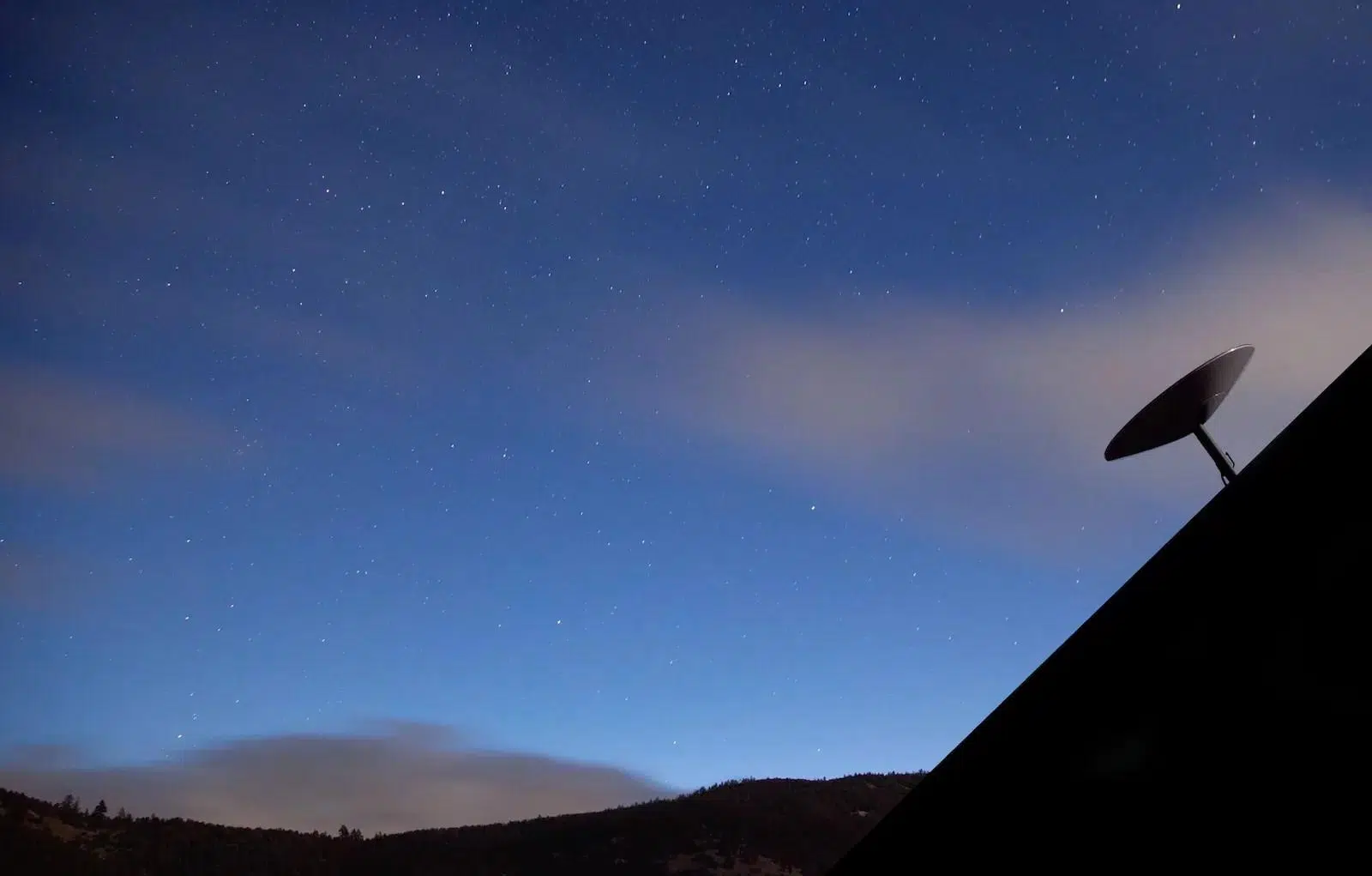
Can you imagine having access to high-speed internet anywhere on the planet, wherever you are, even if there's no fiber optic coverage or mobile data doesn't reach you? Well, this is now a reality thanks to Starlink , the revolutionary satellite internet system backed by Elon Musk and SpaceX. If you've ever heard about those famous "satellite constellations" and wondered if Starlink could solve your connection problems, here's everything you need to know in a clear, up-to-date, and much more accessible way.
In this comprehensive guide, you'll discover what Starlink is , how its technology works, its actual coverage, its cost, its advantages and limitations, and whether it can truly be a viable alternative to traditional internet, whether you live in the countryside, by the sea, or in urban areas with access problems. We'll also show you how to sign up and what installation entails for your home or business, all in clear and easy-to-understand language.
What exactly is Starlink?
Starlink is a SpaceX initiative whose ambitious goal is to offer fast, stable, and low-latency satellite internet access almost anywhere in the world . Its key difference from other satellite systems lies in the deployment of thousands of small satellites orbiting at a much lower altitude than traditional satellites, forming a network (or constellation) that covers the entire planet.
While conventional geostationary satellites are located about 36.000 km from Earth and generate very high latency (that annoying delay that makes online gaming or decent video calls impossible), Starlink satellites orbit at an altitude of only 550 km . This allows latency to be reduced to about 20-40 ms , figures close to the best fiber optic connections.
The idea is simple yet powerful: to put more than 12.000 satellites into orbit (more than 7.000 have already been launched and are operational), which communicate with each other and with Earth using optical, laser, and radio frequency technologies. Thus, where good connectivity was previously impossible (rural areas, ships, islands, mountains, etc.), high-speed internet access is now possible.
Elon Musk and SpaceX envision Starlink not only as a business that can connect the more than 3.000 billion people still without internet, but also as a source of funding for their future space plans, including transportation to Mars.

How does Starlink technology work?
Starlink's technical principle is very different from that of fiber optics or traditional ADSL. The internet signal arrives from space , specifically from a network of satellites orbiting the Earth in Ku and Ka bands. These satellites communicate with each other at high speed using laser optical links , allowing them to send and receive data much more efficiently and with less reliance on ground stations.
What do I need at home? You'll need to install a Starlink user kit , which includes a flat satellite dish (nicknamed "Dishy McFlatface"), a tripod to mount it in the spot with the best view of the sky, a Wi-Fi router , and the necessary cables. The dish automatically tracks the nearest satellite and doesn't require manual adjustments as the satellites move.
This kit connects to a power outlet and your local network. The antenna picks up the satellite signal, transmits it to the router, and you have internet access . It's essential to install the antenna in a location free of obstructions (away from trees, chimneys, nearby roofs, etc.) to avoid signal loss. While it's not suitable for connecting from your mobile phone while out and about, you can still connect at home, in your business, or even in adapted vehicles or boats.
The Starlink network is designed to withstand adverse weather conditions . You can expect that even if it's raining or windy, you'll rarely lose your connection, unlike with other satellite technologies. And if you do experience a brief interruption, it will only last a few seconds.

Advantages of Starlink over other connections
The main difference compared to other connections lies in its speed and latency . Traditional geostationary satellites, being so far from Earth, cause the signal to take a long time to travel to and from the satellite, resulting in a latency of over 600 ms. This makes certain applications, such as online gaming, video calls, or real-time streaming, almost impossible to use properly.
With Starlink, because the satellites are much closer , latency is drastically reduced and download speeds can range from 50 to 150 Mbps , depending on the area and network congestion. Furthermore, Starlink is designed for rural and coastal areas, as well as locations where neither fiber optic nor 4G/5G networks are available , making it the best option for those who live or work in the countryside, on islands, on ships, in mountainous regions, or even in urban areas with poor infrastructure.
Another major advantage is its global coverage . Wherever you point the antenna and have a clear view of the sky, you'll have internet access. This allows boats, campsites, rural businesses, and isolated homes to access a connection quality that was unimaginable not so long ago.
How do I check if I can subscribe to Starlink?
Before making a decision, you should check if your location is covered. To do this, go to starlink.com and enter your address in the search bar on the homepage. The system will then show you automatic suggestions so you can select the exact address or the nearest location.
Don't know the address or is it a hard-to-find location, like a country house? You can use the Google Maps Plus Code . Simply open Google Maps on your phone, mark the location on the map, and copy the Plus Code that appears below the location's image. Then, on the Starlink website, add that code along with the country (for example, "JV5X+M23 Morella, Spain"). This will give you the perfect location to check if Starlink service is available there.
Once you have selected the location, the website will show you the total budget : the price of the initial equipment, the monthly fee, and any shipping or installation costs.
Starlink Plans and Pricing
Starlink pricing varies by service type and region, but currently, in Spain and most of Europe, the main plans are as follows:
- Residential plan: Ideal for homes and domestic use. It offers unlimited internet, with a standard monthly cost of €40 and more affordable alternatives from €29 per month. The installation kit costs €349.
- Traveling plan: Designed for travelers and users on the move (motorhomes, trucks, etc.). Portability allows you to connect even when traveling at speeds of over 16 km/h, with prices of €59 monthly or a limited data plan of 50GB to €40 monthly. The base equipment is the same as the residential equipment.
- Boat plan: For sailors, it allows quality internet in maritime zones, with network priority and unlimited data in continental territories. The rates here are much higher, starting from €289 monthly for 50GB and reaching more than €1.158 per month for 1TB of data. The recommended equipment in this case costs about €2.891.
Important: Prices are indicative and may vary depending on promotions, currency exchange rates, or local conditions. They are updated with the latest available information. It is advisable to check the website before booking.
Where does Starlink have coverage today?
Starlink is currently rolling out coverage at high speed worldwide. It already operates commercially in the United States, Canada, much of Western Europe, Latin America, Australia, Japan, and other countries , with plans for further expansion. Coverage is constantly being updated, so it's worth checking the official Starlink map to see if your location is available. It is estimated that in the coming years it will have full global coverage , except in some territories where regulations or legal issues prevent it.
Please note that in certain countries, whether due to local legislation (such as South Africa) or internal policy, Starlink may not be legally permitted or its availability may be temporarily limited.
Starlink's real-world speed and performance
During testing and after commercial deployment, Starlink has achieved download speeds between 50 and 150 Mbps , and latencies between 20 and 40 ms under normal conditions. These figures may improve as more satellites are launched and the network is optimized, especially in less congested areas.
However, it's important to understand that actual speed depends on location , weather, the number of connected users, and even certain geographical factors. While there may be occasional brief service interruptions or speed drops, these are usually infrequent and short-lived.
The performance is especially noteworthy in rural or remote areas , where the alternative is the old geostationary satellite or low-quality 3G/4G mobile connections.
How to sign up for and install Starlink?
The sign-up process is very simple. Just go to starlink.com , find your address (or Plus code if you don't have one), select the plan you're interested in, and place your order. The system will ask for your information, and then you pay for the starter kit and the first month's fee. Delivery of the equipment usually takes anywhere from a few days to a couple of weeks, depending on stock availability and your location.
Installing Starlink is much easier than it seems. The kit comes with clear instructions and all the necessary components . Simply mount the antenna in a high, unobstructed location, connect it to a power source and your router, and use the official mobile app to adjust or monitor the signal. No advanced technical knowledge or complex installation is required.
For businesses, ships, or professional solutions, there are options for advanced equipment and expert advice available through authorized distributors.
Do you really need Starlink?
Starlink is a solution designed for those who don't have any other quality alternative. If you already have fiber optic or a good 5G network at a reasonable price, you probably don't need to upgrade. But if you're in areas without terrestrial access, travel a lot, work from unconventional locations, or simply want to ensure internet access in any situation, then it can be your lifeline.
Keep in mind that, despite advancements, satellite connections still have some limitations compared to fiber: slightly higher latency, somewhat higher prices, and occasional brief outages. Prices, especially in Latin America and regions where the service is newer, can be higher than the average for traditional internet.
In areas where ADSL, fiber optic, or cable don't reach or perform poorly, Starlink is the fastest and easiest alternative to install, much more efficient and convenient than any traditional satellite solution.
Challenges, controversies, and the future of Starlink
- Space traffic and collision riskLaunching thousands of satellites increases space debris and makes orbit management difficult. SpaceX has implemented automated systems to move its satellites and avoid collisions, but it remains a global challenge.
- Light pollutionStarlink satellites can reflect sunlight and affect astronomical observations. SpaceX is working to reduce the brightness of its satellites (projects like VisorSat) and to collaborate with the scientific community.
- Legal and privacy aspectsProviding internet without relying on national regulators poses a challenge to sovereignty, security, and privacy. Starlink must comply with the laws of each country and guarantee the protection of user data.
Technological advancements continue , and SpaceX is already planning to integrate Starlink into future space projects, such as missions to the Moon and Mars, or connectivity in electric and autonomous vehicles.

Tracking satellites in real time and upcoming passes
Starlink has made headlines not only for internet access, but also because its deployment has transformed the night sky into an occasional spectacle. Thanks to websites and apps like Find Starlink , you can check the approximate times when the well-known "satellite trains" can be seen crossing your location, view interactive maps of their trajectories in real time, and learn about upcoming launches. Simply enter your city or coordinates, and you'll get all the information you need to not miss the show.
Starlink FAQ
- Is Starlink available in my country? Currently, there is coverage in Europe, North America, Japan, Australia, and much of Latin America. Check out the coverage on the official website.
- What speed and latency does it offer? Between 50 and 150 Mbps download, with latencies of 20 to 40 ms in most locations.
- How much does it cost? From €29/month for domestic plans in Spain and Europe, although this may vary by country and plan. The installation kit costs approximately €349.
- In what situations is it worth it? In places without fiber optic coverage, rural areas, boats, campsites, mobile businesses, or isolated homes.
- How is the installation? It's simple, plug and play. The user can set up the antenna, connect the cables, and start using the internet in minutes.
Starlink technology continues to advance and promises to transform the way we access the internet, bringing the future of connectivity from space to our everyday lives.
Table of Contents
- 1 What exactly is Starlink?
- 2 How does Starlink technology work?
- 3 Advantages of Starlink over other connections
- 4 How do I check if I can subscribe to Starlink?
- 5 Starlink Plans and Pricing
- 6 Where does Starlink have coverage today?
- 7 Starlink's real-world speed and performance
- 8 How to sign up for and install Starlink?
- 9 Do you really need Starlink?
- 10 Challenges, controversies, and the future of Starlink
- 11 Tracking satellites in real time and upcoming passes
- 12 Starlink FAQ