- The problem seeks to determine if the flow of incompressible fluids can generate singularities where the velocity or pressure is infinite.
- OpenAI has presented a possible solution using AI agents, although there are strong controversies about the plagiarism of works by Spanish mathematicians.
- The complete solution involves proving the global regularity and the existence of smooth solutions, a challenge that links pure mathematics with the physics of turbulence.
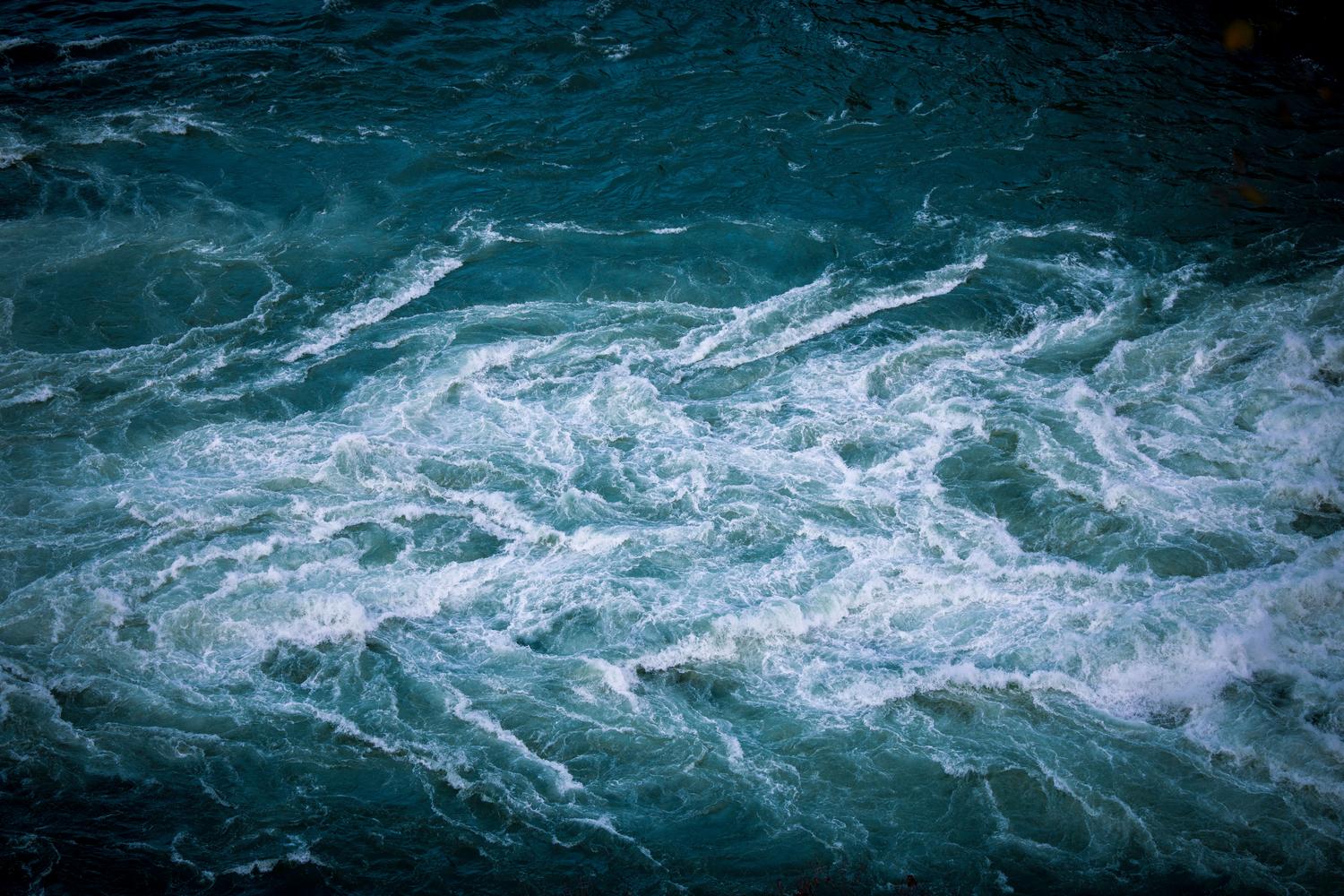
Imagine trying to predict exactly how each drop of water will move in a river or the capricious dance of cigarette smoke in the air. It seems like a simple task, but in reality, we are facing one of the most formidable mathematical challenges in history, known as the Navier-Stokes problem. This challenge is not just an academic curiosity; it is one of the seven Millennium Prize Problems, for which the Clay Mathematics Institute has offered a million dollars to anyone who can solve these equations—a fundamental field for those who study formal sciences.
The story takes us back to the 19th century, when the Frenchman Claude-Louis Marie Navier and the Irishman George Gabriel Stokes laid the foundations of this model. Their aim was to describe fluid flow, focusing especially on incompressible fluids —those whose density doesn't change even when they move, like blood in our veins or milk in a glass. The crux of the matter is whether these equations always hold true or if they can "break down," creating singularities —points where velocity or pressure becomes infinite and the model ceases to be useful for predicting the future.

The enigma of regularity and singularities
To win the prize, approximate calculations are not enough; a rigorous mathematical proof of the existence and regularity of the solutions is required. In simpler terms, it must be proven whether the fluid behaves gradually and continuously or whether, on the contrary, it can abruptly change direction to infinity. The problem is divided into four technical statements (A, B, C, and D). The first four focus on overall regularity without external forces, while the latter four analyze what happens when external forces are present and whether these can cause the system to mathematically collapse.
This is where turbulence comes into play , that apparent chaos that drives engineers and physicists crazy. While a mathematician seeks a unique and smooth solution, an engineer prefers computational models that allow them to design an aircraft in just a few hours. This gap in objectives demonstrates that the problem is an iceberg of complexity where physical intermittency and numerical precision intertwine.

The rise of Artificial Intelligence and the OpenAI controversy

The scientific world has recently been stunned by an announcement from OpenAI. The company claims to have solved claims C and D of the problem using an AI agent strategy : some 10.000 agents working tirelessly for 88 hours. According to their 166-page paper, they have demonstrated that forced fluids (such as water under gravity) can develop singularities. If this is confirmed after peer review, they would meet the criteria to win the million-dollar prize, although they still leave the case of unforced fluids open.
However, it's not all rosy, as a war of egos and accusations of plagiarism have erupted . OpenAI is alleged to have taken advantage of the previous work of Spanish mathematicians Diego Córdoba and Luis Martínez Zoroa. These two experts from ICMAT have been working on the problem for years, and their ideas were fundamental to Tristan Buckmaster and Levent Alpöge's key proofs. The scientific community is now debating whether OpenAI has been honest about the intellectual authorship of this historic breakthrough.

Technical fundamentals: From material derivatives to simulation
To understand the complexity of the matter, we must delve into the complexities of the formulas. The Eulerian description is used , where the substantial or material derivative is employed to track the behavior of a fluid particle. This combines the local variation at a fixed point with the convective derivative , which is the change caused by the fluid's motion itself. It is a dense body of mathematics that includes Reynolds' transport theorem and Gauss's theorem for converting surface integrals into volume integrals.
In practice, these equations are nonlinear and tightly coupled , making them impossible to solve with pencil and paper for complex cases. That's why we resort to numerical methods such as elements or finite differences. Interestingly, this mathematical chaos has a very common application: video games . Thanks to work like that of Jos Stam, simplified versions of Navier-Stokes equations are used in GPUs to create hyper-realistic fire and smoke in real time, although always battling numerical dissipation.
This journey from 19th-century blackboards to OpenAI servers shows us that, while AI is a powerful tool, the human intuition of mathematicians like Córdoba and Martínez-Zoroa remains the true engine of progress. Solving this problem not only brings a financial reward, but also provides a key to understanding the turbulence and limitations of our physical models, closing a cycle that began with Navier and now expands into quantum computing and AI.