- Google Project Astra is a multimodal AI assistant with speech, image, and text recognition.
- You can recall information during the session and respond in real time with high accuracy.
- It is designed to work on smartphones and smart glasses, integrating with the Gemini app.
- Its applications include assistance at home, work, and travel, although it still faces technical challenges.

Google Project Astra is the company's latest major bet in the field of artificial intelligence and virtual assistants. Presented at Google I/O 2024, this project aims to revolutionize how we interact with AI, providing real-time responses through multiple formats, such as text, voice, video, and images. More than just an assistant, Google envisions it as a universal AI agent capable of understanding the world through our own visual and auditory perception.
The idea behind Project Astra is to offer a completely natural and intuitive experience, allowing users to obtain contextualized information about their surroundings simply by looking through their smartphone camera or smart glasses. The goal is for AI to act almost like a virtual companion capable of interpreting any situation and providing immediate responses.
What is Google Project Astra?
Project Astra is a multimodal AI assistant developed by Google DeepMind that combines advanced image, audio, and text recognition capabilities. Its technology allows for real-time information processing, resulting in seamless user interaction. It not only answers questions but also remembers information during the session and adjusts its responses based on context. For more details about AI, you can read more about what artificial intelligence is.
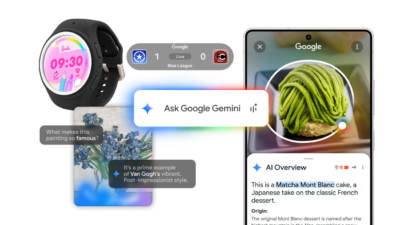
One of the key innovations of this assistant is its ability to see and remember . Thanks to integration with the smartphone camera or smart glasses, Project Astra can analyze what the user is seeing and provide precise details about any object or scene.
Main features of Project Astra
Google has highlighted several features that make this AI assistant unique:
- Real-time interaction: Ability to process information in a matter of milliseconds to provide instant responses.
- Temporary memory: You can recall items during a session and retrieve previously mentioned information.
- Compatibility with different devices: It will work on smartphones with the Gemini app and on future smart glasses.
- Multimodal understanding: Mix text, images, and audio to improve the accuracy of your answers.
How Project Astra Works
Project Astra's mechanics are based on a combination of advanced artificial intelligence technologies. Through its Gemini AI model, Google has enabled this assistant to interpret real-world information and respond like a human would.
To interact with Astra, the user can simply speak to it or show it something with their phone's camera or smart glasses. Astra will not only identify objects but can also provide detailed explanations about them. From recognizing a neighborhood in a city to explaining the elements of a programming code, the possibilities are enormous. If you're interested in learning more about programming assistance, you can read the article about GitHub Copilot and its role in programming.

Project Astra on smart phones and glasses
Google's AI assistant is designed to integrate with various devices. On mobile phones, it will use the Gemini app to provide assistance, while on smart glasses it will enable hands-free interaction.
Google has mentioned that its initial tests on smart glasses have been successful. Through them, Astra can provide real-time information about what the user is viewing, detect objects, and remember where certain items have been placed.

Possible everyday uses for Project Astra
The applications of this assistant go far beyond conventional information searches. Some of the most promising features include:
- Home Assistant: You can help with household chores, such as suggesting recipes depending on the ingredients available.
- Support at work: You can analyze documents or interpret programming codes in real time.
- Travel Guide: Identify monuments, streets, or iconic places based on what the camera sees.
- Smart Reminder: Remember the location of objects such as Keys or glasses, facilitating personal organization.

Limitations and challenges
Despite its enormous potential, Project Astra still faces some challenges. One of the biggest is latency , since processing information in real time requires significant computing power. Google has been working to improve this aspect, but it is still in the optimization phase.
Another challenge is privacy and security . Since this assistant requires access to the user's camera and microphone, it is crucial to ensure that the collected data is handled with strict protection policies.
Furthermore, limited access in its early stages could delay its widespread adoption. Currently, only a few people have been able to test it on specific devices, and its global launch date is still undefined. If you'd like to delve deeper into the topic of generative artificial intelligence, I invite you to read about what generative AI is.
Google Project Astra represents a step forward in the integration of artificial intelligence into our daily lives. Its ability to interpret the world through the camera and respond quickly makes it a revolutionary tool. While there are challenges to overcome, advances in this field bring us closer to a new era in which virtual assistants will become increasingly intelligent and human-like in their interactions.
