- PHP is a server-side language for creating dynamic websites, capable of generating content and processing requests before sending responses to the browser.
- It integrates easily with HTML and databases like MySQL, allowing you to manage data, users, and content in web applications.
- It evolved from the 90s; recent versions (PHP 7 and 8) improved performance, security, and added modern features such as JIT, types, and enums.
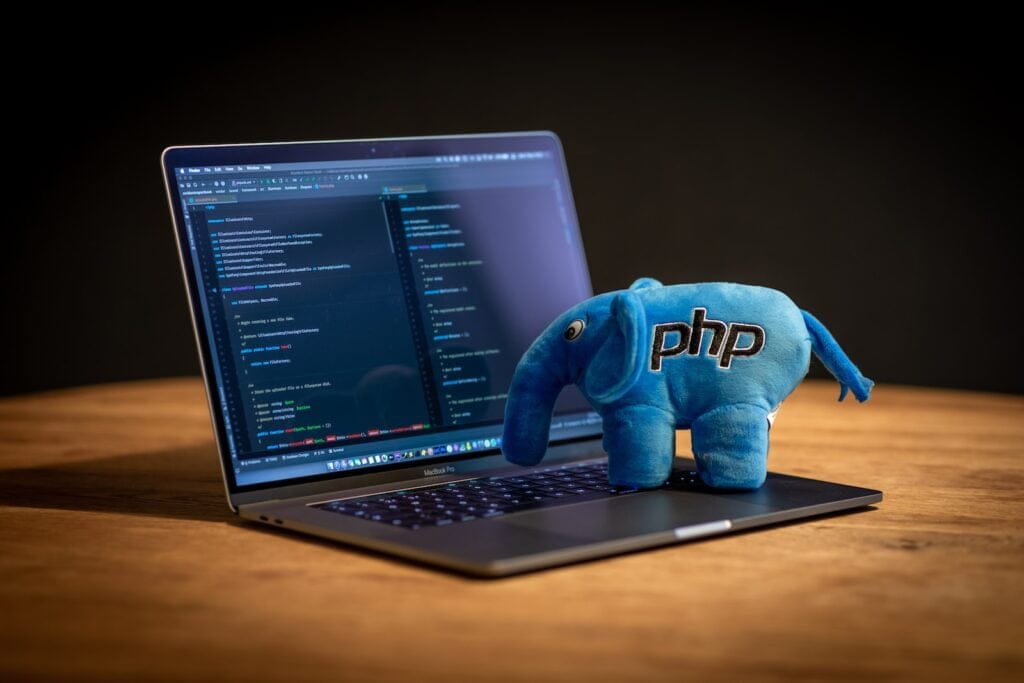
Welcome to our blog about the fascinating world of technology! Today we delve into the universe of PHP, one of the most used and versatile languages for creating dynamic websites. If you want to know what PHP is, how it works and what its main advantages are, you've come to the right place!
In this article, we'll give you a concise introduction to PHP, a powerful programming language . We'll cover its history, syntax, and provide practical examples to help you better understand its usefulness.
We'll also take a look at databases that work with PHP, such as MySQL, and how PHP can act as a REST service. We'll also address challenges you might face when using PHP.
If you're looking to get into web development or expand your knowledge, this article will be your essential guide to understanding what PHP is. Get ready to discover everything you need to know about PHP! Let's get started!
Overview
The PHP programming language is widely used in web development, giving developers a powerful tool for creating dynamic and functional sites. Known as “PHP: Hypertext Preprocessor,” this language runs server-side, meaning that most of the heavy lifting is done on the server before sending the results to the user’s browser.
PHP is a highly versatile and flexible language, allowing interaction with databases and tools like phpMyAdmin , the generation of dynamic content, file manipulation, and much more. Furthermore, its simple syntax makes it easy to learn and use. With so many advantages and practical applications, it's no surprise that PHP is one of the most popular languages among web developers.
Brief History of PHP
The PHP programming language, a fundamental pillar in web development, was born from the creativity and necessity of a Danish engineer named Rasmus Lerdorf. In the early 1990s, the internet was a very different environment than it is today. Lerdorf, in an attempt to keep track of visits to his online resume , created a set of scripts that he initially called "Personal Home Page Tools," or simply PHP.
This modest beginning was the prelude to what would become one of the most widely used programming languages on the web. Lerdorf’s scripts caught the attention of other developers, who saw the potential in this new tool and joined Lerdorf to form the PHP/FI Group. Together, they managed to shape PHP into a more structured and versatile language, laying the groundwork for its wide-scale adoption.
In 1997, PHP version 3 was released to the world, marking a milestone in the language's history. This version introduced significant improvements in database support and enhanced PHP's web capabilities. Not only could it interact with a wider range of databases, but it also offered a broader range of tools for developing dynamic and custom websites.
Since then, PHP has continued to evolve, with each new release bringing with it groundbreaking features and improvements. We've seen the addition of namespaces in PHP 5.3, improvements to error handling with exceptions in PHP 7, and most recently, improved performance with JIT (Just In Time) compilation in PHP 8.
The history of PHP is undoubtedly a testament to the power of innovation and adaptability in the field of technology. From its origins as a simple web tracker to its current status as one of the most popular programming languages for web development, PHP has proven time and again its ability to adapt and grow in response to the changing needs of the technology world. This spirit of adaptation and continuous improvement is what has kept PHP relevant and in use over the years, and it is what will continue to drive its development in the future.
PHP versions
Below we list the most important versions of PHP and the features they supported:
- PHP 3 (June 1998): Zeev Suraski and Andi Gutmans rewrote the parser, creating the basis for PHP 3 and renaming the language PHP: Hypertext Preprocessor.
- PHP 4 (May 2000): Released under the Zend 1.0 engine. This version focused on improving security and fixing critical bugs.
- PHP 5 (July 2004): It used the Zend Engine 2.0. It introduced better support for object-oriented programming, performance improvements, improved support for MySQL and XML, native support for SQLite, built-in support for SOAP, data iterators, exception handling, and improvements to the Oracle implementation.
- PHP 5.4 (March 2012): Introduced support for Traits and shorthand array syntax, and brought several improvements to existing features and performance.
- PHP 5.5 (June 2013): Introduced new generators for loops and support for the function
empty()with expressions. With this version support for Windows XP and Windows was lost. Server & Hosting 2003. - PHP 5.6 (August 2014): Introduced constants with scalar expressions, argument lists of length variable and the exponential operator.
- PHP 7.0 (November 2015): Introduced performance improvements and the declaration of return types in functions.
- PHP 7.1 (December 2016): Introduced the void return type, visibility modifiers for class constants, nullable types, pseudo iterable types, and the ability to catch multiple types of exceptions.
- PHP 7.2 (November 2017): Introduced the new «object» return type and integrated Libsodium as a core extension.
- PHP 7.3 (December 2018): Introduced flexible syntax for Nowdoc and Heredoc, support for references and array deconstruction with list(), support for PCRE2 and the hrtime() function.
- PHP 7.4 (November 2019): This version reached end of life in November 2022.
- PHP 8.0 (November 2020)It introduced new features and increased performance. More details at PHP 8: improvements and new features.
- PHP 8.1 (November 2021): Introduced readonly, Enums, Fiber properties and new syntax.
- PHP 8.2 (December 2022): Deprecated the creation of dynamic properties and added the AllowDynamicProperties attribute.
Syntax
PHP syntax is remarkably easy to understand, which makes it popular among developers. Special tags are used to delimit the beginning and end of a PHP code block.
Within these tags, you can write PHP instructions or statements using a variety of keywords and operators. Furthermore, PHP allows you to easily merge HTML and PHP code, thanks to its well-designed syntax. This facilitates the creation of interactive and dynamic web content, seamlessly integrated with databases or other external systems.
Below is a simple example of what PHP code looks like embedded in HTML :
<!DOCTYPE html>
<html>
<body>
&lt;h1&gt;My first page with PHP&lt;/h1&gt;
&lt;?php
echo &quot;Hello, World!&quot;
?&gt;
</body>
&lt;/html&gt;
In this example, the PHP code block begins with <?php and ends ?>. The instruction echo is used to send the string "Hello, World!" to the web browser, which is displayed as part of the page content. PHP thus allows for generating dynamic web content directly from the server.
PHP Features
PHP is a robust and versatile programming language that offers several distinctive features:
- HTML integration: PHP can be embedded directly into HTML code. This feature allows developers to design dynamic and functional web pages effortlessly.
- Interpreted, not compiledUnlike some other languages, PHP is interpreted on the server in real time rather than requiring a pre-compilation stage. This simplifies development and makes debugging code easier.
- Large and active support communityPHP is supported by a global community of developers who are constantly working on updates and improvements to the language. This active community ensures that the language continues to evolve and adapt to the changing needs of web development.
These key features – its synergy with HTML, its interpreted nature, and the vibrant supporting community – make PHP a preferred programming language for many developers around the world.
Basic PHP code examples
When we are learning a new programming language, it is always useful to have basic code examples to better understand how it works. In the case of PHP, there are numerous examples that allow us to familiarize ourselves with the syntax and fundamental structures of the language.
- Print text on screen: This is one of the most basic uses of PHP. You can print text on the screen using the statement
echo.
&lt;?php
echo &quot;Hello, World!&quot;
?&gt;
This code will print the phrase "Hello, World!" on the screen. The instruction echo It is used in PHP to send data to the output, which is usually the web browser.
- Variables and basic operations: PHP allows you to declare variables and perform operations mathematics.
&lt;?php
$num1 = 10;
$num2 = 20;
$sum = $num1 + $num2;
echo "The sum of num1 and num2 is: $sum";
?&gt;
In this code, we declare two variables, num1 y num2, and then we add them together. The result is stored in the variable suma, which is then printed on the screen.
- Conditional if: PHP supports conditional code execution using the statement
if.
&lt;?php
$age = 18;
if ($edad &gt;= 18) {
echo &quot;You are of legal age.&quot;;
} Else {
echo &quot;You are a minor.&quot;;
}
?&gt;
This code checks if the variable edad is greater than or equal to 18. If true, prints “You are of legal age.”; otherwise, prints “You are a minor.”. This is an example of how PHP can make decisions based on conditions.
These simple PHP examples give us a glimpse into several key capabilities of this powerful programming language. They show us how PHP can generate output for the user, perform operations on variables, and make decisions based on conditions, all of which are essential for any type of programming.
These examples are just the tip of the iceberg in terms of what PHP can do. However, they provide a solid foundation upon which beginners can begin to build their PHP knowledge and skills. As they become more familiar with these fundamental concepts, they can begin to explore more advanced features of PHP and eventually develop full-fledged web applications.
PHP and MySQL: A Powerful Duo for Web Development
The combination of PHP and MySQL is a dynamic duo in the world of web development. Together, they allow developers to create interactive and dynamic websites with robust and efficient databases and tools like MySQL Workbench.
PHP, as we know, is a popular programming language for web development. On the other hand, MySQL is a relational database management system, widely used due to its efficiency, flexibility, and ease of use. When put together, PHP and MySQL allow developers to create and manipulate databases to store, retrieve, and process data efficiently.
For example, on an e-commerce website , PHP could be used to generate dynamic pages that display available products, while MySQL would be used to store and manage information about those products, customer order details, and more.
This combination is powerful for creating web applications that require interactivity and data management. If you are planning to dive into web development, knowing the PHP-MySQL combination will open up a range of possibilities for creating high-quality and functional websites and applications.
Advantages and disadvantages of PHP
Advantages of PHP:
- Easy to learn: PHP has a low learning curve compared to other programming languages, making it ideal for beginners.
- HTML Integration: PHP can be easily inserted into HTML code. This allows developers to create dynamic web pages efficiently.
- Versatile and multiplatform: PHP is compatible with most operating systems and web servers, offering great flexibility.
- Good performance: PHP is an interpreted language, so it can run directly on the server, which generally results in good performance and fast response times, and it can be integrated with caching systems such as Redis.
- Great community: PHP has a large and active developer community. This means it's easy to find support, tutorials, and code libraries to speed up your work.
Disadvantages of PHP:
- Safety: Since PHP is an open-source language, it can be vulnerable to security issues if not handled properly. Developers should be aware of these vulnerabilities and take precautions to ensure the security of their applications.
- It may be too flexible: PHP allows for many ways to do things, which can lead to inconsistencies in code and make it difficult to maintain.
- Not ideal for large scale applications: While PHP is perfectly capable of handling small to medium sized projects, it may not be the best choice for large scale applications due to its lack of rigidity in code structure.
- Performance in intensive tasks: While PHP performs well for most web development tasks, it may not be the most efficient choice for very resource-intensive tasks or complex calculations.
I hope you find this list useful. Remember, every programming language has its strengths and weaknesses, and the choice of language should be based on the specific needs of your project.
XAMPP, LAMP, WAMP, MAMP, UwAmp
When we enter the world of web development, we come across a series of tools and applications that make our work much easier. Among these tools are XAMPP, LAMP, WAMP, MAMP and UwAmp, which make up the essential set of software that allows us to set up a web server on our own computer. But what exactly are these tools and what are they used for? In the following lines, I will explain in a simple and clear way how these software packages can help you carry out your web development projects.
- XAMP: XAMPP is a software package that includes everything you need to set up a local web server on your computer. It is an all-in-one solution that includes Apache (a web server), MySQL (a database management system), PHP (a programming language), and Perl (another programming language). The advantage of XAMPP is that it is cross-platform, meaning you can use it on Windows, Linux, and MacOS.
- LAMP: LAMP is an acronym that refers to a set of open-source software commonly used to run dynamic websites or web servers. LAMP includes Linux (an operating system), Apache (a web server), MySQL (a database management system), and PHP (a programming language), and is useful for Setting up and managing an Ubuntu server.
- WAMP: WAMP is similar to XAMPP and LAMP, but it is designed specifically for Windows. The acronym refers to Windows (an operating system), Apache (a web server), MySQL (a database management system), and PHP (a programming language).
- MAMP: MAMP is a software package similar to XAMPP, but designed for MacOS. It includes MacOS (an operating system), Apache (a web server), MySQL (a database management system), and PHP (a programming language).
- UwAmp: UwAmp is a WAMP (Windows, Apache, MySQL, PHP) server solution that has the particularity of being lightweight and portable. This means that you can carry it on a USB stick and use it on any Windows computer without the need for installation.
These tools are essential for any web developer, as they allow you to create and test web applications in a local environment before putting them online.
Top sites developed with PHP
- Facebook: The world's largest social network, allowing users to connect with friends, share photos, post updates, and more. Facebook uses PHP to handle its massive amount of data and provide an interactive experience to millions of users worldwide.
- Wikipedia: The freely accessible online encyclopedia where users can contribute and edit content. Wikipedia uses PHP as its primary language, allowing contributors to create and update articles easily and efficiently.
- Wordpress: An online publishing platform that allows users to create blogs and websites. Developed entirely in PHP, WordPress offers a wide range of features and customizations, making it a popular choice for both beginner users and experienced developers.
- Etsy: An online marketplace for buying and selling handmade, vintage, and unique goods. PHP plays a pivotal role in the development of Etsy, handling e-commerce logic, payment processing, and inventory management for millions of sellers and buyers worldwide.
- Slack: An enterprise collaboration platform that enables teams to communicate and work together efficiently. PHP is used in Slack to handle real-time messaging, application integration, and content delivery to users.
- Badoo: A social network focused on meeting new people and making friends. Developed in PHP, Badoo offers features such as profile search, instant messaging, and geolocation, allowing users to connect and socialize online.
- Magento: A popular eCommerce platform that allows businesses to create custom online stores. Using PHP, Magento provides a wide range of features for managing products, payments, shipping, and unique shopping experiences.
- MailChimp: An email marketing service that helps businesses send personalized email campaigns to their subscribers. PHP is used in MailChimp's backend to handle email delivery, automations, and data analysis.
These are just a few notable examples of websites developed with PHP. The PHP language offers flexibility, performance, and a large development community, making it a popular choice for a wide variety of online applications.
FAQ
- What is PHP and what is it used for? PHP is a programming language used primarily in web development. It is used to create dynamic and functional websites, interact with databases, manipulate files, and generate dynamic content.
- What is the history of PHP and who created it? PHP was created by Danish engineer Rasmus Lerdorf in the early 1990s. He initially developed a set of scripts to track visits to his online resume, which evolved into PHP. Lerdorf later joined other developers to form the PHP/FI Group and shape the language.
- What are the major versions of PHP and what features did they introduce? Some of the major versions of PHP include PHP 3, PHP 4, PHP 5, PHP 7, and PHP 8. Each of these versions introduced performance improvements, database support, object-oriented programming, and advanced language features.
- What are the advantages of PHP as a programming language? PHP has several advantages, such as its ease of learning, integration with HTML, cross-platform versatility, and efficient performance in web development. In addition, it has a large support community and a wealth of resources available.
- What are the disadvantages of PHP? Some of the disadvantages of PHP include security concerns if not handled properly, its flexibility which can lead to inconsistency in code, and its limitation for large-scale applications due to lack of rigidity in code structure.
- What is the basic syntax of PHP? PHP syntax is simple and can be easily embedded in HTML code. PHP code blocks are delimited with the tags « » at the end. You can use instructions like echo to print content to the screen and variables to store and manipulate data. You can also delve deeper into the control structures in PHP to understand the syntax and execution flow.
- How to combine PHP with MySQL in web development? PHP and MySQL form a powerful combination in web development. PHP is used to interact with the MySQL database, allowing efficient storage, retrieval, and processing of data in web applications.
- What are XAMPP, LAMP, WAMP, MAMP and UwAmp? XAMPP, LAMP, WAMP, MAMP, and UwAmp are software packages that make it easy to set up a local web server environment on your computer. Each of them includes essential components such as a web server, a database management system, and a programming language for web development.
- What are some examples of popular websites developed with PHP? Some examples of popular websites developed with PHP include Facebook, Wikipedia, WordPress, Etsy, Slack, Badoo, Magento, and MailChimp. These websites use PHP to handle the site logic, interact with databases, and provide an interactive experience to users.
- Is PHP suitable for web programming beginners? Yes, PHP is a suitable language for beginners in web programming due to its ease of learning and extensive documentation and resources available. Its integration with HTML makes it easy to create dynamic websites, and its active support community offers support to beginners on their learning journey.
I hope you find these FAQs and answers helpful in better understanding the PHP programming language and its application in web development.
Conclusion
In short, PHP is a programming language widely used in web development. What is PHP? It is a versatile language that allows you to create dynamic websites, interact with databases, and generate custom content.
What is PHP in history? It is the result of Rasmus Lerdorf’s creativity and has evolved over the years to become one of the most popular languages on the web. Also, what is PHP in the context of development tools? It is a part of packages like XAMPP, LAMP, WAMP, MAMP, and UwAmp that facilitate the creation of local web servers. All in all, PHP is a powerful and versatile programming language that has proven to be a reliable choice for web development.
