- MCP is an open protocol that standardizes how AI models access external tools and data in real time.
- It simplifies integration with APIs and RAGs, reducing complexity, data duplication, and security risks.
- Its Host-Client-Server MCP architecture allows the creation of ecosystems of reusable and plug-and-play tools.
- Although it is still maturing, MCP aims to be a key player in business assistants, Fintech, and the AI agent economy.
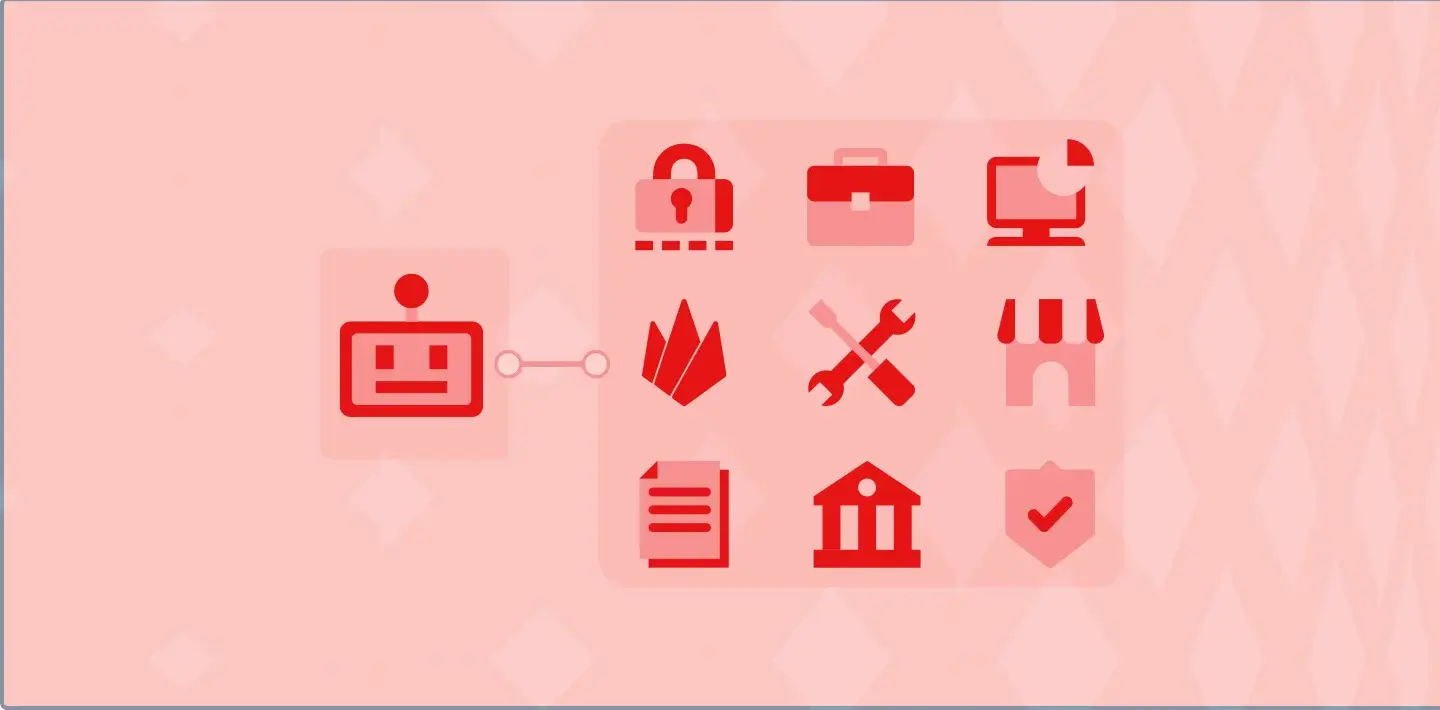
Artificial intelligence is taking a giant leap forward thanks to new ways of connecting models with the real world, and one of the most talked-about developments is the Model Context Protocol (MCP) . If you've heard about AI agents, external tools, RAGs, or MCP servers and it all sounds like "black magic," don't worry: it can be understood with logic and very real-world examples.
In the following lines, you'll see exactly what MCP is, how it works internally, what problems it solves, what components it comprises, and in what cases it makes the most sense to use it . We'll also look at its advantages, current limitations, real-world use cases (including in enterprise and Fintech), and some practical tips to get you started experimenting with MCP servers and clients.
What is the Model Context Protocol (MCP)?
The Model Context Protocol (MCP) is an open, standard protocol that defines how an AI model communicates with external tools, services, and data sources . In other words, it establishes common rules so that a language model (such as an LLM like Claude, ChatGPT, or similar) can access APIs, databases, files, documentation, or enterprise applications without requiring a custom integration for each case.
In practice, MCP is like a "common language" between AI models and external services . Instead of each model speaking its own "dialect" and each tool having its own unique API, MCP acts as a standardized bridge. Models speak MCP, tools are exposed via MCP, and everything fits together seamlessly without having to reinvent the wheel for each project.
One of the classic problems with LLMs is that, however powerful they may be, they operate in isolation within the confines of their training . They don't see your emails, your CRM, your ERP, your order database, or your internal documentation… unless someone builds a specific integration. MCP emerges precisely to address this bottleneck: it opens a secure and structured pathway for the model to query real-time data and execute external actions.
Another key aspect is that MCP is an open standard originally driven by Anthropic (creators of Claude), with the goal of enabling any vendor, company, or developer to implement it. This facilitates the emergence of a shared ecosystem of plug-and-play MCP tools that any compatible model can leverage.
Conceptually, MCP is not an agent framework, but rather the integration layer . It doesn't decide which tool is used or when; it simply provides a consistent way to expose tools and data to the agents or models that make those decisions.
MCP versus RAG and versus traditional APIs
Until now, one of the most popular ways to enrich a model with external information has been the Retrieval-Augmented Generation (RAG) approach . In RAG, documents are converted into embeddings and stored in vector databases ; each time a user asks a question, a semantic search is performed to retrieve the most relevant text snippets, which are then added to the model's context.
With MCP, the story changes because it doesn't require pre-indexing information or generating embeds . Instead, the model accesses information directly from the source : APIs, databases, file systems, SaaS tools, documentation served as an MCP server, etc. The MCP server is responsible for exposing the capabilities and returning fresh data in real time.
This has several interesting consequences: the data is always up-to-date, information duplication is reduced, and the computational load associated with maintaining vector indexes is minimized. Furthermore, from a security standpoint, it is more controllable because you don't need to dump large volumes of sensitive data into an external database ; instead, you serve it on demand.
Compared to traditional APIs , the difference lies in philosophy. A REST API, for example, is designed for classic IT systems , where the client knows precisely which endpoint to call, which parameters to send, and what response structure to expect. With LLMs, that rigidity doesn't fit as well: the model needs to discover what tools are available, understand what they do, and decide when to use them, all guided by the context of the conversation.
Analogies: how to imagine the MCP without going crazy
To better understand the role of MCP, a mental image is helpful. A common comparison is that of an electrical circuit : the AI model would be the motor, the data sources would be the various power plants, and MCP would be the wiring and the electrical panel that decides what energy reaches the motor, through which cable, at what time, and with what intensity.
Similarly, you can think of MCP as a large, universal USB port for AI models . You connect the model to an MCP "hub," and then you plug data sources, automation tools, file systems, CRMs, third-party services, and so on into that hub. The model doesn't need to know the details of each connection; it only needs to know what tools are available and what they can do.
Another useful analogy in business environments is to view it as a switchboard or context router . MCP selects what information, from which source, and when is injected into the model's context. It filters out noise, prioritizes what is relevant, and manages the flow to avoid overloading the LLM's context window , which is always limited.
Key elements of the MCP architecture

Although the concept may sound complex, internally MCP is based on a fairly simple client-server architecture , with three main, well-differentiated roles:
Host MCP
The MCP host is the application where the AI model or agent resides. It can be a chatbot, a programming IDE, an enterprise AI platform, a corporate virtual assistant, or even a web service that offers intelligent features to end users.
This host integrates the language model and is the entry point for user requests. The MCP client is initialized from the host , the MCP servers to be used are configured, and some of the behavior is controlled: which tools are available in each context, which resources are loaded, etc.
MCP Client
The MCP client is a component that typically resides within the host and is responsible for managing communication with the MCP servers . It translates the model's decisions (for example, "call tool X with these parameters") into specific calls to the server, and it also receives the responses and adapts them to the format that the model can use.
Think of the client as the interpreter or translator between the model and the servers . Furthermore, the client is the one who can proactively decide which resources are loaded, manage session state, group multiple tool calls, and handle issues such as timeouts and retries.
MCP Server
The MCP server is the component that exposes specific capabilities to the models : file access, database queries, API calls, business operations, technical documentation, third-party services… Each MCP server is usually focused on a set of functionalities, as if it were a specialized microservice.
Within an MCP server, several types of capabilities are defined :
- Tools: functions that the model can invoke, for example get_weather(city), create_calendar_event() o check_product_stock(id).
- Resources: pieces of information that provide static or semi-static context to the model, such as documentation, policies, business descriptions, or rules of use.
- Prompt: predefined text templates that the server offers to the model to consistently solve recurring tasks, encapsulating very careful prompts that do not depend on each client writing them by hand.
The beauty of this approach is that the model can dynamically discover which tools, resources, and prompts each MCP server offers . There's no need to "wire" a specific API: simply expose it following the standard, and any compatible MCP host/client will be able to use it.
How MCP works step by step
The typical workflow with MCP is usually similar in almost all scenarios. Simply put, when a user makes a request to the model , the following can occur:
- The user submits a query or a command. From a chat, an app, an IDE, etc. That interaction reaches the host where the LLM is located.
- The model analyzes the request and, depending on the context, decides whether its internal knowledge is sufficient or whether it needs query external data or perform an action.
- If you need outside help, the MCP client comes into play: check which servers are registered, what tools they have available and what resources/prompts can be used for support.
- The MCP client Call the appropriate tool on the corresponding MCP server (for example, one tool that queries a database, another that calls the GitHub API, another that searches the documentation, etc.).
- The server executes the operation (query, action, search in documentation, file reading…) and returns the result to the MCP client in a structured format.
- The MCP client injects that information into the context of the modelwhich will use it to generate a more accurate, up-to-date, and actionable response for the user.
This entire process is repeated iteratively if the task is complex, and several tools can even be chained together. From the user's perspective, it simply appears that the AI assistant "knows how to do things" and access live information, when in reality what's happening is that the model is using MCP as an integration layer.
Key benefits of MCP for developers and businesses
The adoption of MCP opens the door to a shift in how AI models are integrated into real-world systems. Among the most notable advantages, we can mention several that affect both the technical and business aspects.
Less integration effort
In the traditional approach, each AI model must be manually connected to each data source . If you have 5 models and 10 systems, this can lead to a tangled web of N × M integrations that is very difficult to maintain. With MCP, each model only needs to communicate via MCP , and each system only needs to provide one MCP server. The problem becomes N + M, which is much more manageable.
This translates into time and effort savings for development teams . Instead of building custom adapters for each model and service combination, they focus on implementing a single MCP server correctly, which the other consumers can then reuse without touching any code.
Access to real-time data without reindexing
With MCP, models query sources in real time . If you change a record in your database, update a document, or modify a policy in your system, the model will see the change on the next call, without needing to regenerate embeddings or reindex.
This approach is particularly well-suited to environments with highly dynamic data : financial systems, logistics, operations, live support, inventories, IoT… where information is constantly changing and a static index quickly becomes obsolete.
Greater data security and governance
Another important advantage is that you don't need to upload all your private information to an external infrastructure for AI to use . MCP servers connect to the systems where the data resides (on-premises, private cloud, SaaS under your control) and only expose what's necessary, when necessary.
This reduces the risk of data leaks and facilitates the implementation of centralized security and access control policies . You can audit which tools have been used, with what permissions, from what context, and against which systems—something invaluable in sectors such as banking, healthcare, insurance, or public administration.
Scalability and interoperability
Because it's based on an open standard, MCP promotes interoperability between models from different vendors . If you decide to change your LLM or combine several tomorrow, you don't have to rebuild all the integrations; you continue using the same MCP servers.
Furthermore, the modular approach allows you to add new services incrementally : simply set up a new MCP server for that tool and register it on the hosts you need. There's no need to rewrite the rest of your architecture or modify existing integrations.
Better experience for users and agents
Because the model can maintain context over time and use tools proactively, it is possible to build much richer assistants: project planners, programming co-pilots, agents that automate complex workflows, or business assistants that cross-reference data from various systems without the user having to be aware of the underlying technical framework.
Typical MCP use cases (including Fintech)
The range of applications for MCP is very broad, but there are several scenarios where it fits especially well because orchestrated access to many data sources and tools is required, or because security is critical.
Business virtual assistants
A very clear example is that of internal assistants for employees . Imagine a corporate chatbot that, thanks to MCP, can:
- Consult customer databases to view history, orders, incidents or billing.
- Access internal documentation (manuals, procedures, FAQs) served as an MCP documentation server.
- Interact with business tools to create tickets, schedule meetings, launch reports, or update records.
All of this is done without having to program a specific connector between the model and each system, because MCP provides the standard abstraction.
Integration with IoT and real-time data
For example, in logistics or industry, an agent could use MCP to read in real time the status of the production chain or the location of shipments and make decisions or recommendations based on that data updated to the second.
Recommendation engines and content personalization
Digital platforms (streaming, e-commerce, online learning, etc.) can leverage MCP to connect the model with each user's history and preferences , without having to copy that information out of the systems that manage it.
An MCP server can expose tools that return, for example, the last thing the user viewed, products visited, interaction with campaigns , and thus the model builds much more refined and contextual recommendations.
Use in Fintech and the financial sector
In Fintech, MCP is a great fit because it combines standardization, security, and the ability to orchestrate many data sources simultaneously . Some typical examples include:
- Financial assistants who consult accounts, products, transactions and regulatory documentation through different MCP servers.
- Risk and compliance analysis connecting the model with internal databases, regulated external sources, and scoring systems.
- Automation of financial workflows (account openings, credit applications, KYC verifications) orchestrating various tools exposed through MCP.
Furthermore, the fact that MCP provides a unified and auditable security model is especially relevant in a sector where traceability and regulatory compliance are mandatory.
How to build an MCP server in practice
Beyond theory, MCP already has implementations and SDKs in various languages , making it relatively easy to create MCP servers and clients. The general idea is always the same: define the tools, resources, and prompts that your server will expose , and register the type of transport you will use.
For example, in .NET/C# environments, a package like ModelContextProtocol can be used to quickly set up an MCP server. The typical structure consists of:
- Set up a host that registers the MCP server, the transport (e.g., stdio locally) and the automatic detection of tools, resources and prompts from the assembly.
- Define tool classes decorated with specific attributes (for example, annotations like McpServerToolType y McpServerTool) to declare which functions the model can invoke.
- Create resources that include critical context (e.g., terms of use, lists of valid values, business rules) that the server makes available to the client.
- Register prompts predefined to encapsulate advanced prompting logic, so that customers can reuse them with a single command.
From there, tools such as Node-based MCP inspectors or integrations with VS Code, Claude, Cursor, or similar editors allow you to connect to that local or remote MCP server, list its tools, and test them from an integrated chat.
Create and use an MCP client
On the other side is the MCP client , which can also be written in different languages. Its main responsibility is to connect to the MCP server, discover its capabilities, and orchestrate calls to tools, resources, and prompts on behalf of the model.
A typical customer usually:
- Configure a transport (e.g., stdio to a local binary or HTTP to a remote server).
- Calling methods to List tools, prompts, and resources available on the server.
- Invoke specific tools with the appropriate arguments and collect the responses, usually as blocks of text or richer structures.
In real-world scenarios, the MCP client is integrated directly into the host where the LLM resides (for example, a VS Code chat or a corporate web app), and it is the model itself that decides when to call each tool based on the context of the conversation.
Specialized MCP servers: the case of documentation
A very interesting case already being seen in production is that of MCP servers generated from technical documentation . Documentation platforms can automatically set up an MCP server in a standard path (for example, /mcp ), which exposes a search or query tool across the entire document.
Thanks to this, any compatible MCP client (Claude, Cursor, certain VS Code plugins, etc.) can connect to that MCP server and allow the model to consult the documentation in real time while responding to the user . The user doesn't even have to say "look it up in the documentation": the LLM can decide for itself that this source of context is relevant and use it during response generation.
For software providers, this means that their users can integrate official documentation directly into their AI tools , with more accurate searches, updated context, and a lower risk of model "hallucinations."
Current limitations and challenges of MCP
Although MCP looks very promising and is growing rapidly, it is not a silver bullet and still has several limitations that should be clear before betting everything on this route.
On the one hand, the level of adoption is still relatively recent . MCP was publicly released as an open standard in late 2024, and although hundreds of MCP servers have been published since then (including official and community implementations), it remains to be seen whether it will eventually become the de facto standard for LLM ↔ tools communication.
Another critical point is that, in many current implementations, MCP servers run locally on the application machine , which simplifies security but can complicate scalability and deployment in large distributed environments. Bringing MCP to multi-tenant environments remains a technical challenge.
Furthermore, there are inherent limitations to the model itself . Although an MCP server can host many tools, the LLM is limited by its context window and how it manages persistent memory. You can't bombard the model with hundreds of tools and resources simultaneously without losing control or generating noise; you have to carefully design what is exposed, when, and with what priorities.
Finally, some AI clients or extensions still do not take full advantage of MCP's capabilities (for example, there are tools that ignore predefined resources or server prompts), which means you always have to think about server-side safeguards so that critical logic does not depend solely on what the client does.
Overall, MCP is already a very promising piece for building truly intelligent software, but it requires ecosystem maturity and good practices to deploy it in production with guarantees.
Everything suggests that, as language models become the engine of a true agent economy and more companies standardize their integrations using MCP, we will see the emergence of environments where agents can discover, coordinate, and reuse tools in a distributed manner . For anyone designing future-proof AI solutions today, it's worth thoroughly understanding this protocol and starting to experiment with MCP servers and clients, because it's very likely to become the silent foundation of many of the intelligent applications we use daily.
