- Virtual reality creates immersive experiences that simulate presence in digital environments.
- The origins of virtual reality date back to the 1960s with advancements in technology over the years.
- Applications of virtual reality include entertainment, education, medicine, and virtual tourism.
- Challenges such as cost, side effects, and privacy are crucial to its development and acceptance.

What is virtual reality?
Virtual reality is a multisensory experience that goes far beyond simply viewing images on a screen. Using sophisticated motion tracking systems, controllers, and real-time rendering technologies, users can explore and manipulate these virtual environments as if they were real. VR creates the illusion of being physically present in a different place, transporting users to scenarios ranging from fantasy worlds to detailed replicas of real-world locations. To learn more about this topic, you can read about what we can do with virtual reality.
This revolutionary technology is transforming the way we interact with entertainment, education, healthcare and many other areas. By offering immersive and captivating experiences, virtual reality is opening new doors to creativity, exploration and learning, allowing people to immerse themselves in virtual worlds that challenge the limits of imagination.

Origins of Virtual Reality
Beginnings and historical evolution
The origins of virtual reality date back to the 1960s, when Ivan Sutherland, a computer pioneer, developed the first virtual reality system known as “The Sword of Damocles.” This rudimentary device consisted of a heavy headset connected to a computer that displayed simple 3D images.
Despite its primitive nature, “The Sword of Damocles” laid the groundwork for the continued development of virtual reality. Over the following decades, significant advances were made in areas such as computer graphics generation, motion tracking systems, and human-machine interaction.

Key technological advances
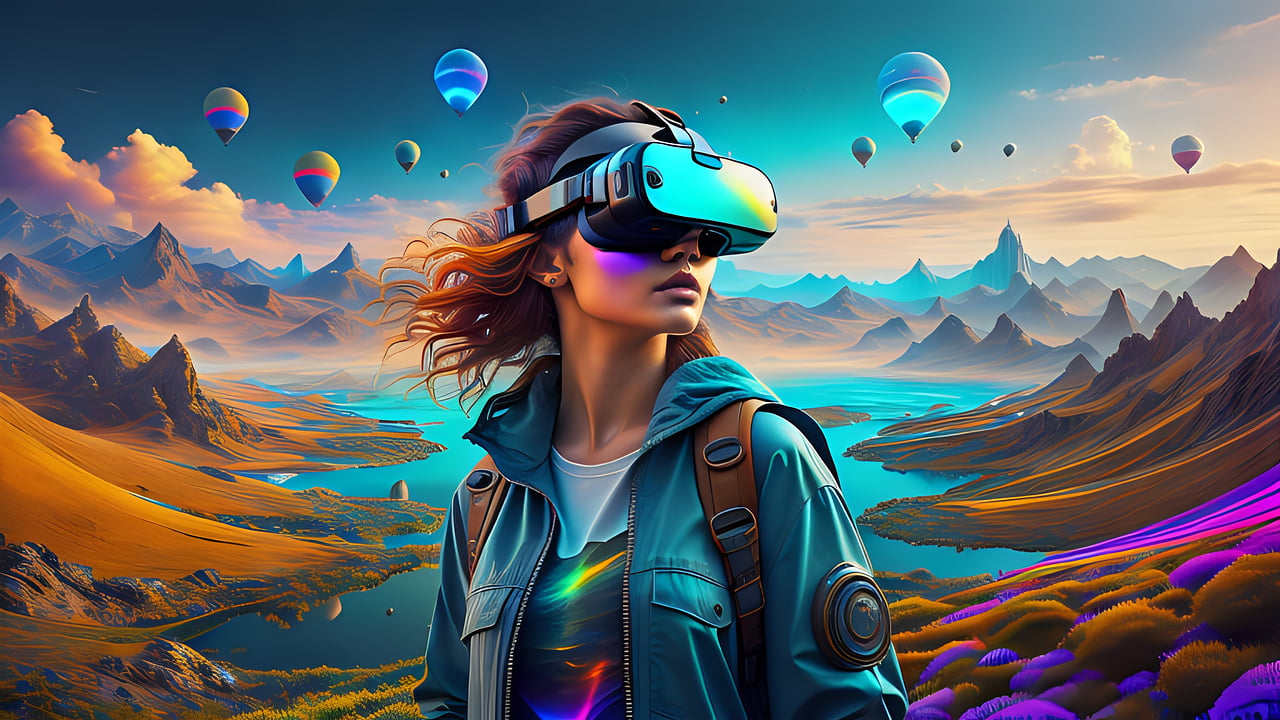
As technology advanced, several milestones occurred that pushed virtual reality to a more sophisticated and accessible level:
- In the 1980s, Jaron Lanier coined the term “virtual reality” and founded VPL Research, one of the first companies dedicated to the development of this technology.
- In the 1990s, video games and movies began to incorporate virtual reality elements, sparking interest among the general public.
- In the early 2000s, the first consumer-grade VR headsets, such as the Google Cardboard, were released, allowing people to experience VR in a more accessible way.
- In 2012, Palmer Luckey introduced the prototype of the Oculus Rift virtual reality headset, sparking a new wave of interest and development in the field of VR.
- Leading technology companies such as HTC, Sony, Valve and Microsoft have launched their own virtual reality devices and platforms, further driving the adoption and advancement of this technology.
Today, virtual reality is in a state of rapid evolution, with constant advances in hardware, software and applications that promise to transform the way we experience and interact with the digital world.

Key Components of Virtual Reality
1. Display devices (helmets, glasses, etc.)
Display devices are the most visible and recognizable component of what virtual reality is all about. These include headsets, glasses, or visors that sit on the user's head and provide a stereoscopic 3D viewing experience.
The most advanced virtual reality headsets feature high-resolution displays and a wide color gamut, as well as an immersive field of view that creates a sense of complete immersion in the virtual environment. Popular examples include the Oculus Rift, the HTC Vive, and the PlayStation VR. In this context, it's interesting to explore the uses and features of augmented reality in comparison.
2. Motion tracking systems
To create a realistic and compelling experience, VR requires accurate motion tracking systems that detect and reproduce the user's movements in the virtual environment. These systems use a combination of cameras, sensors, and algorithms to track the position and orientation of the user's head, hands, and in some cases, the entire body.
Motion tracking systems allow users to interact naturally with virtual objects, creating a sense of physical presence in the digital world. Examples of motion tracking technologies include optical sensors, inertial sensors, and motion capture systems.

3. Controllers and peripherals
In addition to display devices and motion tracking systems, virtual reality also uses a variety of controllers and peripherals that allow users to interact with virtual environments in intuitive and realistic ways.
These include handheld controllers such as the Oculus Touch or Vive Controllers, which simulate the movement of hands and fingers in the virtual world. There are also haptic devices that provide tactile feedback, such as gloves or special suits that allow you to “touch” and “feel” virtual objects.
4. Real-time rendering engines
To generate realistic and fluid virtual images and environments, VR relies on powerful real-time rendering engines. These software engines are responsible for calculating and generating 3D graphics in real-time, allowing for an immersive and seamless experience.
Some of the most popular rendering engines used in VR include Unity, Unreal Engine, and CryEngine. These engines employ advanced techniques such as shading, texture mapping, dynamic lighting, and particle effects to create highly detailed and convincing virtual environments.

In addition, real-time rendering engines also handle simulated physics, artificial intelligence, and other important functions that contribute to the sense of presence and interactivity in virtual worlds.
Types of Virtual Reality
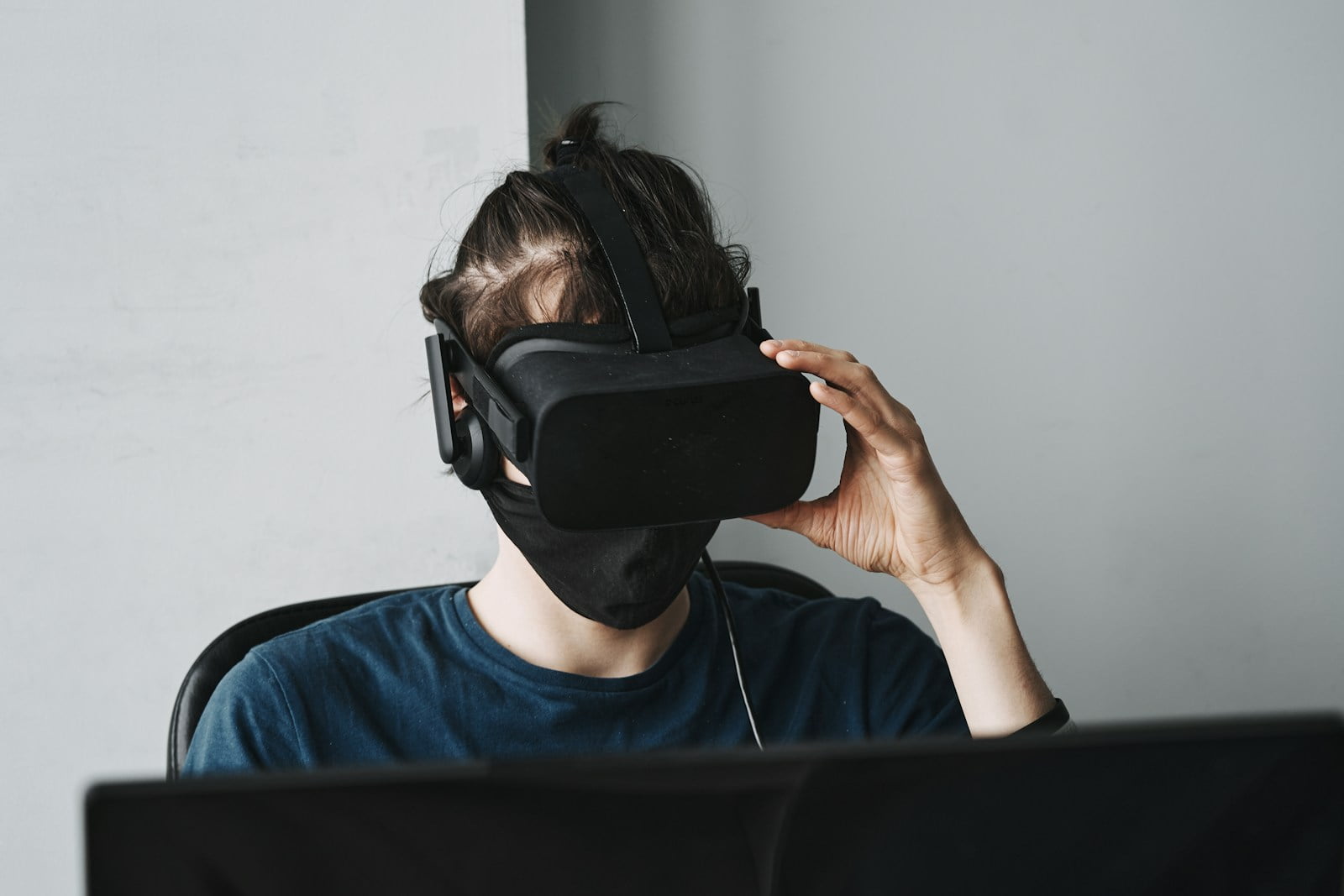
1. Immersive Virtual Reality
Immersive virtual reality is the most comprehensive and immersive type of this technology. In this case, the user is completely immersed in a computer-generated virtual environment, using a virtual reality headset or glasses that completely cover their field of vision.
In immersive VR, the user experiences a sense of physical presence in the virtual world, being able to look around, move around, and interact with objects and characters in a natural and realistic way. This experience is enhanced by precise motion tracking, intuitive controllers, and the ability to hear surround sound.
Some examples of immersive virtual reality applications include video games, training simulators, exposure therapies, and virtual tourism experiences.

2. Non-Immersive Virtual Reality
Unlike immersive VR, non-immersive VR does not involve full immersion in a digital environment. Instead, the user interacts with virtual content through a screen, such as a computer monitor or mobile device.
In this type of VR, the user maintains an awareness of their actual physical surroundings while interacting with virtual content overlaid or presented on the screen. A common example of non-immersive VR is augmented reality applications, where virtual elements are added to the real world through the camera of a mobile device.
Non-immersive virtual reality is widely used in areas such as design, architecture, education, and marketing, allowing users to explore and view 3D content without the need for dedicated VR headsets.

3. Semicircular Virtual Reality
Semicircular VR is somewhere between immersive and non-immersive VR. In this case, the user interacts with a virtual environment projected onto a curved screen or multiple screens arranged in a semicircle.
This type of virtual reality is commonly used in flight simulators, driving simulators and training centers, where the user can experience a sense of partial immersion without the need for a full virtual reality headset.
Semi-circular virtual reality may include additional elements, such as moving seats or physical controls, to enhance the sense of presence and realism in the virtual experience.

Applications of Virtual Reality
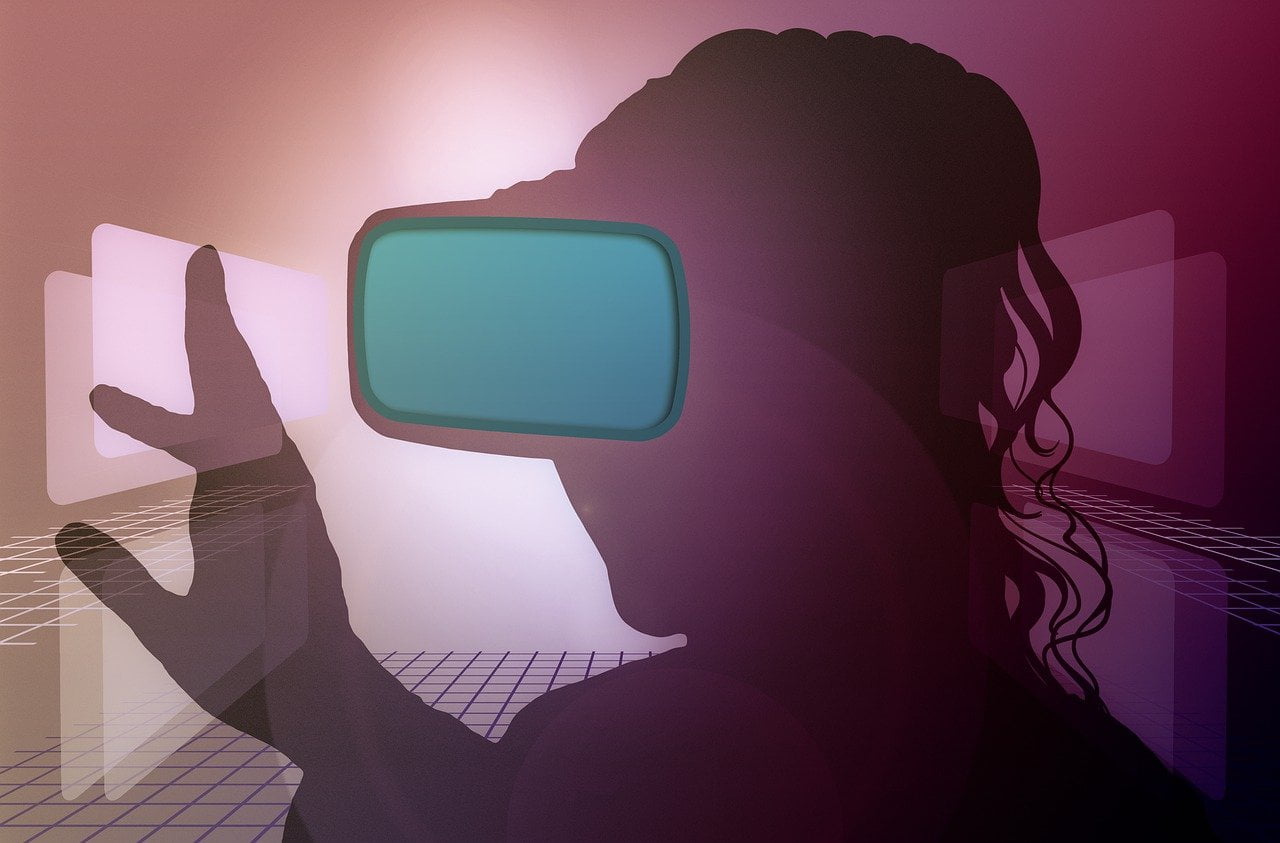
1. Video games and entertainment
One of the most popular and well-known applications of what is virtual reality is in the gaming and entertainment industry. Virtual reality headsets and glasses allow gamers to fully immerse themselves in immersive virtual worlds, exploring detailed environments and participating in interactive experiences in an unprecedented way.
Games such as “Half-Life: Alyx,” “Resident Evil 7: Biohazard,” and “Beat Saber” have demonstrated the potential of VR to create exciting and engaging gaming experiences. In addition to video games, VR is also used in entertainment applications such as movies, virtual concerts, and interactive theme parks.

2. Education and training
Virtual reality is revolutionizing the way education and training is delivered. This technology allows students and learners to explore and experience situations and concepts in a hands-on and immersive way.
For example, medical students can perform virtual surgery simulations, history students can immerse themselves in detailed recreations of historical events, and language learners can practice conversations in realistic virtual environments. Additionally, virtual reality is used in training for professions such as aviation, construction, and law enforcement, allowing for safe and effective training.

3. Medicine and health care
Virtual reality is finding increasingly important applications in the field of medicine and healthcare. Doctors can use this technology to plan and simulate complex surgical procedures, allowing them to practice and minimize risks before an actual operation.
Furthermore, what is virtual reality is being used in rehabilitation therapies, such as recovery from injuries or neurological disorders, by providing safe and controlled environments for training and practice. The use of virtual reality is also being explored in the treatment of psychological disorders, such as anxiety disorders and post-traumatic stress, through gradual exposure to simulated situations.

4. Architecture and design
In the field of architecture and design, virtual reality allows professionals to realistically visualize and experience their designs before they are built. Architects can create complete virtual walkthroughs of buildings and spaces, allowing them to identify potential issues and explore different design options.
Additionally, what is virtual reality facilitates collaboration between design teams and clients as it allows all stakeholders to explore and provide feedback on designs in a shared virtual environment.

5. Tourism and virtual travel
Virtual reality is transforming the way people experience tourism and travel. Thanks to this technology, users can explore destinations and tourist attractions from the comfort of their home, allowing them to make informed decisions about their upcoming trips.
Travel agencies and tourism companies are embracing VR to offer immersive virtual tours of hotels, resorts, and landmarks, giving customers a pre-trip experience. Additionally, VR is also being used to recreate and preserve historical and cultural sites, allowing people to explore and learn about world heritage in a unique way.

Virtual reality is not only limited to individual experiences, but is also enabling new forms of social interaction in shared virtual environments. Social VR platforms allow users to connect, communicate and engage in joint activities in virtual spaces, creating a sense of presence and closeness despite physical distances.
These social VR applications are used for business meetings, social events, conferences, and even for online multiplayer games, where participants can see and interact as avatars in a shared virtual environment. This opens up new opportunities for collaboration, entertainment, and building online communities.

Challenges and Limitations
1. Cost and accessibility
One of the main challenges of virtual reality is its cost and accessibility. Although prices for VR headsets have been gradually decreasing, they can still be expensive for many consumers, especially when additional hardware requirements such as powerful computers or gaming consoles are taken into account.
Additionally, VR systems can be complex for some people to set up and use, posing an additional barrier to entry. It is important that the VR industry continues to work to make this technology more affordable and accessible to a wider audience.
2. Potential side effects
Another major challenge of VR is the potential for negative side effects, such as dizziness, nausea and disorientation. These symptoms, known as “motion sickness,” can be caused by the conflict between visual cues and the body’s balance signals.
While advances in technology and experience design have helped mitigate these effects, it remains a significant challenge to consider, especially for those who are particularly sensitive to these issues. It is crucial that VR developers and providers continue to research and address this issue to ensure a safe and comfortable experience.

3. Privacy and security
As virtual reality becomes more ubiquitous and connected, concerns arise about user privacy and data security. Virtual reality devices can collect a wealth of personal information, such as biometric data , movement patterns, and user preferences.
It is critical that the VR industry implements robust security measures and data privacy practices to protect users’ sensitive information. It is also important to address ethical issues surrounding the responsible use of this technology and ensure that it is not used in harmful or invasive ways.

4. Integration with the real world
Another significant challenge of VR is its integration with the real physical world. While VR experiences can be captivating and immersive, there is still an inherent disconnect between virtual environments and the real world.
The ability to seamlessly and fluidly blend virtual reality with the surrounding physical environment is an area of active research. This could enable broader applications of VR in areas such as manufacturing, logistics, and human-robot interaction.
The Future of Virtual Reality
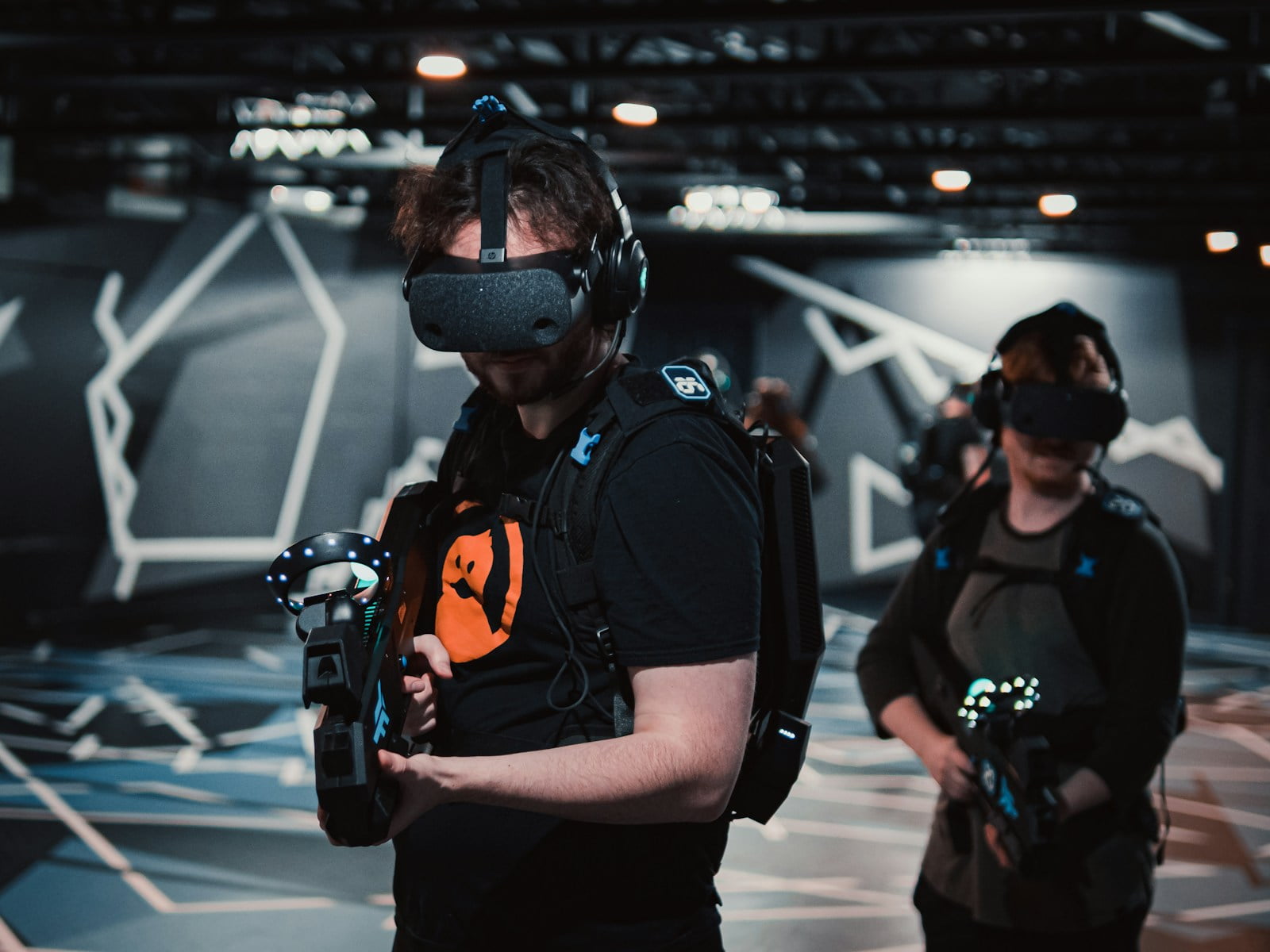
1. Expected advances in hardware and software
The future of virtual reality promises significant advancements in both hardware and software. On the hardware front, virtual reality headsets are expected to become lighter, more comfortable, and with better screen resolution, providing an even more immersive experience.
In addition, technologies such as eye tracking, retina mapping and surround vision displays are expected to be incorporated, which will allow for more natural and realistic interaction with virtual environments.

On the software side, improvements are expected in rendering engines, artificial intelligence, and simulated physics, resulting in more detailed, realistic, and responsive virtual worlds. Additionally, user interfaces are expected to become more intuitive and natural, leveraging voice recognition, gestures, and other forms of contactless interaction.
2. Incorporation of Artificial Intelligence
The integration of Artificial Intelligence into virtual reality promises to transform how we interact with and experience virtual worlds. AI can be used to create more believable virtual characters with more realistic behaviors, capable of holding natural conversations and adapting to the user's actions.
Furthermore, AI can be used to procedurally generate virtual content and environments, which would allow for the creation of infinitely large and detailed virtual worlds. This would open up new possibilities for exploration, discovery, and storytelling in what is VR.
3. Virtual Reality in the cloud
Another emerging trend in the future of virtual reality is the concept of “cloud VR.” This implies that virtual environments and processing resources would be hosted on cloud servers, allowing users to access high-quality VR experiences without the need for powerful local hardware.
Cloud-based VR could make this technology more accessible and scalable, as users would only need display devices and a fast internet connection. It would also facilitate real-time collaboration in shared virtual environments, regardless of users' physical location.
4. Wireless and portable Virtual Reality
Another expected development in the future of virtual reality is the increased adoption of wireless and portable devices. Currently, many VR systems require cables connecting headsets and controllers to a computer or console, limiting freedom of movement and comfort.
However, wireless and stand-alone VR headsets are expected to become more common, allowing for greater mobility and flexibility in VR experiences. This could open up new opportunities for mobile applications, such as virtual tourism, field education, and emergency training.
Ethical Considerations
1. Privacy and data security
As virtual reality becomes more ubiquitous and connected, concerns about the privacy and security of user data are emerging. VR devices can collect a wealth of personal information, such as biometric data, movement patterns, and user preferences.
It is crucial for the VR industry to implement robust security measures and data privacy practices to protect users’ sensitive information. Additionally, it is important to address ethical issues surrounding the responsible use of this technology and ensure that it is not used in harmful or invasive ways.
2. Responsible and healthy use
Another important ethical aspect to consider is the responsible and healthy use of virtual reality. While this technology offers exciting opportunities for entertainment, education and other applications, there is also a risk that it may be used excessively or in an addictive manner.
It is critical that VR developers and providers promote healthy practices and set boundaries and guidelines for safe and responsible use. In addition, potential adverse effects on mental and physical health, such as social isolation, vision problems, and sedentary lifestyle, need to be investigated and addressed.

3. Accessibility and diversity
Virtual reality should be accessible and inclusive for all people, regardless of their physical or cognitive abilities. It is crucial that VR designers and developers take into account the needs of users with disabilities and create experiences that are accessible and adaptable.
Furthermore, it is important that VR represents and celebrates diversity, avoiding harmful stereotypes and promoting inclusion and fair representation of different ethnic, cultural and gender groups.
4. Environmental impact
While VR can have a positive impact by reducing the need for physical travel and enabling digital simulations, it is also important to consider its environmental footprint. The manufacturing of VR devices, as well as the energy consumption to power virtual experiences, can have a significant impact on the environment.
It is crucial for the VR industry to adopt sustainable and eco-friendly practices, such as the use of recyclable materials, energy efficiency, and reducing electronic waste. Additionally, ways to leverage VR to promote environmental awareness and encourage more sustainable behaviors, such as climate change education and natural resource conservation, should be explored.
Conclusion
Virtual reality is a fascinating and revolutionary technology that is transforming the way we interact with the digital world. From immersive entertainment experiences to innovative educational and medical applications, VR is opening new doors to creativity, learning and exploration.
As this technology continues to advance, we are likely to see significant advancements in areas such as hardware, software, and integration with other emerging technologies such as artificial intelligence and augmented reality. However, it is also crucial to address ethical challenges and considerations related to privacy, security, accessibility, and environmental impact.
Ultimately, VR has the potential to transform the way we perceive and experience the world around us, offering exciting opportunities for innovation and growth across a wide range of industries and disciplines. Let’s explore this fascinating path to the future of VR together.