- Supercomputers are distinguished by their exceptional ability to process data and perform complex calculations.
- They use specialized hardware architectures and optimized software to maximize performance.
- They have applications in fields such as scientific research, medicine and climate modeling.
- The future of supercomputers promises significant advances in artificial intelligence and energy efficiency.
What are Characteristic Supercomputers?
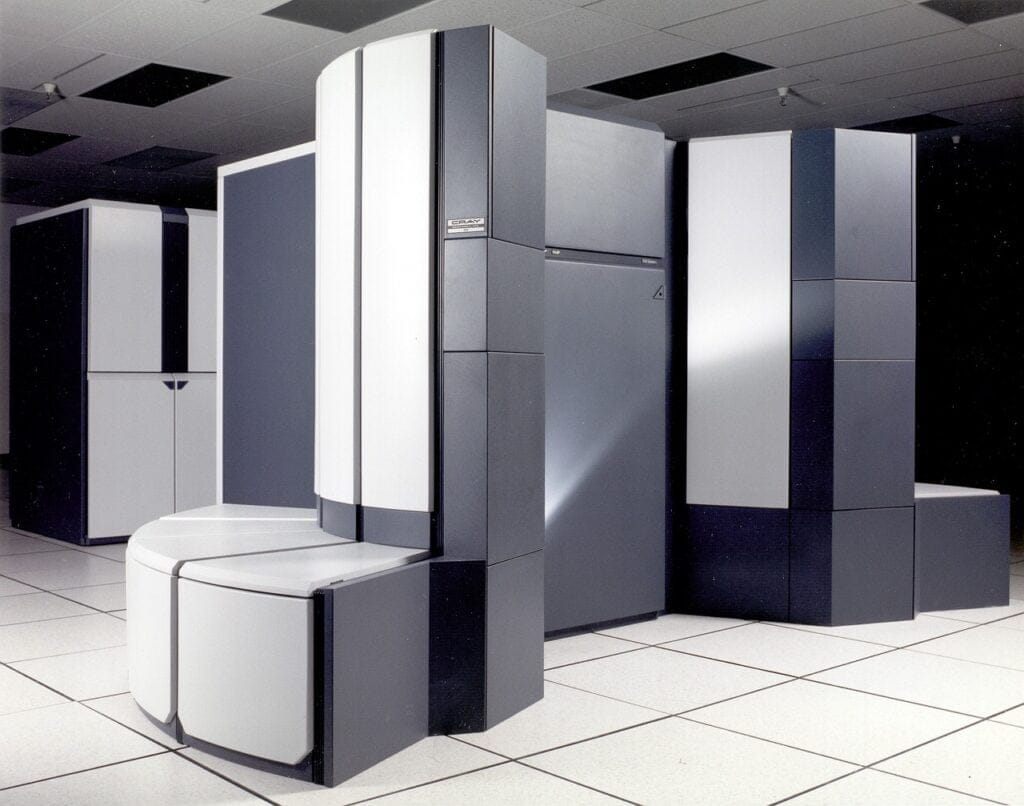
Supercomputers are state-of-the- art computing systems distinguished by their exceptional ability to process enormous amounts of data and perform complex calculations at impressive speeds. These machines are designed to solve highly challenging problems and enable scientific and technological advancements that would otherwise be impossible.
Supercomputers are used in a variety of areas, including scientific research, simulation of physical phenomena, modeling of complex systems, and the creation of visual effects in the film industry, among others.
Features of Supercomputers
These are the reasons why they are indispensable tools for science and industry. Below, we'll explore some of the most relevant:
1. Exceptional Performance
Supercomputers are characterized by their extremely high processing capacity. These machines are made up of thousands or even millions of processing units, which allows them to perform simultaneous calculations at an impressive speed. The performance of a supercomputer is measured in FLOPS (Floating Point Operations per Second), and the most advanced systems can reach figures in the range of exaflops, i.e. billions of floating point operations per second. This enormous processing capacity makes it possible to tackle large-scale problems and accelerate scientific research in a wide range of disciplines.
2. Specialized Architectures
Supercomputers use highly specialized hardware architectures to maximize their performance. These architectures are specifically designed to solve complex problems and make the most of available computing resources. Examples of specialized architectures include GPU-based systems (Graphics Processing Units), which are especially efficient for computing-intensive parallel applications, and FPGA-based systems (Field-Programmable Gate Arrays), which allow flexible and adaptive configuration of electronic circuits for specific tasks.
3. Massive Parallelism
Parallelism is one of the fundamental characteristics of supercomputers. These machines are capable of performing multiple calculations simultaneously, dividing complex tasks into smaller threads and distributing them across their multiple processing units. This makes it possible to significantly speed up the time required to complete a task and solve problems that would require a prohibitive amount of time on a conventional computer. Massive parallelism is essential to the exceptional performance of supercomputers and has opened the doors to scientific discoveries and technological advances that have changed the way we understand the world.
4. Storage Capacity
Another distinctive feature of supercomputers is their massive storage capacity. These machines are equipped with high-capacity storage systems, which allow them to handle large volumes of data and access them efficiently. Data storage is critical for many supercomputing applications, such as analyzing large data sets, simulating complex systems, and creating predictive models. Supercomputers can store and process petabytes of information, providing a solid foundation for research and development in diverse areas.
5. Energy Consumption
Given their performance and processing power, supercomputers are machines that require a large amount of energy to operate. The energy consumption of these machines is significant and can reach several megawatts. As the demand for supercomputing continues to grow, so does the need to develop more energy-efficient technologies. Researchers and supercomputer manufacturers are working to reduce the energy consumption of these machines and make their operation more sustainable in the future.
6. Specialized Software
In addition to their specialized hardware, supercomputers also require software specifically designed to take full advantage of their processing power. The operating systems used in supercomputers are tailored to perform computationally intensive tasks and efficiently manage resources. In addition, specialized software libraries and tools are developed and used to enable scientists and developers to leverage supercomputer capabilities more effectively. Specialized software is essential to ensure optimal performance of these machines and facilitate their use in scientific and technical applications.

Applications of Supercomputers Features

Supercomputers have a wide range of applications in various fields. Below, we will explore some of the areas where these machines are making a significant difference:
1. Scientific Research
Scientific research benefits greatly from the processing power of supercomputers. These machines allow scientists to simulate complex natural phenomena, analyze large data sets, and perform advanced calculations that help improve our understanding of the universe. From astronomy to molecular biology, supercomputers are driving scientific discoveries and opening new frontiers in human knowledge.
2. Simulation and Modeling
Supercomputers are used extensively for simulation and modeling of complex systems. These machines can simulate the behavior of materials, fluids, structures, and other physical systems at an unprecedented scale and detail. This is invaluable in fields such as engineering, medicine, and meteorology, where accurate modeling of phenomena and prediction of outcomes are critical to informed decision making. Supercomputers make it possible to simulate and explore different scenarios, thereby accelerating the design, optimization, and decision-making process across a wide range of industries.
3. Drug Discovery and Personalized Medicine
Medicine also benefits greatly from supercomputers. These machines allow researchers and scientists to perform high-speed simulations and analysis to discover new drugs, better understand diseases, and develop more effective treatments. Supercomputers are also instrumental in personalized medicine, where they are used to analyze genomic data and create predictive models for diagnosing and treating specific diseases based on each patient's genetic information.
4. Climate Change and Weather Prediction
The study of climate change and weather prediction are areas that greatly benefit from the power of supercomputers. These machines allow scientists to simulate and model complex climate systems, analyze large volumes of atmospheric and oceanographic data, and predict climate behavior with greater accuracy. This is essential to understanding the effects of climate change, developing mitigation and adaptation strategies, and making informed decisions to protect our planet and our communities.
5. Research in Artificial Intelligence and Machine Learning
Supercomputers are fundamental tools for research in artificial intelligence (AI) and machine learning. These machines allow AI models and machine learning algorithms to be trained using large data sets and perform rapid inferences in real time. This has applications in fields such as computer vision, natural language processing, robotics, and many other areas where massive data processing and complex computations are required.
6. Entertainment and Visual Effects Industry
In the entertainment industry, supercomputers are indispensable for the creation of high-quality visual effects. These machines can render and simulate 3D graphics and special effects that require intensive processing and massive computing power. From Hollywood movies to video games, supercomputers bring realism and detail to computer-generated images, delivering an immersive and visually stunning experience.
These are just a few of the many applications of supercomputers in diverse fields. Their ability to process large volumes of data, perform complex calculations and model complex systems makes them valuable tools for innovation and advancement in science, technology and industry.
The Future of Supercomputers
The future of supercomputers is exciting and promising. As technology advances, these machines will continue to evolve and play a crucial role in solving our society’s most pressing challenges.
The supercomputers we've explored here are just the beginning. As processing power continues to increase and applications become even more diverse, we can expect amazing advances in fields like artificial intelligence, personalized medicine, and space exploration.

The Most Amazing Supercomputers of 2024
- Frontier:
- Located at Oak Ridge National Laboratory, United States.
- Manufactured by HPE, model Cray EX235a, with AMD Optimized 3rd Generation EPYC 64C 2GHz, AMD Instinct MI250X, and Slingshot-11.
- Capable of performing 1,194 PFlop/s (petaflops per second) with a peak of 1,679.82 PFlop/s and consumes 22,703 kW.
- :
- Located at the RIKEN Center for Computational Science, Japan.
- Manufactured by Fujitsu, with A64FX 48C 2.2GHz and Tofu interconnect D.
- Capable of 442.01 PFlop/s with a peak of 537.21 PFlop/s and consumes 29,899 kW.
- :
- Located at EuroHPC/CSC in Finland.
- Manufactured by HPE, model Cray EX235a, with AMD Optimized 3rd Generation EPYC 64C 2GHz, AMD Instinct MI250X, and Slingshot-11.
- Capable of 309.10 PFlop/s with a peak of 428.70 PFlop/s and consumes 6,016 kW.
- :
- Located at EuroHPC/CINECA in Italy.
- Manufactured by Atos, model BullSequana
- Capable of 238.70 PFlop/s with a peak of 304.47 PFlop/s and consumes 7,404 kW.
- Prodigy (by Tachyum):
- It is in development and will use chips Tachyum Prodigy.
- It will feature 192 64-bit processor cores on a 600mm^2 chip.
- It is expected to reach 50 exaFLOPS, making it one of the first supercomputers to achieve this mark.
Frequently Asked Questions about Supercomputers Features
Below we will answer some frequently asked questions about the characteristic supercomputers:
1. What is the most powerful supercomputer currently?
The most powerful supercomputer currently in existence is the Fugaku supercomputer in Japan. With a capacity of over 442 petaflops, Fugaku tops the TOP500 and is used in a wide variety of scientific research and industrial projects.
2. How much energy does a supercomputer consume?
The power consumption of a supercomputer depends on its design and capacity. The most advanced models can require several megawatts, which requires specially designed power and cooling systems to ensure efficient and sustainable operation.
3. What is the lifespan of a supercomputer?
Supercomputers typically have an average lifespan of 4 to 6 years, although this can vary. Given the rapid technological advancement, initially advanced devices can quickly become obsolete, being overtaken by new technologies.
4. How much does it cost to build a supercomputer?
The cost of building a supercomputer varies widely, but can run into the hundreds of millions or even billions of dollars. This price includes high-performance hardware, specialized software, and the necessary supporting infrastructure.
5. What is the impact of supercomputers on society?
Supercomputers play a crucial role in the advancement of science and technology, facilitating advances in medicine, physical sciences and other fields. They are essential for solving complex problems and improving decision-making in critical areas such as climate change and weather prediction.
What is the future of supercomputers?
The future of supercomputers looks extremely promising, with projections of ever-increasing power and energy efficiency. The continued evolution of specialized hardware and software is expected to boost innovation in vital areas such as artificial intelligence, machine learning, and personalized medicine.
Conclusion on the characteristic supercomputers
Supercomputers are powerful, revolutionary machines that are driving science, technology and innovation forward in a variety of areas. Their exceptional processing power, specialized architectures, massive parallelism and massive storage capacity make them indispensable tools for tackling complex problems and accelerating progress in scientific research, medicine, meteorology and many other fields.
As technology continues to advance, supercomputers will continue to evolve and play a crucial role in our society. Their impact on scientific discovery, informed decision-making, and solving global challenges is undeniable. With their unprecedented processing power, feature-rich supercomputers are paving the way to a brighter, more promising future.