- APIs concentrate much of the current risk and require inventory, continuous testing, and real-time monitoring.
- Active defense combines SAST, DAST, API-specific testing, and production threat detection.
- A good vulnerability management program prioritizes based on actual risk, reduces false positives, and integrates security into CI/CD.
- Success depends as much on the tools as on the culture, processes, and coordination between development, operations, and security.
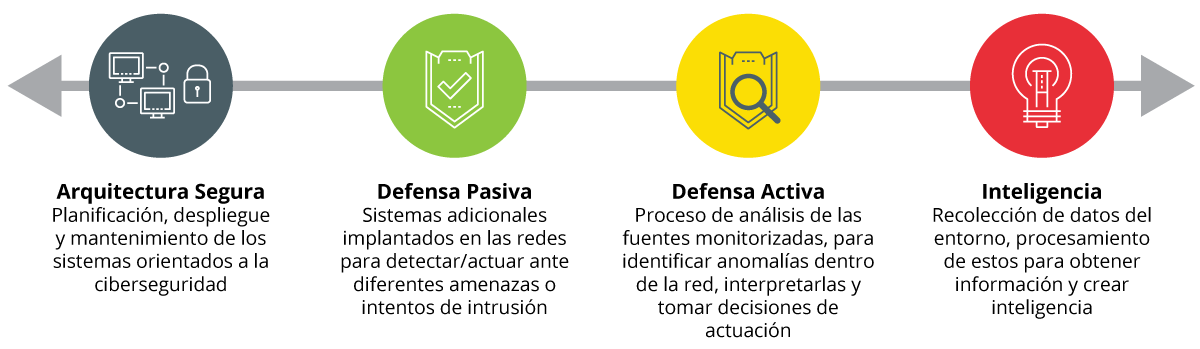
The current cybersecurity landscape is marked by an explosion of vulnerabilities and the massive use of APIs that connect virtually everything: web applications, microservices, mobile devices, SaaS, and internal systems. Launching a new feature on a Friday and discovering on Monday that someone has exploited an unauthenticated endpoint or a vulnerability injection bug is no longer a movie scenario; it's a daily occurrence in many companies.
In this context, the combination of active defense and API vulnerability scanners has become a strategic priority. It's no longer enough to review logs or run a one-off test once a year; it's necessary to discover all APIs (including "shadow" ones), test them automatically before deployment, and monitor what happens in production in real time. And all of this must be done without overwhelming development teams with false positives or using tools that are impossible to maintain.
Why APIs are one of the biggest sources of risk today
Most modern architectures rely on APIs as the primary channel for exposing data and business logic . This multiplies the attack surface: every endpoint, every parameter, and every authentication flow can be an open door if not properly controlled.
Industry reports show a dramatic increase in incidents linked to APIs and web applications , with sectors like financial services particularly hard hit. Furthermore, organizations such as Gartner and OWASP have been warning for some time: API attacks are not only growing in volume, but also in impact, leaking up to ten times more data than other typical breaches.
Among the factors that increase risk are API sprawl (uncontrolled proliferation of APIs) , a lack of updated inventory, old versions that remain accessible ("zombie"), and internal endpoints accidentally exposed. When no one is clear on which APIs exist or how they are used, it's only a matter of time before a serious vulnerability arises.
Added to this is the rise of AI-generated code and practices like "vibe coding" : developers and non-technical users produce large amounts of code and endpoints based on natural language prompts. Productivity increases, but so do the chances of inadvertently inheriting bad practices, outdated libraries, or poor security patterns.
The result is a scenario in which early detection of security flaws in APIs and applications is no longer optional: it is a minimum condition to avoid making headlines for a breach.
Modern vulnerability management for APIs and applications
Application security vulnerability management is no longer limited to running an annual scan. It's now a continuous and structured process that covers everything from source code to production-exposed APIs, including containers, infrastructure as code (IaC), and cloud services.
This approach integrates several components: asset discovery, static analysis (SAST), dynamic analysis (DAST), API-specific testing, patch management , risk-based prioritization, and active monitoring. All of this is aligned with regulations such as GDPR, PCI DSS, and NIST frameworks, which already require secure coding practices and evidence of analysis.
At the application level, typical vulnerabilities range from SQL injection and Cross-Site Scripting (XSS) to broken authentication, exposure of sensitive data, and the use of outdated components . For APIs, the reference is the OWASP API Security Top 10, which groups risks such as:
- BOLA (Broken Object Level Authorization): access to other users' objects by changing an ID.
- Faulty authentication and authorization that allow impersonation of users.
- Unlimited resource consumption, opening the door to denial-of-service attacks.
- Insecure configurations, forgotten endpoints, or old versions still accessible.
- Insecure consumption of third-party APIs, relying on responses without strict validation.
Good vulnerability management should identify these problems both in the code and API definitions and in the actual behavior of running applications, and do so in a repeatable, automated, and measurable way.
Static and dynamic analysis and specific testing for APIs
In an active API defense program, vulnerability scanners aren't an add-on; they're the engine that allows for the systematic discovery of flaws before others find them. This involves several complementary tool families.
Static analysis (SAST) examines source code or the binary without executing it . It looks for risk patterns such as injections, overflows, unsafe API usage, embedded secrets, or vulnerable dependencies. It integrates into the IDE and CI pipeline so that developers receive feedback while writing or before merging.
Dynamic application security testing (DAST) focuses on the running application, sending requests as an attacker would . It is especially useful for detecting misconfigurations, insufficient validation, session problems, or routes that only appear with real-world interaction. Tools of this type simulate HTTP/HTTPS traffic and check for anomalous reactions, suspicious error codes, or responses with more data than expected.
In the specific area of APIs, dedicated tests are added, such as:
- Fuzzing in: mass sending of random or malformed data to see how the endpoint responds.
- Injection tests (SQL, commands, LDAP, etc.) tailored to the API contract.
- Manipulation of parameters and IDs to check for BOLA or privilege escalations.
- Verification of quota and limit controls to prevent automated abuse of business flows.
All of this is complemented by tools that scan the infrastructure: network and host scanners (such as Nessus or Qualys), solutions for containers and IaC, and CNAPP platforms that unify visibility across cloud, Kubernetes, microservices, and APIs.
API discovery and inventory: the problem of what you don't see
One of the biggest practical headaches is knowing which APIs actually exist within the organization . Between legacy projects, proofs of concept (PoCs), internal services that ended up exposed, and versions v1, v2, and v3 coexisting, it's easy to lose track.
Modern API security platforms have focused on automatic discovery . Based on traffic analysis (through integration with gateways, proxies, or WAFs), code repositories, OpenAPI/Swagger definitions, or integrations with Kubernetes and the cloud, they are able to build an inventory of endpoints in use, with information such as:
- Host, path, HTTP method, and accepted parameters.
- Sensitive data potentially exposed on each route.
- Whether the endpoint requires authentication or allows anonymous access.
- Active and historical versions of each API.
For new APIs that do have specifications, tools like Auto Swagger or platforms such as 42Crunch allow you to launch security test suites directly from the API schema, without needing to manually program each test. This way, simply providing the API contract is enough for the scanner to systematically scan all the endpoints and scenarios covered.
This discovery is not just for "having a nice list"; it is the starting point for applying active defense policies: blocking obsolete endpoints, strengthening authentication where it is lacking, and prioritizing testing on critical paths.
Active defense: a combination of testing and real-time monitoring
If anything has become clear in recent years, it's that purely reactive security falls short . Waiting to detect an incident only when an alarm is triggered in production is like installing a home alarm only after the first burglary.
Active API defense is based on a layered model that combines:
- Proactive pre-production scans (SAST, DAST, specific API tests).
- Real-time traffic monitoring in production to detect anomalous behavior.
- Automatic or semi-automatic response capability to attack patterns.
Vendors like F5, Salt Security, Akamai, and other industry players have been incorporating contextual API testing capabilities, behavior-based detection , and correlation with threat intelligence . The idea is to understand the logic of each endpoint (what it does, what data it handles, who should call it) and adapt the tests and detection rules to that context, rather than applying generic templates.
For example, an active defense solution for APIs can:
- Discover all exposed endpoints, including undocumented ones.
- Test each endpoint in pre-production with injection cases, parameter manipulation, fuzzing, and authentication tests.
- Monitor suspicious requests in real time (rate increases, sudden changes in usage patterns, automated ID enumeration attempts).
- Block malicious requests, impose limits per user or token, and alert the security team with enough details to investigate.
This runtime layer is critical because, no matter how good your scans are, there will always be unknown vulnerabilities or business changes that introduce new risks. Live monitoring acts as the last line of defense against attacks that slip through previous testing.
Authentication, authorization, and access control in APIs
No scanner can replace the proper design of access controls. Robust authentication and authorization remain at the heart of API security, both at the application architecture level and in cloud configuration.
Today, almost all modern APIs rely on a combination of OAuth 2.0, OpenID Connect, and JWT tokens to manage user identity and permissions. These tokens must have reasonable expiration dates, well-defined scopes, periodic rotation, and, of course, always be transmitted over HTTPS.
In addition to authentication, authorization controls must be applied at the object and function levels . Models such as RBAC (role-based control) and ABAC (attribute-based control) allow granular mapping of permissions: a user can view their own data, an operator can see aggregated information, an administrator can create or delete resources, and so on.
Cloud environments facilitate this granularity with IAM policies in AWS, Azure, and Google Cloud , which extend to API gateways, serverless functions, and managed services. Properly configuring these policies prevents an administrative endpoint from becoming accessible to anyone with a simple HTTP request.
The API scanners themselves can help verify that supposedly protected routes actually require valid tokens , that expired tokens are not accepted, that privilege escalation by modifying a JSON field is not allowed, and that one user cannot access another's resources by changing an identifier.
Best practices and workflow for continuous detection
For active defense and API vulnerability scanning to work effectively on a daily basis, it all needs to be implemented as a repeatable process integrated into the development lifecycle . Powerful tools are useless if no one uses them or if they hinder team work.
Some key practices that are becoming established are:
- real shift-left: Incorporate security reviews from the design phase, using secure API templates, linter rules, and static analysis in every commit.
- Automated CI/CD scans: Fast SAST on every pull request, DAST and more comprehensive API testing in integration branches or staging environments.
- Quality thresholds and gateways: define what severity of vulnerabilities blocks a deployment and which ones are temporarily accepted with a remediation plan.
- Clear KPIs (MTTD, MTTR, open vulnerability debt, scan coverage) to measure the effectiveness of the program.
- Continuing education and safety culture: that developers understand the problems that the tools detect and how to solve them smoothly.
In organizations with many teams or very heterogeneous technology, it is common to combine solutions: for example, commercial scanners with advanced dashboards and reporting plus an ecosystem of open source tools (Semgrep, CodeQL, OpenVAS, secret scanners such as GitGuardian or Trufflehog, etc.) to fine-tune rules, cover specific languages or validate results.
Advanced platforms like SentinelOne, Snyk, Aikido Security, F5, and similar services aim to unify these layers: discovery, scanning, risk correlation, and runtime protection . Integrated with SIEM, SOAR, and ticketing tools, they transform technical findings into actionable workflows.
Common challenges when implementing active defense and how to manage them
Putting all of this into practice is no walk in the park. Many organizations run into enormous volumes of alerts, a lack of expert staff, and accumulated technical debt in legacy systems that can't be easily stopped or modified.
One of the most common problems is alert fatigue : scanners that generate hundreds or thousands of "vulnerabilities" that, in practice, are either unexploitable or have minimal impact. When this happens, teams start ignoring the reports, and the tool becomes background noise.
To avoid this, it is key to adjust the rules, customize policies and rely on solutions that already include mechanisms for reducing false positives , prioritization by context (for example, if an API is exposed to the Internet, if it handles sensitive data, if the endpoint is actually in use) and, when possible, automatic validation of exploitability.
Another obstacle is the speed of DevOps cycles. If scans take half an hour and block every build, developers will do everything they can to disable them. The solution is to use quick incremental scans for small changes and reserve full scans for specific times (for example, nightly builds or before a large deployment).
Finally, legacy systems and technical debt require a phased approach: prioritize the most critical assets first, with the greatest exposure and business value , apply patches or compensatory measures (WAF, network segmentation, authentication reinforcement) and plan in the medium term for the modernization of the weakest parts.
Given this context, what makes the difference isn't having "the perfect tool," but rather fitting a reasonable set of solutions effectively into a clear process, with defined roles and management support . Active defense of APIs and applications thus becomes a standard practice in development and operations, not a last-minute scare every time someone requests an audit.
Given the rapid growth in vulnerabilities, the cost of a breach, and the crucial role APIs play in any digital business, adopting a model of continuous scanning, real-time defense, and mature vulnerability management is no longer just about "keeping up with the latest trends," but about ensuring the organization's very continuity. Those who manage to discover all their APIs, test them automatically, protect them against abuse, and react quickly when something goes wrong will be the ones who sleep soundly... and who will be least likely to make the news for the wrong reasons.