You've probably experienced this: you have a smartwatch gathering dust in a drawer because the manufacturer decided it was "old." It's a real shame, because while smartphones today support us for half a decade, wearables with Wear OS are usually abandoned after two or three years, leaving us with a slow device and no security patches.
But all is not lost, as there's a powerful option to give your gadget a second life . If you're looking to experiment and don't want to spend money on a new model, AsteroidOS is the ideal solution to transform that technological paperweight into a functional, lightweight, and, above all, privacy-friendly watch.

What exactly is AsteroidOS?
We're talking about an independently developed and completely open-source operating system that has been in the works within the community for quite some time. Unlike commercial options, this distribution is based on Linux and uses technologies like Wayland, Qt5, and systemd to deliver smooth performance even on older hardware.
The main goal of this project is to prevent devices from ending up in the trash. It focuses on three fundamental pillars: offering essential basic tools , allowing users to personalize the watch to their liking, and eliminating constant data tracking, moving away from the aggressive telemetry of large technology companies.

Features and what to expect from the system
If you're wondering whether you can do everything you did with Wear OS, the short answer is that it's a simpler, but very effective, system. You still have access to heart rate monitoring , notification control from your phone, a calendar, an alarm clock, a timer, and even real-time weather information.
It also includes very useful extras such as a music remote, a flashlight, and the Diamonds game for passing the time. In its most recent versions, more advanced features have been added, such as the Always-on Display , the ability to turn the watch on by rotating your wrist (Tilt-to-Wake) or turn it off with the palm of your hand (Palm-to-Sleep), as well as a revamped QuickPanel.
Important compatibility and limitations
This is where caution is advised, as AsteroidOS is not universal. Currently, it only works on a select few models . Compatible devices include the OPPO Watch, Huawei Watch 2, Fossil Gen 6, Asus Zenwatch 2, LG Watch G7, TicWatch Pro, and the classic LG G Watch R, though the list continues to grow thanks to the community.
A key point is that, being a standalone system, you can't install Wear OS apps . You're limited to native apps and those created by developers using the official SDK. As for battery life, it typically ranges from 1 to 4 days, depending, of course, on the wear and tear on your watch's battery.

Is the installation process difficult?
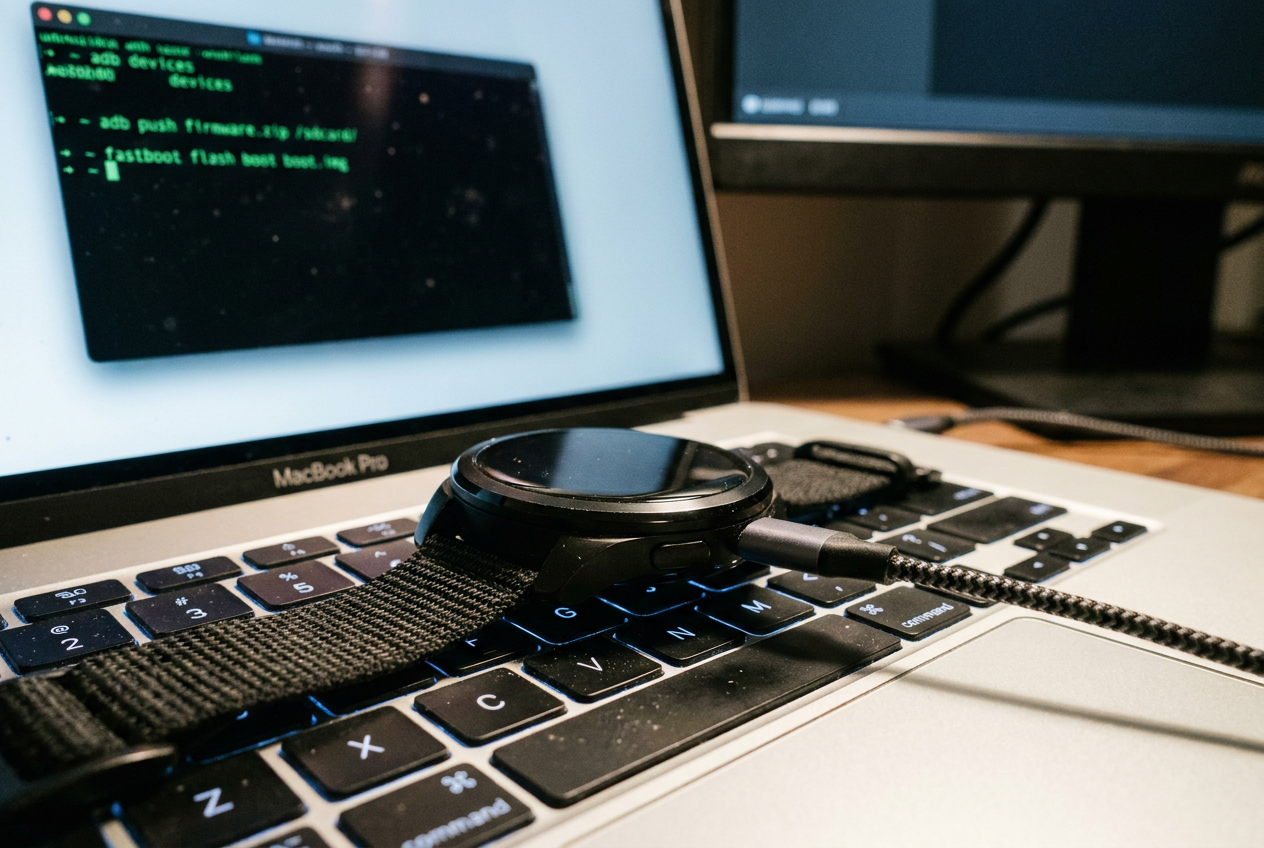
I won't lie to you: it's not as simple as pressing an update button. The process varies depending on the model, but it generally requires enabling ADB debugging on the watch, installing the corresponding drivers on the computer, and running some code commands. In the best-case scenario, it's a smooth flashing process.
However, there are more complex models that require physically disassembling the watch to connect data cables directly to the internal components. The good news is that the project offers detailed guides for each device. Furthermore, in some cases, it's possible to dual boot , keeping both the original operating system and AsteroidOS installed simultaneously.
Mobile synchronization
To ensure everything works seamlessly, there's the AsteroidOS Sync app for Android . This app makes sure your watch and phone communicate in sync, managing time, weather, and notification synchronization, and even letting you locate your watch if you've misplaced it at home or take screenshots.
Owning a device based on open-source software means you have complete control over your hardware, regaining the speed lost with cumbersome official updates. It's an exciting way to combat planned obsolescence and enjoy a clean, fast interface without being tied to a brand's decisions.
