- Advanced sensor system that digitizes the sensory evaluation of liquids to eliminate human subjectivity.
- It uses AI, neural networks, and electrode arrays to create chemical fingerprints of products.
- Key applications in food fraud detection, dairy quality control, and early medical diagnosis.
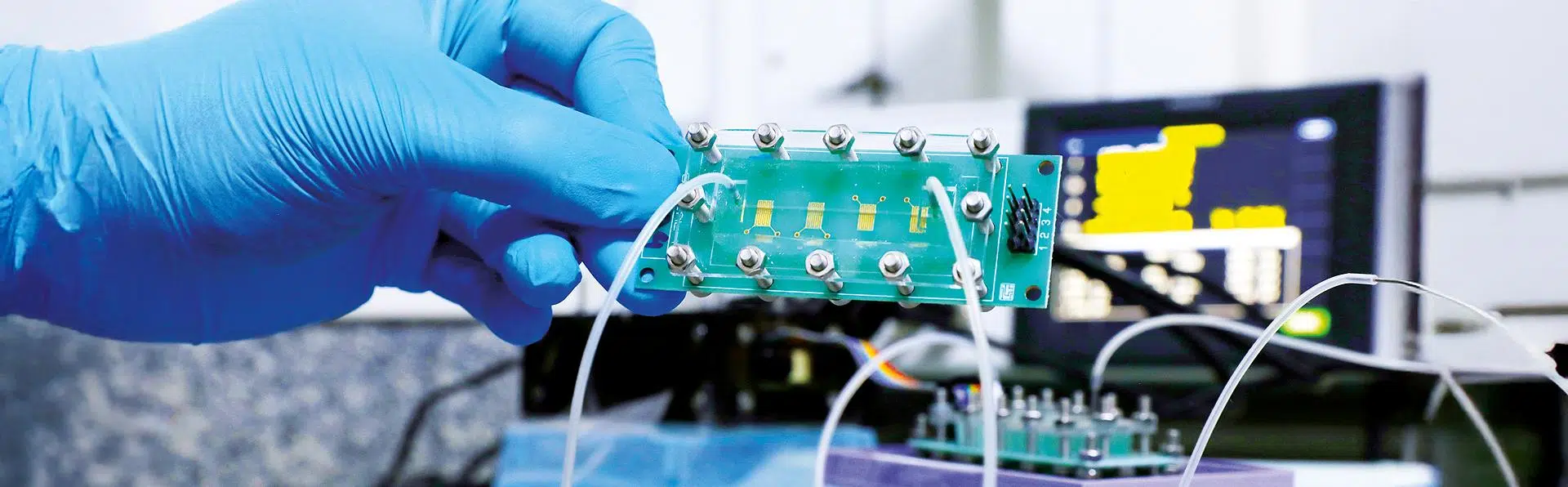
You've probably wondered at some point if machines can taste food or drink like we do. Well, the electronic tongue is precisely that: a state-of-the-art analytical system that breaks down the composition of complex liquids using highly advanced sensors. For companies, this isn't just a technological gadget, but a disruptive and efficient solution that allows them to integrate sensory analysis directly into the assembly line with astonishing precision.
The underlying idea is to digitize sensory evaluation continuously. Why? So that managers and plant supervisors can make decisions based on real data, not on "it tastes good." By using objective tools, corporations can optimize their quality controls , eliminating typical human errors and ensuring that operational excellence is a constant, not a matter of luck.

What exactly is this device?
Basically, we're talking about a technological instrument designed to classify complex liquid mixtures . Its operation is a carbon copy of the human biological system: while we have taste buds that react to compounds, this device uses electrodes that do the same. The interesting thing is that in the world of flavors, the device doesn't focus on isolated components, but rather creates a unique and precise fingerprint of the sample.
Thanks to this, organizations can standardize their daily evaluations without having to rely on whether the taster on duty slept poorly or has a numb tongue. The team transforms the chemical information into structured digital data , allowing the entire process to be managed online and incredibly actionable.
Step-by-step operation in the industry
For this system to be implemented in a corporate environment, it must follow a series of very strict phases. First comes the sensor array , where innovative electrodes interact with the liquid and instantly record chemical changes. Then comes signal conversion , where the hardware translates these molecular reactions into electrical impulses that can then be evaluated.

The magic happens in the third phase with pattern recognition . This is where Artificial Intelligence , Principal Component Analysis (PCA), and neural networks come in to compare the obtained fingerprint with already validated databases. Finally, there's the system training . Unlike a human, the machine doesn't "test" for pleasure, but requires calibration based on complex mathematical algorithms , since, fortunately, it lacks emotional biases.
Practical applications and current usefulness
Today, these "artificial taste buds" have numerous applications in various international industries. One of the most common is quality control in food , ensuring that each batch of a beverage tastes exactly the same as the previous one. They are also invaluable for fraud and authenticity detection , allowing you to know in the blink of an eye if honey, wine, or sparkling wine has been adulterated.
Furthermore, they are used to monitor product freshness and spoilage , evaluating shelf life to ensure that what reaches the consumer is in optimal condition. Their applications extend beyond food, as they also include healthcare and medical diagnostics , analyzing biological fluids to detect complex pathologies at very early stages. And of course, the trend is to bring this technology to robotics and automation , integrating the analysis directly into production lines.

Real-world examples and academic developments
Some institutions are already producing prototypes that are incredibly precise. At Penn State , for example, they've created a graphene- and AI-based model capable of detecting signs of spoilage in food. Meanwhile, IBM Hypertaste has developed a portable tool that eliminates the need to send samples to expensive laboratories, streamlining the entire process.
The issue is also being addressed in Spain. The Polytechnic University of Valencia (UPV) has managed to detect adulterated honey in just one hour, combating unfair competition. Similarly, the Autonomous University of Barcelona (UAB) and other groups have focused on products such as beer, cava, and saffron, managing to distinguish between varieties and even estimate the alcohol content with astonishing accuracy.
Differences between an electronic tongue and nose
It's common to confuse them because both emulate biological senses, but they have very different roles. The electronic tongue focuses exclusively on evaluating dissolved compounds , mimicking the sense of taste. In contrast, the electronic nose analyzes volatile particles floating in the air; in other words, it's responsible for the sense of smell.
The most interesting development occurs when companies combine both technologies . By combining the ability to analyze smells and tastes simultaneously, specialists obtain comprehensive analytical profiles, which raises manufacturing standards to a much higher level.

Specific technologies: Impedance and ChemFET sensors
Not all electronic tongues are created equal. Researchers at Unicamp are testing impedance spectroscopy, which measures a system's response to an alternating current. This technique creates a unique pattern of electrical responses , functioning like a fingerprint for the beverage, and is particularly useful because it doesn't require reference standards, thus reducing costs and time.
On the other hand, we have systems like the ASTREE, which uses ChemFET liquid sensors and conductivity measurement . This device is capable of performing quantitative analysis, classifying samples according to the intensity of attributes such as saltiness, acidity, or umami . Furthermore, thanks to its automatic injector, it can process a sample every three minutes, making it an ideal alternative to human sensory panels in routine testing.
Focus on the dairy industry and bioelectronics
The dairy sector has received special attention with the development of bioelectronic tongues . These tongues use nanomaterials and enzymatic bioreceptors to detect key compounds and combat adulteration in liquid milk. The goal is to integrate these sensors into networks that can operate directly on production lines, aligning with Industry 4.0 principles.
These tools improve the sensitivity and selectivity of the analysis, using mathematical models to correlate data with traditional techniques. Ultimately, the goal is to make the dairy industry more competitive and sustainable, ensuring product authenticity in real time.

Advantages, challenges and the path to the future
The major advantage is that the machine doesn't suffer from fatigue and can test hazardous substances without putting any workers at risk. However, it's not all smooth sailing; the initial implementation is expensive and requires programming specific algorithms and creating very robust reference databases, which takes time.
Looking ahead, the trend is toward total internet connectivity and extreme portability. We will see cheaper devices and centralized storage platforms where flavor variables intersect. The fusion of AI with sensory systems promises an industrial revolution that will protect public health and guarantee absolute quality in consumer products.
This technology positions itself as the definitive bridge between analytical chemistry and business decision-making, allowing digital objectivity to replace human subjectivity in quality control, optimizing everything from the detection of contaminants in juices to the purity of milk, all integrated into intelligent and efficient production platforms.
Table of Contents
- 1 What exactly is this device?
- 2 Step-by-step operation in the industry
- 3 Practical applications and current usefulness
- 4 Real-world examples and academic developments
- 5 Differences between an electronic tongue and nose
- 6 Specific technologies: Impedance and ChemFET sensors
- 7 Focus on the dairy industry and bioelectronics
- 8 Advantages, challenges and the path to the future