- From the first Hummingbird to the Exynos 8, the family has gone from simple Cortex-A8 to Octa and Hexa designs with big.LITTLE and advanced Mali GPUs.
- The Exynos 7 and 8 consolidated the transition to ARMv8 and 64 bits, introducing their own cores, LPDDR4 memory and powerful GPUs for gaming.
- The new generation with Exynos 2500 and 2600 focuses on 3nm and 2nm nodes, local AI, Ray Tracing and better thermal management to compete with Snapdragon.
- Samsung diversifies with Exynos Auto platforms for connected cars and infotainment systems, strengthening its business beyond mobile.
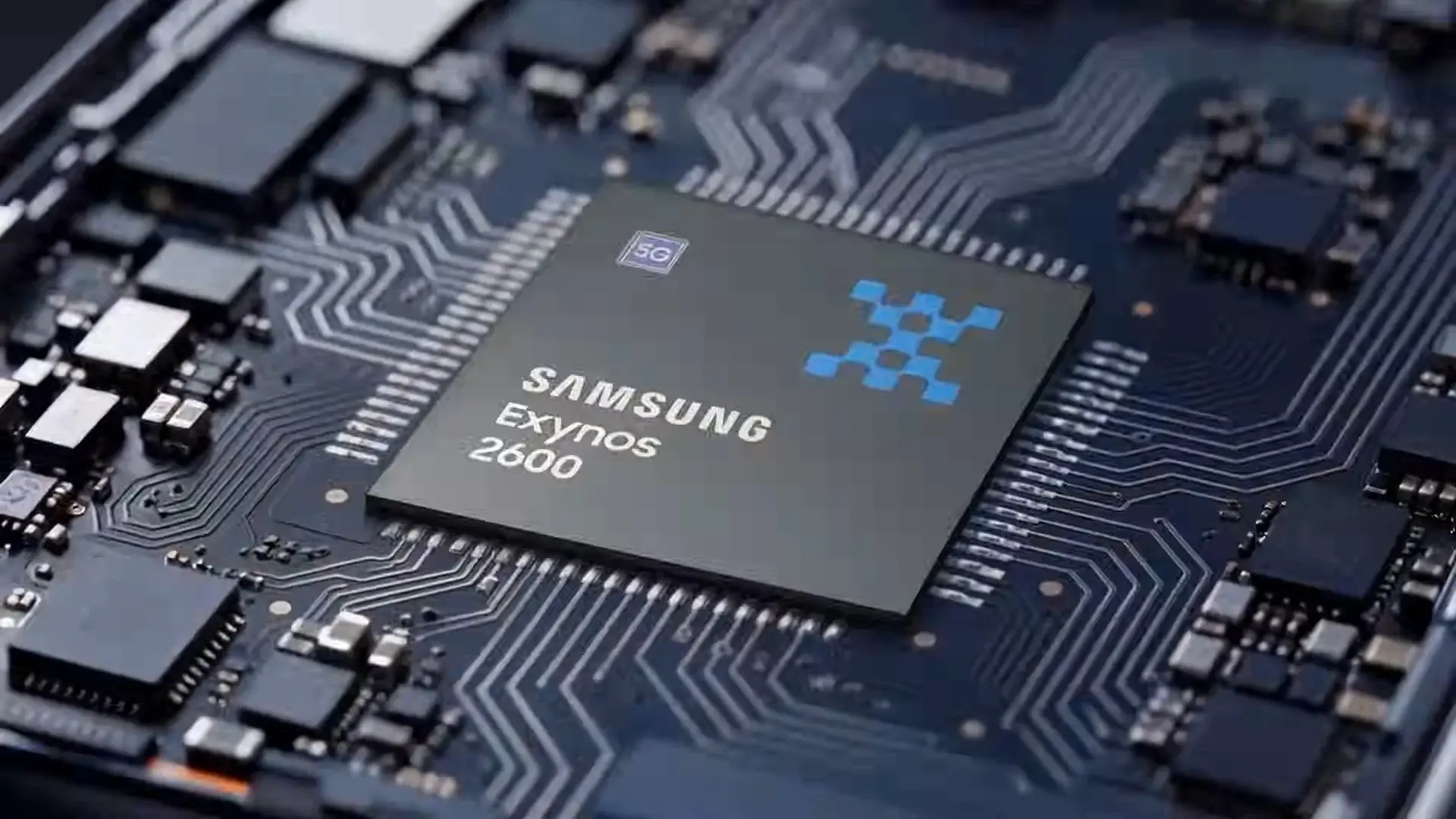
Processors Samsung Exynos They have become one of the most influential SoC families of the Android ecosystem, both for its role in Galaxy devices and for its growing presence in other sectors such as automotive. Over more than a decade, they have evolved from simple mobile chips to complete platforms with advanced graphics capabilities, 5G connectivity, and artificial intelligence built into the device itself.
Today, when you search detailed information about ExynosIt's no longer just about compare a specific model with SnapdragonBut it's not just about understanding how the architecture has evolved, why Samsung has had periods of both success and failure, and what the leap to 3nm and 2nm processes with the Exynos 2500 and 2600 means. Let's review that history, the key technologies, and where Samsung stands in terms of competing against Qualcomm and Apple.
From Hummingbird to Exynos: the family's first steps
The origins of Exynos date back to 2010, when Samsung launched the chip S5PC110, better known as Hummingbird and later renamed Exynos 3 SingleThis SoC debuted in the legendary Samsung Galaxy S and included a single-core ARM Cortex-A8 CPU running between 1,0 and 1,2 GHz, accompanied by a PowerVR SGX540 GPU at 200 MHz.
In terms of memory, that first Exynos 3 Single supported 32-bit dual-channel controllers with support for LPDDR, LPDDR2 and DDR2This was a very advanced configuration for the time, allowing for remarkable bandwidth in a 45nm manufacturing process. It was the starting point for a proprietary processor strategy that, over time, would become a key part of Samsung's mobile business.
The serious leap into the high-end market came in 2011 with the Exynos 4210, later renamed Exynos 4 Dual 45 nmintegrated into the Samsung Galaxy S II. This SoC featured a dual-core CPU based on Cortex-A9 between 1,2 and 1,4 GHz, accompanied by a Mali-400 MP4 GPU, and had a very important feature: its controller was integrated into the linux kernel, with official support since version 3.2 in November 2011.
A few months later, on September 29, 2011, Samsung unveiled the Exynos 4212, later known as Exynos 4 Dual 32 nmAlso based on Cortex-A9, it increased the frequency to 1,5 GHz and significantly improved the graphics with a Mali-400 MP4 at 400 MHz, resulting in an increase of around 50% in 3D performance compared to the 4210. In addition, the jump to the 32 nm HKMG node brought better energy efficiency.
The Exynos 4 and Exynos 5 era: more cores, more power, and new features
In April 2012, Samsung introduced the Exynos 4 Quad (Exynos 4412)This chip, which was integrated into the Samsung Galaxy S III and Galaxy Note II, featured four Cortex-A9 cores between 1,4 and 1,6 GHz, with a Mali-400 MP4 GPU running at up to 533 MHz, maintaining a 64-bit (2×32-bit) dual-channel memory bus at 400 MHz compatible with LPDDR, LPDDR2, DDR2 and DDR3.
The company boasted at the time that the The Exynos 4 Quad consumed approximately 20% less energy than the SoC used in the Galaxy S II, despite increasing the number of cores. It was also the moment when Samsung reorganized its naming convention: the old Exynos 3110 became known as the Exynos 3 Single; the 4210 and 4212 were grouped as the Exynos 4 Dual (45 and 32 nm), and the 5250 was renamed the Exynos 5 Dual.
Within this same generation appeared the Exynos 4415, another quad-core variant based on Cortex-A9 Manufactured using a 28nm HKMG process, it featured CPU frequencies around 1,5 GHz and a Mali-400 MP4 GPU at 533 MHz. It retained a dual-channel 64-bit LPDDR/LPDDR2/DDR3 memory interface and a bandwidth of around 6,4 GB/s, sufficient for the mid-range/high-end devices of 2014 where it was used.
The big technological leap within the family came with the Exynos 5250, commercially known as Exynos 5 DualReleased around the third quarter of 2012 and manufactured on 32nm HKMG, it was one of the first SoCs on the market to adopt high-performance Cortex-A15 cores at 1,7 GHz and a Mali-T604 MP4 GPU at 533 MHz, with graphics performance far superior to the Mali-400 MPx of the previous generation.
In terms of memory, this Exynos 5 Dual offered a bandwidth of up to 12,8 GB/s with LPDDR3 or DDR3 at 800 MHz In a 64-bit dual-channel configuration, or 8,5 GB/s with LPDDR2 at 533 MHz. It supported WQXGA (2560×1600) resolution, Full HD video playback at 60 fps, and modern interfaces for the time such as USB 3.0 and SATA 3, making it a very attractive chip for tablets and productivity devices.
big.LITTLE, Exynos 5 Octa and the first high-performance hybrids
With the maturation of the ARMv7 architecture, Samsung opted for the approach big.LITTLE: combining powerful cores with efficient cores in a single SoC. The first example was the Exynos 5 Octa 5410, manufactured at 28 nm by HKMG, which combined four Cortex-A15 and four Cortex-A7 in a 4+4 configuration.
The Exynos 5410 offered frequencies of up to 1,6 GHz in the Cortex-A15 cores and 1,2 GHz in the Cortex-A7 coresIt employed an initial big.LITTLE architecture that would later evolve towards more flexible execution modes. For graphics, it used a PowerVR SGX544MP3 GPU at 480 MHz (up to 532 MHz in certain full-screen applications), with a 64-bit dual-channel LPDDR3 memory bus at 800 MHz (up to 12,8 GB/s). It was launched in 2013 and marked the commercial debut of the Exynos 5 Octa range.
A little later the Exynos 5420 and 5422, also under the Exynos 5 Octa umbrellaThey maintained the combination of four Cortex-A15 and four Cortex-A7 cores, but raised the bar: the 5420 reached 1,9 GHz on the A15s and 1,3 GHz on the A7s, while the 5422 reached up to 2,1 GHz on the larger cores and 1,5 GHz on the smaller ones. Both integrated a Mali-T628 MP6 GPU at 533 MHz, which translated to approximately 102,4 GFLOPS in single precision.
These SoCs incorporated LPDDR3/LPDDR3e or DDR3 dual-channel 64-bit memory up to 933 MHz, with bandwidths close to 14,9 GB/s, and improved power management thanks to a more refined big.LITTLE execution (with Global Task Scheduling). They arrived on the market between 2013 and 2014 and were used in high-end smartphones and tablets.
Within that same family also appeared the Exynos 5430, an Exynos 5 Octa manufactured at 20 nm HKMG It retained the combination of four Cortex-A15 and four Cortex-A7 cores with frequencies of 1,8 and 1,3 GHz respectively. The GPU remained a Mali-T628 MP6, but this time at 600 MHz, raising its theoretical power to approximately 115,2 GFLOPS. The dual-channel LPDDR3e/DDR3 memory bus at 1066 MHz offered a bandwidth of around 17 GB/s and was used in models such as the Samsung Galaxy A7 and A8.
Exynos 5 Hexa and Octa for the mid-range: a balance between power and efficiency
To reach more market segments, Samsung developed variants with fewer large cores but maintaining advanced capabilities. Exynos 5260, known as Exynos 5 HexaIt combined two Cortex-A15 cores at 1,7 GHz with four Cortex-A7 cores at 1,3 GHz in a 2+4 configuration, also featuring big.LITTLE technology and Global Task Scheduling.
The graphics component of the Exynos 5260 was handled by a Mali-T624 MP4 600 MHzwith a performance close to 76,8 GFLOPS in single precision. It retained a 64-bit dual-channel LPDDR3 bus at 800 MHz (12,8 GB/s), which positioned it as a very competent SoC for the mid-to-high range in 2014, with somewhat lower power consumption than the Octa with eight large+small cores.
In parallel, the announcement was made Exynos 5800, another Octa variant of the 5 series with four Cortex-A15 cores at 2,0 GHz and four Cortex-A7 cores at 1,3 GHz, a Mali-T628 MP6 GPU, and a similar memory bus (dual-channel LPDDR3/DDR3 at 933 MHz). This platform was geared more towards devices with greater sustained processing needs.
Transition to ARMv8 and 64 bits: the Exynos 7
With the arrival of ARMv8-A and the mass adoption of 64-bit in mobile phones, Samsung launched the range Exynos 7, designed to take advantage of the new architecture and improve both performance and efficiency. The first benchmark was the Exynos 7 Octa 5433, manufactured at 20 nm by HKMG.
The Exynos 5433 integrated four Cortex-A57 cores and four Cortex-A53 cores (4+4) in Global Task Scheduling mode, with frequencies up to 1,9 GHz in the large cluster and 1,3 GHz in the efficient one. The GPU was a Mali-T760 MP6 at 700 MHz, capable of delivering around 142 GFLOPS, supported by dual-channel 64-bit LPDDR3 memory at 825 MHz (approximately 13,2 GB/s). It included an LTE Cat 6 modem and state-of-the-art WiFi and Bluetooth connectivity for the time.
The next big step was the Octa 7 Exynos 7420It was one of the first commercial chips on a 14nm LPE (Low Power Early) process. It maintained the 4×Cortex-A57 + 4×Cortex-A53 configuration, but increased the frequencies to 2,1 GHz for the larger cores and 1,5 GHz for the smaller ones, and switched the memory to LPDDR4.
The Mali-T760 GPU evolved into an MP8 design in the Exynos 7420, running at 772 MHz and achieving around 210 GFLOPS, with a 64-bit dual-channel LPDDR4 bus at 1553 MHz that provided approximately 24,88 GB/s. This SoC became a market benchmark in 2015 and was key to the reputation of the Galaxy S6 and Note 5.
For lower-end models, Samsung introduced chips like the Exynos 7 Quad 7570 and Exynos 7 Octa 7580The 7570, manufactured using a 14nm process, was based solely on four Cortex-A53 (ARMv8-A) cores and was aimed at the entry-level market, with LTE Cat 4 connectivity and full support for Wi-Fi and Bluetooth. The 7580, produced using HKMG's 28nm process, integrated eight Cortex-A53 cores at 1,5 GHz with a Mali-T720 MP2 GPU at 668 MHz and dual-channel LPDDR3 memory at 933 MHz (approximately 14,9 GB/s), sufficient for a capable mid-range device with LTE Cat 6.
More Exynos 7 variants and the jump to Exynos 8
The Exynos 7 family was expanded with models designed to balance cost and performance. Exynos 7 Hexa 7650 It combined two Cortex-A72 cores with four Cortex-A53 cores (2+4), running at 1,7 and 1,3 GHz respectively, and featured a Mali-T860 MP3 GPU at 700 MHz. Like others of its time, it used dual-channel 64-bit LPDDR3 at 933 MHz and was paired with LTE Cat 6 modems.
Another important member was the Octa 7 Exynos 7870It was manufactured using a 14nm LPP process, with eight Cortex-A53 cores at 1,7 GHz, a Mali-T830 MP2 GPU at 700 MHz, and dual-channel LPDDR3 memory at 933 MHz (14,9 GB/s). It was designed to offer excellent battery life with very respectable performance for everyday tasks and moderate gaming.
In the next higher range was the Octa 7 Exynos 7880Also built on a 14nm LPP process, it combined Cortex-A72 and Cortex-A53 cores in a 4+4 configuration. The A72 cores reached 1,88 GHz and the A53 cores 1,3 GHz. The Mali-T860 MP4 GPU at 950 MHz delivered around 71,4 GFLOPS, with dual-channel LPDDR3 memory at 1033 MHz maintaining a bandwidth close to 14,9 GB/s.
The most ambitious leap in that generation was the Octa 8 Exynos 8890The first chip in which Samsung dared to use its own custom cores (Exynos M1 “Mongoose”) alongside Cortex-A53 in ARMv8-A architecture. Manufactured in 14 nm LPP, it used a 4×Exynos M1 + 4×Cortex-A53 configuration with frequencies of up to 2,6 GHz (when 1-2 M1 cores were operating) or 2,3 GHz (3-4 cores), while the A53s remained around 1,6 GHz.
The GPU of the Exynos 8890 was a Mali-T880 MP12 650 MHzWith an approximate performance of 265,2 GFLOPS, supported by a dual-channel LPDDR4 memory bus at 1794 MHz (around 28,7 GB/s). The result was a very powerful SoC for its time, used in the Galaxy S7 series, capable of competing head-to-head with the high-end Snapdragon processors of the era.
Exynos vs Snapdragon: Overview and Key Advantages
Beyond specific models, it's worth understanding what Exynos brings to the table compared to other SoCs like Snapdragon. Generally speaking, the Exynos and Snapdragon They have opted to tightly integrate CPU, GPU, 5G modem and artificial intelligence into a single design specifically created for Galaxy devices.
According to Samsung's official communications, the processor is the The mobile phone's "brain," responsible for speed, power, and consumption.Its performance impacts everything from the overall system fluidity and app launch speed to battery life. The company emphasizes that an efficient processor improves the user experience in virtually every aspect.
In the Android market, there are usually two main families of chips: Exynos and SnapdragonAlthough they share many core technologies (ARM architecture, 5G support, etc.), they differ in their custom cores, camera ISPs, power management, and GPU design. Exynos has been primarily used in Samsung devices but has also appeared in phones from other brands, while Snapdragon is present in most manufacturers' devices.
In recent years, Samsung has highlighted that its high-end Exynos processors incorporate Custom GPUs powered by AMD and featuring advanced functions like Ray TracingTogether with AMIGO (Advanced Multi-IP Governor) technology, these chips aim to deliver high-quality graphics and console-like performance in demanding games and mixed reality experiences, while dynamically adjusting power consumption to avoid excessive battery drain.
Another key is the integration of Very powerful NPUs (neural processing units)These technologies allow AI to run locally on the phone. This powers features such as automatic photo and video enhancement, facial recognition, real-time translation, and smarter assistants, reducing latency and eliminating the need to continuously send data to the cloud, thus strengthening privacy.
The recent crisis at Exynos and the bet on the automotive industry
Despite the progress, Samsung's chip division has gone through a complicated period in recent years, with losses and the loss of key clients like Google. Some Exynos processors haven't managed to match the performance or efficiency of the most advanced Snapdragon processors, and that has led to decisions such as reserving Snapdragon for certain "Ultra" models.
Recent reports indicate that Samsung's LSI division, responsible for the design of Exynos processors, ISOCELL sensors, and 5G modems, has registered losses of close to 1 trillion won in 2024Part of that result would be related to the impossibility of integrating the Exynos 2500 into the Galaxy S25 series, which forced a rethinking of the roadmap.
To compensate, Samsung is strengthening its presence in other sectors, especially automotive. This strategy includes the Exynos Auto V720, chosen by BMW for the next iX3This will be the German brand's first electric vehicle to use this platform. It's not the first collaboration: 7 Series models have been using the Exynos Auto V920 platform since 2023.
The Exynos Auto V720 is manufactured in a 5nm process and focused on advanced infotainment systemsThis is an area where computing power, connectivity, and multi-screen management are crucial. Harman's (a Samsung subsidiary) acquisition of ZF Friedrichshafen's ADAS unit further reinforces its commitment to driver assistance systems (cameras, radar, critical computing, etc.).
The automotive industry itself is currently experiencing a “software and screen war”While some manufacturers, like Volkswagen, advocate a return to physical buttons for ergonomic and safety reasons, the reality is that large touchscreens and connected systems are here to stay; and processors like Exynos Auto are a strategic component for Samsung in this regard.
Exynos 2500: the foundation of the new generation with local AI
Within this context of reinvention, Samsung has presented the Exynos 2500 as its new high-end processor With a strong emphasis on artificial intelligence running directly on the mobile device, this SoC, manufactured using an improved 3nm process, is designed to compete head-to-head with Qualcomm and Apple in the premium segment.
According to the brand, the Exynos 2500 is capable of perform up to 59 trillion operations per second (59 TOPS) in AI tasksThis represents an increase of nearly 39% compared to its predecessor. This figure places it among the most powerful chips on the market in terms of AI.
The heart of this ability is its Redesigned NPU (Neural Processing Unit)This allows complex AI functions to run without an internet connection. This means faster, more contextual assistants, much smarter image and video editing tools, and biometric and security systems that don't have to send your data to external servers.
In terms of "classic" specifications, the Exynos 2500 It features a 10-core CPU and an Xclipse 950 GPU based on AMD technology.This combination ensures power for everyday tasks as well as demanding games, video editing, and augmented reality applications. Furthermore, Samsung has invested years in perfecting its 3nm process, and the arrival of the Exynos 2500 demonstrates that this commitment to the manufacturing node has begun to pay off.
Among the first devices confirmed to feature this SoC is the Galaxy z flip 7This indicates that Samsung is relying on the Exynos 2500 for a flagship product with very high visibility, leaving behind the rumors that pointed to insurmountable manufacturing problems.
Exynos 2600: the leap to 2nm, generative AI and new Xclipse 960 GPU
If the Exynos 2500 marks a before and after, the The Exynos 2600 is Samsung's real game-changer.This is the first commercial chip manufactured on a 2nm node with GAA (Gate-All-Around) technology, ahead of the 3nm processes used by TSMC, Qualcomm and Google in their high-end solutions.
The use of GAA allows the transistor's "gate" to completely surround the channel, instead of only one or three sides as with FinFETs. Thanks to this, Samsung claims that the Exynos 2600 It achieves a very significant leap in raw performance and energy efficiency. compared to the previous generation, with an increase of around 39% in CPU performance.
At the CPU level, the Exynos 2600 uses a 10-core configuration with ARMv9.3 architecture in a 1+3+6 schemeThe main core is a 3,8 GHz Cortex-C1 Ultra, supported by three 3,25 GHz Cortex-C1 Pro cores and six 2,75 GHz Cortex-C1 Pro cores. This configuration aims to combine very high peak power with excellent sustained performance.
In the graphics section, the following debuts: Xclipse 960 GPU, successor to the Xclipse 950Samsung claims it doubles the computing performance of the previous generation and offers 50% more performance in ray tracing, in addition to supporting frame generation and resolution upscaling using AI techniques. All of this is designed for top-tier mobile gaming and demanding mixed reality experiences.
The Exynos 2600 also includes a 32K MAC NPU specifically optimized for Generative AI, with a 113% performance improvement over its predecessorThis allows complex models to run directly on the device, maintaining privacy and reducing latency, from advanced assistants to intelligent photo and video editing.
Improvements in photography, video and thermal management of the Exynos 2600
In terms of image processing, the Exynos 2600 incorporates a New ISP with AI-based VPS and DVNR technologiesThe VPS (Visual Perception System) integrates artificial intelligence directly into the image processor, so that it can recognize complex scenes or very fine details, such as a blink on a subject's face, and react in real time without increasing power consumption.
The DVNR (Deep Learning Video Noise Reduction) function is responsible for reduce noise in videos recorded in low light conditionsAlso using AI, it maintains sharpness and detail without needing larger sensors or additional lenses. This ISP can manage cameras up to 320 MP and work with the AVP codec for video, directly targeting ultra-high-end mobile photography and videography.
One of the most sensitive issues in Exynos' history has always been the thermal throttling or performance throttling due to heatTo tackle this, the Exynos 2600 debuts HPB (Heat Path Block) technology, a thermal block integrated directly into the chip that facilitates faster heat transfer to the heatsink.
According to Samsung data, this system It reduces thermal resistance by approximately 16%.This allows the SoC to maintain more stable temperatures even under prolonged load (heavy gaming, 8K recording, etc.). The company is so confident in this technology that it has even offered it to competitors like Qualcomm for their own designs.
By combining the improved 2nm process, the ARMv9.3 architecture, the new Xclipse 960 GPU, and HPB, Samsung claims that devices with the Exynos 2600 They will be able to offer high and sustained performance, without sudden drops due to overheating., one of the most criticized points in previous generations.
Performance of the Exynos 2600 versus the Snapdragon 8 Elite Gen 5
The first leaked tests and records on platforms like Geekbench 6 have allowed for a comparison of the Graphics performance of the Exynos 2600 versus the Snapdragon 8 Elite Gen 5Under the Vulkan API, the Xclipse 960 GPU has shown an improvement of around 8% compared to its own previous results and has come considerably closer to Qualcomm's chip.
In September 2025, the Exynos 2600 achieved figures around 22.829 points in Vulkan testsIn measurements from January 2026, the score rose to approximately 24.726 points, suggesting intensive optimization work on drivers or GPU frequency. Simultaneously, particle physics tests improved from 2.715 FPS to 4.388 FPS (a 61% improvement), and the edge detection test increased by around 51%, indicating that specific bottlenecks in the graphics architecture have been eliminated.
The Snapdragon 8 Elite Gen 5, however, remains slightly ahead with figures close to 25.083-27.700 points in similar scenarios. However, the gap between the two has narrowed considerably: where previously the difference was estimated at around 21%, it now stands at about 12%, a much more competitive margin for future Galaxy releases.
In Vulkan GPU tests performed on the Galaxy S26 equipped with the Exynos 2600, scores ranging from 19.825 and 24.726 pointsThese variations are explained by differences in firmware, performance modes, and cooling settings between prototypes. In any case, the data confirms that the graphics processor is among the elite in the market.
Although scores in OpenCL have remained more stable, the push in Vulkan, coupled with a previous increase in CPU frequencies estimated at around 12%It paints a picture in which Exynos is no longer so far behind Qualcomm, but becomes a serious alternative in overall performance, AI and efficiency.
Galaxy S26 and the dual chipset strategy
The Exynos 2600 has already been detected in Galaxy S26 prototypes found in databases like GeekbenchThis marks the first time this chip has been seen working in a real phone. Until now, it had only been tested on internal development boards, so these results, while not definitive, provide a fairly clear idea of its power.
The global version of the Galaxy S26 that appeared in these tests features the Exynos 2600 paired with the Xclipse 960 GPUConfirming what was widely expected: Samsung will once again heavily feature its own chips in several markets. The company has hinted that it will combine the Exynos 2600 and Snapdragon 8 Elite Gen 5 in the S26 series, depending on the region.
Everything points to the fact that in South Korea, India, and Europe will sell versions with the Exynos 2600.While in other regions Snapdragon processors will be used, the Galaxy S26 Ultra is expected to launch globally with only Qualcomm chipsets, repeating the strategy seen in recent generations.
Beyond the leaks, Samsung has already shown a teaser of the Exynos 2600 and officially announced the chip, with a Full presentation scheduled for the end of FebruaryThen all the details of the technical specifications will be known (final frequencies, exact memory support, video capabilities, etc.), but the focus on AI, Ray Tracing, advanced photography and thermal management is already clear.
The multi-threaded CPU results for the Exynos 2600 in the Galaxy S26 are not yet fully confirmed in public databases, but estimates suggest it will be capable of to seriously challenge the Snapdragon 8 Elite Gen 5especially in workloads that take advantage of the 10 cores and the L1, L2 and L3 cache improvements that Samsung has been highlighting in its press releases.
This entire journey, from the first Hummingbird to the ambitious 2nm Exynos 2600, paints a picture of a processor family that has had its ups and downs but is now once again at the forefront of the industry: Chips with 10-core CPUs, Xclipse GPUs with Ray Tracing, NPUs capable of running generative AI locally, advanced ISPs with VPS and DVNR, and a clear focus on thermal efficiencyIf the official figures and benchmarks translate into a good user experience in Galaxy devices and new opportunities in automotive and other sectors, Exynos is in a position to regain prominence against Snapdragon and Apple Silicon.

Table of Contents
- From Hummingbird to Exynos: the family's first steps
- The Exynos 4 and Exynos 5 era: more cores, more power, and new features
- big.LITTLE, Exynos 5 Octa and the first high-performance hybrids
- Exynos 5 Hexa and Octa for the mid-range: a balance between power and efficiency
- Transition to ARMv8 and 64 bits: the Exynos 7
- More Exynos 7 variants and the jump to Exynos 8
- Exynos vs Snapdragon: Overview and Key Advantages
- The recent crisis at Exynos and the bet on the automotive industry
- Exynos 2500: the foundation of the new generation with local AI
- Exynos 2600: the leap to 2nm, generative AI and new Xclipse 960 GPU
- Improvements in photography, video and thermal management of the Exynos 2600
- Performance of the Exynos 2600 versus the Snapdragon 8 Elite Gen 5
- Galaxy S26 and the dual chipset strategy