- Gamification applies game mechanics to daily life to increase motivation, focus, and engagement.
- Its key elements are clear goals, visible progress, rewards, constant feedback, and a social component.
- It is already used in productivity, education, business, physical and mental health, with specific apps and systems.
- A well-designed program enhances intrinsic motivation, but its overuse and extreme competition can backfire.
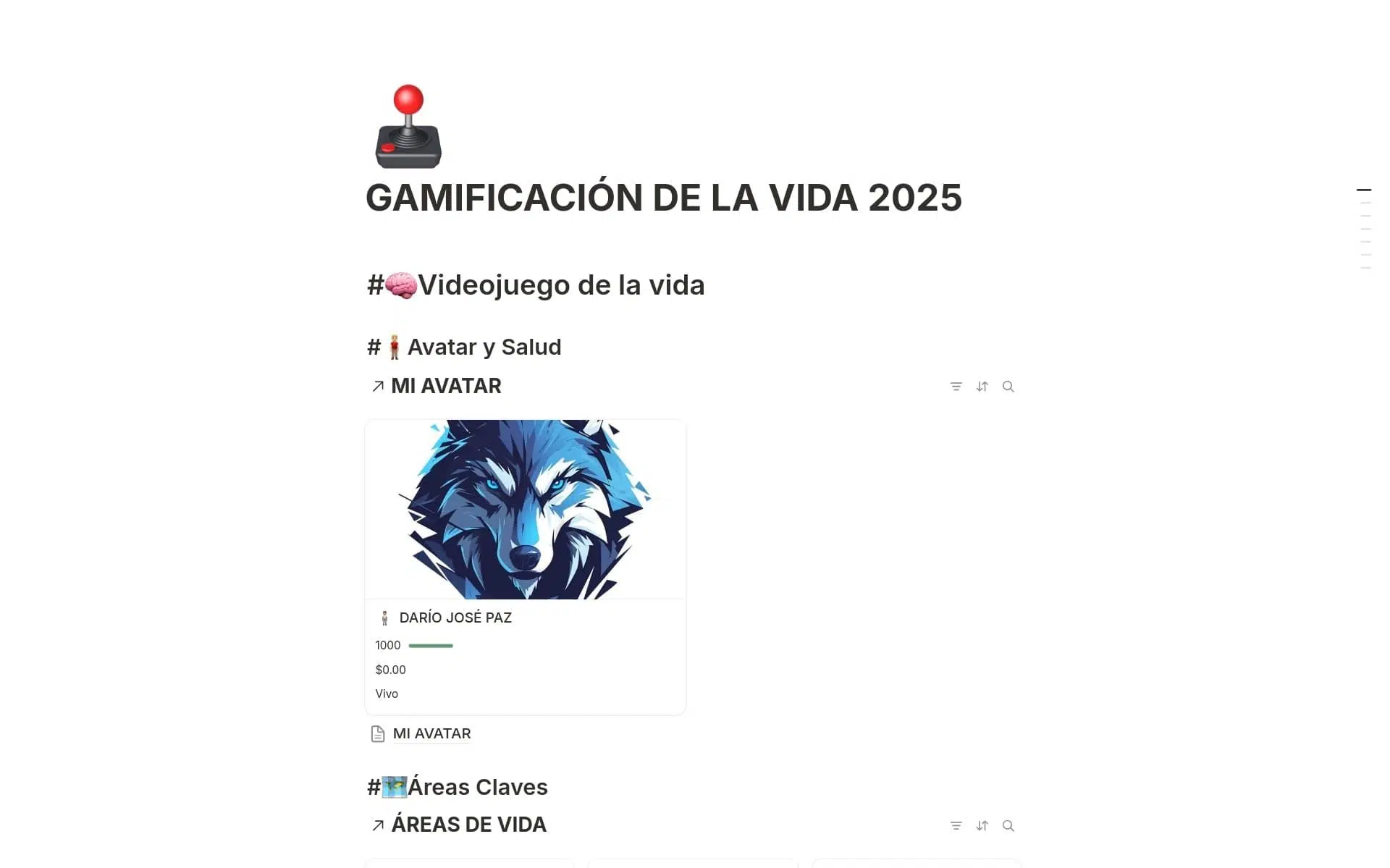
Gamification has permeated almost everything: work, studies, sports, saving, mental health , and even how we interact with technology. We're not talking about spending all day playing video games, but rather using game logic to transform initially tedious tasks into challenges we're eager to complete.
When designed well, gamification is a powerful motivational tool : it encourages us to stay focused, be consistent with our habits, and enjoy things a little more that, while important, we don't always feel like doing. But it also carries risks if we turn everything into points, streaks, and external rewards. Let's see how to make the most of it in daily life, without losing sight of its advantages and disadvantages.
What exactly is the gamification of life?
The Royal Spanish Academy proposes the term ludification to describe gamification: applying game dynamics and mechanics to contexts that are not inherently playful (work, study, health, personal finance, etc.) in order to increase motivation, participation, and learning . In practice, it's about transforming your daily life into something more like an adventure than a list of obligations.
Gamifying your routine isn't just about adding games. It's about introducing clear rules, objectives, immediate feedback, and rewards —the ingredients that make a game engaging. Tasks like studying math, going for a run, saving money, or finishing a tedious report are transformed into meaningful missions with a visible progress system.
This game logic has transcended the gaming world and is now applied to new technologies in education , business, healthcare, mentoring, social media, and productivity apps . Furthermore, many people are adapting it to better manage ADHD, demotivation, or the difficulty of starting things they "should be doing" but that don't provide immediate gratification.
A very clear example: someone with ADHD can approach each daily task like a video game mission, breaking down the big goal into smaller steps and assigning specific rewards upon completing each phase. This simple layer of gameplay reduces feelings of overwhelm, makes tasks less intimidating, and generates a much more frequent sense of accomplishment.

Key elements of gamification applied to your life
The apps and systems that gamify your daily life rely on a series of recurring elements that activate both the emotional and rational parts of the brain. It's not magic: it's psychology and well-thought-out design.
One of the most common resources is the use of progress or experience bars . Seeing how far you've come and how much further you have to go to reach your goal makes tangible something that would otherwise seem vague. This visual clarity reduces the feeling of an "endless mountain" and helps maintain motivation in the medium and long term.
Another key element is tiered goal setting : big goals achieved through small, manageable challenges. Instead of obsessing over "passing a competitive exam" or "getting in shape," you focus on completing daily or weekly micro-challenges. Each small victory fuels your sense of competence and propels you toward the next.
Rewards are at the heart of any gamified system. They can be symbolic (medals, badges, avatars, unlocked content) or tangible (bonuses, days off, cash prizes, experiences). The important thing is that they arrive at the right time and are clearly linked to a specific effort, so your brain associates effort with reward.
Immediate and constant feedback is another essential ingredient. Seeing in real time how your points increase, how a streak is maintained, or how a new level is unlocked reinforces behavior much more effectively than a distant evaluation. If you know instantly that your action has had an effect, you're more likely to repeat it.

Uncertainty and curiosity also work in favor of gamification. Just as you follow a series because you want to know what happens in the next episode, a system full of surprises, random rewards, or hidden missions sparks your interest in "seeing what comes next" in your own gamified life.
Finally, almost every experience of this kind incorporates a social component . Even if you're playing against yourself, being able to share results, compare rankings, or collaborate with other players multiplies the level of engagement. That feeling of belonging to a community that pursues similar challenges (learning a language, training, studying, saving money, etc.) is a huge motivator for perseverance.
Psychological and performance benefits of gamifying your life
When all these elements are combined intelligently, gamification achieves very specific effects on your brain and behavior . One of the best-known is the release of dopamine, the neurotransmitter associated with pleasure and reward. Each point, level, or badge you earn after an effort generates a small "high" that reinforces the behavior that caused it.
In addition to that dopamine rush, gamified dynamics foster a recurring sense of victory . You don't have to wait months to see progress: every completed task, every study session, every day you maintain a healthy habit gives you a mini-success. This frequency of achievements fuels satisfaction, motivation, and perseverance.
Another important effect is the increase in sustained concentration time . Long, tedious tasks become more manageable when they are broken down into "levels" or timed with Pomodoro Techniques, which transform focus into a kind of race against the clock or virtual monsters. You stay engaged longer because you want to see the mission end.
Gamification can also help train cognitive skills such as logical thinking, decision-making, planning, and problem-solving. When a mentoring or business system presents challenging situations as missions and offers constant feedback, it forces participants to analyze options and learn from mistakes in a relatively safe environment.

Gamify time, resources, and habits with specific apps
In the field of personal productivity and time management, there are several applications that have become benchmarks by transforming daily organization into a game with missions, monsters, and avatars.
Habitica is one of the best known. It turns your life into a classic role-playing game : you create a character, and every task, habit, or obligation translates into an enemy to defeat. Completing your lists in real life is reflected in your avatar's progress within the game. If you complete them, you advance, acquire equipment, level up… if you don't, your character pays the price. This direct connection between real-life behavior and virtual consequences is surprisingly effective.
Similarly, Do It Now functions as a gamified task organizer . You can assign daily activities, set reminders, and clearly and visually track your progress. As you accomplish your goals, your digital character gains skills, levels, and experience, reinforcing your consistency day after day.
Another interesting example is the 52-Week Challenge, an app designed to turn saving money into a personal challenge . The idea is simple: set aside a minimum amount each week for a year. The app calculates how much you should save at any given time, sends you reminders, encourages you, and guides you until you reach your financial goal, whether it's for a trip, a wedding, or a safety net.
Beyond apps, many people are gamifying their lives using wearable devices like smart rings or fitness watches. Metrics such as heart rate, steps, active minutes, and sleep quality become "character stats" that they try to improve, just as if they were leveling up in a role-playing game.
Gamification, sport and healthy habits
In the realm of physical exercise and healthy habits, gamification and virtual reality have found fertile ground. Numerous applications offer challenges, scoring systems, and communities to make going out to exercise or moving more less of an abstract obligation.
Fitocracy, for example, combines training plans tailored to different levels with a points, badge, and achievement system . Each completed session helps you progress, unlock content, and participate in challenges within a global fitness community. It's both a social network and a fitness app, which increases adherence to the routines.
Thirty Habit focuses on the classic idea of 30-day challenges to change or establish healthy habits. Its strength lies in the social aspect: sharing your progress with friends or the community, discussing your achievements, and seeing that others are also struggling with their own challenges makes it much easier not to give up.
There are also more "narrative" options, like Zombies, Run!, which transforms your runs or walks into a survival mission in the midst of a zombie apocalypse . With headphones on, the app immerses you in a story where you must flee from the undead, complete missions, and collect resources. Suddenly, jogging around your neighborhood becomes much more entertaining.
Forest is another very popular tool, though focused on reducing mobile phone addiction. Using a simple metaphor, it plants a virtual tree every time you decide to concentrate . As long as you don't touch your phone to check social media or get distracted, the tree grows; if you succumb, it withers. It's a constant visual reminder of your ability (or inability) to stay focused.
Gamification and emotional well-being
Gamification has also made significant inroads into the field of mental health and emotional management . It is by no means a substitute for professional therapy in severe cases, but it can be a valuable complementary tool for managing anxiety, stress, or low mood.
MoodMission, developed from research by psychologists specializing in cognitive-behavioral therapy , proposes brief "missions" related to how you feel: breathing exercises, meditation, behavioral activation activities, stretching, or small exposure challenges. Various studies have shown that its use can improve well-being and promote good mental health.
SuperBetter has gained worldwide fame as a tool for training resilience , the ability to remain strong and optimistic in the face of life's challenges. It was created by game designer Jane McGonigal to help people overcome the effects of a severe concussion and has since been studied by universities such as the University of Pennsylvania and Ohio State University, yielding positive results in reducing symptoms of depression and anxiety.
In this app, users set goals related to real-life problems (stress, chronic pain, injury recovery, difficult emotions) and address them through challenges, allies, powers, and enemies within a game-like narrative. Comparisons with other apps in the same field place it among the most effective for mood management.
All of this aligns with what we know from neuroscience: we play to satisfy our curiosity, our desire for challenge and mastery . Psychologists like Alok Kanojia speak of the “will to mastery” to describe this tendency to strive intensely for something we perceive as valuable, and how triumphs reinforce identity, respect, and personal pride.
AI and gaming in service of cognitive health
Gamification is also beginning to be used in the early screening for potential cognitive decline . A striking example is the video game The Mind Guardian, developed by Samsung in collaboration with the University of Vigo and the Galicia Sur Health Research Institute.
Its aim is to detect early signs of cognitive decline long before an Alzheimer's diagnosis. Through tests integrated into a game accessible from home, it assesses different types of memory (episodic, procedural, semantic) without the pressure often associated with traditional medical consultations.
While it doesn't replace professional assessment, it does offer a simple and early screening tool that can expedite referrals to specialists and intervention when concerning patterns are detected. The key is to use the language of play to reduce fears, make the experience more enjoyable, and still gather useful data.
Gamification in education: learning like a game
Schools and universities are undergoing a profound transformation thanks to the power of educational software . In a context where artificial intelligence automates repetitive tasks, skills such as critical thinking, creativity, logic, and collaboration are becoming increasingly important. Game-based learning is a perfect fit for developing these kinds of abilities.
Experts like Inma Marín advocate for a shift in approach, integrating the narrative, challenges, constant feedback, surprise, cooperation, and competition inherent in games into teaching methodology. The idea is for the classroom to function almost like a large-scale educational role-playing game where the student is not a passive recipient, but an active participant.
Applications like Classcraft take this philosophy to the extreme: teachers design "games" where students unlock attributes and powers as they complete activities, collaborate with others, and behave in certain ways. The epic storyline, roles, and missions provide context to subjects that, without that layer, might seem dry.
Other platforms like ClassDojo bring together teachers, students, and families in a single environment , using points, avatars, and symbolic rewards to reinforce behavior and participation. The goal is to create a classroom climate where motivation depends not only on exams and grades, but also on everyday achievements.
Studies on play and learning point to clear benefits: improved attention, vocabulary, creativity, and strategic thinking . Traditional games like Scrabble or chess illustrate this effect well, enhancing language skills, concentration, and planning through playful challenges.
Gamification in business and mentoring
In the workplace, gamification has become a driver of innovation and cultural change in managing technology-driven teams . When implemented effectively, it can increase engagement, improve collaboration, and help people perceive daily challenges as shared endeavors rather than burdens.
Many companies use it to recognize desired behaviors : punctuality, meeting objectives, participation in training, improvement proposals… Points, levels or badges are assigned and internal rankings are established that end up being linked to specific rewards such as vacation days, bonuses or experiences.
Cases like that of Correos, which created a prize-based game to engage its employees in the launch of its website, show that this approach can translate into greater efficiency and significant savings . BBVA did something similar to boost the use of its online banking, successfully attracting and retaining users while teaching them how to use new features.
However, firms like Gartner warn that a high percentage of business gamification projects fail because they lack meaning for their target audience. If it all boils down to competing for points without a purpose, motivation plummets or even generates rejection.
In mentoring programs, gamification can help structure objectives, measure progress, provide feedback, and recognize achievements . Setting joint challenges between mentor and mentee, designing missions that require teamwork, and adding symbolic or tangible rewards fosters mutual commitment and the acquisition of skills such as problem-solving and decision-making.
The flip side: risks of turning everything into a game
Alongside the benefits, there is an important debate about the danger of life becoming like a game . If children and young people only engage in activities that come wrapped in gamified dynamics, we run the risk that the adult world, with its efforts without immediate reward, will become overwhelming for them.
One of the key warnings from experts like Ferran Teixes is the difference between intrinsic and extrinsic motivation . The former comes from within: curiosity, genuine interest, satisfaction from learning or doing something well. The latter depends on external factors: points, awards, medals, rankings. If we overuse these external motivators, there comes a point when, without them, motivation collapses.
It has also been shown that excessive competitiveness can be counterproductive. When everything revolves around beating others or climbing the rankings, those who fall behind become demotivated or feel punished, and the atmosphere becomes strained. Gamified systems that emphasize collaboration, group achievements, and mutual support tend to work better in the long run.
On the other hand, there's the risk of a "dopamine overload" associated with constant rewards. The brain gets used to quick and frequent stimuli, as happens with many social media platforms, and it becomes increasingly difficult to stay engaged in tasks with slow or diffuse rewards. That's why it's crucial to mix short-term challenges with long-term projects and also to cultivate patience.
Ultimately, the key is to use gamification as a framework, not a permanent crutch : to lean on it to get started, create habits, and shape more user-friendly processes, but without making it the sole source of meaning or motivation. The goal is for intrinsic motivation to gradually take precedence over extrinsic motivation.
Understood and used wisely, gamification allows us to make daily life something more like a stimulating challenge than an unbearable list of obligations: it offers tools to maintain concentration, get hooked on healthy habits, learn with enthusiasm, work with more commitment and take care of physical and mental health, as long as we remember that the game is a means and not the ultimate end.

Table of Contents
- 1 What exactly is the gamification of life?
- 2 Key elements of gamification applied to your life
- 3 Psychological and performance benefits of gamifying your life
- 4 Gamify time, resources, and habits with specific apps
- 5 Gamification, sport and healthy habits
- 6 Gamification and emotional well-being
- 7 AI and gaming in service of cognitive health
- 8 Gamification in education: learning like a game
- 9 Gamification in business and mentoring
- 10 The flip side: risks of turning everything into a game